


Wildfires across Kosovo during the summer expose that the country is dangerously unprepared to confront a crisis that is becoming increasingly routine and destructive each year.
As summertime wildfires spread across forests, fields, and even threatened homes, Kosovo’s firefighting crews—limited by manpower, outdated equipment, and the absence of aerial support—are forced to rely on local residents and NATO’s KFOR mission troops for help.
Forests, agricultural fields, and open plains across Kosovo were ravaged by wildfires in July and early August, leaving behind burned landscapes and raising concerns about the country’s ability to confront an increasingly destructive trend.
Flames swept through agricultural land, threatening harvests, while in the regions of Mitrovica and Prizren, the fires reached residential areas, placing lives and homes at risk.
Apart from firefighting crews, soldiers from KFOR joined the effort, alongside local residents, in an attempt to contain dozens of simultaneous blazes burning across the country.
A growing trend of destruction
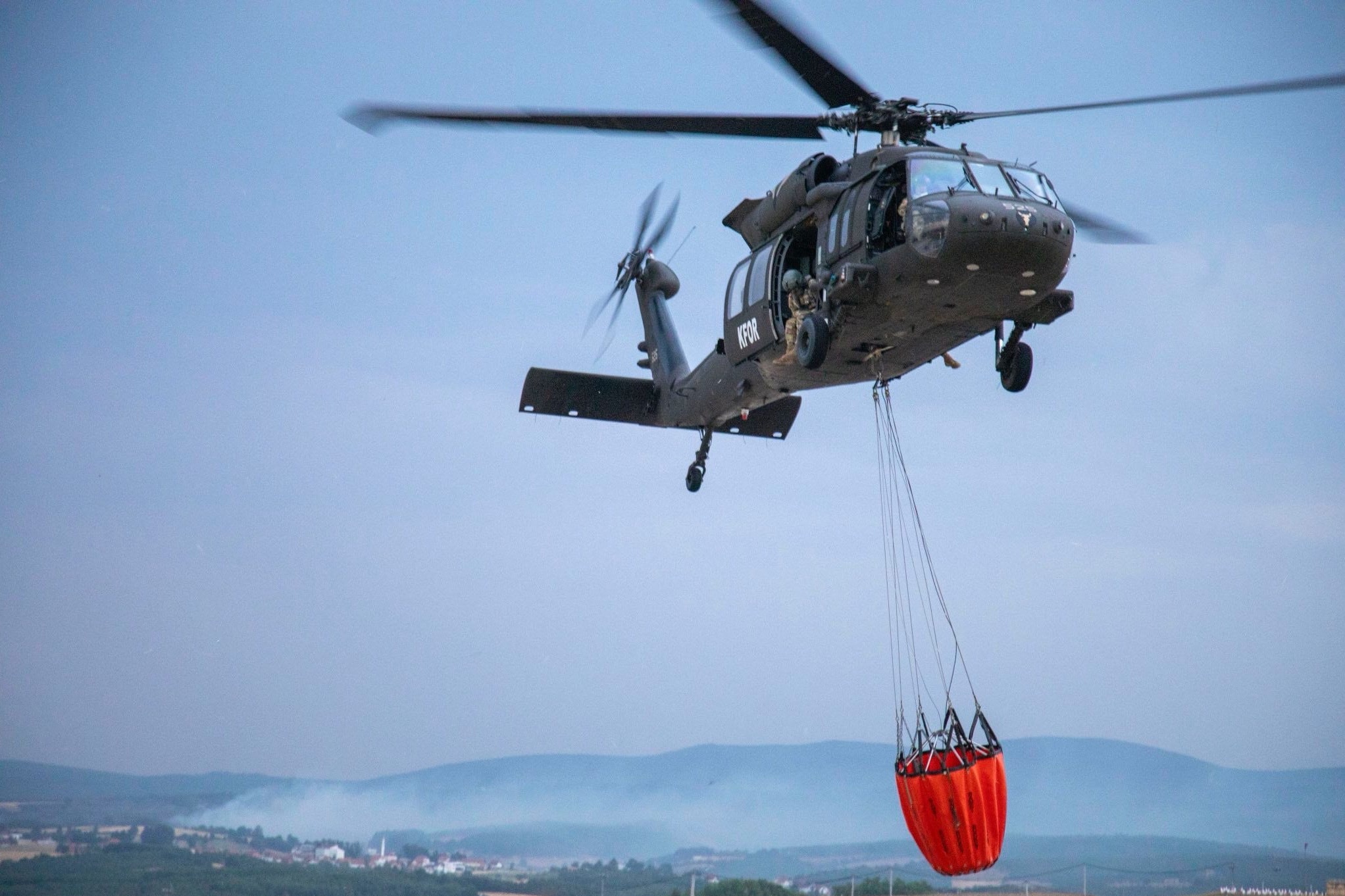
The NATO-led KFOR mission troops assist the Kosovo Emergency Management Agency in combating wildfires on July 28. Photo: NATO Kosovo Force-KFOR
On August 19, Kosovo’s Emergency Management Agency, EMA, reported 23 active fire hotspots across the country, down from more than 70 active fires reported in the first week of the month.
In a press conference on August 13, EMA director Genc Metaj told reporters that, “Just in the past week, more than 633 cases of forest and field fires have been reported, where human lives, private property, and state infrastructure were put at serious risk” .
He highlighted cases in the village of Kqiq i Vogël in Mitrovica and Kamenica, where KFOR was forced to intervene.
The Ministry of Internal Affairs called for a ban on all forms of open fire across the country, warning that negligence or deliberate fire-setting would trigger legal consequences.
Metaj also urged citizens to take preventive action, such as, “creating protective firebreaks using their own agricultural machinery.”
Metaj pointed to climate change as one of the drivers of the situation, “This August there were more wildfires compared to last year. Climate change is creating challenges, not only for us, but across the region and globally. Our priority remains protecting people and their homes.”
Meanwhile, Police Lieutenant Colonel Jeton Rexhepi reported that, “officers arrested 23 individuals linked to wildfire incidents and initiated 193 cases tied to ‘public endangerment’ and arson.”
Yet enforcement is only one side of the challenge. Firefighters on the front lines face an uphill battle against nature, with limited manpower and outdated equipment.
A fire service under strain
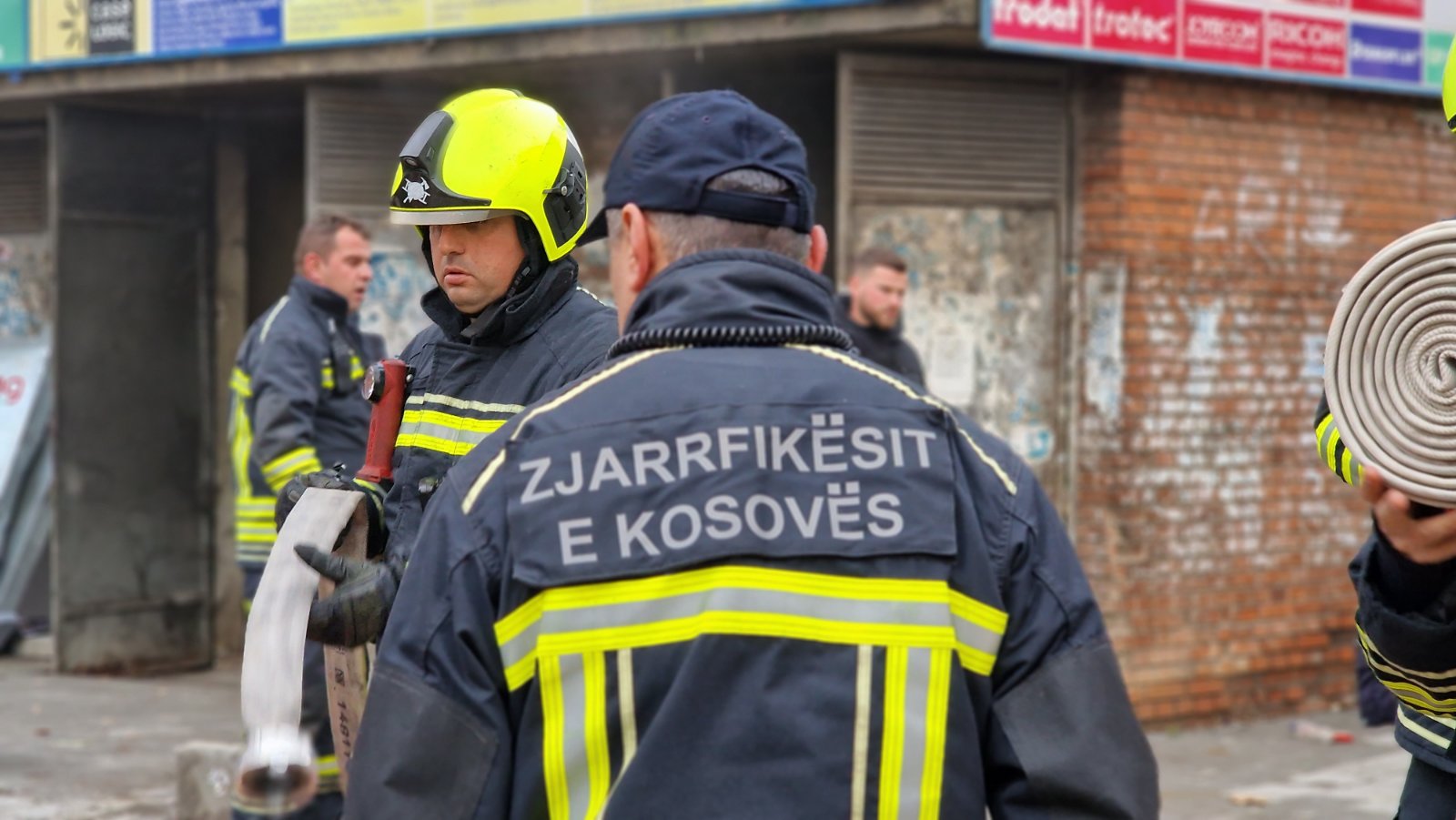
Firefighters in Kosovo. Photo: BIRN
For years, Kosovo’s firefighters have raised concerns about being under-equipped for crises of this magnitude. This summer’s blazes have underscored the warnings.
“There are approximately 800 firefighters in Kosovo,” explained Muharrem Beka, head of the Firefighters’ Union, in a statement for Prishtina Insight. “That number is insufficient, even under normal conditions. The situation becomes critical when we face multiple emergencies like this,” he declared.
According to Kosovo’s regulations, there should be at least one firefighter per 1,500 residents. With a population of 1.6 million, the country needs around 1,100 firefighters to meet basic standards.
“Many municipalities operate with just two or three firefighters per shift,” Beka said.
“Vehicles are old and few in number. While firefighters are provided personal gear, there is a lack of communal equipment and specialised tools for tackling forest and field fires. Kosovo doesn’t even have aerial firefighting capacity—no helicopters or planes—despite the terrain making them essential,” he emphasised.
According to him, the most challenging areas for intervention are the forests, “due to difficult terrain and the lack of roads for firefighting vehicles.”
Legislation and fines alone cannot resolve Kosovo’s growing vulnerability. What’s needed, Beka says, is investment.
“The government must analyse the situation, secure sufficient budgets, and increase capacities—both in human resources and in technical equipment,” Beka stressed further.
He demanded hazard pay, health and life insurance, and proper compensation for overtime, weekend, and holiday work.
“Given the specific challenges of our service, firefighters must be treated with special attention. Every investment in this sector is an investment in the safety of citizens and the property of Kosovo,” he noted.
Losses in forests
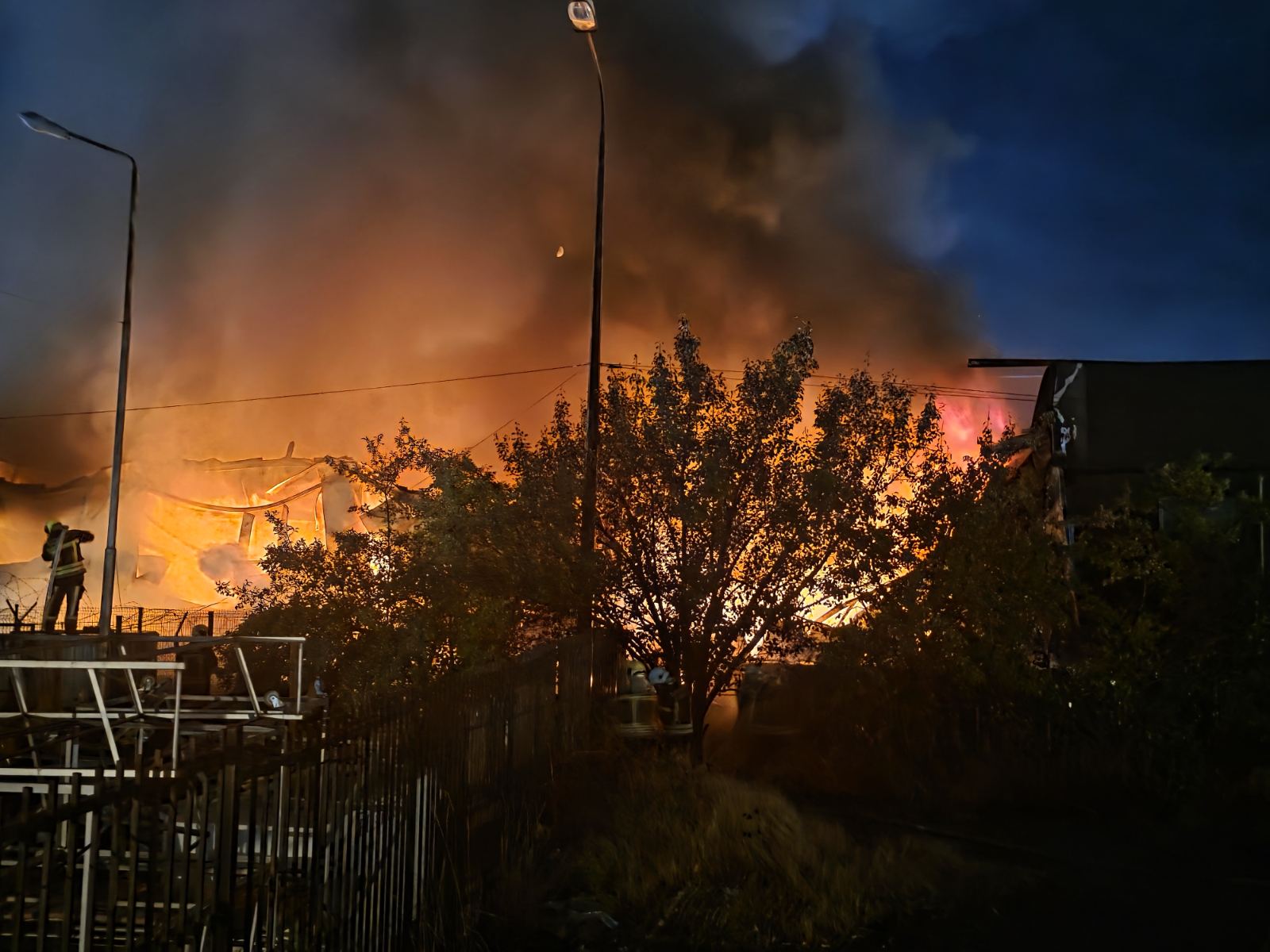
Firefighters responding to a fire in August 2025. Photo: BIRN
The Kosovo Forest Agency within The Ministry of Agriculture, Forestry, and Rural Development, MBPZhR, provided sobering statistics of nationwide wildfires over a period of five years.
In 2020: 2,404 hectares were burned, 2021: 2,653 hectares burned, 2022: 1,597 hectares burned, 2023: 3,208 hectares burned, 2024: 3,469 hectares burned.
Meanwhile, from January to July in 2025 alone, fires have already consumed 850 hectares of forest and woodland. We are, however, still missing the data for August when most of the fires were reported.
Tahir Ahmeti, director of Forest Department at MBPZHR stated that “Kosovo’s legal framework relating to forest protection states that: open fires are prohibited within 500 meters of forests, with fines ranging from 500 to 20,000 euros”.
The Kosovo Forestry Agency, KFA, assesses fire damages and plans additional harvest in damaged forests.
Despite these regulations, over 95% of wildfires in the region are caused by human negligence, according to awareness campaigns launched by the Ministry of Agriculture, Forestry, and Rural Development.
One of the campaigns, with the slogan “One Action Changes Everything,” calls for collective responsibility in safeguarding landscapes.
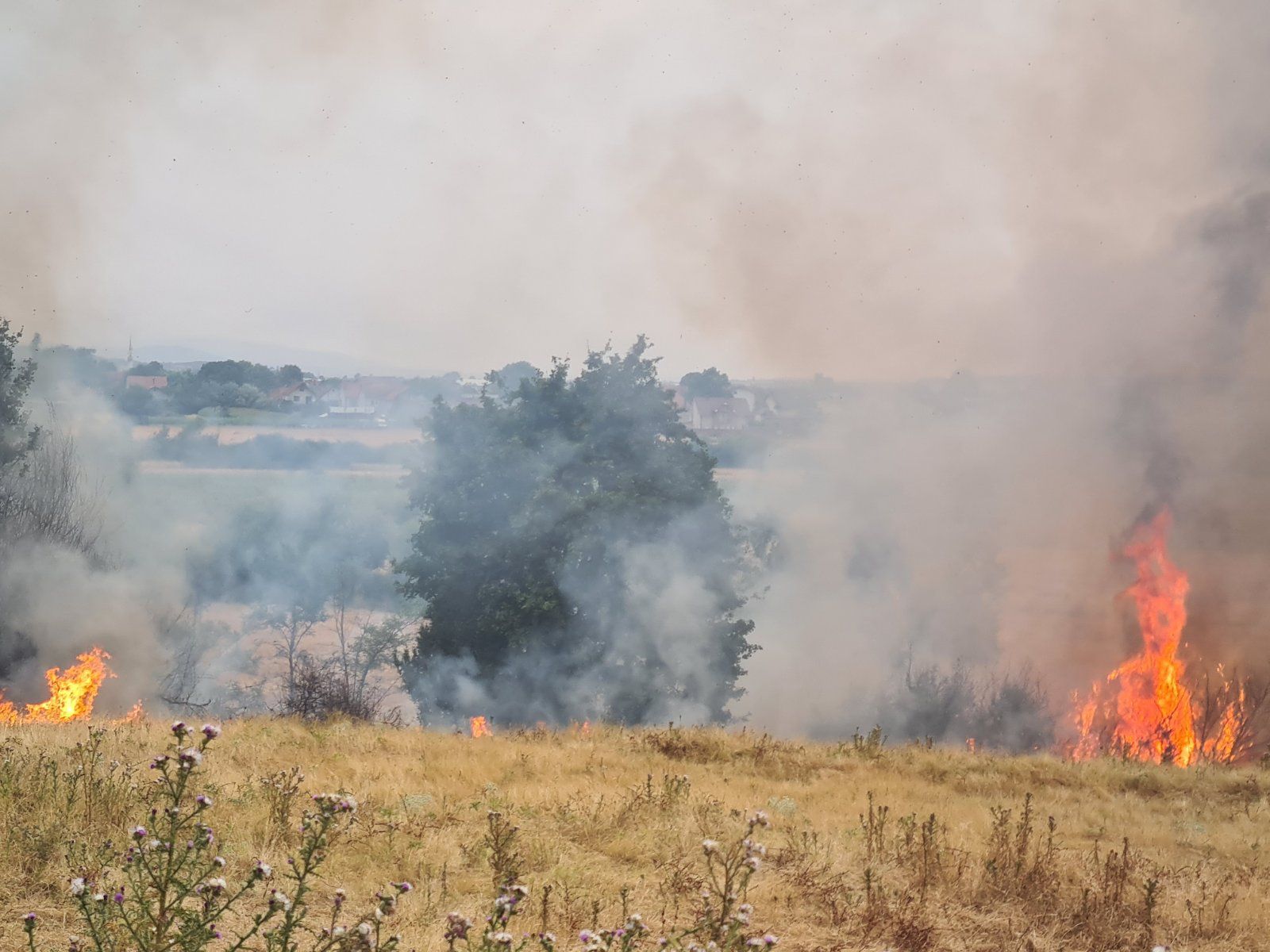
Forest wildfires in July 2025. Photo Courtesy of Kosovo Emergency Management Agency
This summer also saw grassroots mobilisation with Prishtina Municipality launching the Volunteer Association for Firefighting and Rescue in August of 2025 and encouraging citizens to join with the slogan, “Be the Hero of Your Community, Become a Volunteer Firefighter.”
The effort recognises that institutional capacity alone cannot keep pace with the crisis.
Since 2000, wildfires in Kosovo have steadily increased, as noted in the State Strategy for Reducing Risk from Natural and Other Disasters (2023–2028).
Parallel to that, Tahiri emphasised that the government’s Climate Change Strategy (2019–2028) seeks to reduce greenhouse gas emissions while building resilience to climate shifts-—longer heatwaves, extended droughts—that make wildfires ever more likely.