


Two years after the discovery of a 1,500-year-old mosaic inscription at the Ulpiana Archeological Park in Kosovo, archaeologists have managed to confirm that the Byzantine Emperor Justinian I rebuilt the Roman city after a devastating earthquake in 518 AD.
In the mosaic floor of a large sixth century basilica, at an archaeological park in Kosovo on the site of a once great Roman city, Latin inscription is embedded of the names of Eastern Roman Emperor Justinian I and his wife the Empress Theodora. The inscription provides rare and concrete evidence of their role in the city’s rebirth.
The basilica was discovered in 2022 at the Ulpiana Archaeological Park on the outskirts of Kosovo’s capital Prishtina. A year later, archeologists managed to excavate the rare mosaic and it took another two years to confirm that the large basilica was built by Emperor Justinian I in 545 AD.
The rebuilt city, that archeologists confirm was called Justiniana Secunda, was constructed after an earthquake in 518 AD destroyed the ancient city of Ulpiana.
Milot Berisha, archaeologist and site manager of the Ulpiana Archaeological Park, told Prishtina Insight that, “this is one of the rarest and most valuable archaeological inscriptions ever found in Kosovo and the wider former Roman provinces.”
On August 2, 2025, Kosovo’s Acting Minister of Culture, Hajrulla Çeku, publicly praised the discovery, noting that while the inscription found in 2023 confirmed the foundation of Justiniana Secunda as a Dardanian city, the new discovery in 2025 adds critical context about the city’s spiritual and architectural origins. The first archaeological research at the site began in the 1950s.
The site of Municipium Ulpiana, also known as Justiniana Secunda, is under permanent legal protection as part of Kosovo’s National Heritage list.
From Ulpiana to Justiniana Secunda
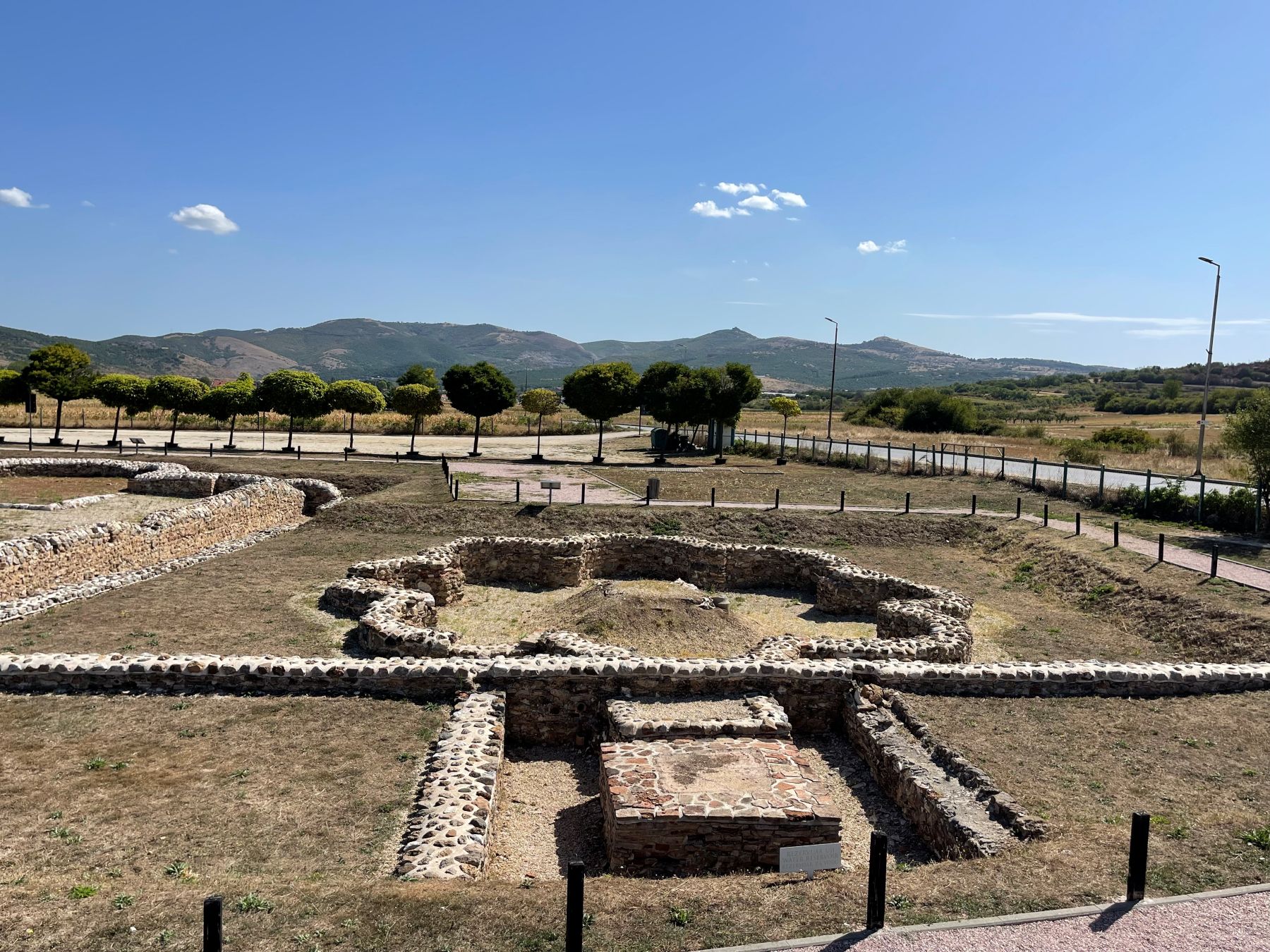
Ulpiana Archeological Park in Kosovo. Photo: BIRN/Ardita Zeqiri
At its peak in the 3rd and 4th centuries AD, Ulpiana’s fortified centre covered 35 hectares, while the entire settlement, including suburbs, stretched across 120 hectares. It was a vital administrative, commercial, and religious hub in Roman Dardania.
When the earthquake of 518 AD leveled the ancient city of Ulpiana, which was built late in the I century AD , Justinian I ordered its reconstruction a few hundred meters east of the original site, thereby creating Justiniana Secunda.
“This level of chronological precision is extremely rare in the context of the Byzantine Empire,” Berisha explained. “It is crucial for understanding the architectural and religious developments in Dardania and the wider region.”
French archaeologist Christophe J. Goddard, who led the excavation, noted the emperor’s personal involvement.
“In the Balkans, you have Roman churches all over the place. It was a very Christianised region. But here, you have a proper dedication by an emperor. Most churches were built by the local community. In this case, an emperor decided to rebuild a city from scratch”.
Goddard emphasised that the basilica’s discovery wasn’t accidental but based on advanced geophysical mapping of the site.
This was accomplished by the multidisciplinary team of archaeologists jointly led by Christophe J. Goddard (École normale supérieure – PSL, France), Arben Hajdari (University of Prishtina), and Milot Berisha (Archaeological Institute of Kosovo – Ministry of Culture, Youth and Sports).
Breaking the archeological ceiling
Bërvabatoci is also breaking ground in another way: she is the first woman from Kosovo to specialise in geophysics, a discipline until recently largely absent in the region. “As a child, I was fascinated by how treasures are found. I started with architecture, but archaeology pulled me in,” she said. She also noted a shift: Kosovo now counts around 15 active female archaeologists, all educated abroad. “It used to be only one,” she added, referring to pioneer Edi Shukriu.
Tringa Bërvabatoci, a geophysicist and PhD student in Paris, explained that, “this technology is like an X-ray of the ground. What you see on the surface is only 2–3 percent of the actual city.”
Working with Italian colleagues, in 2024, they mapped most of the city’s layout underground.
“Only fragments of walls and a cathedral are visible above ground—the rest of the city remains buried,” she explained.
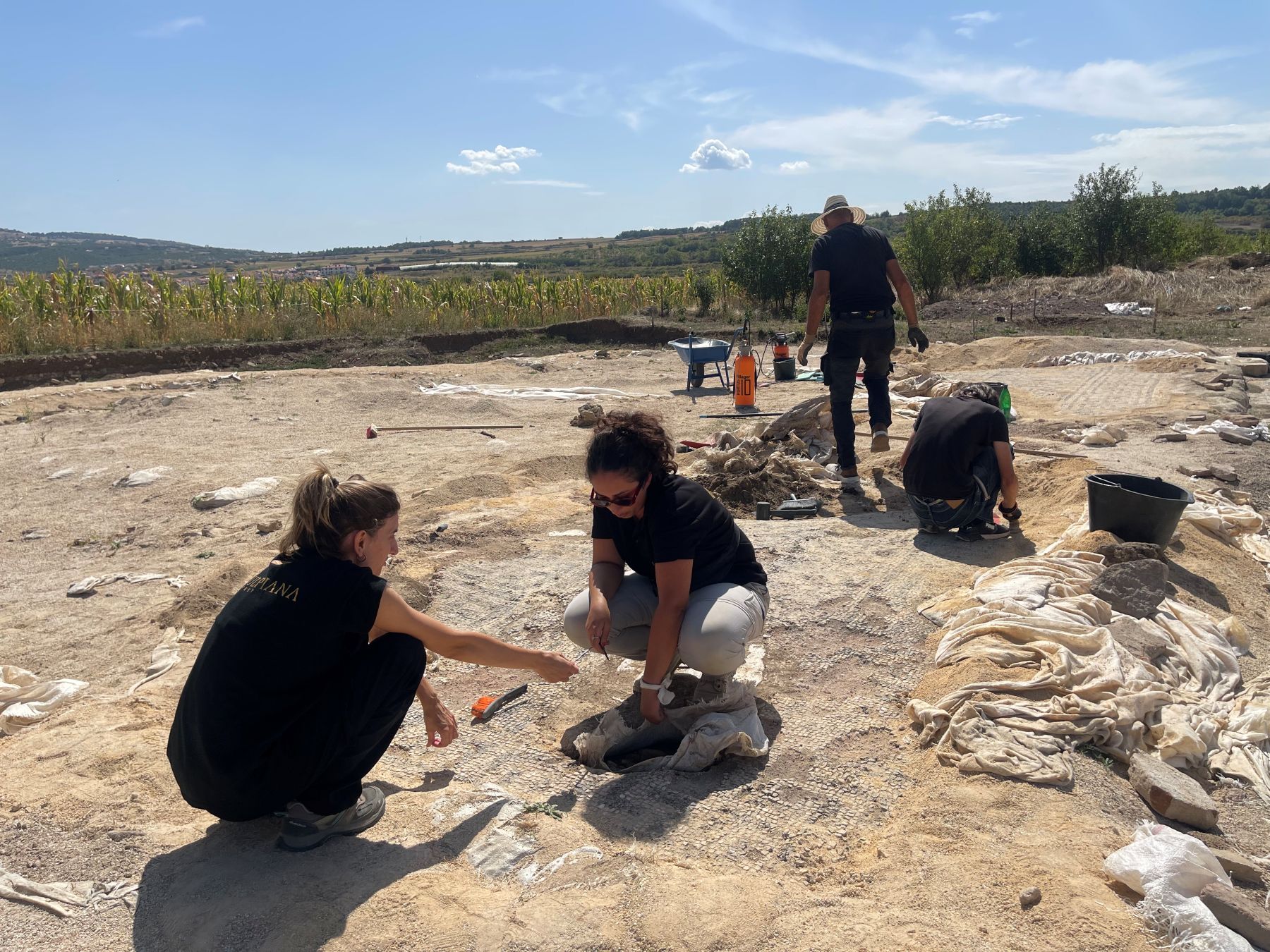
Excavations at Ulpiana Archeological Park. Photo: BIRN/Ardita Zeqiri
Land, law, and local life
While the scientific results are impressive, the excavation is not without obstacles. Disputes over land have slowed the project, despite the government expropriating 21 hectares for the archeological park exploration in 2024, with plans to further expand the area.
“People show up with lawyers,” Berisha said, frustrated by compensation disputes and lack of municipal support.
“We’ve also asked the municipality [of Gracanica, where the excavations are taking place] to remove construction waste [which had been discarded] all over, but nothing.”
By law, owners are entitled to financial compensation, typically based on market value, and must be paid within 2 years of the final expropriation decision and after submitting a compensation request.

Burial Grounds at Ulpiana Archeological Park. Photo: BIRN/Ardita Zeqiri
Some farmers have unknowingly damaged underground remains by planting trees or crops. Yet, curiosity sometimes outweighs resistance.
Goddard recalled that once “one farmer planting corn beside the site halted when we told him not to go further, he asked me, ‘oh, that’s interesting-what is it?’”
To prevent further harm, exposed remains are protected with layers of cotton and sand.
Meanwhile, the team is preparing a master plan to consolidate structures, expand visitor facilities, and run educational programmes—from summer schools to guided tours.
“We’re not just unearthing everything,” Bërvabatoci stressed. “We’re protecting, preserving, and documenting. Archaeology isn’t only about digging up the past—it’s about leaving something to future generations.”
Berisha emphasised that they intend to expand the protected zone beyond 23 hectares, noting the city’s full size and potential.