


Electricity theft is costing Kosovo tens of millions of euros every year, while the burden for these losses is passed on to ordinary consumers through their electricity bills.
In August, inspectors working for Kosovo’s energy distributor, KEDS, cut the power to a business in Gjakova, but pumps, refrigerators, and even coffee machines kept working despite the outage.
Usually, when machinery keeps running after an electrical shutdown, it indicates illegal electricity lines and potential electricity theft. The business in Gjakova was flagged after discrepancies emerged between billed consumption and actual usage on the digital monitoring system.
Inspectors found a parallel supply line that bypassed the official metre.
Thousands of citizens in Kosovo face criminal proceedings every year for stealing electricity. Data from the Energy Regulatory Office, ERO, show that commercial losses, caused mainly by electricity theft, account for nearly 5 percent of annual consumption. In monetary terms, that’s close to 30 million euros.
Kosovo’s energy distributor, KEDS, has intensified inspections because of the tens of millions of euros a year that are stolen via illegal grid connections by households and businesses. The crew of BIRN and Internews Kosova’s TV programme Kallxo Përnime accompanied the teams uncovering theft in Prishtina, Gjakova, and Prizren.
Overall, technical and commercial losses combined cost Kosovo nearly 90 million euros annually. These costs are not absorbed by the power company, they are distributed across all consumers and are driving up household bills.
Electrical engineering professor Vezir Rexhepi notes that while technical losses are inevitable to some degree, commercial losses are entirely preventable.
“European standards allow for a certain percentage of technical loss—it’s part of the system—but theft should be zero. Unfortunately, here it remains around five percent,” Rexhepi said.
“Beyond financial damage, illegal connections are extremely dangerous, often leading to fires, material damage, and even fatalities,” he explained.
Widespread crime compensated by innocent citizens
In a remote location in the mountains surrounding Gjakova, the Kallxo Përnime crew accompanied KEDS inspectors as they cut the electricity to a household and livestock stable which were drawing power even though their metre had been disconnected.
The homeowner had set up an illegal line, essentially taking 100 percent of his electricity for free.
In just the first nine months of 2025, the company conducted more than 55,000 checks, uncovering around 2,500 cases of illegal use. Prishtina, the capital of Kosovo, tops the list, followed by Mitrovica and Peja. Gjilan has the fewest recorded thefts.
In one instance, the monitoring system in a neighborhood in Prizren—known for its large businesses, including wedding halls—reported major energy losses in the area. Inspectors confirmed that one of the halls was fully powered despite the electricity being cut. A parallel cable had been connected directly to a nearby utility pole.
Further checks in Prizren uncovered irregularities in a hotel, where one phase of electricity had been rerouted to bypass the metre, meaning that about 33 percent of the hotel’s consumption was not being recorded.
“We work on two fronts: investing in infrastructure and intensifying inspections,” KEDS spokesperson Lulzim Krasniqi told Kallxo Përnime.
“Since January, we’ve filed 1,000 criminal complaints. About 250 cases have already been resolved in court, but many proceedings are slow. Our responsibility ends when we hand the files over to the judiciary,” he added.
The penalties for electricity theft can be severe, with sentences of up to three years in prison.
Lawyer Qendrim Arifi explained that while small-scale thefts often result in fines or short-term sentences, larger-scale cases—especially those involving businesses—should carry harsher penalties.
“It’s not the same to steal 100 euros worth of power as it is to steal 100,000,” Arifi argued. “The law needs to reflect that difference.”
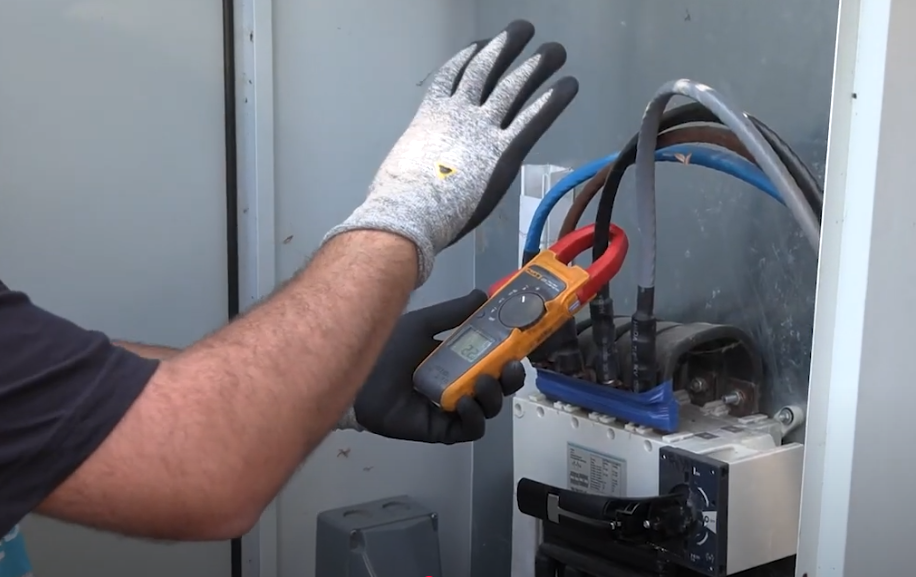
KEDS teams inspecting businesses for electricity theft. Photo: BIRN
The law penalises individuals who misuse electrical energy. In addition to the Recovery of Losses, offenders may also face criminal penalties, including legal prosecution and disconnection from the electricity distribution network. The Criminal Code of the Republic of Kosovo categorises the theft of electrical energy within the “theft of services,” punishable by a fine or imprisonment of up to three years.
According to Petrit Pepaj of ERO, losses are divided into two categories: technical and commercial.
Professor Rexhepi argues that ERO must enforce stricter deadlines for investment infrastructure and tighter inspection of theft cases.
“Technical losses stem from outdated infrastructure, overloaded grids, and a lack of investment. Commercial losses are the result of theft and metre manipulation.”
He emphasised that stolen electricity carries a very high financial cost, which is neither billed nor collected but distributed across consumers.
“That energy is not billed and not collected. It is then distributed across all consumers, meaning that all of us end up paying for the electricity that is lost,” he explained.
He also clarified that KEDS is responsible for technical losses, while investigating commercial losses requires institutional coordination.