


Membership of Europe’s Single Euro Payment Area could save individuals and businesses in Kosovo millions of euros every year, but a court review and a prolonged political impasse mean no one knows when the country might join.
Political shenanigans since the last general election in February have also slammed the brakes on parliamentary business; a new election is likely, but even then it remains unclear when the country will have a functioning government and parliament capable of implementing the Court’s position once it comes.
The Central Bank told BIRN that, “because the three relevant laws have not entered into force due to constitutional review, the final application could not be submitted, while we have received informal comments on the pre-application process”.
Legal expert Urim Vokshi, who was contracted as an external expert by the Commission to evaluate Kosovo alignment with the legal framework to join SEPA, wrote on Facebook: “Waiting for the Constitutional Court’s decision is a prerequisite for continuing this process further.”
He specified that the laws in question are: Law 08/L-304 on Banks, Law 08/L-328 on Payment Services and Law 08/L-333 on Supplementing/Amending the Law on the Prevention of Money Laundering and Financing of Terrorism.
Significant potential savings
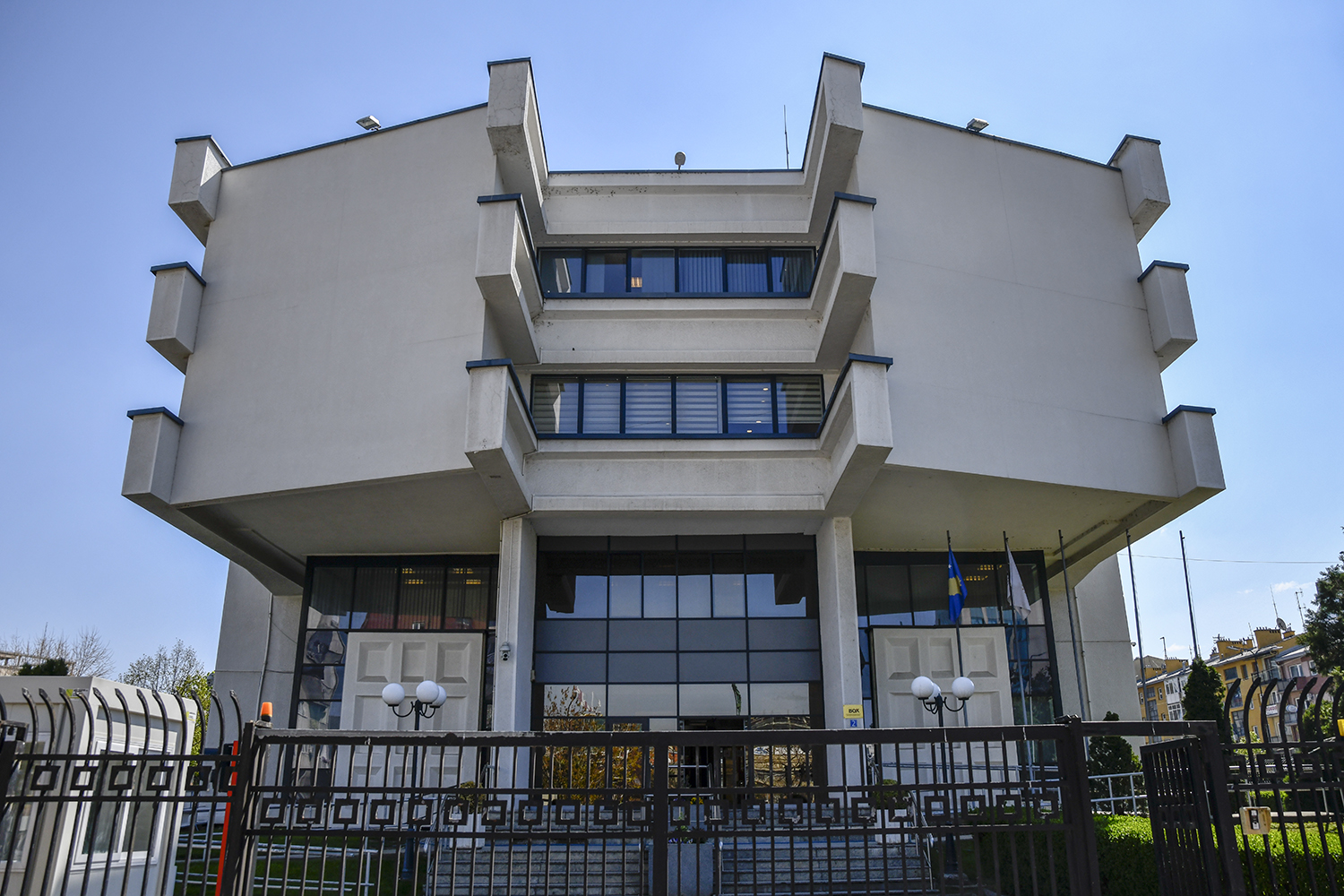
Central Bank of Kosovo. Photo: Atdhe Mulla.
In its statement to BIRN, the Central Bank cited experts from the German Economic Team, GET, an advisory body financed by the German Federal Ministry of Economics and Energy, as saying individuals and businesses in Kosovo stand to save “around 55 million euros annually” when Kosovo joins SEPA.
“The broader benefits mean fast, effective, secure payments, which impact trade, foreign direct investment, the diaspora, as well as the entire economic cycle,” the bank said.
GET itself has specified that SEPA inclusion would save 26 million euros in remittance costs and 29 million euros in foreign trade payment costs per year.
“Kosovar citizens, businesses, and the diaspora will benefit from these savings,” it said. “In addition to this, SEPA membership may increase competition among domestic payment service providers which may result in lower domestic transfer fees, encouraging non-cash payment methods. This would reduce retail transaction costs, enhance transparency and decrease the informal economy.”
“Lastly, obtaining SEPA membership would positively affect the absorption of EU funds and strengthen Kosovo’s EU accession prospects in the long run, since it is indicated as one of the priority areas in the new EU Growth Plan.”
Lulzim Rafuna, head of the Kosovo Chamber of Commerce, gave an example: “We have very good fashion designers in Kosovo, who have also dressed international stars, and they have trouble accepting international payments,” he told BIRN.
“They are forced to make multiple combinations and part of their work that would be translated into profit goes to fees to accept such payments in our country, because we are not part of this international organisation.”
GET noted that Serbia “plans to apply soon” and that Bosnia and Herzegovina still has legislative work to do.
The European Payments Council, which estimates whether a country can join SEPA, declined to comment.