


Kosovo’s tradition of interfaith coexistence has increasingly become the target of coordinated disinformation campaigns.
Disinformation campaigns targeting interfaith harmony in Kosovo seek to destabilise society, undermine democratic institutions, and divide interethnic coexistence.
Investigations by Kosovo’s Special Prosecution and counterterrorism institutions show that radical religious ideologies have been exploited to fuel interfaith and interethnic tensions, particularly through online platforms.
In the online sphere, clashes between Sunni and Shia groups promote narratives of division within the religion itself, while certain radical movements linked with the Orthodox Church have been associated with incidents that were later framed as interethnic conflict.
The Special Prosecution of Kosovo has filed dozens of indictments for hate crimes, primarily crimes linked to these extreme religious ideologies. Dozens of ISIS supporters have been arrested on terrorism charges, while one indictment for incitement to hatred was documented against a supporter of the Shia movement.
The Special Prosecution has also charged Orthodox Albanians with inciting hatred against Serbian Orthodox believers.
Despite these charges and prosecutions, the financial backers of radical and hate-driven online content largely remain unidentified.
Religious disinformation incites fear
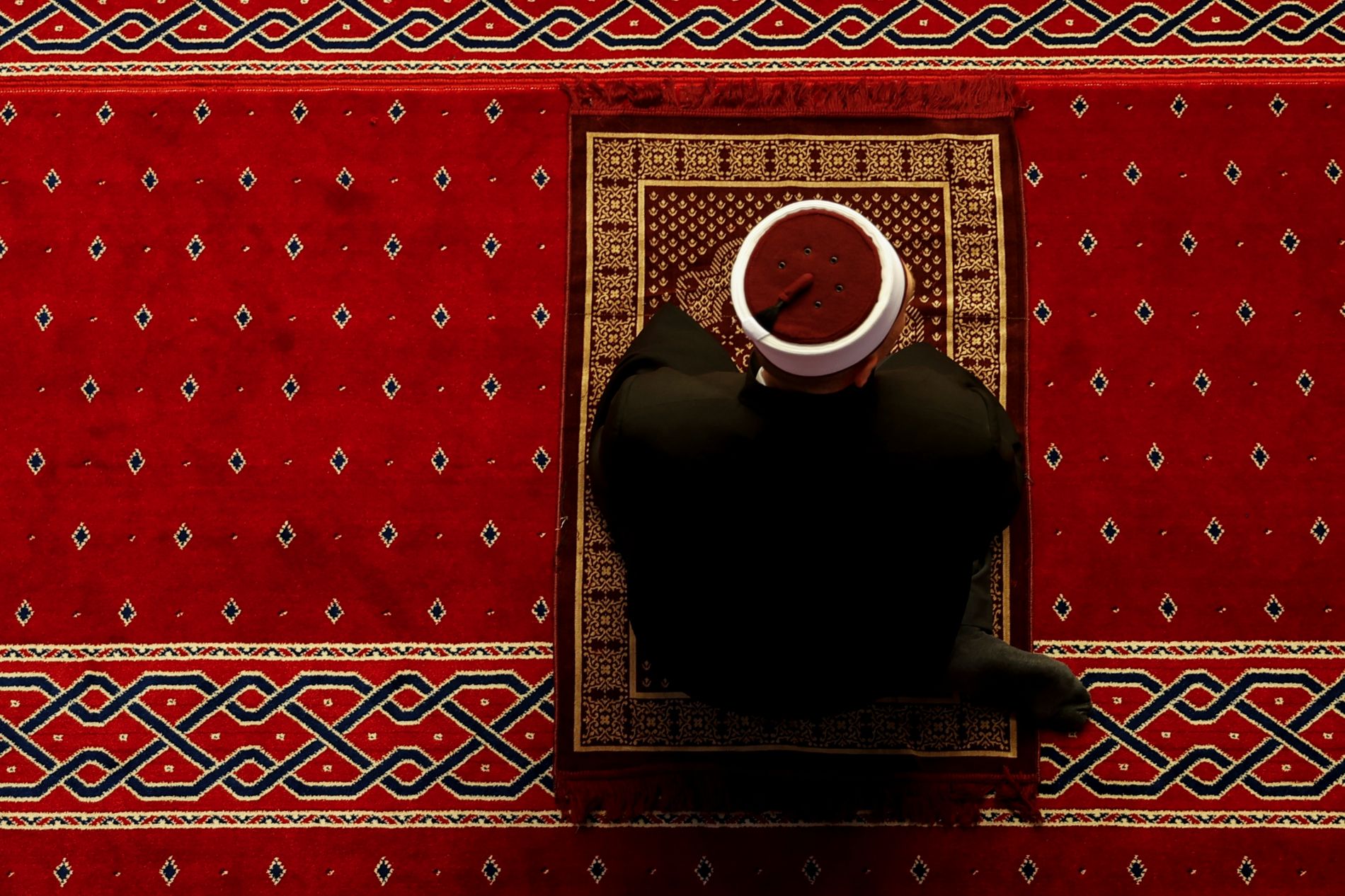
An imam attends prayers at the Grand Mosque in Prishtina, Kosovo on May 24, 2020. Photo: EPA/Valdrin Xhemaj
Disinformation campaigns frequently use religion to provoke fear and outrage. In a multi-ethnic and multi-religious society like Kosovo, even incidents rooted in ethnic or political disputes are reframed as religious conflicts, which deepens social divisions and erodes trust between communities.
One of the most persistent false narratives is the claim that Kosovo’s institutions are engaged in a systematic campaign against the Serbian Orthodox Church.
Russian state-linked media and Serbian officials routinely politicise minor incidents near Orthodox religious sites.
For example, a municipal project in Prizren to build a pedestrian path near an Orthodox church was portrayed by Serbian officials as an attempt by Prime Minister Albin Kurti to “destroy everything Serbian.”
This claim was amplified by Kremlin-controlled media, including the Pravda network, which publishes in dozens of languages. The outlet also reposted a claim by Russian Foreign Ministry spokesperson Maria Zakharova, alleging that Kosovo’s government was “trying to rewrite history by allowing provocations against Serbian shrines.”
False reports have also claimed that, “90 percent of Orthodox cemeteries in Kosovo have been destroyed.” While cases of vandalism do occur and are investigated by Kosovo Police, such figures are entirely unsupported by evidence.
The terrorist attack in Banjska on 24 September 2023, which killed Kosovo Police Officer Afrim Bunjaku, shows how violence is manipulated for propaganda purposes. Prime Minister Kurti stated that the attackers intended to provoke a police response at the Banjska Monastery in order to present the attack as a religious confrontation.
“They wanted our police to enter the Banjska Monastery so they could spread photos worldwide showing bullets in the monastery walls,” Kurti said.
The attack was later claimed by Milan Radoicic, a former senior figure in the Srpska Lista (the Belgrade backed party in Kosovo). Despite the INTERPOL warrant out for his arrest, Radoicic remains at large. Kosovo’s Special Prosecution has successfully indicted 45 individuals for terrorism, financing terrorism, and money laundering related to the attack.
Targeting Muslims, Catholics, and national identity
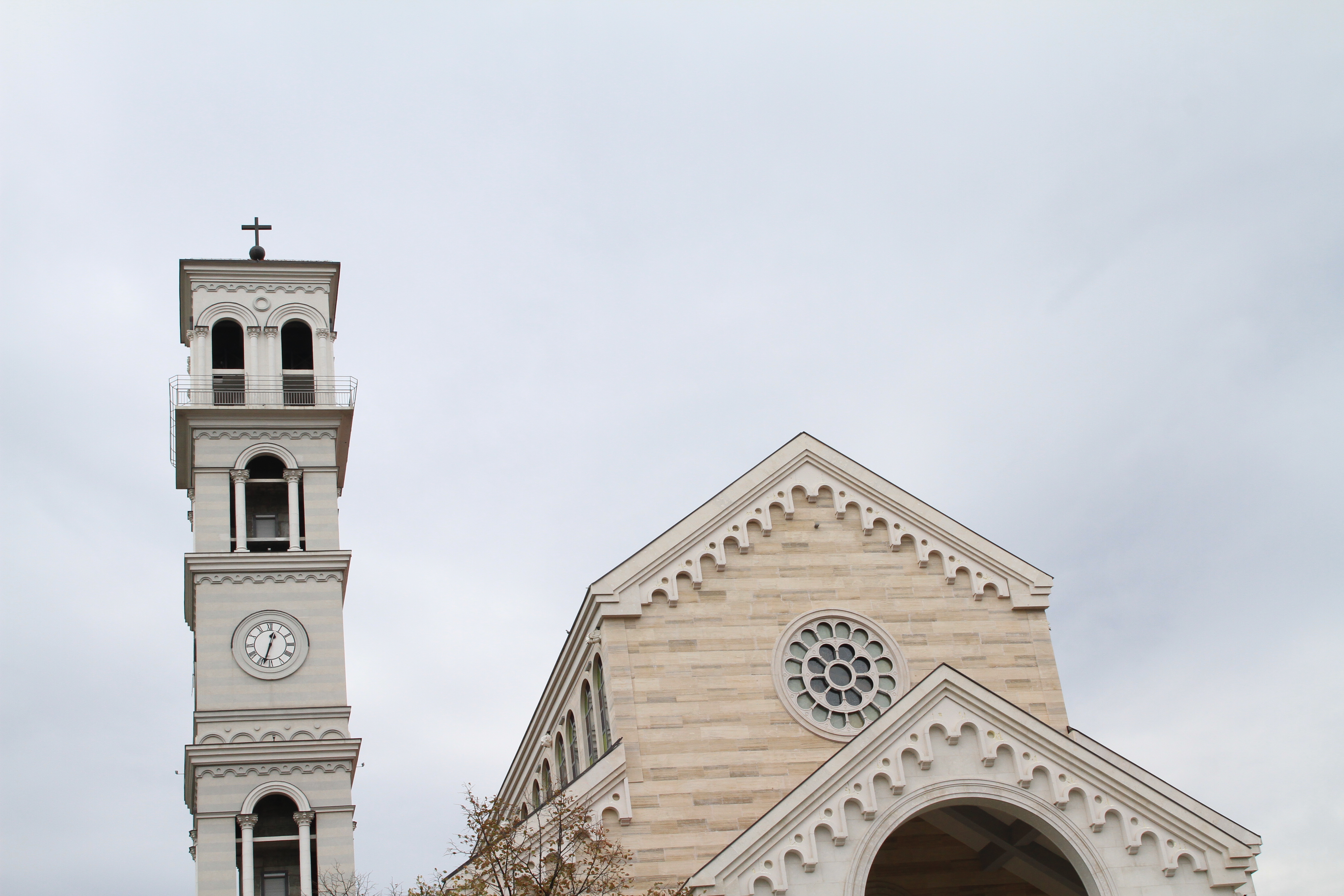
Mother Teresa Cathedral in Prishtina. Photo: BIRN/ Urim Krasniqi.
Disinformation does not target only one religious group. Muslims and Catholics alike have been portrayed as enemies of the state or as tools of foreign agendas.
Online posts have mocked Muslim clerics, misrepresented Islamic practices, and spread false claims about women wearing headscarves for financial gain.
Catholic communities have been falsely labeled as “Serbian” or accused of conspiring against Kosovo, with some pages even linking the Banjska attack to the Catholic Church.
Historical figures have also been dragged into these disinformation campaigns. Gjergj Kastrioti–Skanderbeu, a unifying national symbol, has been falsely portrayed as Russian.
Historian Bedri Muhadri refuted this claim, stating that: “All the historical evidence and many renowned historians confirm that Skanderbeg was Albanian.”
Following Russia’s invasion of Ukraine, disinformation networks in the region sought to rehabilitate the image of Russian President Vladimir Putin by portraying him as a defender of religious values, particularly Islam.
Viral posts falsely claimed that Putin had passed laws protecting the Quran and punishing insults against the Prophet Muhammad, claims debunked by the Kallxo.com fact checking platform Krypometri.
A longstanding problem
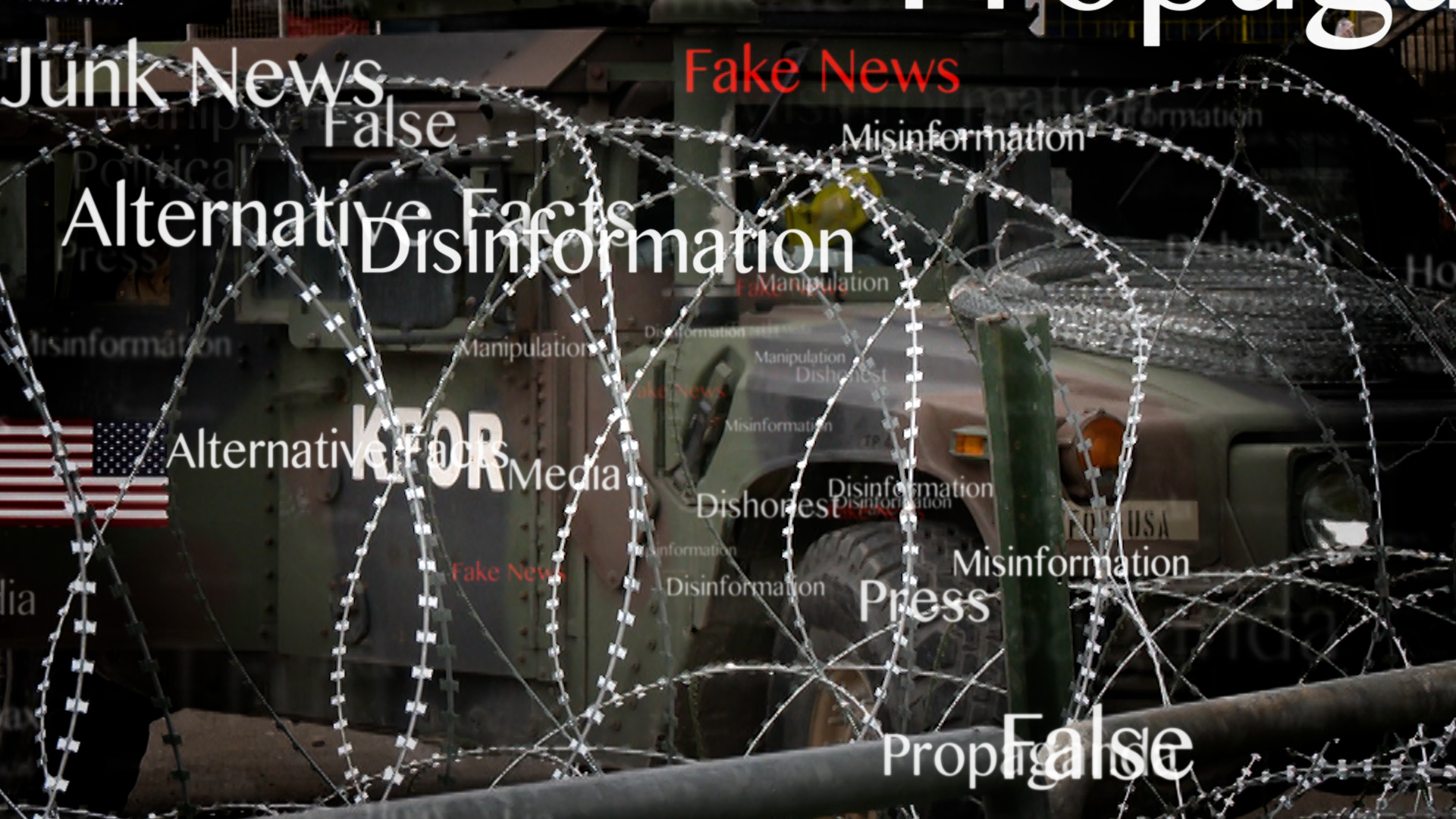
Illustration: BIRN
Disinformation linked to religious and political extremism is not new. A 2017 report by the Kosovo Center for Security Studies, KCSS, documented how extremist groups used social media to promote jihad, glorify ISIS, and portray Kosovo’s democratic institutions as anti-Islamic. It also documented extremist activity across social networks in Kosovo, Albania, and North Macedonia.
Interviews with returnees from Syria and Iraq revealed that social media played a key role in radicalisation and recruitment.
According to prosecution files, individuals accused of ISIS involvement used social media to spread propaganda and organize travel to Syria.
Their discourse targeted political parties, officials of the Islamic Community of Kosovo, BIK, and democratic participation, which they claimed contradicts Islamic principles.
They also promoted ideas like refusing to pay taxes to a secular state, preventing children from attending public schools, and prohibiting work in state institutions such as the Kosovo Police or Security Force
A BIRN study, conducted between May 2023 and May 2024, analysing 193,000 online media articles found that religious issues were instrumentalised during the 9 February 2025 elections, particularly around LGBTIQ+ rights, family values, and headscarves.
Untraced funding and destabilisation efforts
A Kallxo.com documentary titled ‘Disinformation that kills’ revealed that Kosovo authorities have not fully traced the financing of disinformation platforms. While several Serbian intelligence, BIA, agents were arrested, no direct financial links to influencers have been uncovered.
A Special Prosecution file revealed a 2018 plan to destabilise Kosovo, orchestrated by Abu Ahmed, ISIS’s intelligence chief. The plan aimed to provoke interethnic tensions by attacking Serbian Orthodox churches and nightclubs in Serb-majority areas on Vidovdan—the Serbian national and religious holiday commemorating the Battle of Kosovo of 1389.
Funding reportedly came from Kyrgyzstan and Russia, with 9,000 euros allocated for explosives sourced from Germany. Kosovo ISIS members Lavdrim Muhaxheri and Ridvan Haqifi were also involved. Over 400 Kosovars joined ISIS following prolonged indoctrination.
Experts warn that even limited exposure to disinformation can have long-term social consequences.
Women and children who returned from ISIS-held territories continue to face stigma and discrimination.
Security expert Rudina Jakupi noted that, although religious disinformation affected a relatively small circle, its impact was significant.
“It peaked before and during the war in Syria and was based on fake news, conspiracy theories, and religious narratives aimed at portraying Kosovo’s democratic system as anti-Islamic.”
She added that these groups share ideological ground with Putin, particularly in their anti-Western, anti-EU, anti-US, and anti-LGBTIQ+ stances.
Ekrem Avdiu, Chief Imam of Mitrovica, highlighted the lasting social damage: “Women who returned from Syria still struggle to integrate. Their children are bullied today because of misinformation and hasty judgments.”
Former MP Besa Ismajli emphasised the persistent disinformation targeting religious women.
“For years, there have been claims that women are paid to wear headscarves. This has never been properly investigated and this discrimination disproportionately targets women and girls.”
This material was produced with the support of the British Embassy in Kosovo through funding from the UK Government; however, the views expressed do not necessarily reflect the official policies of the UK Government.