


Kosovo has emerged as a critical transit point along the Balkan route, where organised smuggling networks exploit legal loopholes, weak regional coordination, and vulnerable migrants to move thousands toward Western Europe.
An abandoned track that cuts across northern Kosovo, through Leposavic, has become one of the most discreet crossings between Kosovo and Serbia, where irregular migrants use the railway line and a tunnel to pass from one country into the other, often undetected.
Just a short distance away are Kosovo Police special units and the official Jarinje border crossing. Yet, in between lies the unmonitored stretch of the railway that has effectively turned into an informal transit route.
In December 2025, the BIRN team filmed groups of migrants making the crossing; this footage was shown in the documentary “Smuggling without Borders,” which was screened on Friday. The documentary uncovers how smugglers use routes in Kosovo to illegally bring migrants through the Balkans and further into European Union countries and/or the United Kingdom.
Law enforcement officials say their hands are tied. Kosovo and Serbia lack operational police cooperation, making real-time coordination nearly impossible and turning the border into a free passage for migrants.
“We do our job within our territory,” says border investigator Avdyl Sekiraqa. “But without cooperation between the two states, it is impossible to fight this activity effectively as we have no real time data.”
Under Kosovo law, migrants are not committing a criminal offense simply by approaching the border through unofficial routes. The violation occurs only once they cross into Serbian territory. “By then, it is no longer within Kosovo’s jurisdiction,” he added.
The result is a legal and operational vacuum—one that organised criminal networks know how to exploit.
Kosovo as a transit hub
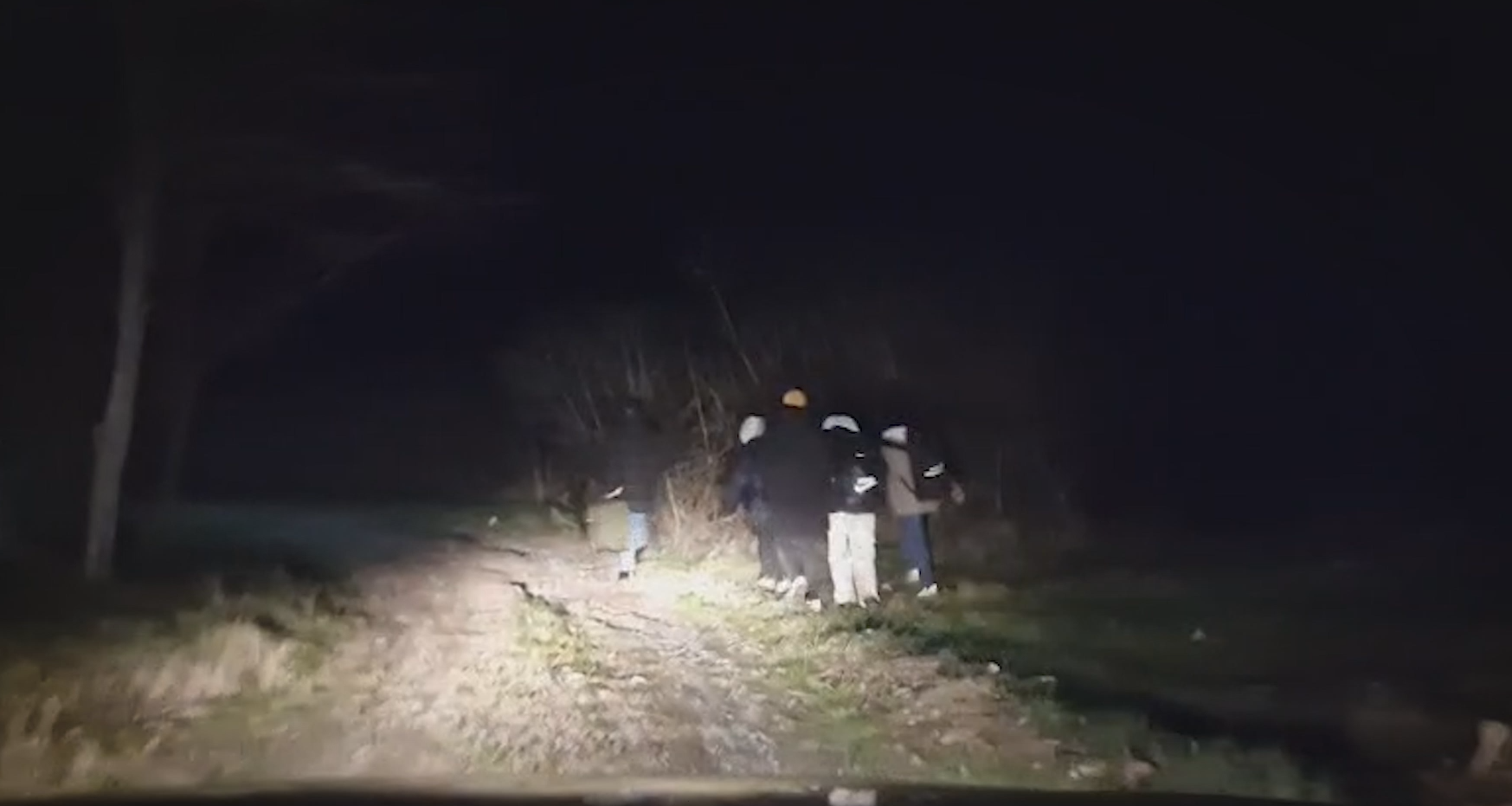
Migrants crossing from Kosovo into Serbia through illegal routes. Photo: BIRN
Kosovo has increasingly become a transit country along the Balkan route—the migratory corridor that stretches from the Middle East and Asia toward Western Europe.
Migrants arriving from Afghanistan, Syria, Bangladesh, Jordan, and elsewhere reach Kosovo either through irregular land routes—crossing multiple borders before entering the country—or legally, by plane using visas.
In 2025 alone, more than 6,100 Jordanian nationals entered Kosovo legally through Prishtina International Airport. Authorities estimate that at least 35 percent did not return home. Many are believed to have continued their journey toward the European Union through irregular channels.
A similar pattern emerged with work visas. Between 2023 and 2024, Kosovo issued more than 1,400 work visas to Bangladeshi nationals. According to law enforcement assessments, most of them failed to return.
“They came with work visas, misusing the purpose of their entry. After an assessment and analysis was conducted, it was noted that in 2024 around 75 percent of these foreign nationals did not return,” Sekiraqa said.
In 2025 alone, more than 1,000 asylum seekers left Kosovo before their legal procedures were completed—most disappearing along irregular routes. “Often we have no clear record of how or where they exited,” Sekiraqa added.
Investigations and interviews with migrants suggest that crossings are rarely spontaneous. Transportation is arranged in advance, usually taxis or vans coordinated by intermediaries. Migrants arrive in Kosovo mostly from North Macedonia, and Albania
Refugee Smuggling Networks Along Kosovo-Albania Border Profit Millions Using Blackmail and Violence
Near the railway bridge in Leposavic, evidence of constant movement is everywhere. A tunnel close to the crossing is littered with food packaging, clothing, and discarded documents issued by Kosovo authorities—papers many migrants abandon before attempting to cross into Serbia.
At night, the area becomes more active. In the village of Jarinje, migrants move through side roads and wooded paths, often guided remotely by handlers who provide instructions over encrypted messaging apps.
During one patrol, the BIRN team encountered a Jordanian family who had lost their way. They were being directed by phone, step by step, toward what they believed was a safe passage into Serbia.
Once across the border, migrants are typically received by associates of the same criminal networks and transported onward, often toward Subotica near the Hungarian border, or toward the border between Bosnia and Herzegovina and Croatia.
At the mercy of violent and criminal groups
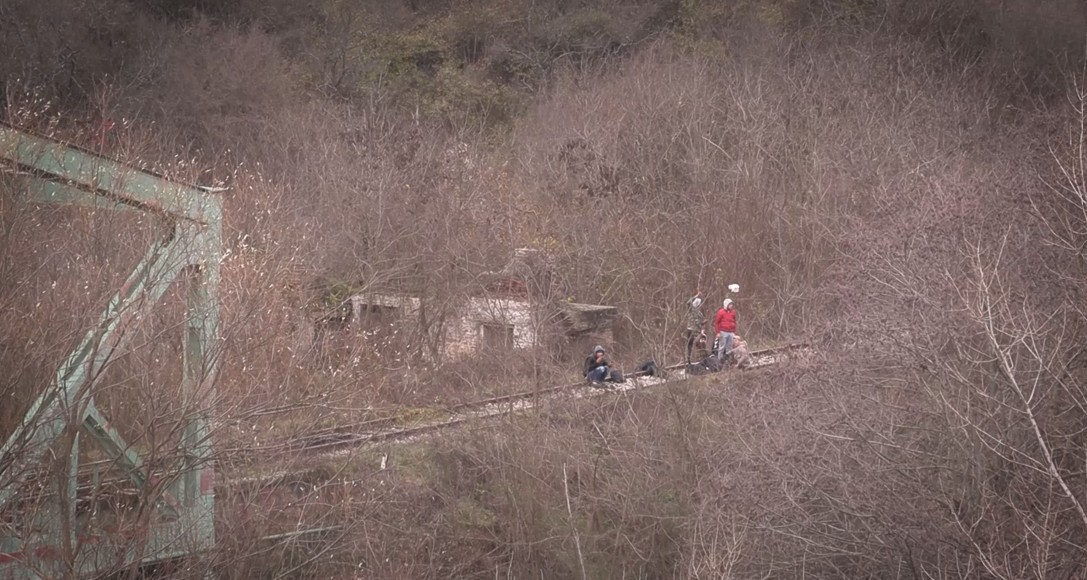
Migrants waiting at the abandoned railway near Kosovo-Serbia northern border. Photo: BIRN
Authorities describe the smuggling groups operating in Kosovo as highly organised and increasingly dangerous.
There has been at least one case of a migrant being killed by smugglers in a border area with Albania.
“These groups are extremely dangerous,” Sekiraqa says. “We suspect murders have occurred during crossings in remote mountainous areas. Migrants are completely at their mercy.”
Petrit Kryeziu, head Prosecutor of the Basic Prosecution of Prizren, which covers a large part of the border with Albania, confirmed that in 2022, a group operating near the Vërmica border crossing “has been detained and is under investigation for murder.”
UK Sanctions Kosovo Nationals to Combat Western Balkans Smuggling Routes
BIRN secured evidence retrieved from a mobile phone seized from a Syrian that showed armed individuals beating migrants, and carrying Kalashnikov rifles and pistols while patrolling border zones.
According to investigators, some groups operate along ethnic lines—Syrian, Moroccan, Afghan, and Jordanian networks—while relying on local facilitators who secure safe routes and logistical support.
Law enforcement also suspects that some migrants are coerced into transporting weapons or narcotics across borders.
“They use them to transport weapons across the border, and to carry various narcotics during border crossings by filling their bags,” Sekiraqa added.
The lucrative smuggling fees range from 2,500 to 10,000 euros per person, depending on the destination.
“Communication between network members is conducted through encrypted applications and social media platforms,” Sekiraqa added, while noting that routes, prices, and even recruitment of collaborators are sometimes facilitated through encrypted applications.