

In Kosovo’s public discourse, early pregnancies are frequently portrayed as a phenomenon specific to certain communities, however, official data and experts dispel this widespread notion.
Sensational media headlines, like “a 14-year-old girl became a mother,” often highlight—explicitly or implicitly—the ethnic background of those involved. On social media, the issue is regularly described as a “cultural or ethnic tradition” of the Roma, Ashkali, and Egyptian minority communities in Kosovo.
Yet, official data tells a different story.
Statistics do not categorise early pregnancies by ethnicity, nor do they support the claim that the phenomenon belongs to one community alone. What is emphasised more is complex social reality shaped by poverty, inequality, and limited access to education and services.
According to the Kosovo Agency of Statistics, KAS, between January 1, 2011 and April 4, 2024, 517 births were registered to mothers aged 15–19 in Kosovo. The data does not include ethnic breakdowns.
The University Clinical Center of Kosovo, UCCK, reports that in 2024, 36 patients under 18 gave birth at the Clinic of Obstetrics and Gynecology, in 2025, 29 such cases were recorded. Again, no ethnic categorisation is provided.
Similarly, the Kosovo Police recorded 13 cases in 2025 and two cases in 2026 involving extramarital unions with persons under the age of sixteen. These records also do not specify ethnicity.
Despite the absence of ethnic data, public perception often assigns the issue a clear ethnic identity.
A social rather than an ethnic issue
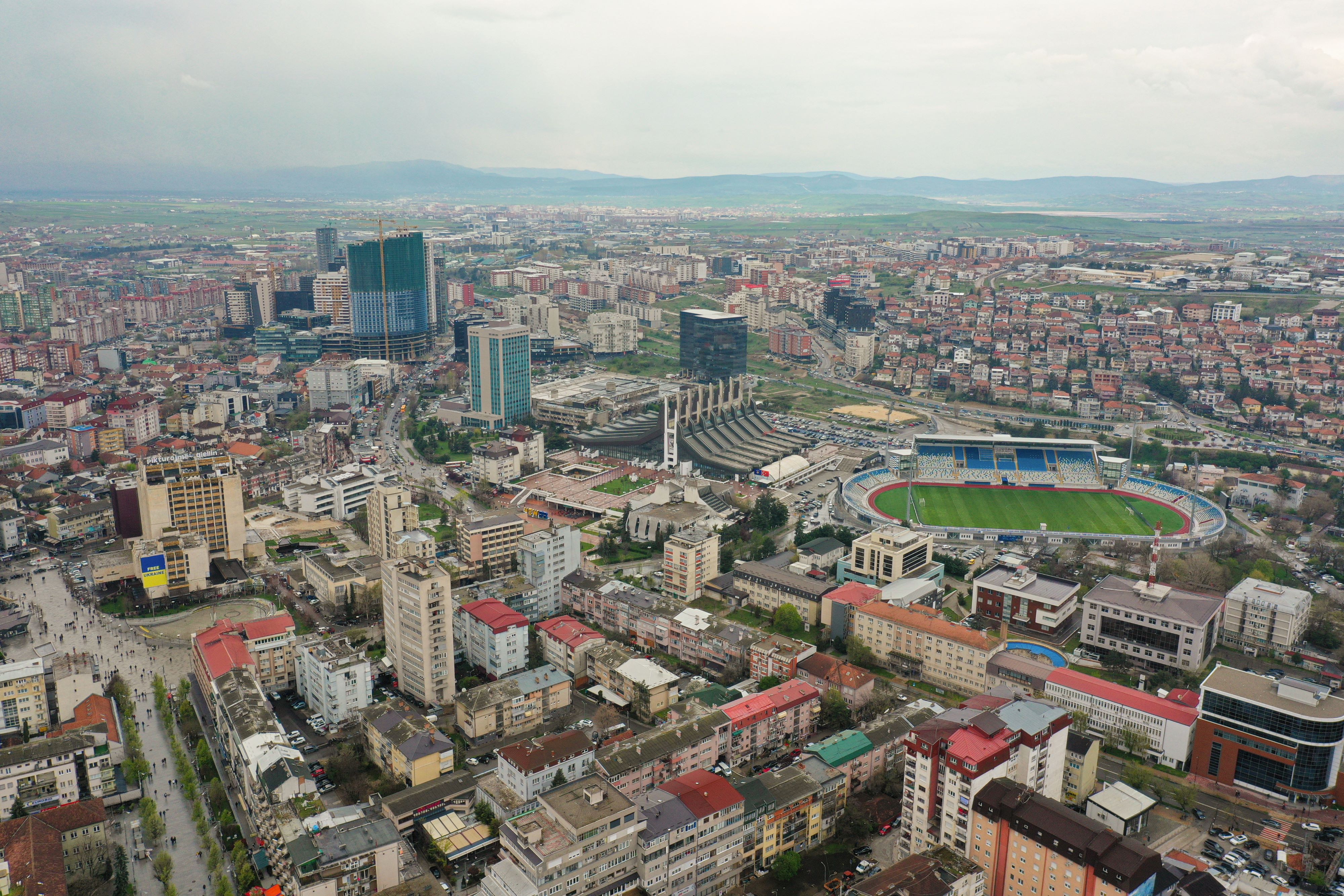
Aerial view of Prishtina. Photo: BIRN/Denis Sllovinja
When a social issue is repeatedly linked to a specific group, it gradually becomes perceived as a defining characteristic- thus, contributing to stereotyping.
Amanda Toska from the NGO Voice of Roma, Ashkali, and Egyptian, VoRAE, in Kosovo argues that media framing has contributed to a distorted public image.
“The narrative is often centered on stereotypes and does not reflect the full reality. The media have presented it as a problem exclusive to these communities, creating the impression that it is more widespread there, even though this is not accurate nationwide.”
Similar reports of minor girls becoming pregnant or mothers have repeatedly appeared in news media outlets, emphasising ethnic and cultural backgrounds and targeting the aforementioned communities.
In June 2025, the organisation published a report titled “National Survey on Early Marriages among the Roma, Ashkali, and Egyptian Communities in Kosovo,” which emphasises that early marriages and pregnancies are not limited to these communities, though socio-economic vulnerability may increase exposure to such risks.
According to Toska, mentioning ethnic affiliation even when it is not relevant to the news creates a chain reaction: stigmatisation, public shaming, and a loss of self-confidence among young girls.
“Many girls feel restricted and prejudged. This directly affects their ambitions for education and for their future,” she says.
Lendrit Qeli, from the organisation Prosperiteti, stresses that the issue is rooted in socio-economic inequality rather than ethnicity. He stressed that early marriages have always been reported in different areas in Kosovo, “but it does not affect a certain group.”
“It is automatically linked to one community and turned into an ethnic issue, when in fact it is about poverty, lack of education, limited healthcare access, and economic insecurity.” he says.
He adds that when family pressure and a lack of economic prospects are added to these factors, “early decisions about marriage or pregnancy become more likely, regardless of ethnic background.”
Sociologist Genc Xerxa places this phenomenon within the broader context of social marginalisation. He argues that marginalised communities are often labeled and mythologised by the majority, with certain behaviors portrayed as their “natural” traits.
The European Commission, in its 2025 Progress Report, highlights persistent challenges faced by Roma, Ashkali, and Egyptian communities, including limited access to quality education, high dropout rates, early and forced marriages, and barriers to employment and public representation.
Edi Gusia from the Gender Equality Agency within the Prime Minister’s Office says that employment for girls and women from Roma, Ashkali, and Egyptian communities remains a persistent problem.
“The numbers are very low. Looking only at the public administration as a whole, there are approximately only 140 individuals from these communities employed,” Gusia explains.
A report published by the OSCE Mission in Kosovo in 2024 concludes that around 400 children dropped out of compulsory education between 2020 and 2023, with a significant proportion coming from these three communities.
Data from UNICEF indicates that approximately 84% of children from these communities attend primary school, compared to 96% nationally. Only 31% complete upper secondary education, compared to 87% of the general population.
The role of media and gendered disinformation
Data show that the phenomenon of early pregnancies is not increasing dramatically and has even declined in some years. However, experts note that these positive stories rarely receive the same attention as sensational headlines.
University professor Remzie Shahini Hoxhaj says that gender disinformation is a subtle form of manipulation, which operates through “narratives that portray women as less professional than men, reinforce patriarchal norms, and shift attention toward women’s private lives and physical appearance rather than their work or achievements.”
“This implies the deliberate spread of false or manipulated content aimed at reinforcing gender stereotypes,” she explains, while adding that, “by manipulating the context, it ultimately leads to the demotivation and delegitimisation of women’s participation in society.”
Shahini Hoxhaj says she frequently encounters such reporting: “Media must respect the Code of Ethics and base their reporting on applicable norms and regulations. Otherwise, they may face sanctions or civil lawsuits filed individually,” she adds.
Ardita Zejnullahu, Executive Director of the Association of Independent Electronic Media of Kosovo, stresses that media outlets have a professional responsibility to avoid stigmatisation, “especially when covering sensitive issues related to gender, ethnicity, poverty, disability, or sexual orientation.”
She adds that the “narrative linking girls from Roma, Ashkali, and Egyptian communities to early pregnancies appears more frequently in public comments and on social media.”
“Sometimes it is even used in political debates as an argument on social or educational issues,” she noted.
While Xerxa adds that, “media perception is often superficial and misses the core of the real issue, which plays a crucial role in shaping public opinion.”
Based on data from Kosovo’s 2025 Population Census, 91.57% of the population identifies as Albanian. Roma make up 0.56%, Ashkali 1.05%, and Egyptians 0.68% of the registered population.