


The film by Dea Gjinovci, a Swiss director of Kosovo origin, tells the story of a village which endured a lot in its recent past. The film will be screened at Prizren’s DokuFest on August 13.
Dea Gjinovci, a young Swiss-Albanian director, and her Kosovo-Swiss crew have landed in Makermal, an idyllic village in central Kosovo, where her father, Asllan Gjinovci, was born in 1949. She is strolling through the village looking for actors who will re-enact scenes of her father’s childhood. When a villager, Hamid Gjinovci, approaches her she asks him if “he and his bride would accept a part in our movie.”
“You mean me and my old lady?” says the villager, “Of course we will help”.
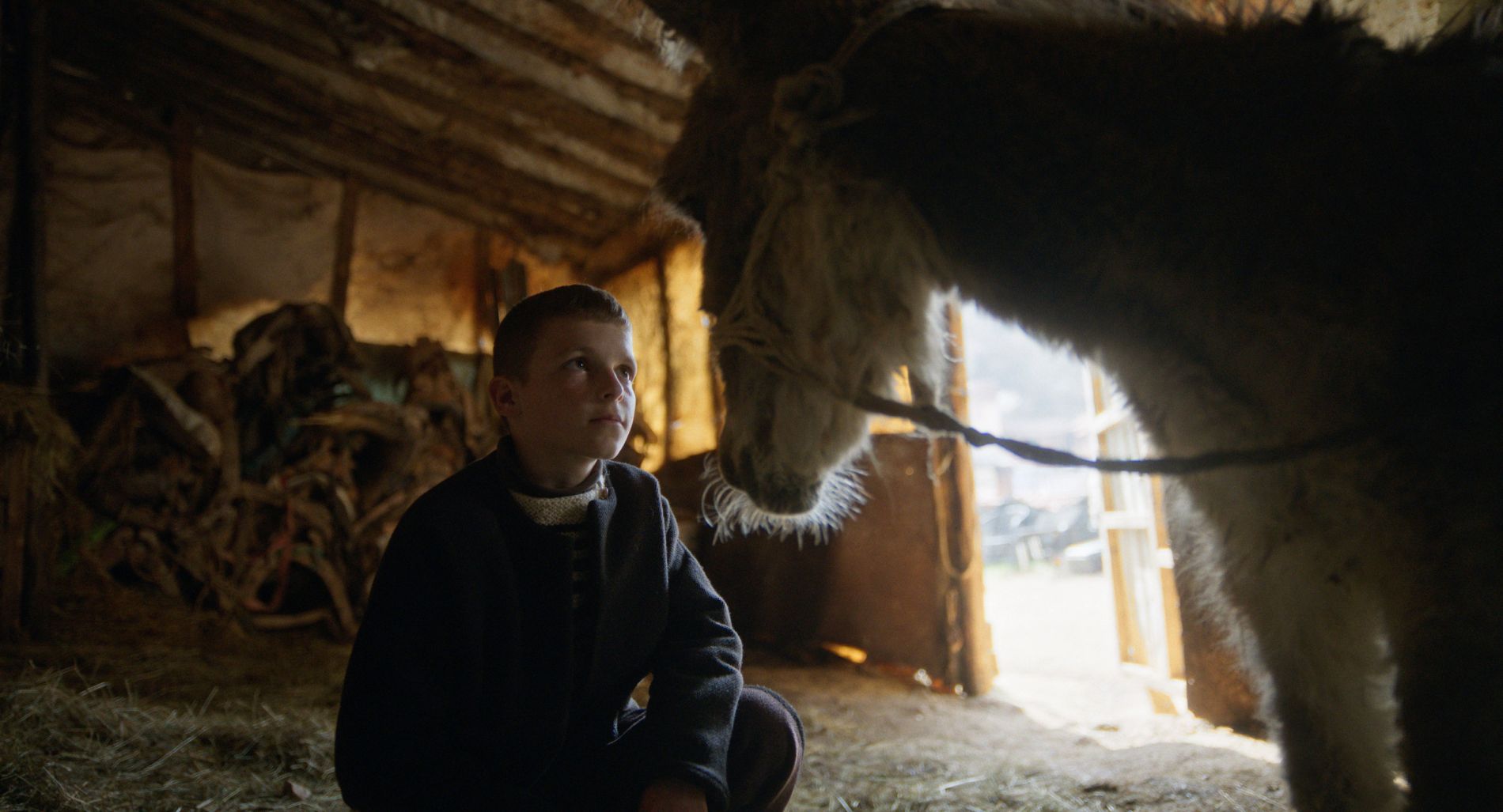
Beauty of the Donkey film still. Photo courtesy of Astrae Production.
The premise of the film “Beauty of the Donkey” seems quite innocent at first. A story that traces the childhood of Asllan, who emigrated from Yugoslavia after being pursued by police for participating in the 1968 protest that demanded more rights for Albanians. He ended up in Switzerland and became a biochemist at the University of Geneva. He married a woman from Albania and had five children, Dea being one of them. He was not able to return to Kosovo until the war ended in 1999, but he continued helping Kosovo by organizing 300 scholarships for Kosovar & Albanian students to study abroad.
Asllan started writing down the memories of his childhood in Makërmal and these notes form the basis of Dea Gjinovci’s film which premiered in Kosovo at the Dokufest in Prizren to an absolutely packed audience last weekend. This documentary brings Asllan back to Makërmal (former Kishnareka) in Drenica as an old man to reconstruct the skeleton of the house he grew up in from memory. We see the house being completely rebuilt in the field where Asllan thinks the house used to be. The main room, the Albanian oda, is then populated by local enthusiastic villagers who recreate quite authentic scenes from his childhood.
Initially the scenes are idyllic: chasing cows, climbing trees, picking and eating fruit, and having meals with lots of people. This idyll is then interrupted when we get to the most dramatic scene of the film: the raids from Rankovic’s era. Rankovic, the Serbian leader of the Yugoslav secret service, UDBA, who supported a hardline approach towards Albanians in Kosovo, persecuted them through raids searching for weapons, arrests, and imprisonments.
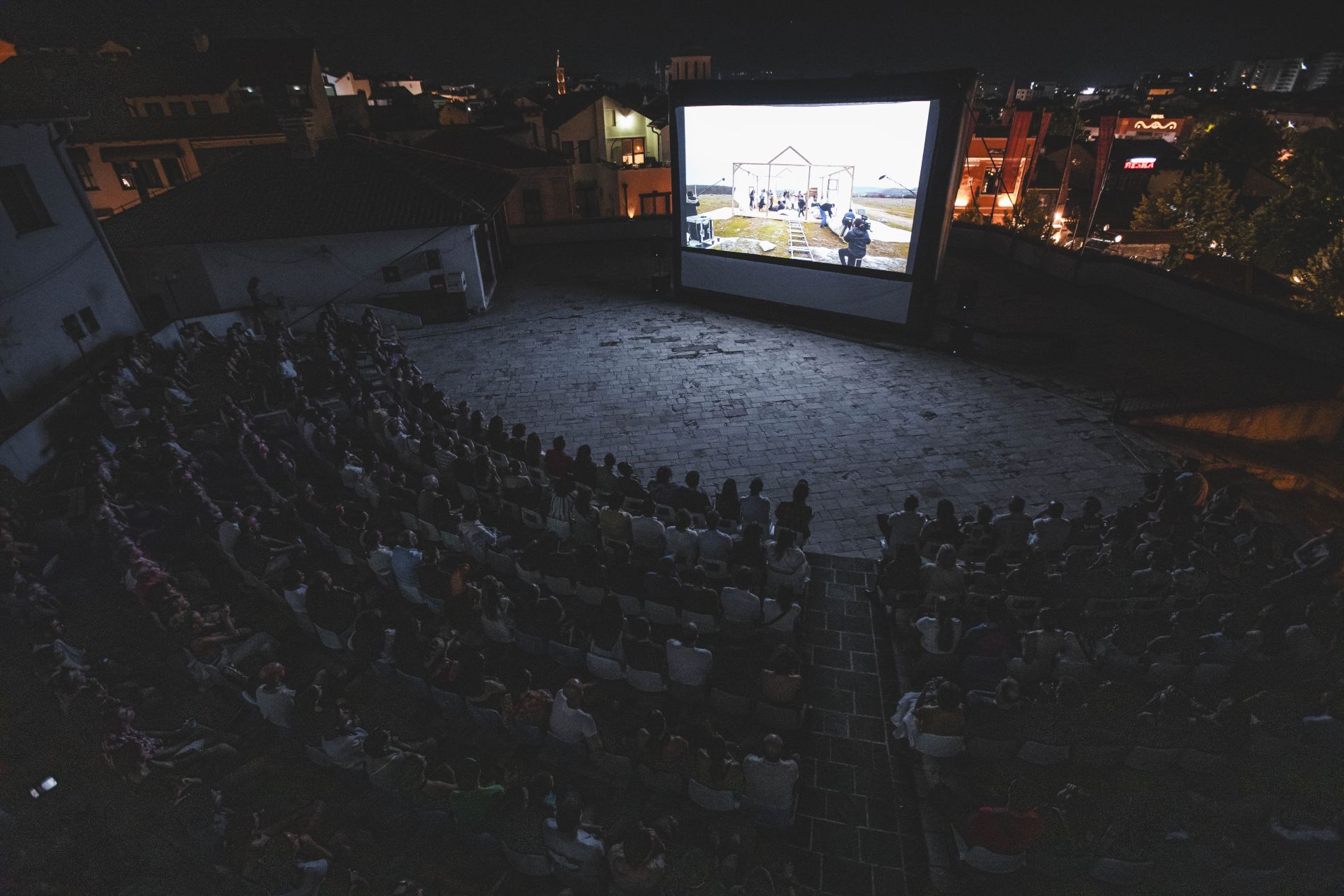
Screening of Beauty of the Donkey at the DokuFest Film Festival in Prizren. Photo: Elmedina Arapi.
The audience was made up mainly of locals who watched this scene in an open air cinema in Prizren. There was absolute silence as they watched, curious to see how the villagers would act in the “Rankovic weapon raid scene,” a very familiar story of village life in the 1950s that has been passed down to younger generations through oral history and to which Asllan was a witness as a child.
“Just when we wanted to start filming this scene, it started to rain. The whole village had gathered to see this scene. Actors were dressed in the right costumes from that time, it was dark (as most raids happened at night) and it started pouring rain for 4 hours. There was a 45 min period where the rain stopped and we decided to film the scene then and managed to finish by 11PM” says Gjinovci in an interview for Prishtina Insight, explaining that this was the most challenging part of making the film.
Asked whether her approach of working with local communities and casting residents to tell their own stories was inspired by Ken Loach’s filmmaking, Gjinovci confirmed the influence.
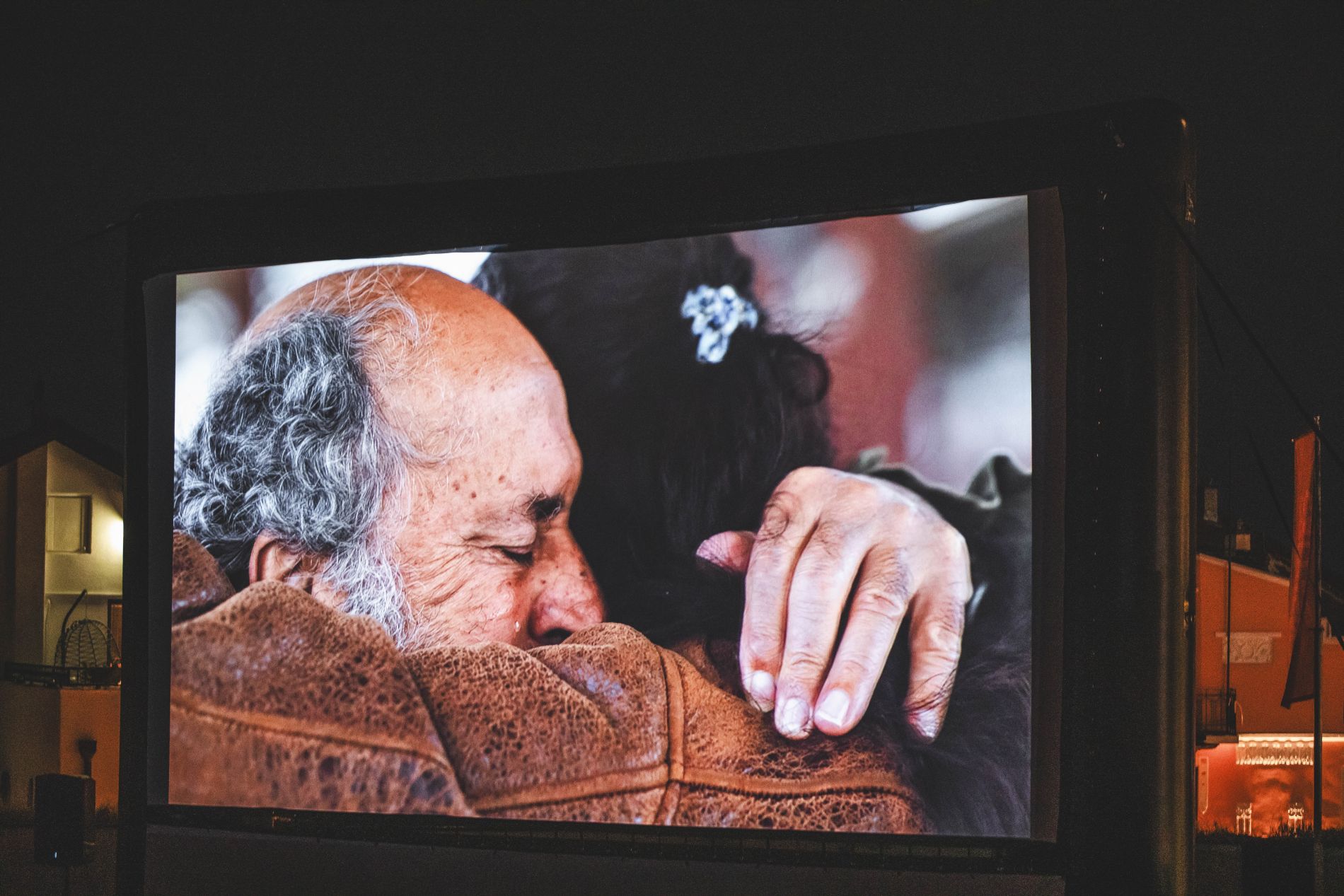
Beauty of the Donkey film still. Photo courtesy of Astrae Production.
“Yes, my references come from Ken Loach and Fellini who used to meet people in the streets (and turn them into actors). Angelopoulos too mixed social realism with poetic cinema. I did not want to literally recreate the past of this village. Instead, we have to be able to reimagine (create) something that feels poetic, magical, trying to find the feeling of something, not necessarily recreate a factual event.”
For Gjinovci, it was obvious that she would find people who have lived through this story in the village of Makërmal. “No requirement to perform something different to what they know, as (the story) is rooted in their oral history and local knowledge.”
This film is not just a poetic journey of a daughter and a father accessing their distant past. Half way through the film it becomes an investigation into something far more recent: what happened to Dinore Gjinovci, Asllan’s mother who disappeared on 1st of April 1999. Dinore is among some 1,500 people who remain missing from the 1998–99 Kosovo war, during which around one million Kosovar Albanians were forced from their homes by Serbian troops. Through background interviews with family members who did not participate in the film, Dea Gjinovci’s film uncovers what happened to the mother that Asllan never saw again since he left Kosovo as a teenager. The scene of when the daughter tells the father of what happened in the Fushe Kosove train station where his mother was last seen alive, is probably the most cathartic scene in the film.
What follows, both in the film and in real life, is no longer a journey through Asllan’s memory, but through the institutions of contemporary Kosovo. Dea accompanies her biochemist father to the Kosovo Institute of Forensic Medicine, where he provides a DNA sample, as most relatives of missing persons in Kosovo have done in the hope that it might one day match remains still being recovered from grave sites in Kosovo and Serbia.
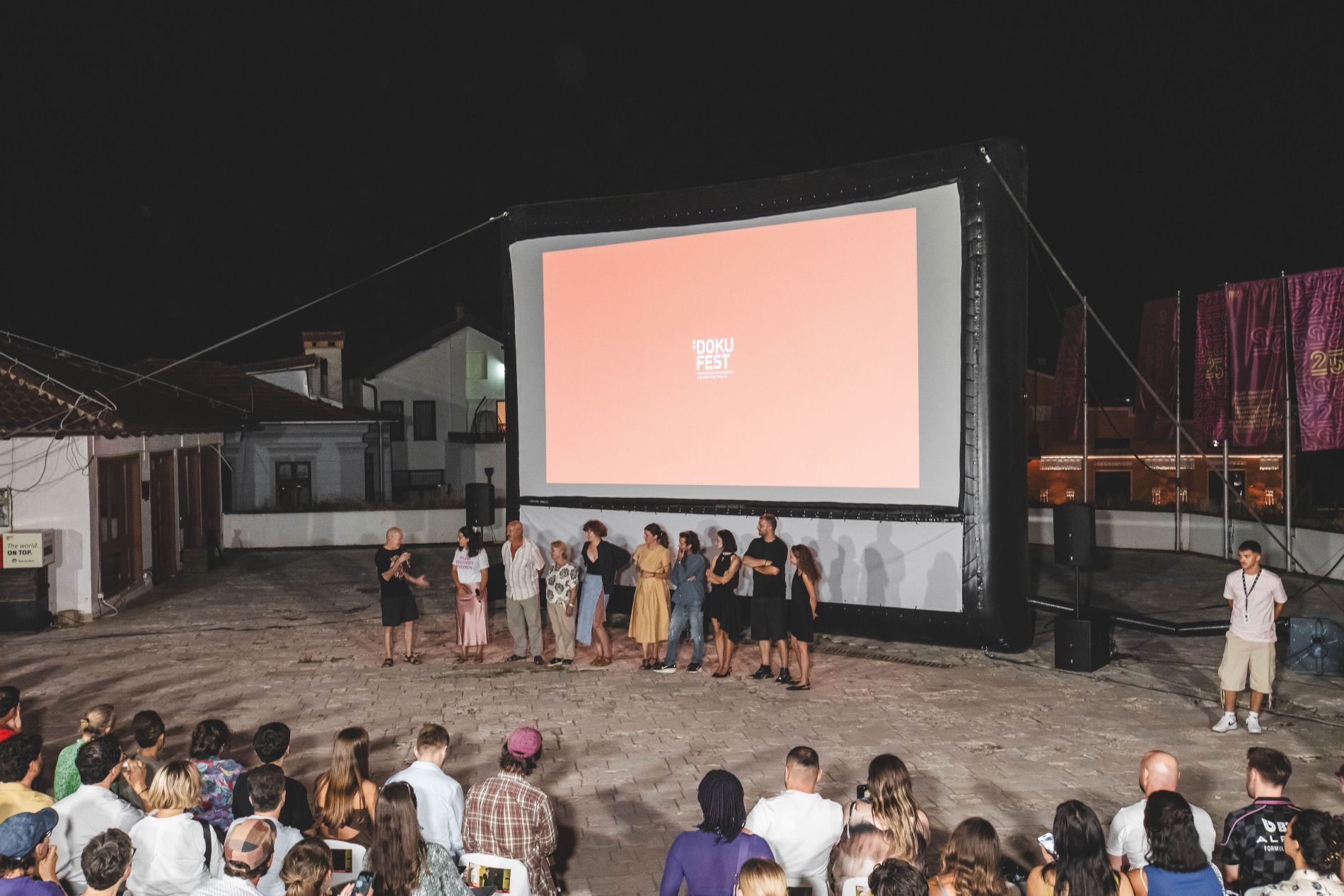
The Premiere of Beauty of the Donkey at the DokuFest Film Festival in Prizren. Photo: Elmedina Arapi.
Just last month, a new mass grave was discovered in Zubin Potok in northern Kosovo, showing how the story of “The Beauty of the Donkey” is relevant to the current experience of the families of missing persons in post-war Kosovo.
Gjinovci said that her work with Kosovan filmmakers, Ilir Hasanaj and researcher Blerta Haziraj, prompted her to find out more about her grandmother and the story of her disappearance.
“We (the documentary team) understood how little we knew about Dinore, as my father had spent most of his adult life away from his mother. So, we had to know more. We did not have full answers but (felt that) the act of searching can be the start of healing,” says Gjinovci.
“The act of searching for a missing person is up to you, and it is a long process. We went to the morgue, they explained to us that it takes years to identify the victims from mass graves. It can take decades. It is an active investigation,” she adds.
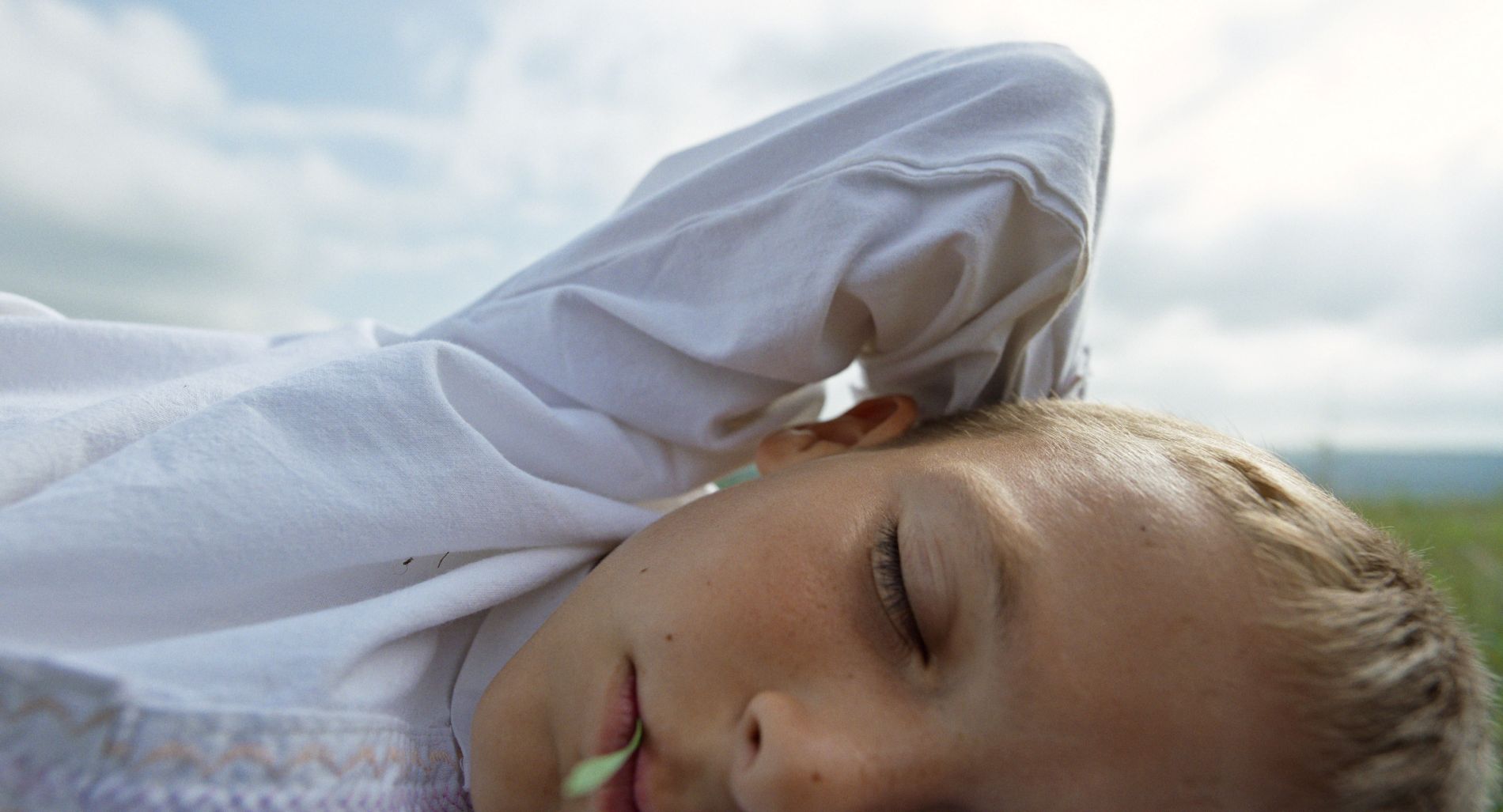
Beauty of the Donkey film still. Photo courtesy of Astrae Production.
Gjinovci’s short film “Without Kosovo” won her the Best National Documentary award in 2017 and the “Beauty of the Donkey” has been touring the world winning other awards, most notably Prix Célestine at Human Rights Film Festival Zurich 2026.
Gjinovci is a prolific filmmaker whom we need to watch, not least because, with this film, she has managed to hit the nail of preserving memory in Kosovo on the head by exploring her family’s history with a very intimate, creative and indeed carpenterly approach that hides nothing from the audience. The father – daughter relationship in this film feels like a rare Kosovo story, where a generational trauma is passed on for healing rather than stored for revenge. As such, this film seems to have had therapeutic value for the community involved in the making of it, and thus is a story that should be seen by as many as possible.
The “Beauty of The Donkey” will be screened on 13 of August at 22:00 in Dokukino as part of DokuFest festival in Prizren.