


Women public personas in Kosovo are often the targets of online smear campaigns and hate speech more than men, causing them to sometimes opt for self-censorship, which experts claim harms democracy.
In June, Adelina Tërshani, feminist activist and MP candidate from Kosovo’s ruling party the Vetëvendosje Movement, submitted 650 pages of material to the police containing evidence of offensive, derogatory, and threatening comments directed at her.
For Tërshani, threats and humiliation are used as “weapons” to silence, intimidate, or drive women away from public life.
In Kosovo, Women with public personas, such as journalists, activists, artists, and politicians, are often targets of online hate speech and threats.
More recently, during the Kosovo Parliament inauguration session on August 8, Aleanca (Alliance) MP Time Kadrijaj, threw eggs in the direction of the acting Prime Minister and leader of Vetëvendosje, Albin Kurti. She was met with a wave of offensive comments.
Kadrijaj told Prishtina Insight that she reads “the comments on my own social media accounts, but not on certain online platforms or news portals,” where people might engage in sexist or derogatory comments about her, after her public appearances.
Despite the frequency of such publications, posts, and comments, “this is not a guarantee that they can stop my activities or that I will stop participating in political activities,” she said.
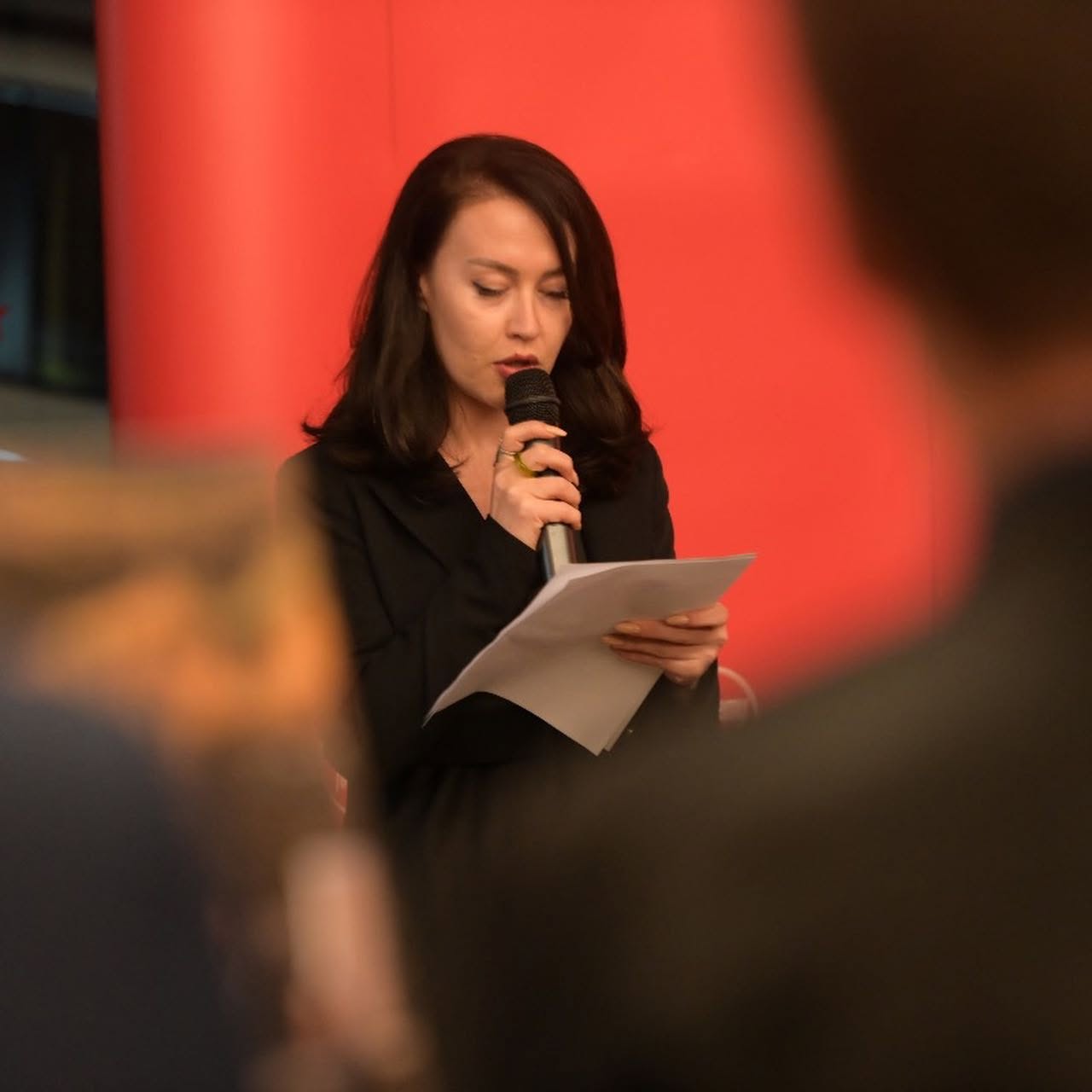
Adelina Tërshani, a parliamentary candidate for Kosovo’s ruling Vetëvendosje party. Photo: Adelina Tërshani/Facebook.
However, the lack of equality in the expression of public opinion is evident as the number of women participating in the public sphere in Kosovo is lower than men. Very often, Kosovo TV debates have mainly male invitees, especially during prime time as women experts might feel reluctant to state their expertise publicly because of the pressure and hate speech online, at times leading to self-censorship.
For example, as a consequence of online violence, insults, and hate speech, political expert Donika Emini has considered withdrawing from televised debates and no longer expressing her views publicly, being aware of the attacks that would follow against her.
“When a television appearance is followed by hundreds of offensive comments, political labeling, misogynistic attacks, or attempts to discredit your professional and personal integrity, this comes with an emotional and psychological cost,” Emini told Prishtina Insight.
Emini said that she is more selective about her public appearances. “I know many well-prepared women who refuse to appear publicly because they consider the public space to be an ‘aggressive and often humiliating’ environment.”
Bleona Kurtishi, an assistant in the Department of Sociology at the University of Prishtina, told Prishtina Insight that “the self-censorship that women engage in, in this case, does not come as a result of personal choice, but rather as a result of a social order that punishes women’s critical voices.”
Persevering despite ‘attempts to silence’ them
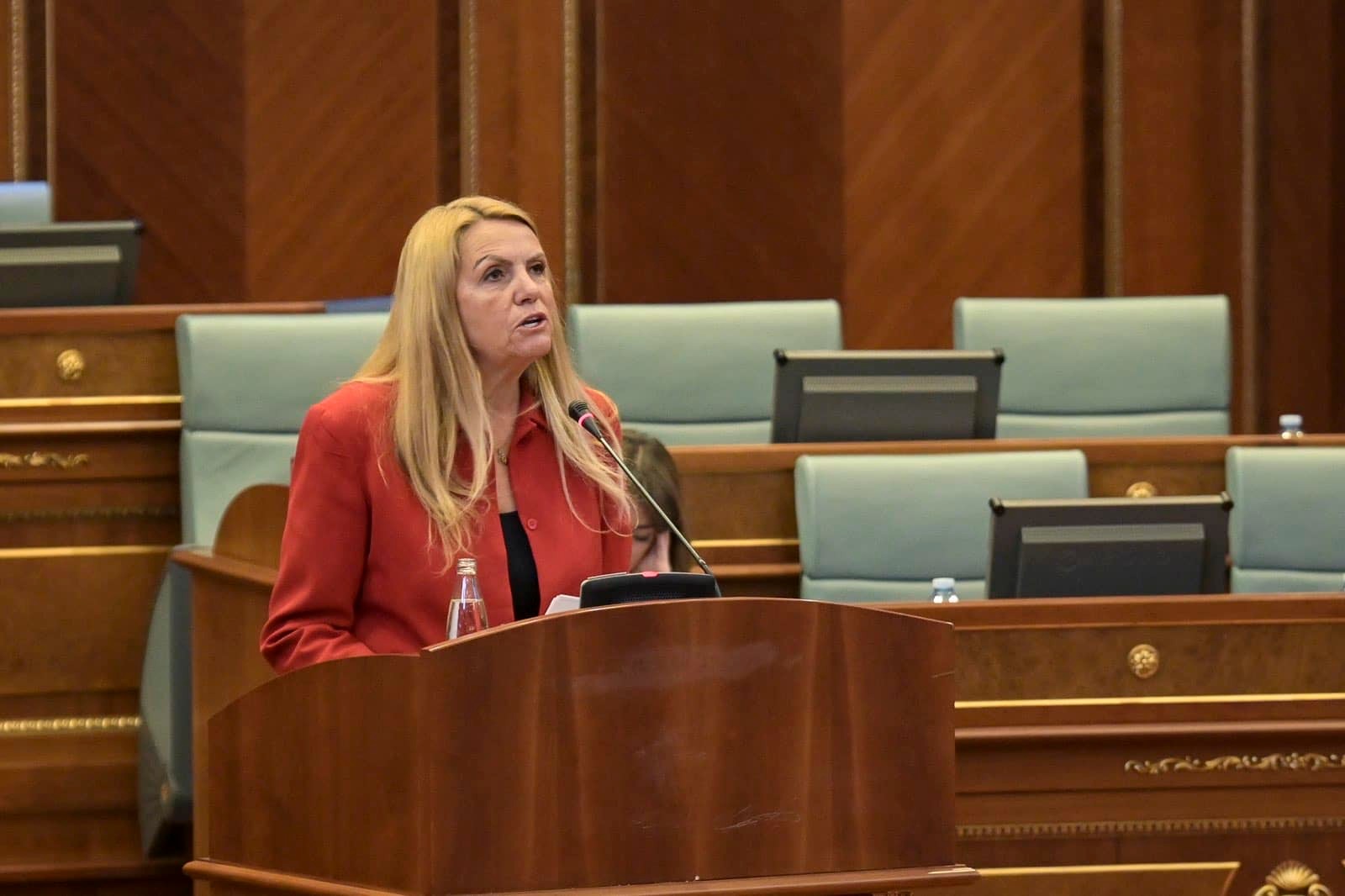
Time Kadriaj, an MP of Kosovo’s opposition Alliance, in the Kosovo Parliament. Photo: BIRN
Women who have received hate speech and threats because they are public personas told Prishtina Insight that they are often targeted in an effort to belittle or silence them. However, while the experience has been very difficult mentally, the smear campaigns have eventually pushed them to participate more in public life and even be the voice of other women.
Leonida Molliqaj, the director of the Prishtina based women’s rights organization QIKA, told Prishtina Insight that throughout her activism, she has faced personal attacks and labeling, which, according to her, have been intended to delegitimize her work and that of the organization she leads.
“There have been moments when I have thought about the consequences that a public statement might bring, but I have not allowed fear to determine whether I would speak or not,” Molliqaj said.
In 2023, sports journalist Qëndresa Krelani, known by the pseudonym Qeqa, faced sexist language and insults during a televised debate which was followed by an influx of offensive comments on social media.
“The discomfort, insults, and the most dangerous scenarios in my career were experienced at the hands of my male colleagues,” Krelani told Prishtina Insight, highlighting that “sexism is not a demonstration of strength. It is very often a refuge for someone who no longer has a professional response.”
“There were moments when I was tired. Moments of depression,” she said, adding that “I needed a psychologist from the international organization CPJ (Committee to Protect Journalists), who stayed by my side for many months and helped me greatly to overcome some of the trauma.”
After the debate, however, she did not consider speaking less. On the contrary, the experience convinced her that her voice needed to be even more present.
“If the attempt to silence me goes as far as personal and sexist insults, then my voice is exactly where it needs to be,” she highlighted.
Tërshani told Prishtina Insight that everyone has the right to criticize her, disagree with her, and challenge her views. “This is part of democracy. But no one should think that freedom of expression gives them the right to threaten, humiliate, or use hate speech against someone,” she said, adding that “the internet should not be a lawless zone. The fact that someone hides behind a screen does not mean that they should not be held accountable for what they say or do.”
She said that her case is currently undergoing institutional procedures.
Prishtina Insight requested information from the Prishtina Basic Prosecution and Prishtina Basic Court on such cases and how they have been handled by the justice institutions, but did not receive a response by the time of publication.
Former journalist Arbana Xharra considers these attacks to often take on a more personal and more brutal dimension in Western Balkan societies.
Referring to an attack she experienced in 2017, she recalls that “when unknown individuals found my home address and drew a cross on my door, the police told me not to worry. Not long after that incident, the physical attack occurred.” The physical attack was preceded by attacks and harsh reactions on social media, which began mainly after she became involved in politics.
During her account, Xharra admitted that there had been moments when she questioned whether it was worth raising her voice publicly, especially when she thought about the consequences this could have for her family.
“I regretted [such thoughts] when I saw how identical or similar attacks were carried out against other women. This confirms that silence only increases tolerance for sexist attempts to intimidate women, and prevents them from becoming more active,” Xharra said.
Risk to democracy
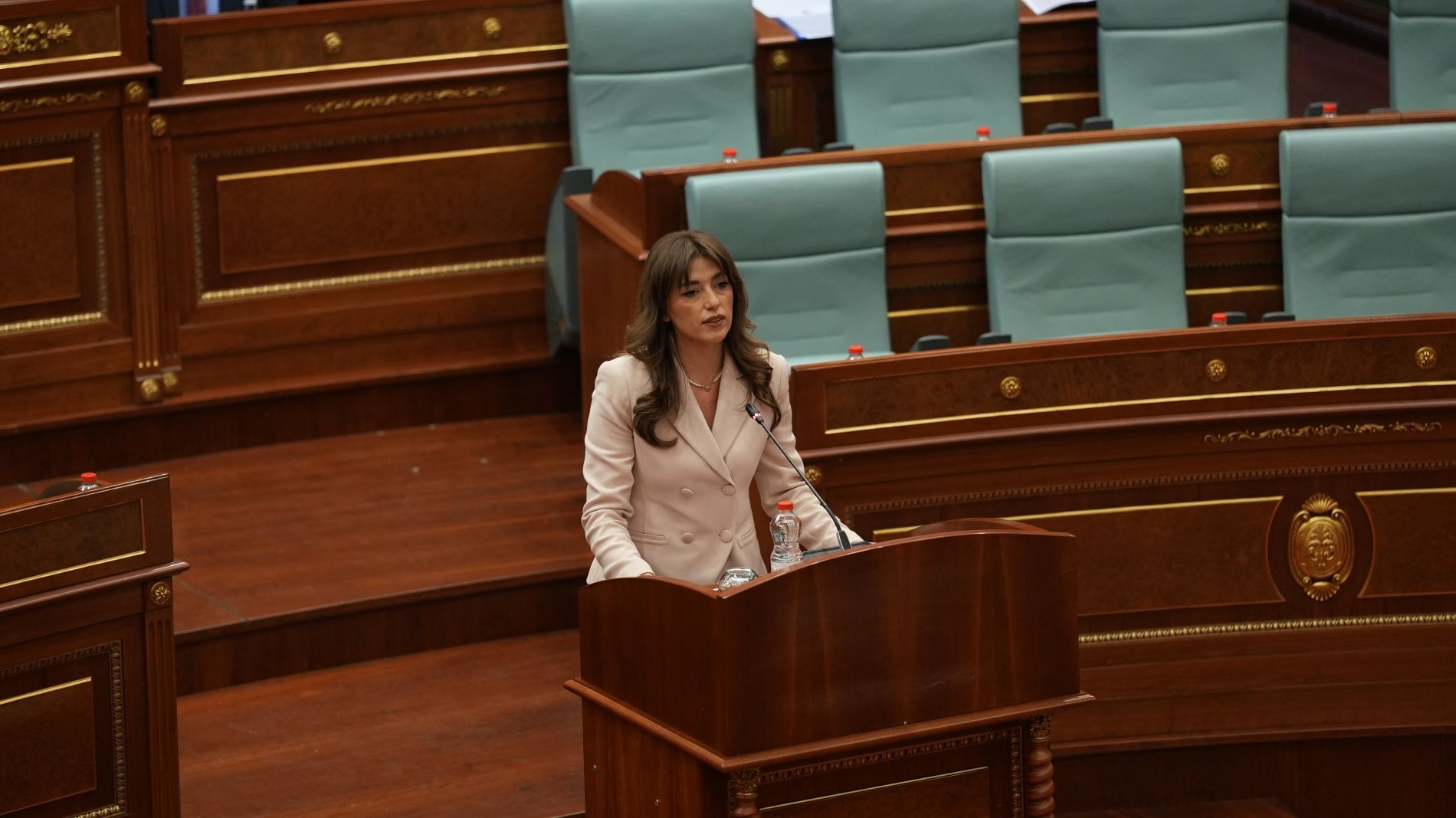
Albulena Haxhiu takes over the post of Kosovo’s parliament speaker on February 11, 2026. Photo: BIRN/Denis Sllovinja
Nonetheless, continued exposure to this type of violence pushes many women to hesitate when expressing their opinions on social media. Research shows that self-censorship among women and girls in Kosovo is extremely prevalent as a form of self-protection.
Melisa Kadolli, the Legal and Monitoring Coordinator at the Kosovo Women’s Network, told Prishtina Insight that “online violence does not harm only one individual. It affects society as a whole because it deprives us of women’s voices and perspectives.”
Political experts highlight that self-censorship of women is also a risk to the country’s level of democracy.
Political science researcher, Donik Sallova, told Prishtina Insight that when women censor themselves “the quality of democracy is weaker, not to say that democracy has failed to bring about equality. The more restricted or self-restricted people are in expressing and promoting their ideas and political ideals and programmes, the more fictional democracy becomes.”
Similarly, according to D4D Director Rezarta Delibashzade-Krasniqi, this is also a risk to democracy, “because it undermines inclusivity and leaves half of the population out of decision-making”.
According to her, the digital space in Kosovo has become a hostile environment because when women challenge their male colleagues or take opposing positions, they face a harsh and immediate reaction and online backlash.
Often women are left to protect themselves and have to use certain security applications and tools provided by social media platforms, as well as increase their knowledge of online safety, however, according to information technology expert Blerton Abazi, these measures are still not sufficient.
“The use of fake profiles or accounts created specifically for harassment, which can quickly reappear even after they have been suspended,” is very challenging, Abazi stated.
An August 2026 report, titled “Women in the Media and Gender-Based Disinformation in Kosovo,” by the Association of Journalists of Kosovo, AJK, showed that online gender-based abuse, harassment, and disinformation constitute significant concerns for female journalists and other women working in Kosovo’s media sector.
According to the survey findings, of the 54 women surveyed, 61 percent, or 33 of them, stated that they had experienced online abuse or harassment because of their professional work.
These attacks are related to questioning their professional credibility, morality, physical appearance, private life, as well as their perceived political affiliations.
In March 2024, a BIRN analysis of hundreds of videos uploaded by TikTok users in eight Balkan countries shows the platform has become a hub for abuse of women and girls based on their appearance and actual or perceived sexual behaviour – ‘slutshaming’.
Over the course of several weeks, BIRN identified 427 videos posted between September 2020 and November 2023 in which girls and women were ‘slutshamed’; the videos were shared by accounts in Kosovo, Albania, Bosnia and Herzegovina, Croatia, Montenegro, North Macedonia, Serbia, and Slovenia. In total, the videos have been viewed more than 30 million times, each garnering dozens, sometimes hundreds of abusive comments. 18 of the videos included ‘slutshaming’ content against public personas.
None of the eight countries analysed defines cyberbullying as a separate criminal offence, meaning that ‘slutshaming’ must be punished under other criminal violations such as gender-based hate speech, stalking, or the unauthorised sharing of someone else’s photos.
A 2023 research report conducted by the organization D4D, “Non-Social Media – Research and Exposure of Gender Disinformation in Kosovo,” showed that women face online violence and harassment more often from men than from other women.
As part of its monitoring of online media and social networks, the report analyzed 23 high-impact cases related to gender disinformation, which were covered in 2,429 media articles. These articles generated a total of 210,541 interactions, including likes, shares, and comments. According to the analysis of comments on articles containing gender disinformation, 89.6 percent of comments containing hate speech against women were written by men, while 10.4 percent were written by women.
According to Kadolli, from the Kosovo Women’s Network, society changes when more women feel safe to speak.
“Every voice that is raised contributes to building a fairer, safer, and more equal society,” she said.