


The Balkan Investigative Reporting Network presented the findings of a two-year grant programme supporting media outlets and organisations in investigating corruption and organised crime across Kosovo and beyond.
BIRN’s Anti-Corruption Forum in Prishtina on Monday brought together representatives of justice and law-enforcement institutions, investigative journalists, and civil society organisations to discuss efforts to prevent and expose corruption.
The forum marked the conclusion of a two-year programme through which BIRN provided grants to eight media outlets and civil society organisations to investigate corruption and organised crime, including in healthcare, public procurement, policing, environmental crime, and public finances.
“The investigations have highlighted legal gaps and failures to implement the law,” BIRN Executive Director Jeta Xharra said at the forum.
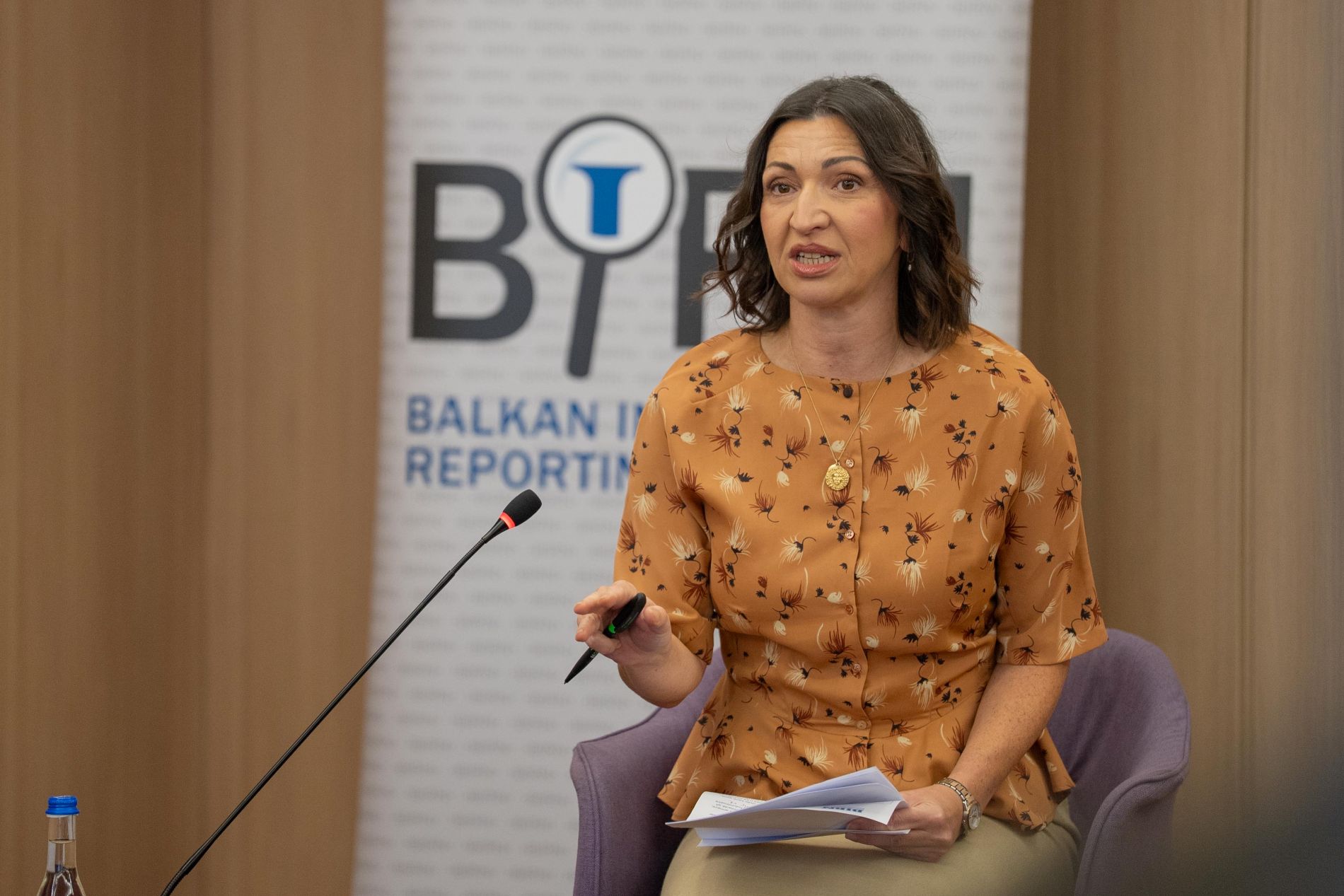
BIRN Kosovo Executive Director Jeta Xharra at the Anti-Corruption Forum on September 28, 2026. Photo: BIRN
Among the investigations, Xharra cited research by Democracy Plus into medicine price equalisation, work by the Patients’ Association on long waiting lists and referrals from public hospitals to private facilities, and an investigation by Sbunker into annex contracts awarded through public procurement.
“Sbunker specifically looked at annex contracts being awarded through public procurement and the pattern of signing contract amendments without an open procurement process,” Xharra said.
The programme also focused on the cross-border aspect of organised crime, including drug and arms trafficking, money laundering, migrant smuggling, concealment of assets, and gold smuggling.
BIRN’s offices in Kosovo and Montenegro worked on examining how organised crime networks operate across borders and why institutions have struggled to respond to crimes that extend beyond national jurisdictions.
The programme supported research by eight organisations and media outlets: Sbunker, Kosovo 2.0, Radio Gorazdevac, ACDC, Buletini Ekonomik, PRAK, Democracy Plus, and Katror Media.
Together, they produced more than 500 pages of investigative reports covering issues including corruption in healthcare, police integrity, medicine lists, and environmental crime.
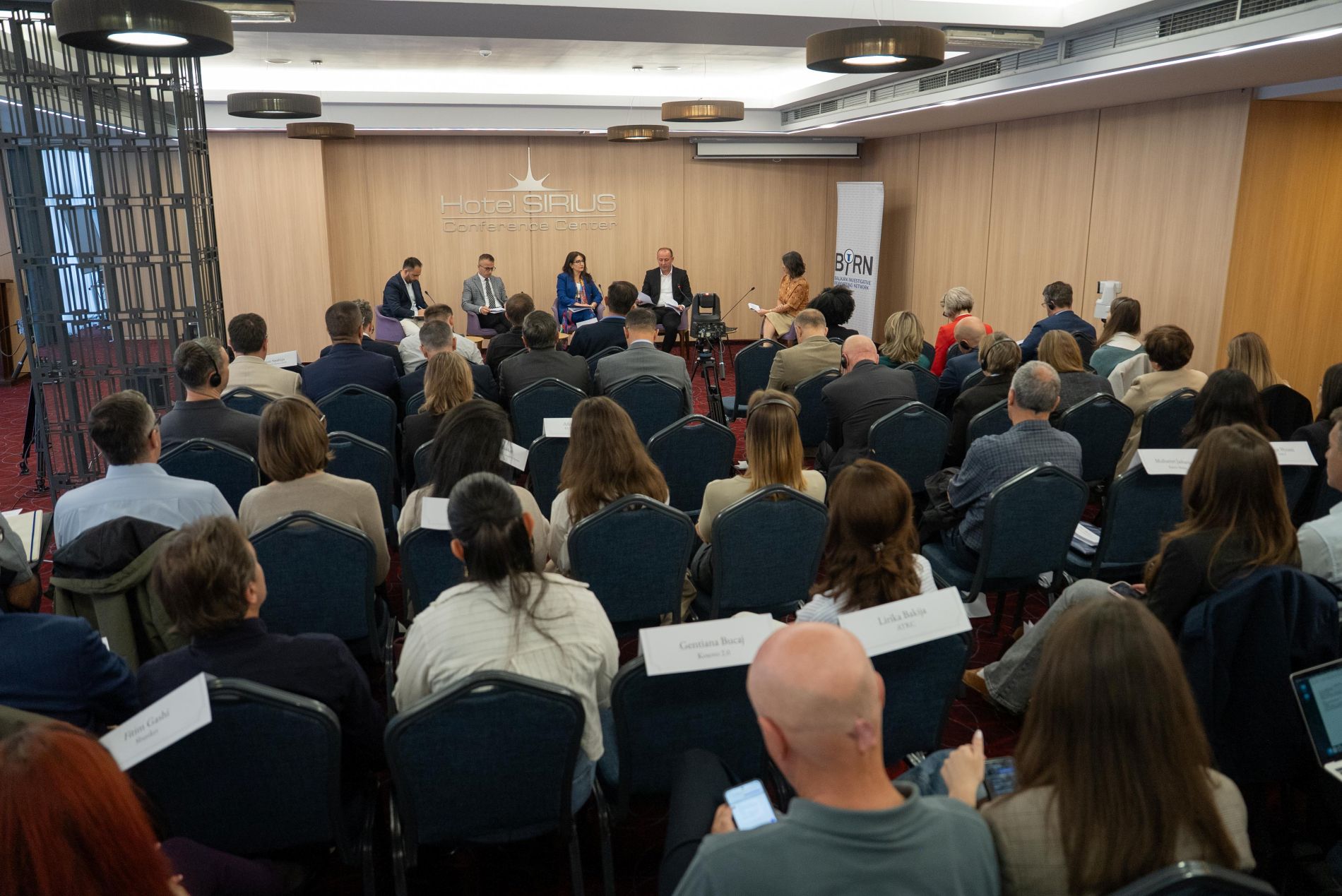
Anti-Corruption Forum held by BIRN Kosovo on September 28, 2026. Photo: BIRN
The investigations also produced recommendations for government institutions, parliament, ministries, law-enforcement agencies, and municipalities.
One of the participating outlets, Buletini Ekonomik produced five investigations, including reporting on expropriations in Shipitullë and their connection to the Kosovo Energy Corporation, KEK.
Agon Sinanaj, a researcher at Buletini Ekonomik, said the investigation found evidence of a corruption scheme involving residents of the affected villages and KEK, which he said had facilitated the expropriation process.
“We managed to prove that this was a corrupt scheme that involved not only the residents of these villages, but also the Kosovo Energy Corporation, which facilitated the expropriation process,” Sinanaj told KALLXO.com.
Monday’s forum emhpasised weak cooperation between rule-of-law institutions as one of the main obstacles to tackling organised crime across the region.
In the forum it was noted that procedural and bureaucratic barriers continue to obstruct cooperation between institutions.