


Justina Shiroka Pula takes office after months of political deadlock, as the new Specialist Chambers law and strained relations with international partners are set to test her authority and diplomatic skills.
Justina Shiroka Pula begins her presidency at a critical moment for Kosovo. Elected after more than 19 months of institutional deadlock, she inherits a political landscape with deep divisions, a new law on the Specialist Chambers in the Hague based Court, and the need to rebuild strategic communication with the United States while maintaining relations with the European Union.
On October 6, 2026, Shiroka Pula secured 81 votes in the Parliament, one more than the 80 required for election. Her candidacy came as a compromise between Prime Minister Albin Kurti and the Democratic Party of Kosovo, PDK, who elected Shiroka Pula in the final hours of the constitutional deadline. Had the Parliament failed to do so, Kosovo would have faced another snap election.
Shiroka Pula’s presidency begins with the expectation that she will help ease political tensions, contribute to a level of political consensus, manage the diplomatic implications of the Specialist Chambers legislation, and strengthen Kosovo’s relations with the European Union and the United States.
Following his first meeting with the new president, Prime Minister Albin Kurti declared that Kosovo now had functioning institutions and he called for closer coordination on matters of national importance.
“We must come together to address the many state-level challenges ahead,” Kurti said.
He added that Shiroka Pula was understanding and expressed a willingness to cooperate during his meeting with her.
In her first speech as president, Shiroka Pula pledged to represent all of Kosovo’s citizens and work toward unity, justice, development, and stronger institutions. She also reaffirmed Kosovo’s Euro-Atlantic orientation and its commitment to maintaining close relations with its allies.
Political unity expected after months of deadlock
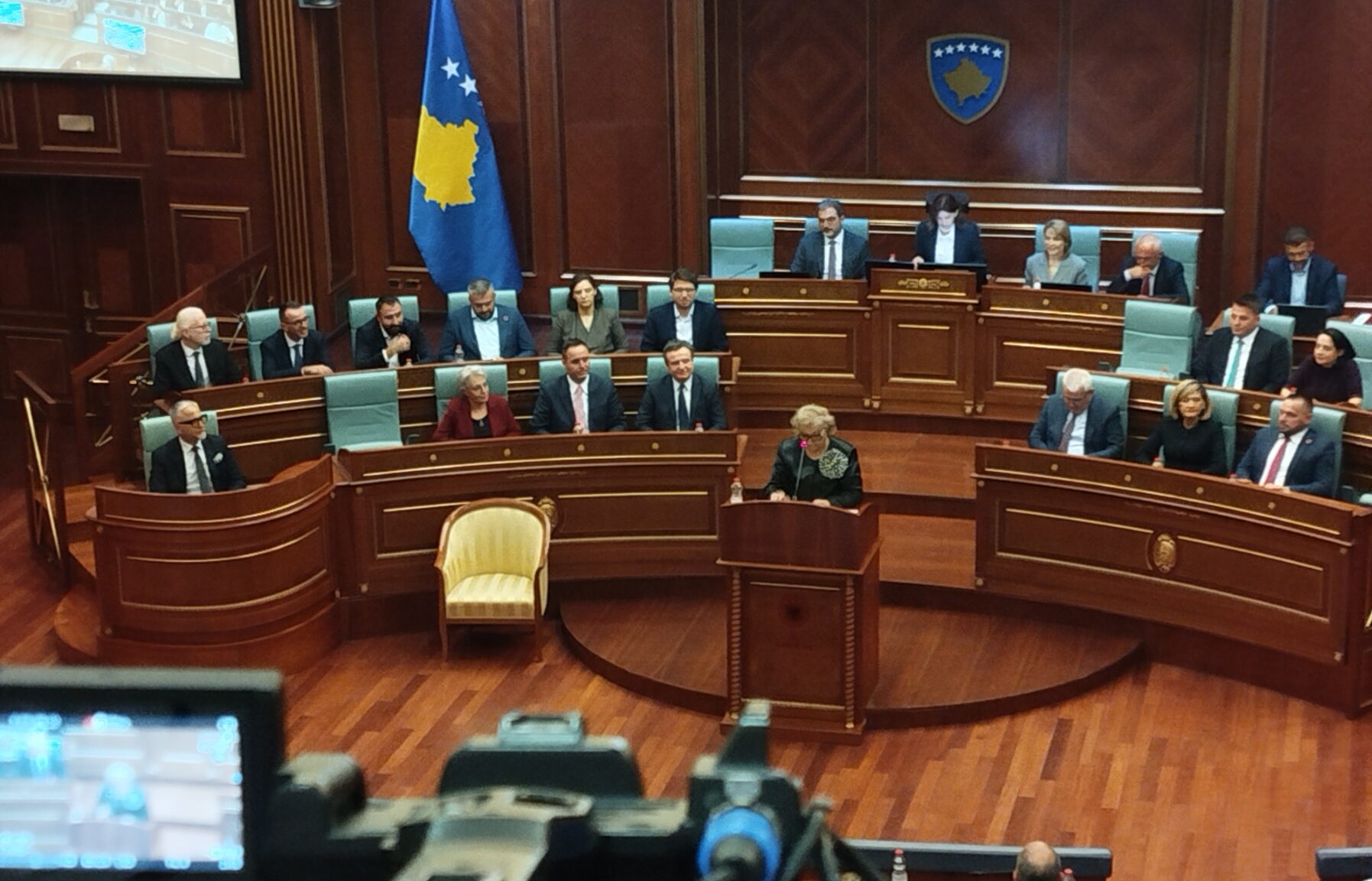
Newly elected Kosovo President, Justina Shiroka Pula taking oath at the Kosovo Parliament, October 7, 2026. Photo: BIRN/Shqipron Xhema
The first challenge is domestic. Her election followed an agreement between the governing party and one of the main opposition parties, offering an opportunity to ease the conflict that had characterised Kosovo’s political landscape for months.
Political analyst Melazim Koci says that the president should use her position to ease tensions between political leaders and establish a minimum level of consensus on issues of national importance.
“Kosovo cannot move forward on any front without a minimum consensus on critical domestic and foreign policy issues,” Koci said.
He believes Kosovo has lost political energy to internal disputes and that the new president should help reopen channels of communication among party leaders.
Dritëro Arifi, a politics expert, similarly notes institutional cooperation as an urgent priority.
“One of the things that needs to happen quickly is for the Presidency to create space for deeper, more concrete, and more open cooperation between institutions and political parties,” Arifi said.
The Specialist Chambers law: The first major test
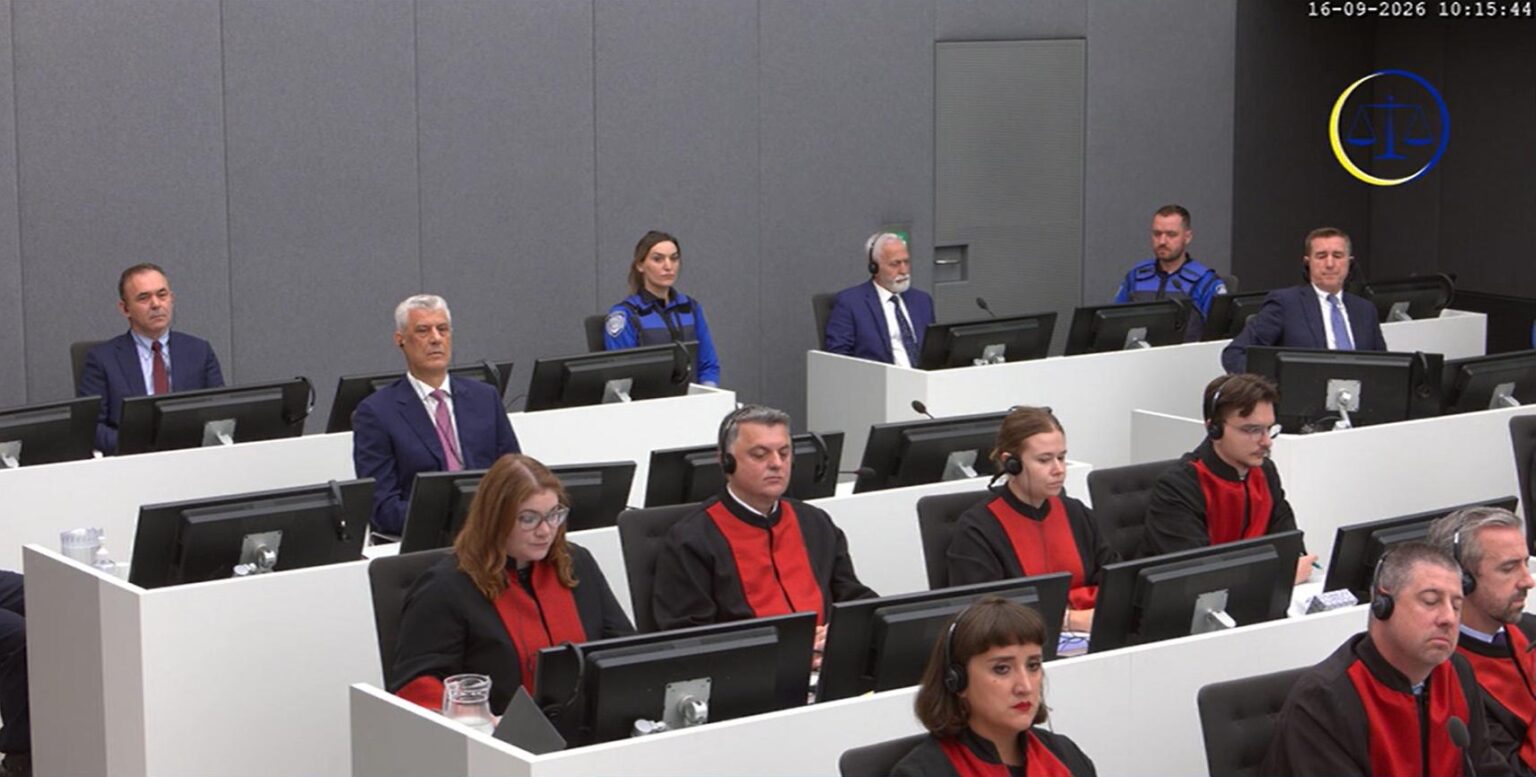
Rexhep Selimi, Hashim Thaci, Jakup Krasniqi, and Kadri Veseli in court on September 16, 2026. Photo: Screenshot/Kosovo Specialist Chambers.
The most immediate test concerns the amended Law on the Kosovo Specialist Chambers and the Specialist Prosecutor’s Office in the Hague-based court, adopted by the Parliament on the same day Shiroka Pula was elected.
The amendments address several aspects of the court’s functioning, including its jurisdiction, sentencing, and the possibility of sentences being served in Kosovo.
The legislation is expected to reach the Presidency for consideration. Under Kosovo’s Constitution, the president must enact a law within eight days of receiving it or return it to the Parliament once for reconsideration.
The decision will be among the first tests of her presidency, requiring her to consider the law’s constitutional implications alongside Kosovo’s broader international commitments.
Koci argues that the legislation cannot be considered in isolation from Kosovo’s relationship with the European Union.
The EU expressed “deep concern” one day after the amendments were adopted, arguing that they conflict with Kosovo’s international obligations toward the EU. Brussels also emphasised the need to protect the independence of the Specialist Chambers and uphold commitments to accountability and justice for victims.
“The fact that the European Union reacted just 24 hours after the law was adopted signals that relations between Brussels and Prishtina could become strained over this issue,” Koci said.
He also mentioned the remarks attributed to European Commission President Ursula von der Leyen during her visit to Prishtina three days before the vote. According to Koci, von der Leyen had indicated that Kosovo “could decide the matter provided the independence of the judiciary was not compromised”.
Koci further emphasises that Kosovo’s political leadership should use those remarks as a starting point for further engagement with the EU, while avoiding a deterioration in relations.
Arifi, meanwhile, adds that the “Specialist Chambers should be among the Presidency’s immediate priorities”. He called for a coordinated task force and institutional response based on a clear legal and diplomatic strategy.
“Perhaps a triangle should be established between the Presidency, the Government, and the Parliament,” Arifi said, adding that the institutions need to coordinate more quickly and effectively.
Washington and Brussels: Restoring strategic communication
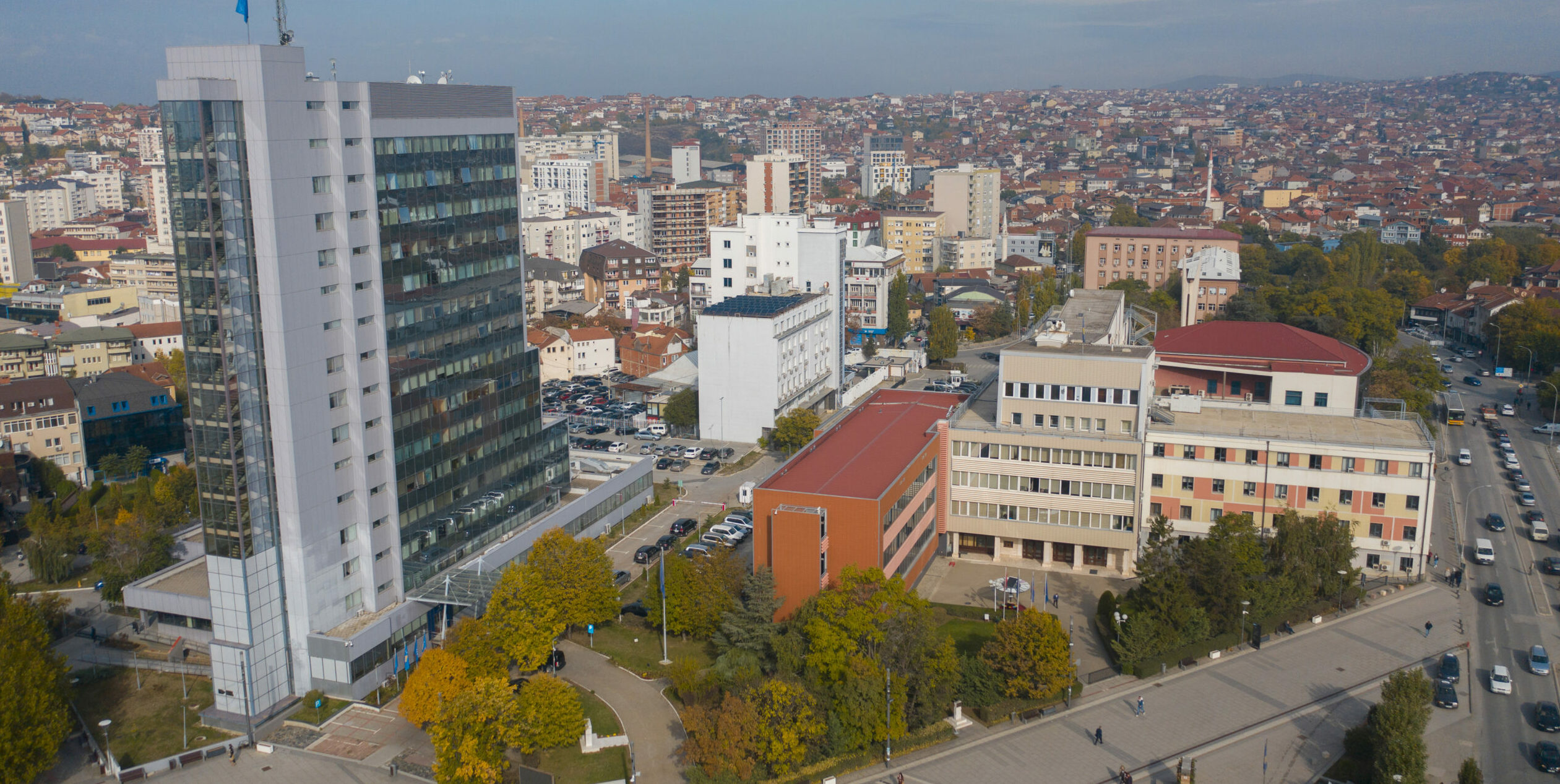
Kosovo government and parliament buildings in Prishtina. Photo: BIRN/Denis Sllovinja
Beyond domestic political unity and the Specialist Chambers, Shiroka Pula faces the challenge of strengthening Kosovo’s strategic partnerships, particularly with the United States and the European Union.
Koci mentioned the resumption of strategic partnership dialogue with Washington as a priority . The dialogue was suspended in September 2025, and he argues that the new president “should seek direct engagement with American officials to clarify the conditions for its resumption”.
“Without communication and an advanced relationship between Prishtina and Washington, Kosovo cannot make progress toward participation in international organisations,” Koci said.
Arifi also sees an important role for the Presidency in deepening relations with both Washington and Brussels.
He notes that Kosovo “needs a coordinated diplomatic and legal position that can be presented directly to American officials and European capitals”.
In his view, the strategy proposed by a task force could serve as the basis for Kosovo’s state-level diplomatic and legal arguments, including its concerns about alleged violations throughout the judicial process, particularly concerning the Special Chambers.
He stresses that this engagement “should be carried out quickly, carefully, and with well-documented arguments to ensure that Kosovo can respond effectively to the issues it raises.”
Meanwhile, Koci notes that among many issues, the country has spent too much time consumed by internal confrontations. “It is high time these divisions were overcome and the country’s interests were put first,” he said.
This article was originally published in Albanian and prepared for English publication by Ardita Zeqiri.