


Named for its purity and as a symbol of natural beauty, the Drini i Bardhë (White Drin) river, has become one of Kosovo’s most polluted habitats and a pathway for waste, sewage, and industrial runoff flowing from Kosovo into Albania.
Gani Kurtaj, a resident of Radavc now in his sixties, has seen how the clean stream of water he played in as a child has been choked by sewage, industrial waste, and gravel dust over the decades.
Once proud of its natural beauty, today Kurtaj shakes his head in disappointment at the state of the stream.
“This is the pure spring water of the Drini i Bardhe [White Drin], but not far downstream it starts to get polluted,” Kurtaj declared. “We used to drink and bathe [swim] in it, but unfortunately, that’s no longer possible,” he explained while frowning and leaning on the riverbank.
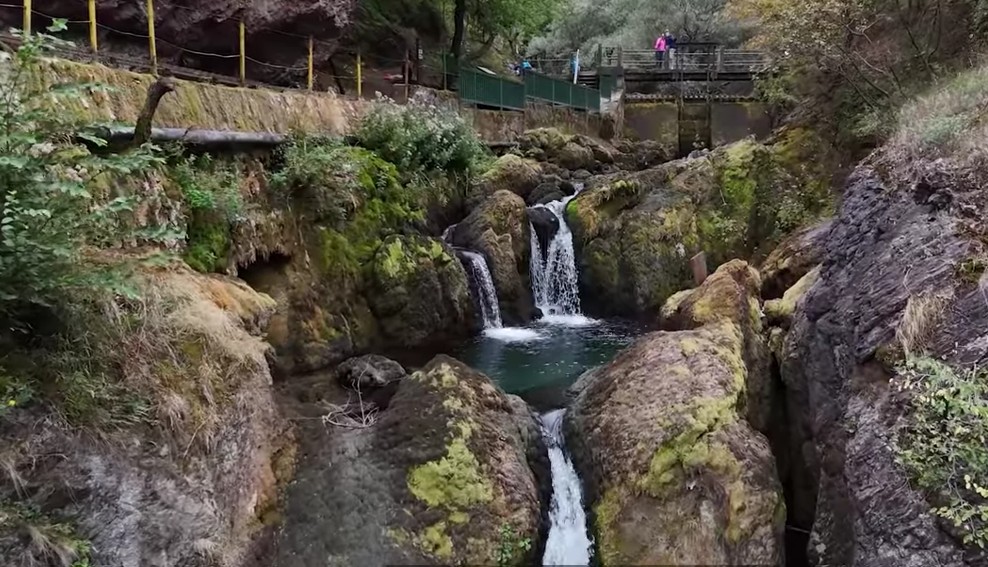
The White Drin River’s source in Radavc. Photo: BIRN
Known for its crystal-clear waters, Kosovo’s White Drin river has become a symbol of environmental neglect. Once called “white” for its purity, the river now carries sewage from eight municipalities, industrial waste, and gravel residue downstream into Albania.
The White Drin flows into Albania’s Fierza Lake, carrying contaminants downstream.
According to Beqir Izeberi, head of the fishing management organisation at Fierza, the pollution “greatly affects fish reproduction and the overall sustainability of fishing.”
Experts say that in order to prevent further damage of the river and environment, Kosovo must increase penalties, ban illegal gravel extraction, and accelerate wastewater treatment investments to prevent further ecological collapse.
Yet, according to government projections, most treatment projects will not be completed before 2030, by which time the damage to the river’s biodiversity may be irreversible.
A river overwhelmed by waste
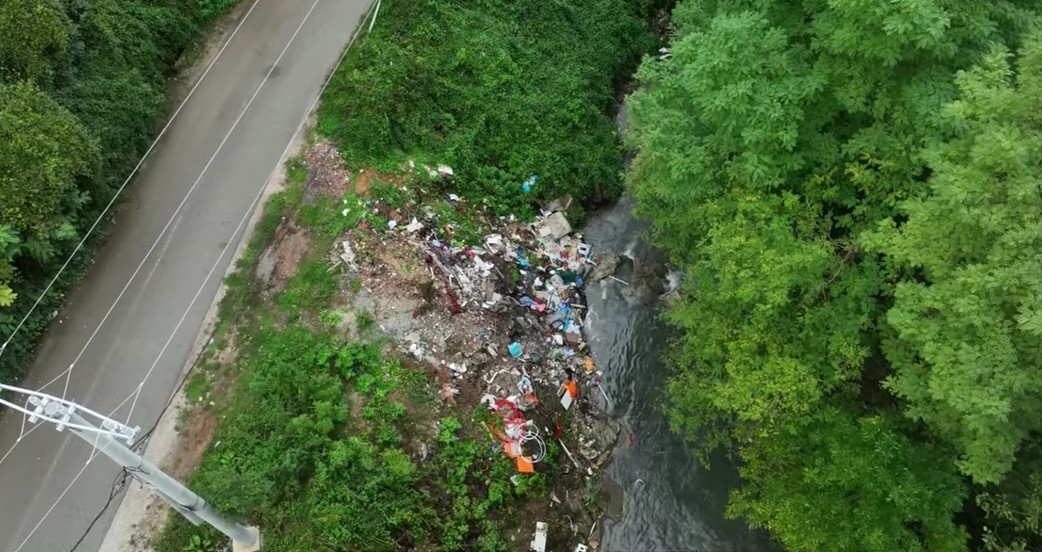
Trash in the flow of the White Drin River (Drini i bardhë). Photo: BIRN
Stretching 115 kilometres, the White Drin collects sewage from eight municipalities—Peja, Deçan, Junik, Gjakova, Prizren, Klina, Istog, and Rahovec, before crossing into Albania. Most of these urban centres discharge wastewater directly into the river without treatment.
Preliminary data from the Kosovo Agency of Statistics show that around 125,000 households and businesses release wastewater into streams that feed the White Drin. This area is home to approximately 400,000 residents, yet lacks adequate wastewater infrastructure.
Measurements from the Kosovo Environmental Agency show alarming oxygen depletion levels in the river. In some sections, dissolved oxygen has dropped to 5.25 mg/l, below the acceptable limit of 6.5 mg/l—a sign of severe pollution.
Ilirjana Osmani, a chemistry professor researching organic pollutants in Balkan rivers and lakes, explained that agriculture, unregulated pesticide use, urban growth, and industrial waste are major contributors.
“These pollutants can have carcinogenic effects and disrupt the nervous, hormonal, and reproductive systems,” Osmani warned. “They also harm aquatic life and reduce biodiversity.”
In a separate interview, former Environment Minister Linda Çavdarbasha agreed, saying that, “Kosovo still lacks a comprehensive wastewater management system across its cities.”
“There are sufficient policies in place, both at the central and local levels, as well as secondary policies that could be implemented; however, the main problem lies in their implementation,” she added.
Leniency against construction industry polluters
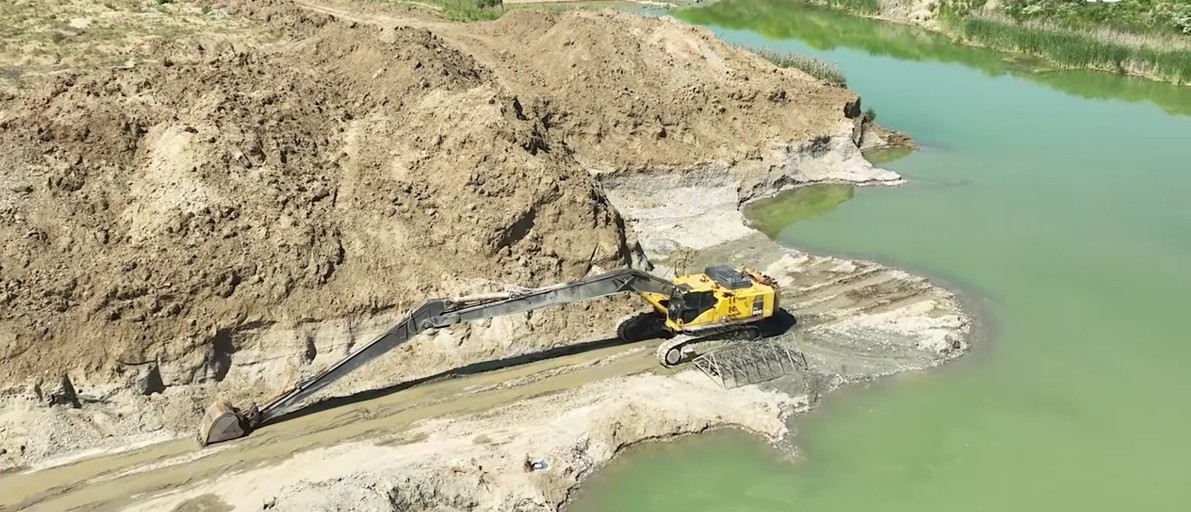
Damage caused to the river flow by gravel extraction. Photo: BIRN
Beyond sewage, the White Drin faces another threat, illegal gravel extraction. Since after the 1998-99 Kosovo war, hundreds of unauthorised operators have dug into the riverbanks to supply Kosovo’s booming construction industry.
Over the years, around 110 illegal gravel sites operated along the river, leaving behind devastated farmland, eroded shores, and increased flood risks. According to data from the Ministry of Environment, 123 square kilometres of land near the river are now at risk of flooding because of these interventions.
Although illegal gravel extraction is a criminal offense, enforcement remains weak.
Data from the Prizren Basic Court show that most environmental crime cases resulted in light sentences, mainly fines or suspended sentences. Out of 33 cases, 7 ended with suspended sentences and 25 with fines.
Marcel Lekaj, spokesperson of the Prizren Basic Court, told Prishtina Insight that, “from 2021 until September 2025, the [court’s] criminal division has accepted 60 cases related to environmental crimes such as pollution or destruction of the environment. However, after reviewing and analysing a selection of rulings, we have not found a single case specifically addressing pollution caused by gravel pits, whether by dumping waste or discharging sewage.”
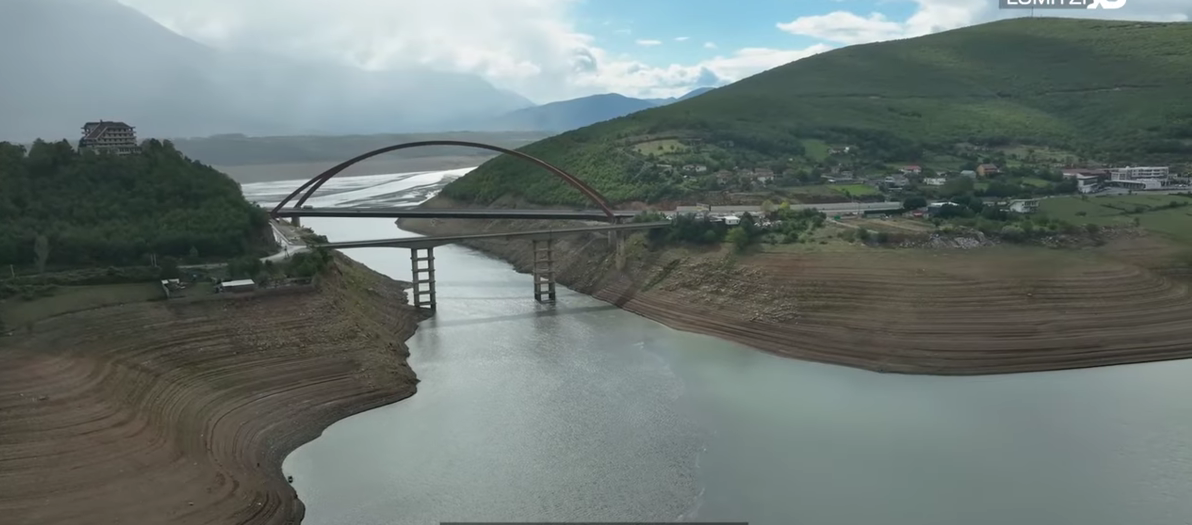
Fierza lake in Albania. Photo: BIRN
Most illegal gravel extractors in criminal cases are fined, which contributed to increased recidivism. Prosecutors’ files reveal that many offenders are repeat violators.
Peja based prosecutor Dorian Juniku said that some confiscated trucks and bulldozers were later returned to offenders by court order.
“If confiscated equipment is returned, we’re effectively allowing offenders to continue their crimes,” prosecutor Juniku stated.
Environmental activist and journalist Eroll Grapci noted that the White Drin’s upper reaches near Peje were once populated with fish, especially Trofta (the native Drin trout) which now is “nearly extinct due to pollution and illegal fishing.”
He mentioned the prolonged judicial procedures as a contributing factor.
“In one case, a concrete mixer discharged its waste into the river, resulting in hundreds of kilograms of dead fish. We filed a lawsuit and the case went to court, but the judicial process was extremely slow. We only received a court summons three years later,” Grapci stated, adding that the company was not penalised.
“After discussions we went to a legal mediator and the agreement was that once the project is finalized, the owner [of the company] will pay a certain amount to restock the river with fish,” Grapci concluded.
Municipal efforts fall short
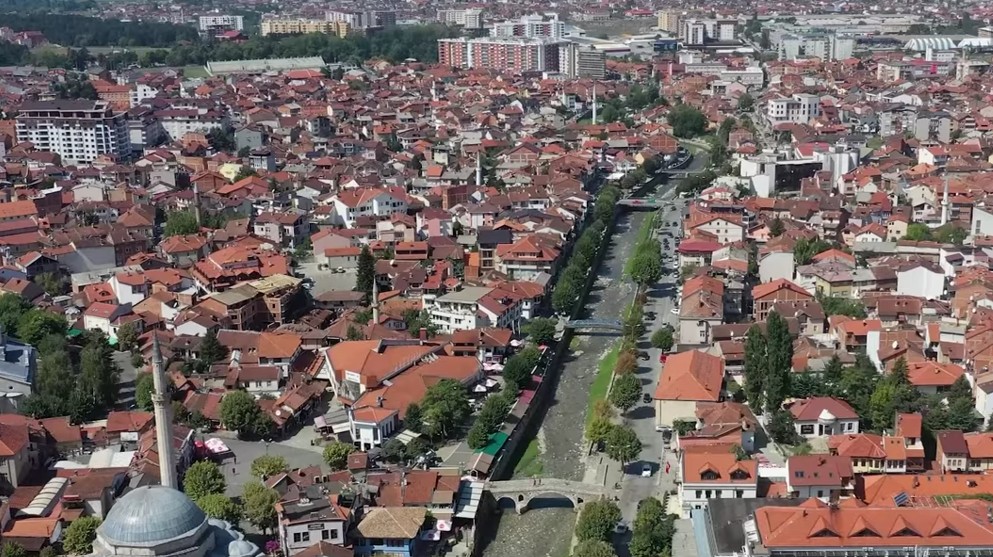
Lumbardh River running through Prizren. Photo: BIRN
Municipalities are attempting to act. Prizren has invested over 26 euros million in a partial wastewater treatment system covering half the city, while Peja is developing six to seven small treatment plants for nearby villages. However, these projects are far from enough.
Ymer Berisha, spokesperson for the Municipality of Prizren, which has a river running through the middle of the city, explained that, “we’ve done continuous inspections and asked businesses to take measures, but half the city still discharges untreated water into the river.”
Agron Shala from the Hydrometeorological Institute, which operates 56 surface water monitoring stations which include 22 rivers, told Prishtina Insight that the water quality consistently declines as rivers flow through urban and industrial zones.
“The Lumbardhi River of Prizren is a river we should take pride in because of its location and its source in the Sharr Mountains,” Shala said, explaining that, “at the monitoring point near its source, the water is crystal clear.” However, around 35 km downstream, “by the time it reaches Vlashnjë village [where Prizren’s Lumbardhi river joins the White Drin] the pollution levels are unbelievable.”
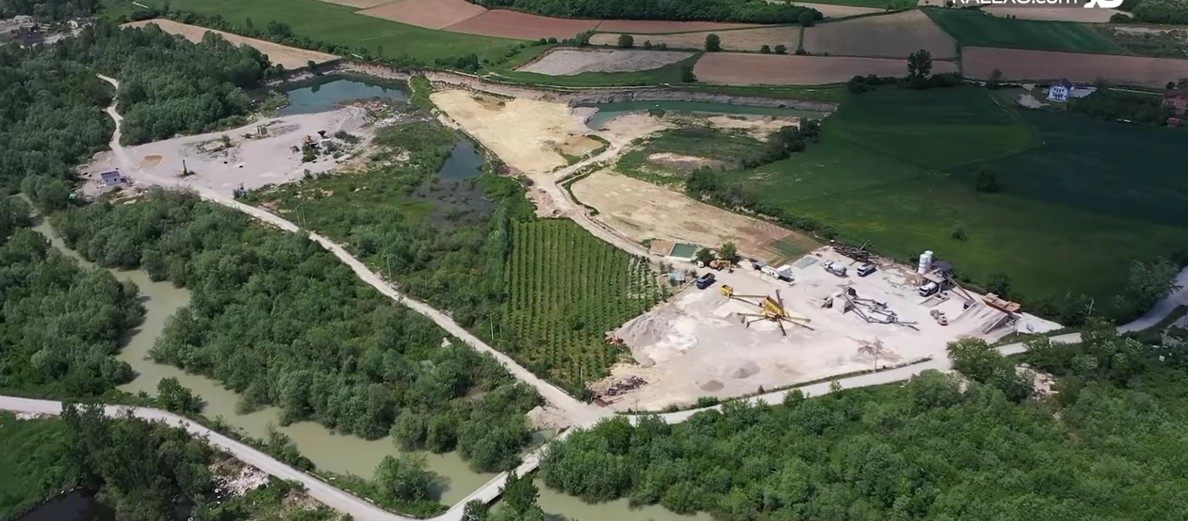
Environmental damage and disruption of river flow from the construction industry. Photo: BIRN
Shala emphasised that although a wastewater treatment plant was built in Prizren, there are still full discharges entering the river because the plant does not collect all of the city’s wastewater.
“A large part of Prizren continues to release sewage into the river just as it did before.”
Agron Nikçi, Director of Public Services in the municipality of Peja, added that they are working on a project to build around six or seven small-scale treatment plants.
He explained that, “although not at the same level as the one [treatment plant] constructed in Gorazhdevc (a village near Peje), these smaller plants will serve the surrounding villages, treating their wastewater before it eventually flows into the White Drin river.”
Meanwhile, locals are looking forward to the construction of a proper waste management system so they can get some of their river back.
“We are all eagerly waiting for the wastewater treatment plants to be built but we still don’t know when that will happen,” Kurtaj from Radavc said.
This TV Report was produced with the support from Internews Earth Journalism Network.
English version was prepared by Ardita Zeqiri