


Kosovo’s representation in the newly formed Peace Board for Gaza is a diplomatic success and signals strengthening relations with the Trump Administration, says Edward P. Joseph, a lecturer and Senior Fellow at Johns Hopkins SAIS in Washington, D.C.
On January 22, President Vjosa Osmani received significant attention in Kosovo after posting a photo of herself signing the Board of Peace Charter in Davos, Switzerland, with US President Donald Trump. Kosovo is one of several Balkan countries joining the new international body supposedly aimed at resolving conflicts around the world.
The Board of Peace initially focused on Gaza. However, the possibility of expanding to countries where Trump believes he has prevented conflicts was not ruled out.
“Because the alliance with America is the only way,” Osmani wrote on Facebook under the photo with Trump, moments after signing.
Talking to the BBC on January 25, Osmani justified her decision to accept the invitation and sign the Board’s founding paper.
“Kosovo was a country devastated by war. Genocide was being committed against the people of Kosovo and, under the leadership of the United States, of course with the support of the United Kingdom and many democratic countries around the world, our lives were saved… And today, we are sovereign, we are democratic, we are independent, and most importantly, our children are the first generation in the history of our nation that has not experienced war and is enjoying peace,” she said.
Speaking to Prishtina Insight, conflict management expert Edward P. Joseph, a lecturer and Senior Fellow at the Washington D.C-based Johns Hopkins SAIS, acknowledged the importance of a small country like Kosovo having the US as an ally and made the argument for the image of President Osmani applauding as President Trump held up the signed Charter of the Peace Board being “a significant step” toward improving Kosovo’s relations with the United States of America.
“Very simply, the most important implication for the Balkans from the Board of Peace is that Kosovo was invited to join. The image of President Osmani applauding as President Trump held up the just-signed Charter of the Board of Peace is a coup for Kosovo,” Joseph said.
“Kosovo must do what it can to build the relationship with the United States, and repair any damage from the September suspension. And joining Trump’s Board of Peace is a significant step in this direction,” he added.
Joseph was referring to the suspension of the Strategic Dialogue between Prishtina and Washington in September 2025, a decision which caused a stir last year, raising questions about whether relations had cooled with the US—the global power that has been Kosovo’s closest ally since liberation in 1999.
Joseph is a conflict management expert with over fifteen years of field experience. In April 2012, he served as the Deputy Head of the OSCE Mission in Kosovo. He has had more than a decade of work-experience in the Balkans, having contributed directly to peacebuilding and crisis response efforts in Kosovo, Bosnia, and North Macedonia.
However, in Joseph’s view, Kosovo’s strategic position imposes obligations on Prishtina, particularly given the isolation it faces from Serbia at the UN and Belgrade’s strong backing from Russia and China.
Balkan countries taking sides
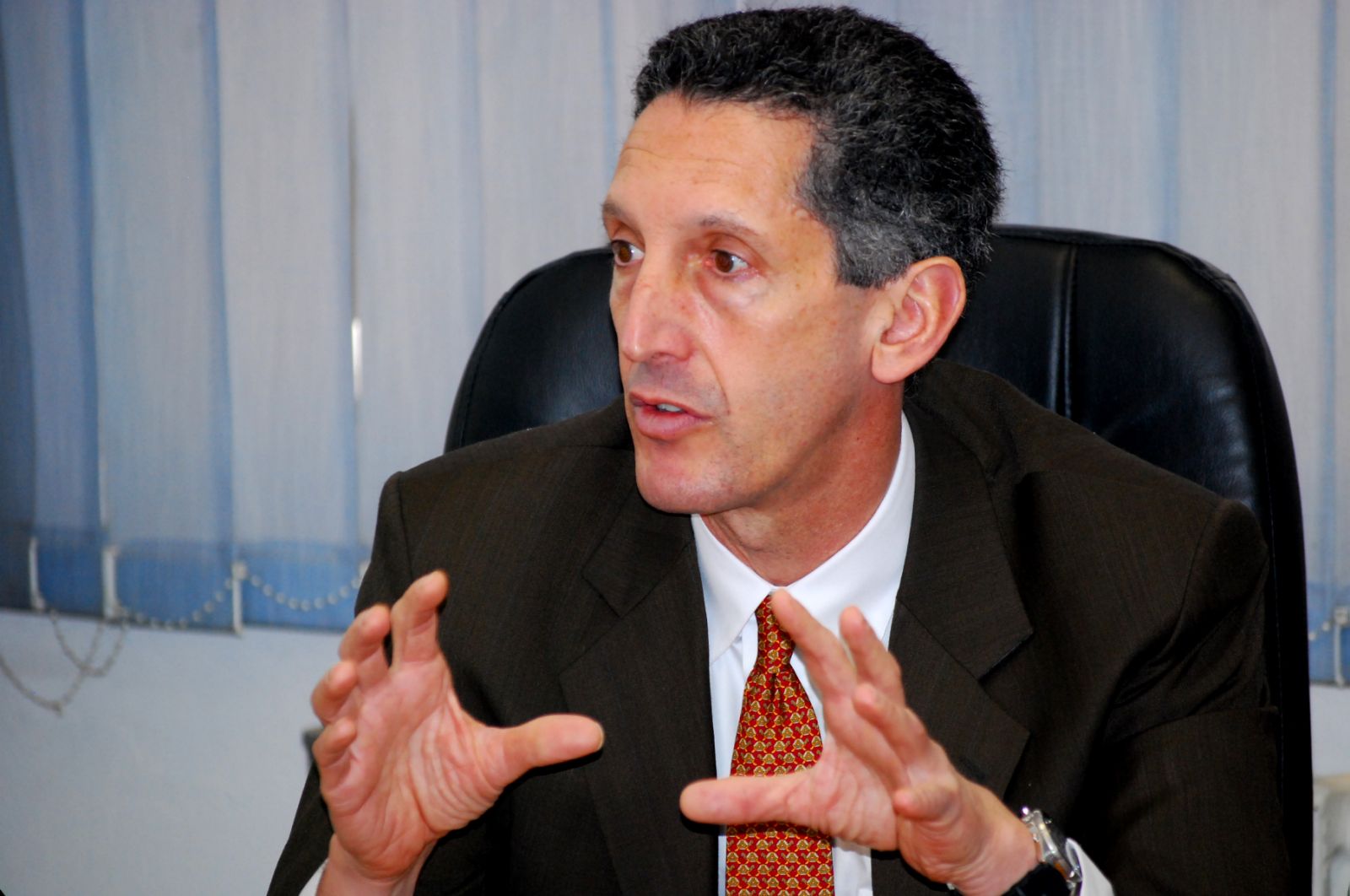
Edward Joseph. Photo: OSCE/Hasan Sopa
It has not gone unnoticed that Serbia remains outside the Board while Albania, Kosovo, and Bulgaria have joined—a move that solidifies these states’ standing with the Trump Administration.
“What is important right now for Kosovo—and Albania and Bulgaria—is that they are solidifying their relationship with the Trump Administration,” assessed Joseph, adding that other countries—such as North Macedonia, which faces continuing obstacles from Bulgaria—should take note and consider asking to join.
Albania accepted the invitation to be part of the Board, although Prime Minister Edi Rama was not present at the Charter signing ceremony as the parliament was discussing the initiative on that exact day. Subsequently, it gave the green light.
Furthermore, Joseph drew attention to the fact that Bulgaria and Serbia are traditional rivals.
He holds the view that Serbia is unlikely to join because the Peace Board is an obvious competitor to the UN and Belgrade views the UN as central to isolating Kosovo, which, according to him, constitutes the main priority in Serbian foreign policy.
Joseph describes this development regarding the Peace Board as an extraordinary turn of events, considering that a year ago, when President Trump took office again, expectations in Belgrade were extremely high.
“Obviously, these expectations have not been met, although Belgrade still has its channels to Washington,” he emphasised.
Although Joseph says there is no explicit mention of the Western Balkans in the Board’s Charter, he underscores the fact that “with Trump, who knows?”
“The entire endeavor appears to be an outgrowth from the original Gaza Board of Peace, which has a more elaborated Executive Board,” he added.
Joseph also emphasizes the basic composition of the Board. He finds it significant that a Bulgarian national and former UN official, Nikolay Mladenov, holds a key function in the Peace Board for Gaza.
A “rupture” with Europe
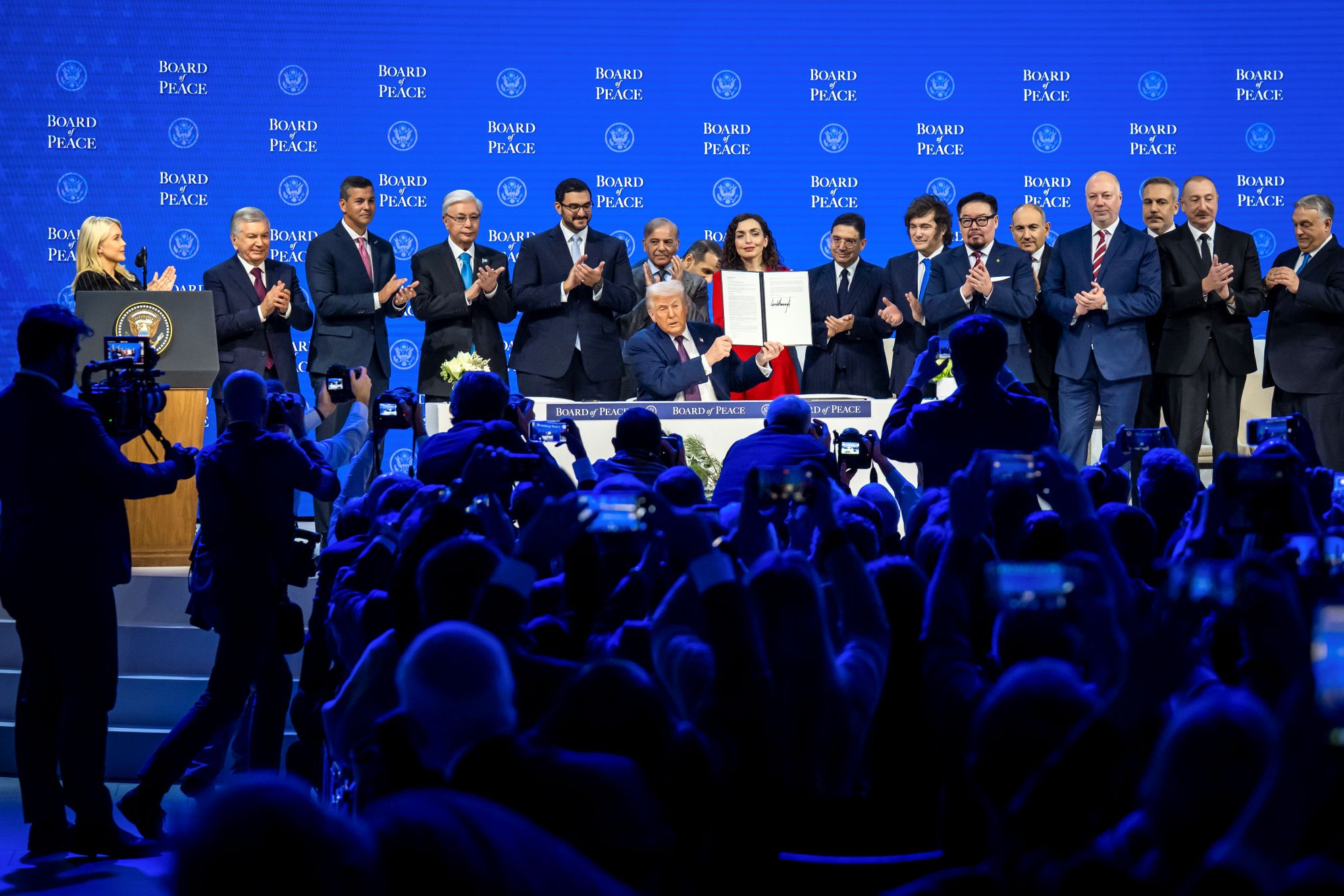
US President Donald Trump (C) holds a signed founding charter at the ‘Board of Peace’ meeting during the 56th annual meeting of the World Economic Forum (WEF), in Davos, Switzerland on January 22, 2026. Photo: EPA/GIAN EHRENZELLER
While 20 countries—including Argentina, Hungary, Saudi Arabia, and Turkey—signed the Charter, major Western powers have notably stayed away.
British Foreign Secretary Yvette Cooper stated that the UK would not sign due to legal and treaty concerns. Similarly, German Chancellor Friedrich Merz and Italian Prime Minister Giorgia Meloni cited constitutional barriers, while France and Norway rejected the invitation outright. Canada’s invitation was withdrawn by Trump following hesitation from Ottawa.
Joseph believes this opposition to the Board of Peace among European countries is likely to grow. “Transatlantic relations are at a ‘rupture,’ to cite the key word from Davos. Europe is in a position of pushing back on the Administration’s assault on the international order,” he said.
Despite President Trump’s recent assurances that he is a “big fan” of the UN’s potential and “the UN should have settled every one of the wars that I settled,” Joseph considers the Peace Board an attempt at an alternative mechanism. However, he concludes that this friction is a concern for Europe, not for Balkan states like Kosovo, for whom the priority remains solidifying their footing in Washington.
Furthermore, this should not be a concern for North Macedonia either, which has changed its name and yet still cannot open EU accession negotiations due to Bulgaria’s demands.
Structure and scope
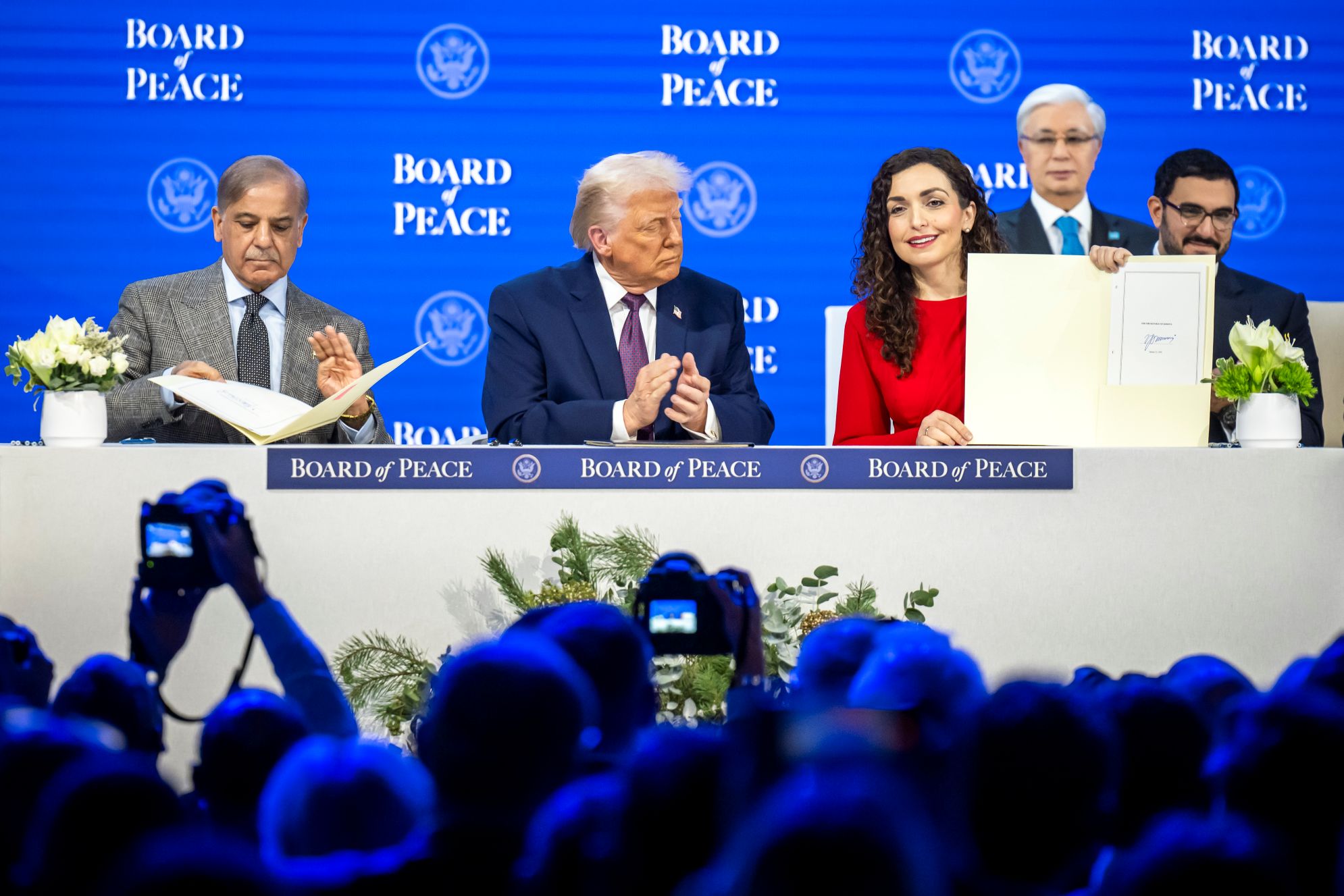
US President Donald Trump (C) sits between Pakistan’s Prime Minister Shehbaz Sharif (L) and Kosovo’s President Vjosa Osmani (R) during a signing ceremony of the ‘Board of Peace’ charter during the 56th annual meeting of the World Economic Forum (WEF), in Davos, Switzerland on January 22, 2026. Photo: EPA/GIAN EHRENZELLER
The Board, which initially focuses on Gaza, includes high-profile figures such as Trump’s son-in-law Jared Kushner, Secretary of State Marco Rubio, special envoy Steve Witkoff, and former British Prime Minister Tony Blair.
Notably for the region, Nikolay Mladenov, a Bulgarian national and former UN official, has been appointed as the High Representative for Gaza. He will act as the main liaison between the Board and a technocratic committee.
Joseph also mentioned reports that Jared Kushner, who is also part of the Board, was inspired to expand the concept of the entire Peace Board to a global level.
However, questions remain regarding the Board’s informal nature. Reports indicate a $1 billion fee for a permanent seat, though President Osmani has stated Kosovo has not been asked to pay this.
“Indeed, the Board’s status appears to be private and unofficial. The Charter states that it is to be deposited with the United States—not with the UN, which is the standard practice,” Joseph underlined.
According to the draft statute, a copy of which was secured by CNN, Trump will serve as chairman of the board, possibly holding the post beyond his second term.