


As Kosovo heads toward snap parliamentary elections set for June 7, 2026, social media platforms have flooded with AI-generated images, videos, and fabricated statements targeting political candidates across all parties.
With Kosovo entering a snap election campaign, Artificial Intelligence is being used as a powerful tool for political disinformation. Dozens of AI-generated images, manipulated videos, and fabricated statements targeting candidates from different political parties have flooded social media platforms.
The manipulated content ranges from deepfake-style images and altered videos to fabricated quotations and misleading posts repurposed from satirical sources.
Fact-checking platform Krypometer has identified fabricated posts targeting candidates from all major political parties, including the ruling Vetëvendosje Movement, LVV, the Democratic League of Kosovo, LDK, the Democratic Party of Kosovo, PDK, and the Alliance for the Future of Kosovo, AAK.
Religious, moral, and foreign allegiance narratives

Logos of some messaging and social media applications. Photo: EPA/RITCHIE B. TONGO
A considerable amount of the manipulated content seeks to portray political candidates as religious extremists, foreign agents, or individuals with questionable moral character.
Among the targeted figures are Acting Prime Minister Albin Kurti and LVV parliamentary candidate, cleric Osman Musliu.
Manipulated photographs falsely associate cleric Musliu with Iran’s former Supreme Leader Ayatollah Ali Khamenei.
“This content is entirely false and is being produced in my name,” Musliu stated.
Another Facebook page, Drenica Graphic, published an image showing Kurti and Musliu dressed as imams inside Kosovo’s Assembly. Kryepometer found no evidence supporting the authenticity of the image on the official profiles of either or in credible media outlets.
A separate manipulated image portrays Kurti wearing Orthodox clerical clothing. Reverse-image analysis indicates that Kurti’s face was digitally placed onto another person’s body.
Other posts have attempted to portray candidates as collaborators with Serbia or individuals acting against Kosovo’s national interests. Such narratives are particularly effective during election periods, as they set out longstanding political and ethnic sensitivities within Kosovo’s society.
From satire to disinformation
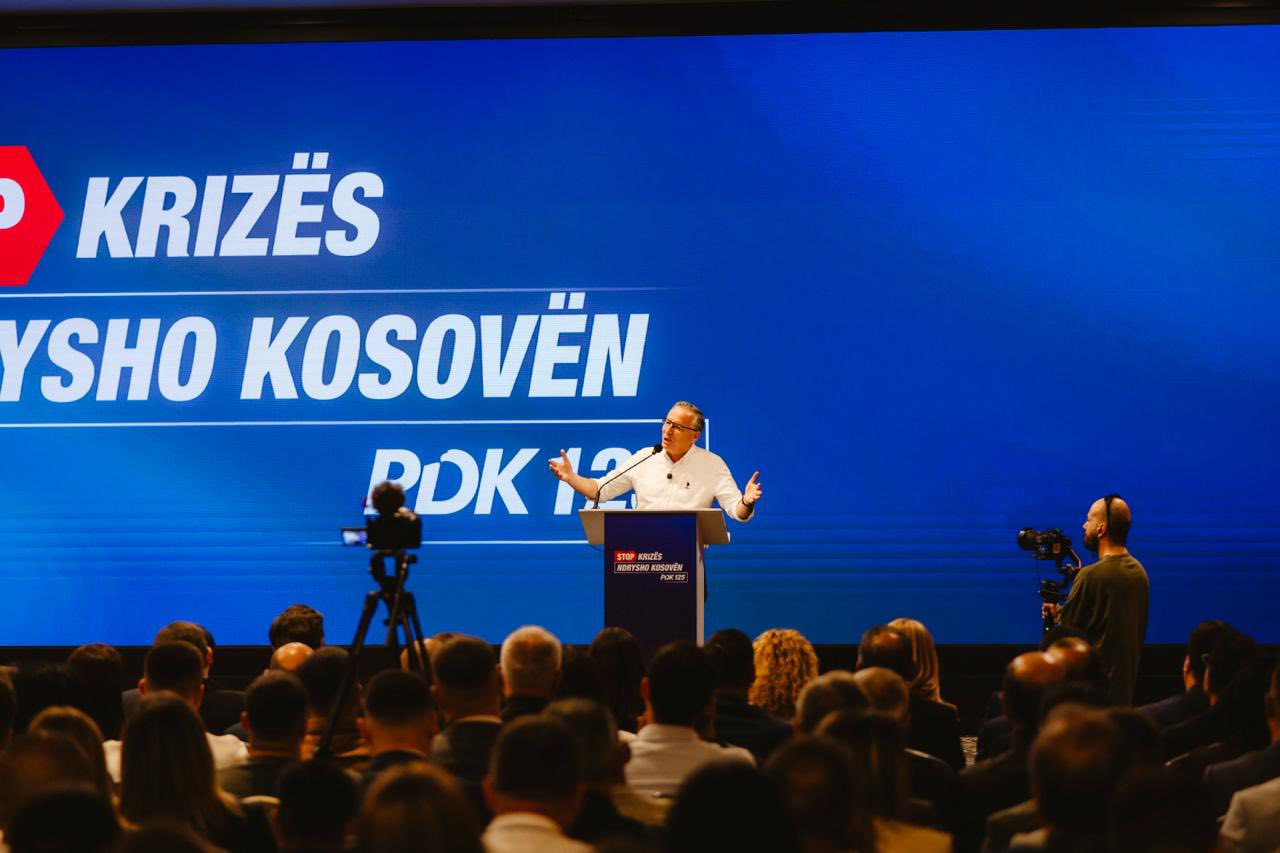
Bedri Hamza, the Democratic Party of Kosovo, PDK, candidate for Prime Minister, during an electoral rally held on May 24. Photo: Bedri Hamza’s Facebook account
Another tactic involves the misuse of satirical content. Fact-checkers found multiple cases in which posts originally published by satire pages were stripped of their labels and redistributed as authentic political statements.
Facebook page NjeLajm.com shared a quote falsely attributed to Albin Kurti: “Stay patient; we are only two elections away from the destruction of Kosovo.”
Fact-checking revealed that the quote originated from the satirical Facebook page hibridi.ks, which clearly labels its content as satire. However, the satire label was removed and the statement was presented as genuine.
Government spokesperson Arlind Manxhuka confirmed that the “quote was entirely false”.
Another post falsely portrayed PDK official Uran Ismaili making a statement about losing elections.
A Facebook group shared an image of Ismaili accompanied by the fabricated statement: “I promise that even without Fatmir Limaj (of the NISMA party), we will lose the elections decisively.”
This post also originated from the satirical page hibridi.ks.
Female politicians targeted
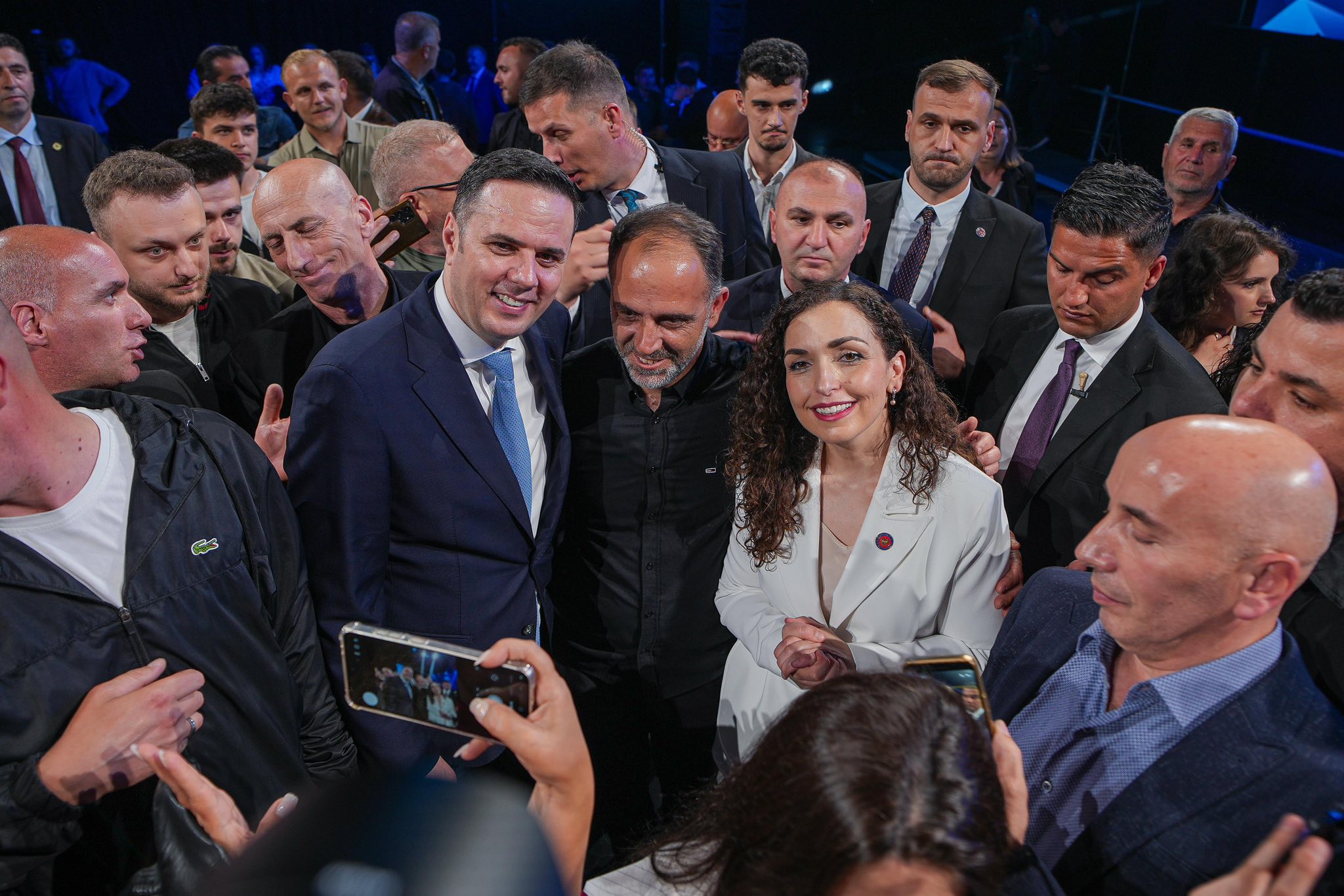
LDK leader Lumir Abdixhiku (left) and Kosovo’s ex-President Vjosa Osmani (right) take photos with supporters in Pristina on May 10, 2026. Photo: Lumir Abdixhiku/Facebook.
Former President Vjosa Osmani has been among the most frequent targets of manipulated content since announcing her return as leader of the LDK electoral list and the party’s presidential candidate.
False claims have portrayed Osmani as collaborating with Serbian President Aleksandar Vucic, or acting under the influence of other political leaders. Osmani has repeatedly been targeted by manipulated content portraying her as submissive to either Albanian Prime Minister Edi Rama or Albin Kurti.
One Facebook group published an image of LDK leader Lumir Abdixhiku and Osmani alongside the fabricated quote, “We will send Kurti to Montenegro,” falsely attributing to them a remark that plays on Kurti’s family origins in Montenegro.
The post appeared on April 30, the same day Abdixhiku and Osmani met to discuss potential electoral cooperation.
In reality, both described the meeting as a friendly gathering. Abdixhiku stated:
“It was a friendly dinner between two friends. Not the first of its kind, nor the last. Very soon we will come with good news.”
Both LDK representatives and Osmani’s team denied the claims as false.
Similarly, fabricated quotations have been attributed to other opposition figures, including former MP Hykmete Bajrami. One post falsely claimed she intended to abolish child benefits if LDK formed the government.
“Children do not need benefits. We will stop them on the first day of an LDK government,” the post read.
Both Bajrami and LDK leader Lumir Abdixhiku dismissed the claim as disinformation.
The Facebook page Gjithçka rreth Politikës (Everything about politics) published an AI-generated image falsely showing Vetëvendosje official Dejona Mihali meeting Serbian President Aleksandar Vucic.
Vetëvendosje’s Information Office confirmed that the claim was completely fabricated.
AI images used to create false associations
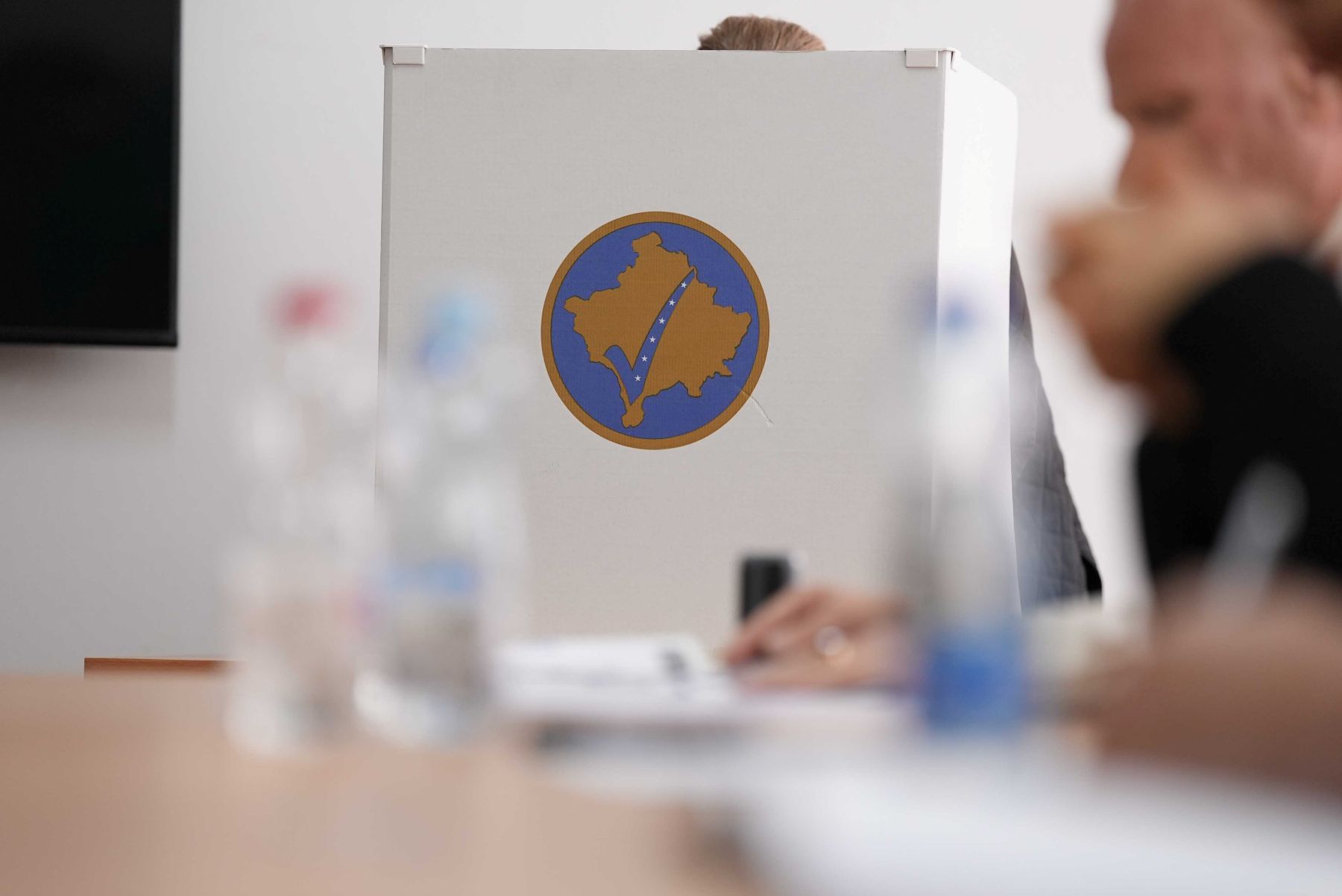
Local elections in Kosovo on October 12, 2025. Photo: BIRN/Denis Sllovinja.
Several manipulated images appear designed to create guilt-by-association narratives.
PDK prime ministerial candidate Bedri Hamza was falsely inserted into a historical newspaper front page praising former Yugoslav leader Josip Broz Tito.
On May 15, a threads user shared an altered image of the March 23, 1981 front page of the newspaper Rilindja, where it replaced former Yugoslav leader Josip Broz Tito with PDK prime ministerial candidate Bedri Hamza under the headline: “With Tito in our hearts – Following Tito’s path.”
The image was altered to label Hamza as “Homza Titisti.”
Review of the original newspaper edition showed that the front page featured Tito, not Hamza. PDK officials described the image as deliberate election disinformation.
In another case, AI-generated images falsely portrayed Skenderaj Mayor Sami Lushtaku in a car alongside Milan Radoicic, the Serbian politician suspected of involvement in the Banjska attack.
Another fabricated image showed Lushtaku attending a dinner with Radoicic and other PDK officials and businessmen.
The spread of manipulated content has not been limited to a single political party.
AAK MP Besnik Tahiri was targeted through AI-generated images showing him surrounded by large amounts of cash and through manipulated photographs taken inside Kosovo’s Parliament. Tahiri publicly shared original images to demonstrate the alterations.
Another AI manipulated image falsely showed Tahiri alongside MP Duda Balje inside Kosovo’s Parliament. Tahiri responded by publishing the original photograph, detailing the differences between the authentic and altered versions.
Acting President Albulena Haxhiu set June 7, 2026, as the date for Kosovo’s snap parliamentary elections after the Assembly was dissolved for failing to elect a new President within the constitutional deadlines.
Under Kosovo’s Constitution, electing a President requires a two-thirds majority of all Assembly members during the first two rounds of voting. If no candidate secures the required majority, a third round is held between the top two candidates. If no candidate is elected in the third round, the Assembly is dissolved and new elections must be held within 45 days.
Following the December 28, 2025 parliamentary elections, Vetëvendosje won 57 seats, PDK 22, LDK 15, and AAK 6. Despite holding the largest parliamentary group, Vetëvendosje failed to secure sufficient support from other parties to elect a President.
The official campaign period began on May 28 and runs until 6:59 a.m. on election day.
Note: This material was produced with the support of the Embassy of the United Kingdom in Kosovo through funding from the Government of the United Kingdom; however, the views expressed do not necessarily reflect the official policies of the UK Government.