


Many ethnic Albanian artists fled their homes during the 1998-99 Kosovo war, leaving behind large collections of their work.
“On the day NATO began bombing Yugoslavia, I knew I had to save whatever I could,” Fadil Hysaj tells Prishtina Insight 27 years later.
Warned that his name appeared on a Serbian blacklist targeting Albanian intellectuals and artists, Hysaj spent his final hours in Prishtina in late March 1999, trying to save years of his work. He then joined the column of Kosovo Albanians forced to flee to neighbouring Albania.
“I loaded everything onto floppy disks on an old Windows computer and took them with me across the border,” he recalls. Hidden among the few belongings he carried, the disks contained dozens of plays, unfinished texts, personal notes, and fragments of larger literary projects.
Only after reaching Albania did he discover that the disks were defective. He had lost all his life’s work.
“Thirty plays written over an entire decade had just disappeared, together with unfinished dramas, sketches, diaries, working papers, and a novel in progress. I lost almost everything I had written,” Hysaj says.
For many Kosovo artists, the losses inflicted by the war were profound. Not only did they lose their homes, studios, and livelihoods, they also lost the manuscripts, paintings, musical scores, notebooks, and unfinished projects through which they had documented and imagined Kosovo itself.
Hysaj also lost an unfinished novel, which he describes as a “psychopolitical” work, in the genre of existential surrealism, centered on what he calls “the trauma of national tragedy.”
“The idea was to examine how Albanians have remained victims of international political decisions for more than a century and a half,” he says.
Fleeing Kosovo
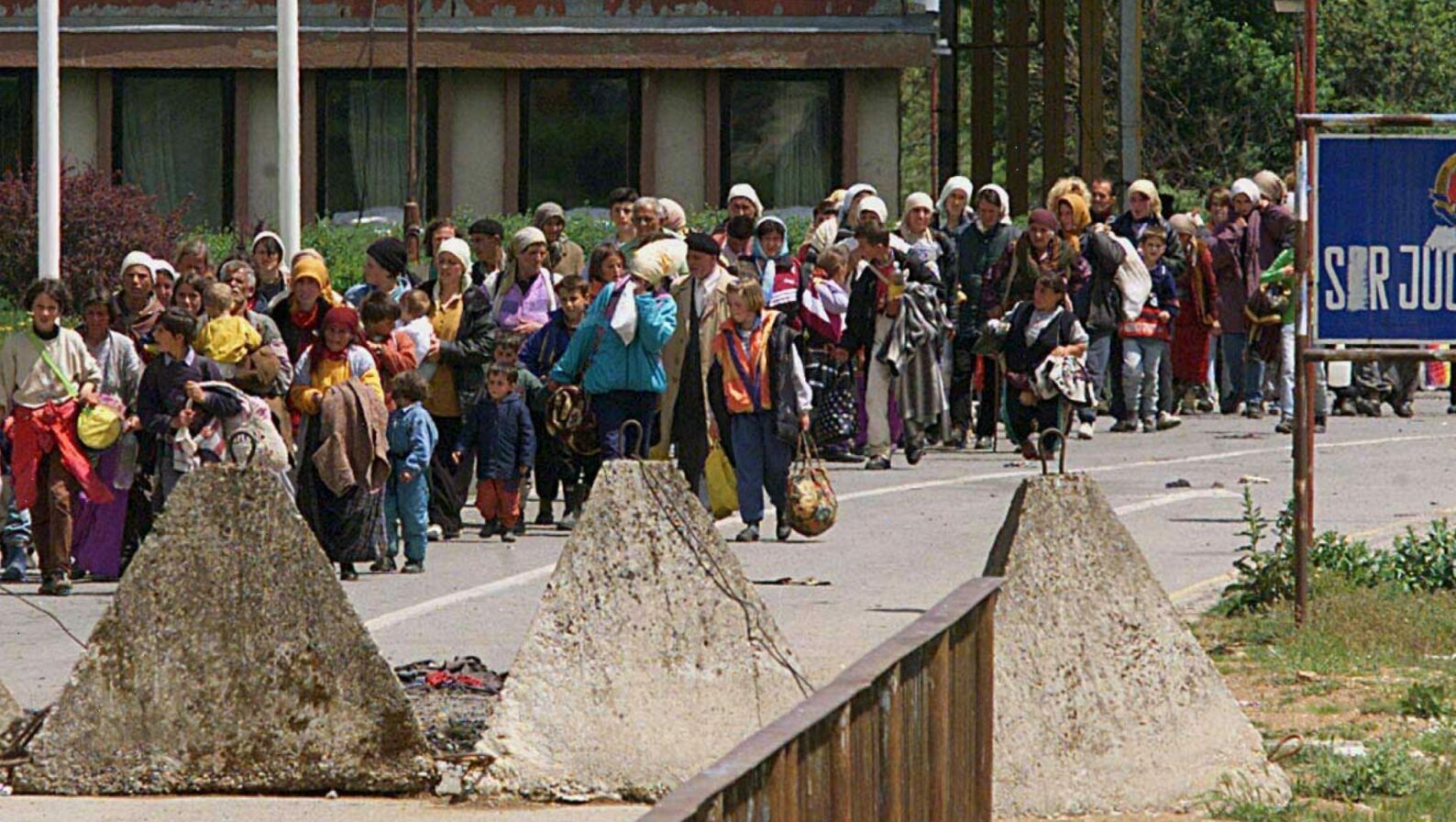
Ethnic Albanian refugees fleeing Kosovo are passing by anti-tank obstacles as they arrive after hours on foot at the Yugoslav-Albanian border in Morina on Monday, May 10, 1999. Photo: EPA/Louisa Gouliamaki/lg-fob
Hysaj was more than a filmmaker. During the 1990s, he served as dean of the Faculty of Arts at the University of Prishtina within the parallel Albanian education system established after Yugoslavia’s President Slobodan Milošević revoked Kosovo’s autonomy in 1989. He was also among the founders of Kosovo’s first Albanian political party, the current Kosovo opposition party the Democratic League of Kosovo, LDK.
The dismantling of Kosovo Albanian cultural institutions had begun long before the war itself. Following the revocation of Kosovo’s autonomy in 1989, Albanians were removed from public cultural and educational life. Public galleries and institutions were restructured under centralised control, while Albanian-language media production was reduced or sidelined. Many actors, directors, teachers, and cultural workers were dismissed from state institutions, as parallel cultural and educational structures emerged throughout the 1990s. According to Human Rights Watch reporting on Kosovo in the 1990s, this process formed part of a broader pattern of systematic exclusion of Albanians from public institutions.
Before leaving Kosovo himself, Hysaj first ensured that his family reached safety. “In those days I was moving from one apartment to another,” he recalls. “I remember being in the apartment of actor Selman Isufi when he asked me to take his young son across the border to safety.”
Years later, that experience would be dramatized in the award-winning 2012 short film Kolona (“Column”), directed by Hysaj’s son, Ujkan Hysaj. The film follows a Kosovar refugee convoy halted at a Serbian checkpoint, where a father is forced to make an impossible choice between saving his own son or his nephew. Kolona went on to win numerous international awards, including Best Live Action Short Film at the 2013 Cleveland International Film Festival.
In exile
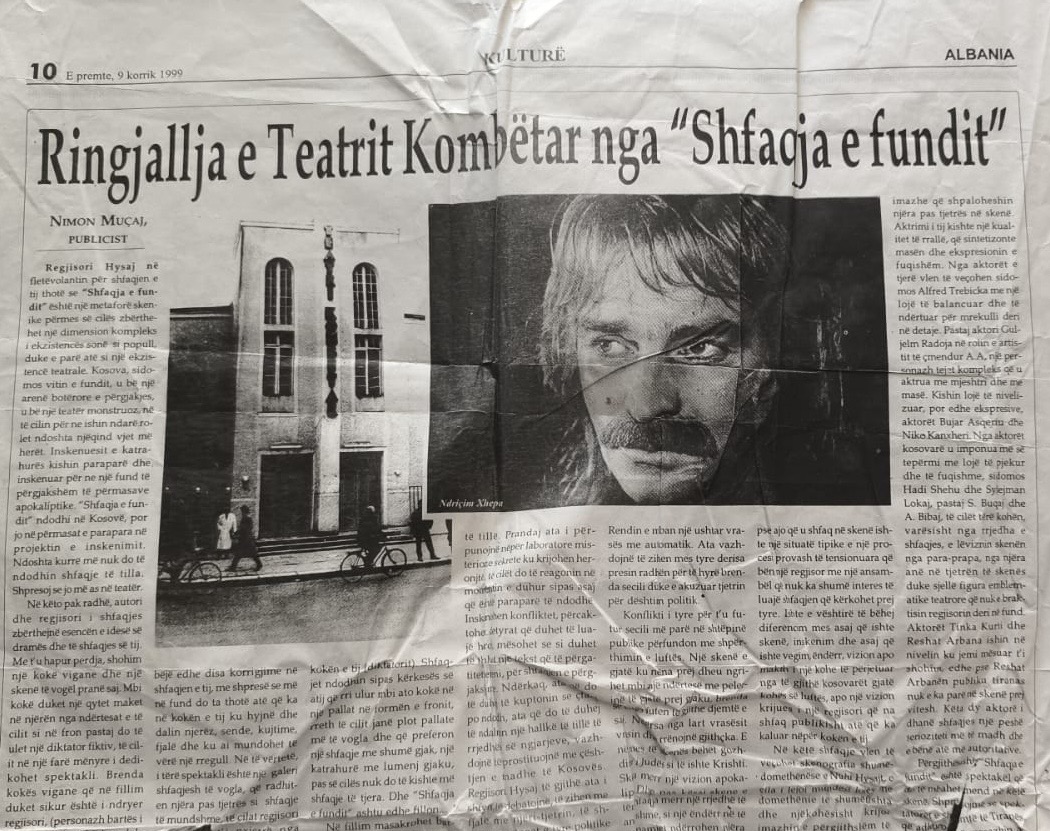
Albanian newspaper covering Shfaqja e Fundit (The Last Exhibition) and featuring an interview with Fadil Hysaj, July 9, 1999. Photo courtesy of Fadil Hysaj.
While Hysaj was a refugee in Tirana, Albania, alongside many other Kosovo Albanian artists who had fled the war, reports were circulating that he had been killed.
“There was this Bosnian director who travelled all the way to Tirana looking for me,” Hysaj recalls. “People thought I was dead. He found me there and interviewed me for Radio Television Sarajevo.” The incident reflects the confusion and lack of information that accompanied the mass displacement of Kosovo Albanian artists and intellectuals in the spring of 1999.
Despite the shock of displacement, Hysaj described his two months in Tirana as unexpectedly productive. “At first I wasn’t feeling well,” he says, adding that “then I met [Kosovo Albanian painter] Rexhep Ferri. He had lost almost everything he had created, yet he remained optimistic. After seeing him, I felt relieved. It gave me strength and restored a sense of optimism.”
During his stay in Albania, Hysaj lectured at the Academy of Arts in Tirana, directed theatrical productions, including Shfaqja e Fundit (The Last Exhibition). It was written in the aftermath of exile and loss and staged by actors from the National Theatre of Tirana alongside Kosovar refugee actors in Albania. The play went on to receive significant acclaim.
“From June to July 1999, Fadil, myself, and other actors travelled through Albanian cities where Kosovar refugees were housed,” actress Sheqerie Buqaj told Prishtina Insight. “We performed for children in the camps as part of a month-long tour.”
Artists find refuge
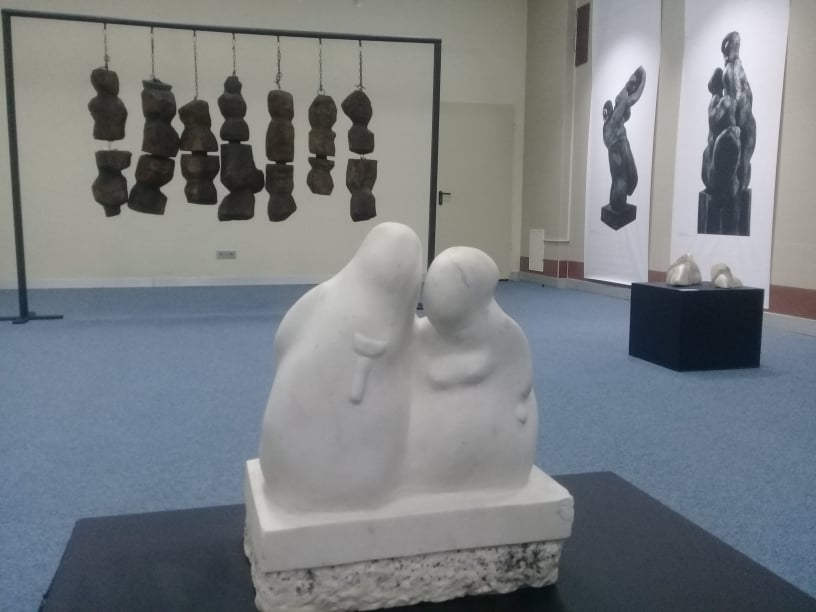
Exhibition commemorating the 20 year anniversary of the death of Kosovo Albanian sculptor Agim Çavdarbasha in Prishtina, October 25, 2019. Photo: BIRN
Several Kosovo Albanian artists were forced to flee to Albania during the 1998-99 Kosovo war. Some managed to take some of their work with them, others had to start anew.
The late Kosovo Albanian artists, painter Muslim Mulliqi and sculptor Agim Çavdarbasha, moved much of their work to Tirana out of fear that it would be seized or destroyed, while Çavdarbasha himself remained unaccounted for during part of the war.
“In 1993, as part of Kosovo Culture Week in Albania, we transported works by Muslim Mulliqi and Agim Çavdarbasha to Tirana,” Hysaj recalled. “Those works remained there. By the end of the war, many of the paintings and sculptures were destroyed, including Agim’s sculpture Nana. It was one of his masterpieces.”
Peter Finn’s 1999 Washington Post article ,The Lost Art of Kosovo, a Casualty of War, also documented the experiences of several Kosovo Albanian artists whose work was disrupted by the expulsions.
Finn reported that composer Rauf Dhomi, author of the first opera composed in Kosovo, Goca e Kaçanikut (The girl of Kacanik), escaped Prishtina only after bribing Serbian paramilitaries at checkpoints. He had to leave behind both his instruments and compositions.
Among the artists featured in the Washington Post article was Nexhat Krasniqi, also known under the pseudonym NEKRA. A caricaturist, graphic designer, and animator from Peja, Krasniqi ran Studio N, an independent artistic space where younger artists gathered to study and work during the 1990s.
According to Finn’s reporting, Studio N became one of the first targets of the expulsions in the city. By late 1998, police raids had forced Krasniqi into hiding, moving between different homes each night. When he eventually fled Kosovo through Montenegro into Albania, he left behind hundreds of original works and around 12,000 drawings intended for an unfinished animated film.
“The artistic spirit, even with the destruction we have witnessed, didn’t die and won’t die,” Krasniqi told the Washington Post in 1999.
More than two decades later, Hysaj expressed a similar sentiment in an interview with Prishtina Insight, recalling that despite the displacement and uncertainty, that period was marked by a remarkable sense of solidarity.
“It was a different spirit,” Hysaj claims, reflecting on the months spent in Tirana in a community of displaced actors, painters, writers, directors, and other refugees. “There was a unity and camaraderie that we no longer have today.”
Bleart Thaçi is a cultural history researcher. He works at BIRN’s Reporting House museum which explores media coverage of the war in Kosovo.