


The absence of a strong legal framework has led to persons with disabilities in Kosovo not being integrated into society and it has limited their access to proper education or employment opportunities.
December 3 marks the International Day of Persons with Disabilities. Around the world, this date is intended to serve as more than a slogan. It mainly marks a moment to reflect on commitments made, progress achieved, and rights still denied.
In Kosovo, despite annual conferences and polite applause in institutional halls, this day remains largely symbolic. Beyond the speeches and commemorative banners, the actual reality for persons with disabilities continues to be shaped by inconsistent policies, insufficient resources, and a striking lack of political urgency.
Data shows a truth no ceremony can mask. According to the Kosovo Strategy on the Rights of Persons with Disabilities 2025-2030, more than 337,000 citizens—roughly 21 percent of Kosovo’s population—live without functional laws and sustainable services designed to support them.
According to civil society organizations, persons with disabilities are less likely to attend school, more likely to face unemployment, and routinely excluded from public services and civic life.
Afrim Maliqi, the director of the Association of Paraplegics and Paralysed Children of Kosovo, HANDIKOS, told Prishtina Insight that, “persons with disabilities remain the poorest and most marginalized group in the country.”
“Despite efforts at both central and local levels, the situation remains difficult for the persons with disabilities, [who] live in difficult economic conditions, without institutional rehabilitation, adequate healthcare services, or meaningful access to public life,” he explained.
Not integrated in society
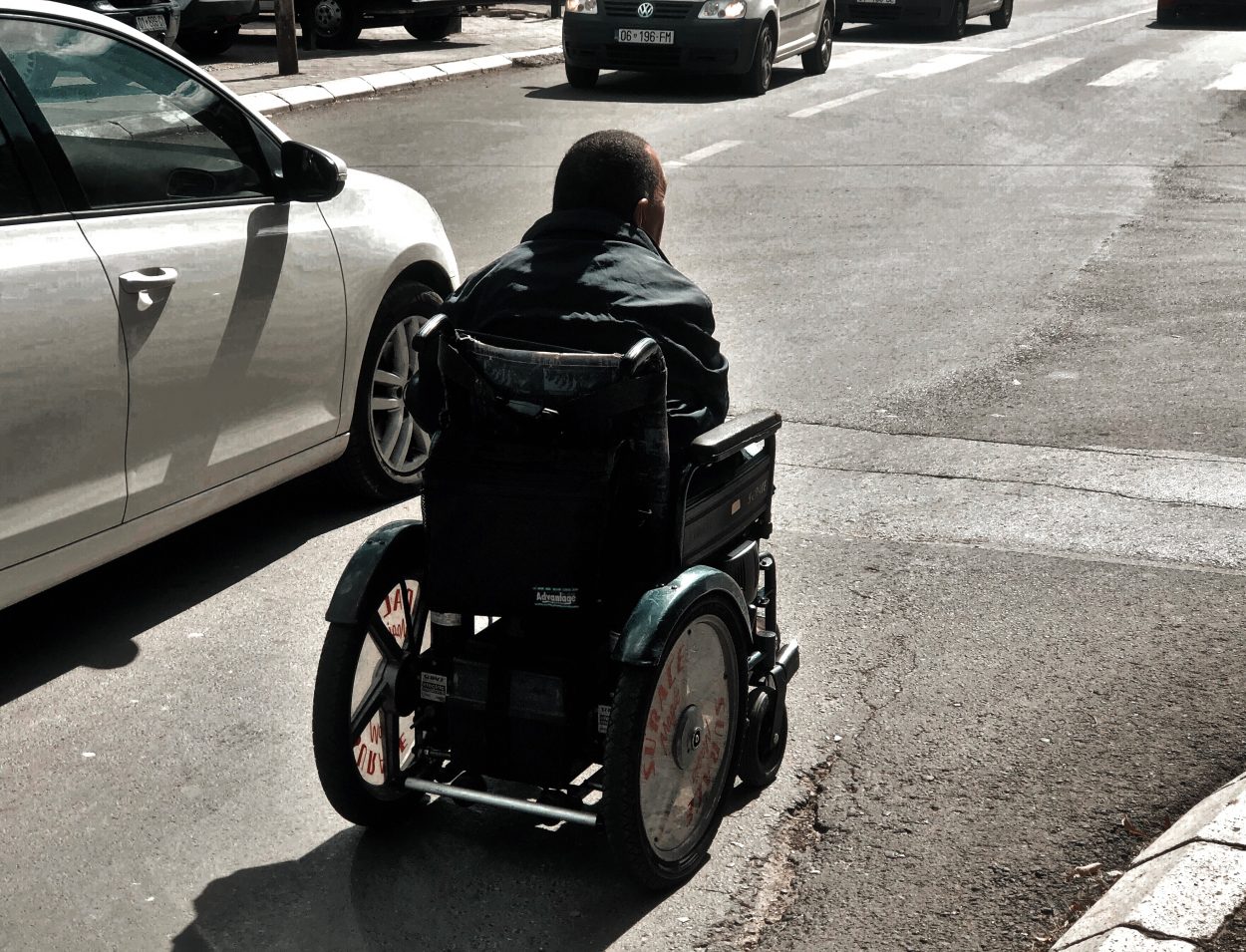
A wheelchair user moves along the streets of Prishtina due to the lack of dedicated spaces. Photo: BIRN.
Because of the lack of a proper legal framework and state assistance, many persons with disabilities are not able to integrate into society in Kosovo.
According to the World Bank, only around 12 percent of school-age children with disabilities are actually in school in Kosovo—5,300 of an estimated 43,000 children. However, a report by Dr. Vjollca Belegu Caka, published at the Academicus International Scientific Journal, explains that, “up-to-date statistics are scarce, but reports indicate that approximately 10-15% of children with disabilities in Kosovo are included in mainstream education, while the rest are in specialized institutions or out of the school system entirely.”
Experts consider this to be not merely a policy indicator but a moral outrage, revealing how far Kosovo lags behind international standards for inclusion and equal access to schooling.
According to Mustafa from the Kosovo Association of the Deaf, the barriers faced are not only physical or institutional but also linguistic.
“The education of deaf persons in Kosovo remains one of the biggest issues because of the non-implementation of the bilingual education model—teaching in Sign Language and writing. As a result, many deaf persons finish education without the basic literacy skills of writing and reading,” she told Prishtina Insight.
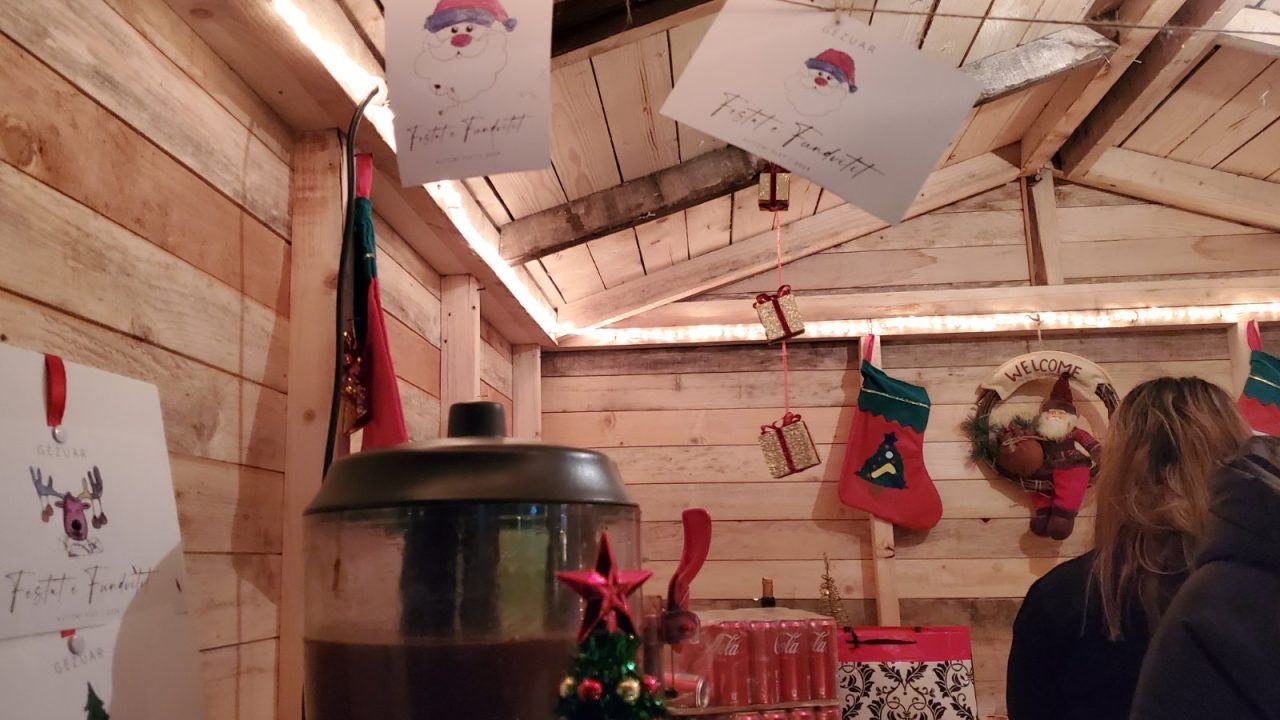
Cards crafted by children with autism. Photo: BIRN.
Indeed, Sign Language is not formally recognized or mandated in schools in Kosovo. Many complete their schooling without the most foundational literacy skills, not because they are unable to learn, but because the system never offered education in a language they can access.
A 2023 Council of Europe study concluded that the vast majority of children with hearing impairment, almost 100 percent, do not have basic reading and writing skills.
“The reading skills test showed that none of the 14 students tested from years 4 to 12 manage to read and understand even simple sentences,” the report reads.
Mustafa explained that a concept document on Sign Language has been drafted in cooperation with the Prime Minister’s Office for Good Governance. The purpose of this initiative is to improve access to information, public services, and education for deaf persons. However, according to Mustafa, this proposal remains only at the conceptual level, despite being planned under the Strategy for the Rights of Persons with Disabilities 2025–2030.
Without legal status, Sign Language remains invisible in institutions, unregulated in classrooms, and absent from public information platforms. Kosovo is decades behind EU standards on this basic issue.
Paper-only laws
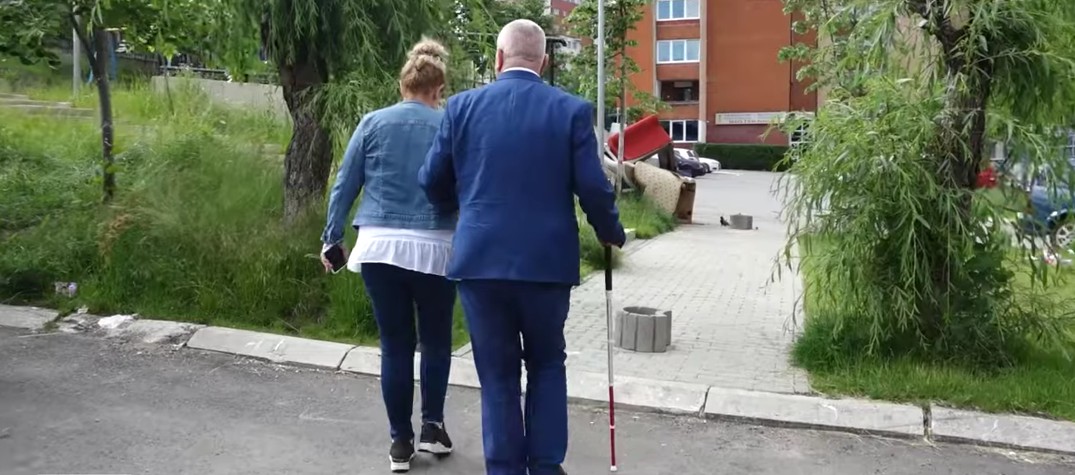
A visually impaired person walks alongside his member. Photo: BIRN.
Where deaf rights show the consequences of linguistic exclusion, autism demonstrates the emptiness of strategic promises that are not implemented.
Violeta Hyseni, director of the NGO Autizmi Flet (Autism Speaks) pointed out that Kosovo has laws on disability and administrative guidelines and strategic documents on inclusion, but they are rarely implemented.
Hyseni told Prishtina Insight that, “institutions treat the issue of persons with disabilities only partially seriously. At the declarative and legal level, there is political will and strategic documentation. However, when it comes to implementation, a serious approach is often lacking. Some municipalities have made good progress, while others do not even consider this field among their basic priorities.”
Moreover, she explained that institutions frequently operate without dedicated budgets, sustainable structures, or meaningful consultation with persons with disabilities. Strategies and action plans are published, celebrated and then left without financial guarantees or measurable deadlines. A policy without a budget line is not a policy at all; it is political performance.
The most common model of financing disability-related services in Kosovo is through annual subsidy lines at the municipal level. However, year after year, organizations must wait for funding decisions that come late, in unpredictable amounts, or not at all. Civil society organizations have concluded that no service provider—whether for autism, Down Syndrome, mobility support, or rehabilitation—can design long-term programming under such precarious conditions.
Funding instability also discourages collaboration, capacity-building, and professional development. Projects usually become fragmented and short-term, designed to survive administration cycles rather than to achieve sustainable results.
Sebahate Hajdini-Beqiri, the Executive Director of the NGO Down Syndrome Kosova, argued that this is not merely a budgeting problem; it is a structural flaw.
“The failure to adopt the Law on the Rights, Assessment, Treatment and Status Recognition, Services and Benefits for Persons with Disabilities, along with its accompanying by-laws, has direct and harmful consequences for thousands of people in Kosovo. This is not merely a budgeting problem; it is a structural flaw,” she told Prishtina Insight.
“Annual subsidies do not constitute a system. They are emergency survival mechanisms,” she added, explaining that, “without a legal foundation for financing, disability organizations in Kosovo are forced to function as competitors for scarce project grants rather than as integrated partners in service delivery.”
“In practical terms, it means that vital services—such as assistive devices, rehabilitation programs, personal assistants, inclusive education support, and accessible healthcare—remain discretionary instead of guaranteed rights. Every year becomes a battle for survival rather than a predictable system of inclusion,” Hajdini-Beqiri explained.
Employment remains one of the clearest indicators of whether disability rights are functioning. Under Kosovo’s existing legal framework, every employer must hire one person with disabilities for every fifty workers. A report by the NGO Down Syndrome Kosova concluded that more than half of entities employing over fifty people have no employees with disabilities at all. Penalties exist but are rarely implemented. This gap between written obligation and practical reality demonstrates a pattern that appears throughout the disability sector: rights exist on paper, but not in daily life.
Unemployment
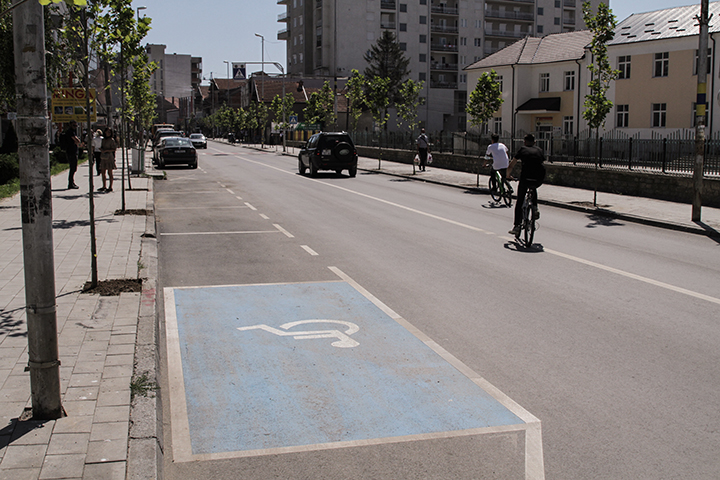
A parking space reserved for people with disabilities in Ferizaj. Photo: BIRN.
Public institutions must play a leading role in respecting and enforcing employment standards. According to experts, monitoring disability employment within public institutions could transform the social perception of persons with disabilities by strengthening their economic position, reducing stigma, and making disability visible and mainstreamed in institutional life.
Hyseni from Autizmi Flet told Prishtina Insight that, “in the labor market, the employment rate of persons with disabilities remains very low. Even public institutions, which should serve as an example, rarely implement the legal employment quota. Health and rehabilitation services are also limited, particularly in smaller municipalities where there is a lack of therapists, psychologists, speech therapists, and day care centers.”
Beyond employment, institutions need to functionalize the mechanisms necessary for drafting disability-sensitive policies, monitoring and reporting on implementation, and ensuring that persons with disabilities are part of public consultations.
Civil society organizations constantly demand that participation of persons with disabilities in society must move beyond invitations and transition into co-design of regulations, strategic plans, and service models. They demand disability be integrated holistically into municipal development planning, not sidelined or treated as a separate project. Local disability strategies and action plans must be reflected in budgetary planning and tied directly to program objectives. Without this integration, every promise risks being postponed indefinitely, a guideline by the Kosovo Coalition of Children Rights Organizations,KOMF, explains.
A concrete and urgently needed measure is the application of additional scoring criteria during subsidy allocation. The report “Situational Analysis on the Rights of Persons with Disabilities in Kosovo (Brief),” explains that, “while some municipalities have developed action plans and advisory committees, the effectiveness of local mechanisms varies due to limited funding and capacity.”
Moreover, the European Commission’s Progress Report for Kosovo has already indicated that the country has only partially implemented previous recommendations on disability rights, urging adoption of the disability law, harmonization with the European Accessibility Act and effective guarantees for access to education, health care, infrastructure and transport. Delay carries consequences—financial, social and ethical.
Experts maintain that professional services must accompany this shift, meaning that psychologists, speech therapists, occupational therapists and social workers are essential, particularly in smaller municipalities, where families often have no access to specialized support. Without these professionals, inclusion remains theoretical rather than practical.
Civil society organizations have constantly claimed that adopting a comprehensive law on persons with disabilities would allow all of these elements to come together in a single, coherent system. Kosovo could do away with fragmentation and pursue standardization; rather than uncertainty, it could guarantee continuity.