


The daily protests by Kosovo citizens and other supporters of the Kosovo Liberation Army against the conviction of four former KLA leaders for war crimes, by Kosovo’s Hague-based court, bring back the issue of war- related trauma.
In Kosovo, the children born at the end of the last century, grew up surrounded by the legacy of the 1998-99 war. Rather than learning history from textbooks, as children would normally do, we learnt it by overhearing conversations among brothers-in-arms when they came to visit, from the silence that would at times encase the dinner table, or when the financial burdens that follow post-conflict societies made daily life challenging.
For twenty-six years, the post-conflict reality in Kosovo was framed by both a public and a personal narrative that conveyed two different ideas of a warrior.
In the public narrative—in the perceptions of ordinary people—the children of ex KLA fighters were often perceived as entitled. Personally, however, I never experienced these great privileges that people believe come with being the offspring of a liberator. That is my personal narrative.
In the household, the fear of the war potentially starting again never disappeared. It was an unaddressed and unhealed trauma often multiplied by stigma, economic dependence, and various mental health struggles.
Rebuilding peace
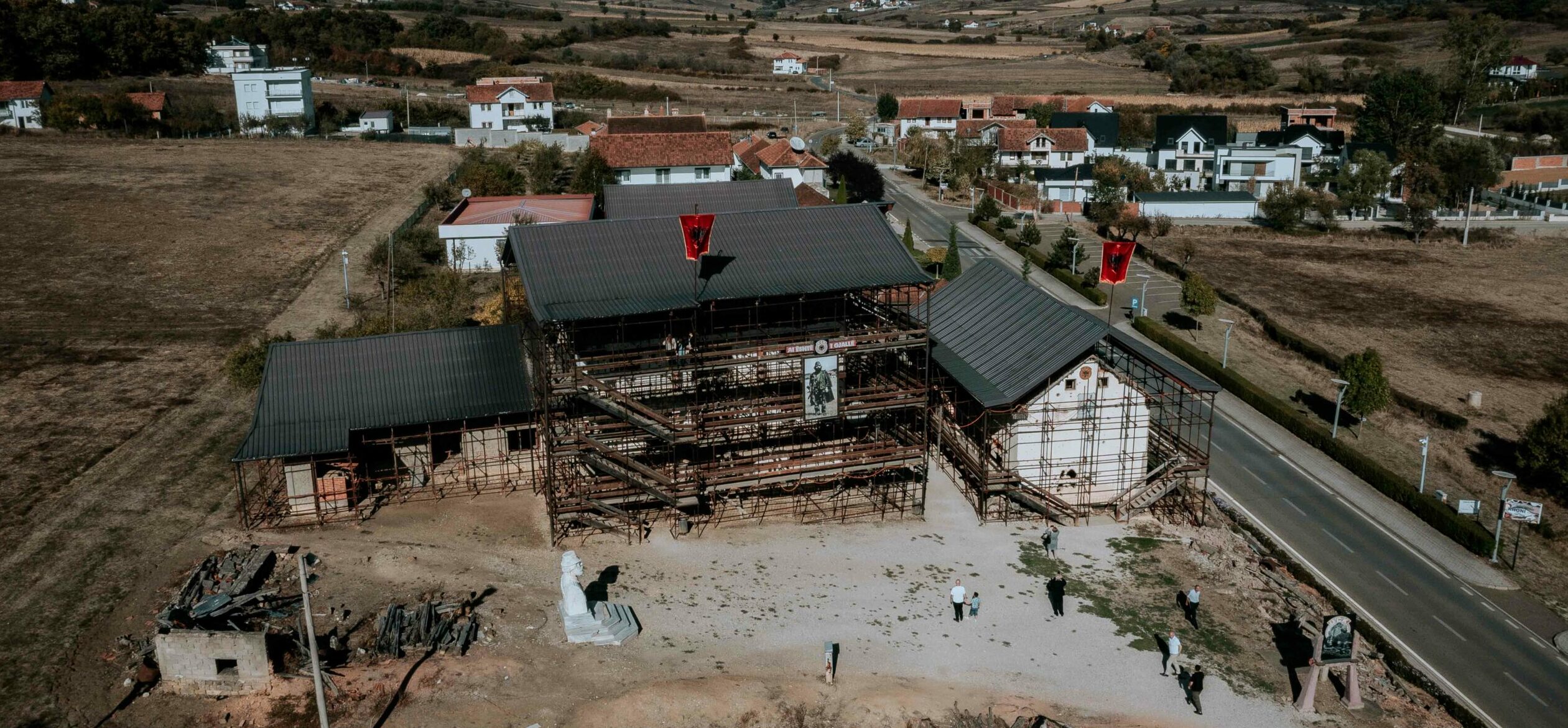
The Adem Jashari Memorial Complex in Prekaz village, Skenderaj municipality, Kosovo. Photo: BIRN
As the child of a KLA fighter, hypervigilance and extreme composure were often the main means to help parents move past the harrowing experiences of war—the front lines and the trenches.
For around three decades, Kosovo society was mostly content with holding commemorations during anniversaries and erecting a few poorly maintained war memorials, while the survivors of the war were mainly neglected. In many cases of war-related injuries of civilians or combatants, their children or spouses became the primary caregivers.
No war ends with the weapons being laid down and the uniforms being taken off. The struggle starts with the process of rebuilding peace and addressing the grievances of the past.
Many studies conducted on post-conflict societies recognise the secondary traumatic stress, STS, transgenerational trauma, and intergenerational trauma. Countries such as Croatia, Bosnia and Hercegovina, and Northern Ireland have for years been documenting specific cases of children raised by war veterans experiencing emotional distress, as a consequence of the pain, silence, anxiety, and uncertainty of growing up in these households.
Longitudinal studies of the mental health of Northern Ireland’s youth since the signing of the Belfast Agreement in 1998 have shown that their high level of psychological vulnerability is directly linked to an environment of socio-economic deprivation and the transmission of collective trauma within the family and community.
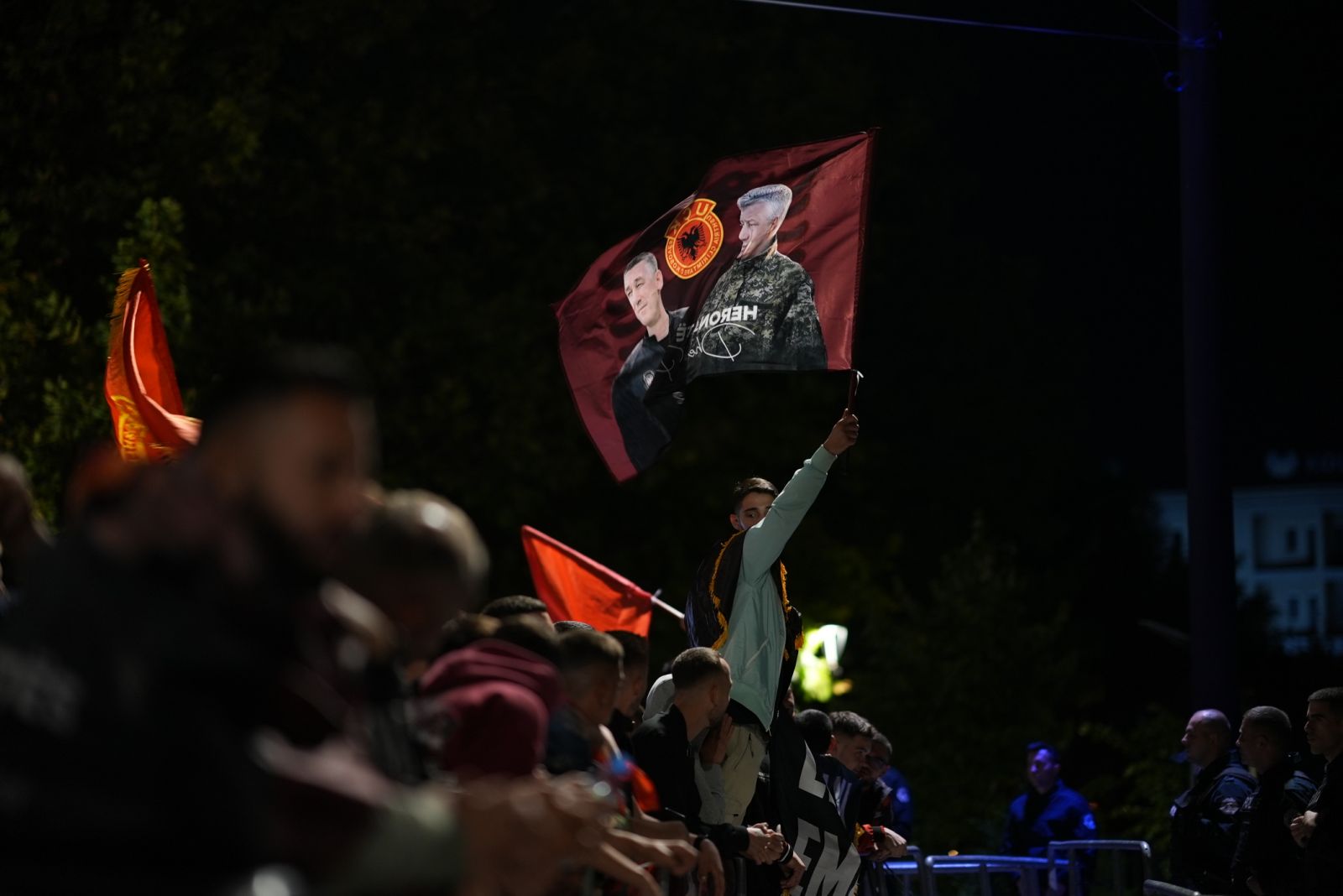
Protest against the Hague verdict in Prishtina, September 21, 2026. Photo: BIRN/Denis Sllovinja
In Kosovo, few studies have examined how post traumatic stress among former KLA combatants has affected them, their immediate families—particularly their children born in the 1990s and 2000s—and society at large.
Not only is the research in Kosovo lacking, but it took the country 12 years after the conflict ended to regulate the status of all the categories that derived from the war. It then took another 11 years until the amended law on War categories—which defines 13 categories and subcategories of conflict related victims—introduced the relevant benefits for these categories, mainly health benefits, education, and employment.
People are angry. The September 16, 2026, first instance verdict against four KLA leaders at the Kosovo Specialist Chambers in the Hague, caused a multidimensional outrage, as Albanians in Kosovo and in the diaspora took to the streets to protest daily. The verdict sparked an unprecedented expression of anger where, for once, the political establishment and war veterans organisations are not the main actors of the protests. This time, the family members of freedom fighters, martyrs, missing people, or civilian victims, and the youth that inherited the post-conflict trauma took the lead.
Hashim Thaçi, Jakup Krasniqi, Kadri Veseli, and Rexhep Selimi were found guilty of war crimes and sentenced to 25, 25, 18, and 13 years in prison respectively, with credit for time served in detention since November 2020. Defendants, families, defence teams and authorities are hanging their hopes on an appeal to overturn the verdict.
The presiding judge Charles Smith III said “in the name of the people of Kosovo… you are found guilty” repeating it four times as he sentenced each one of them. Unwittingly, he ignited the sympathy of the youth towards the KLA and Kosovo.
This situation brings with it the perfect opportunity to focus on the much needed mental health support for ex-KLA fighters and their families who inherited post traumatic stress.
In Kosovo, the overall well-being of ex-KLA combatants is shaped by complex postwar realities. Most notably, many ex-fighters and many civilians were forced to live and work in the very houses, apartments, and premises that had served as an active battleground during the conflict.
This stark reality reflects the deeper tragedy of the Kosovo war: a conflict marred by oppression, ethnic cleansing, and displacement, targeting Kosovo Albanians own cult of the home and the moral economy behind its construction and organisation.
In local tradition, the house is sacred; it is the anchor of identity, education, livelihoods, and personal well-being. For many combatants, protecting this sacred space was the ultimate motivation to join the liberation movement. As KLA commander Hamëz Jashari declared in one of his rare audio-visual appearances in the 1990s, they fought simply because they had nowhere else to go.
A vast number of killings and massacres committed in Kosovo took place within family compounds and inside homes like the Suhareka Massacre, where 50 members of the Berisha family were murdered by Serbian forces in March 1999, and the Izbica Massacre, where 147 ethnic Albanians were killed by Serbian forces on March 28, 1999.
Following liberation, many similar sites carrying the heavy memories of war had to be used as family homes again, where ex-KLA combatants were forced to endure silent PTSD while facing daily existential struggles.
“Where is my leg?”
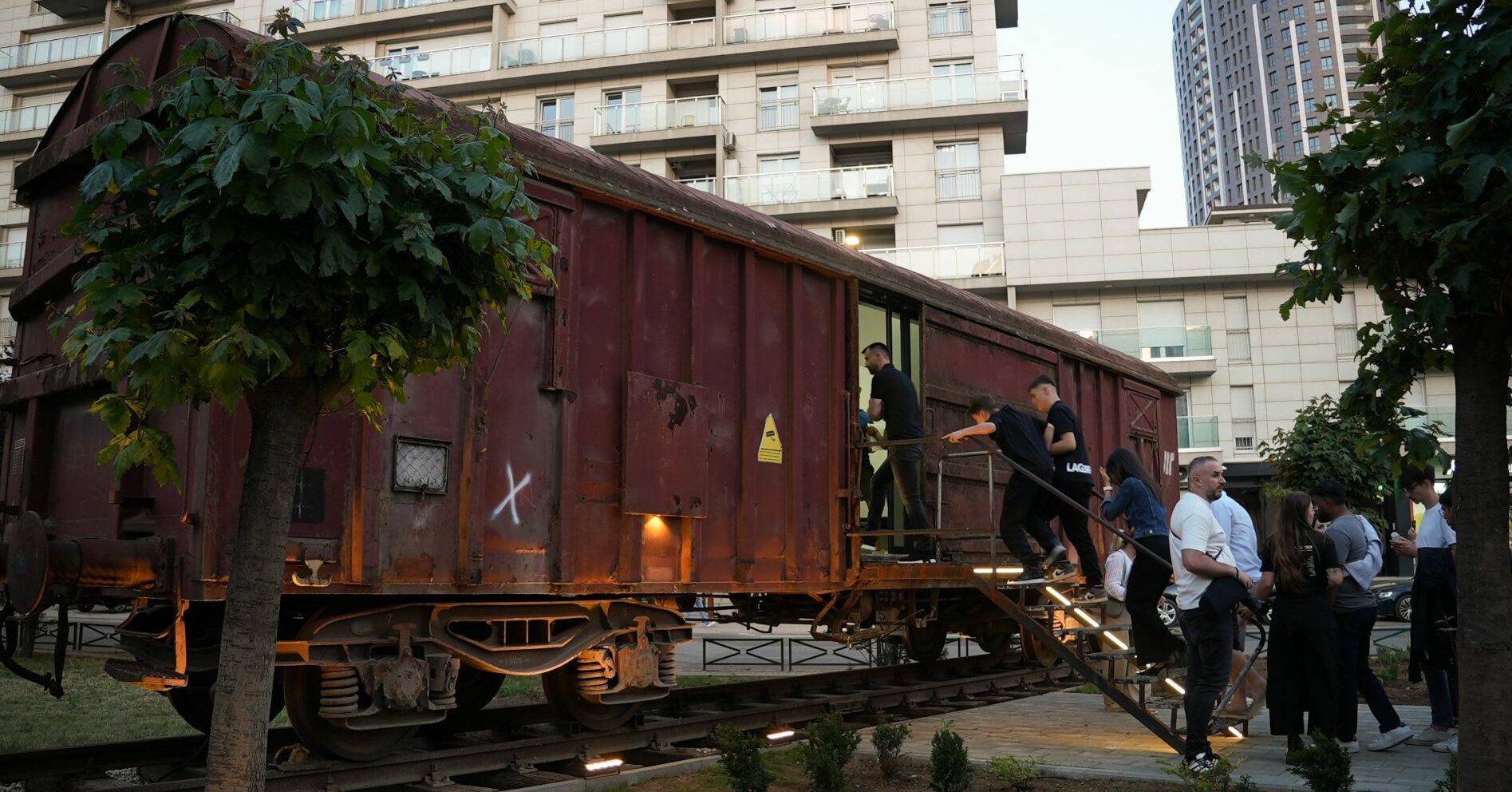
The ‘Exodus ’99’ wagon, of BIRN’s Reporting House exhibition, at Prishtina railway station. Photo: BIRN
One of my first vivid memories of the Kosovo war is me getting on an old farming truck filled with women and children from 0-15 years old, as we were forcibly displaced by Serbian forces. And thus, I became a refugee.
After crossing the border to Albania, I suddenly woke up and paranoidly asked my mother: “where is my leg?”
The leg was there, but I could not feel it. There were around 50 people crammed onto that truck, and, as a five year old, I had stood there for hours whilst other people were standing on my leg. I was incapable of comprehending at the time why I had had to say goodbye to my father, my uncles, and my grandfather. Little did I know that they had decided to stay to protect our home, our village, our people, and our right to exist with whatever they could.
The mental health impact such experiences had, however, has not been tackled in post-war Kosovo. For a number of ex-KLA combatants, everyday struggles became unbearable, leading them to view themselves as a burden.
In late September 2025, Gazmend Syla, from the KLA War Veteran’s Organization, told local Kosovo media that 60 war veterans had committed suicide, leaving behind families forced to bear both the loss and social stigma.
Yet, because of a lack of in-depth, systemic empirical research, these numbers may not be accurate and could be significantly higher.
One of the few known cases is the 2014 suicide of ex-KLA combatant A.H. from the Peja region.
In a suicide note to his wife, he wrote: “With or without my presence, you are raising the kids alone. For a long time, I have only been spending and not helping you with anything.”
Research conducted a year later by two health professional from Gjilan on suicide risk among combat veterans with PTSD highlighted a silent, devastating crisis, where 52.6% of the 215 participants in the study were suffering from lifetime post-traumatic stress disorder.
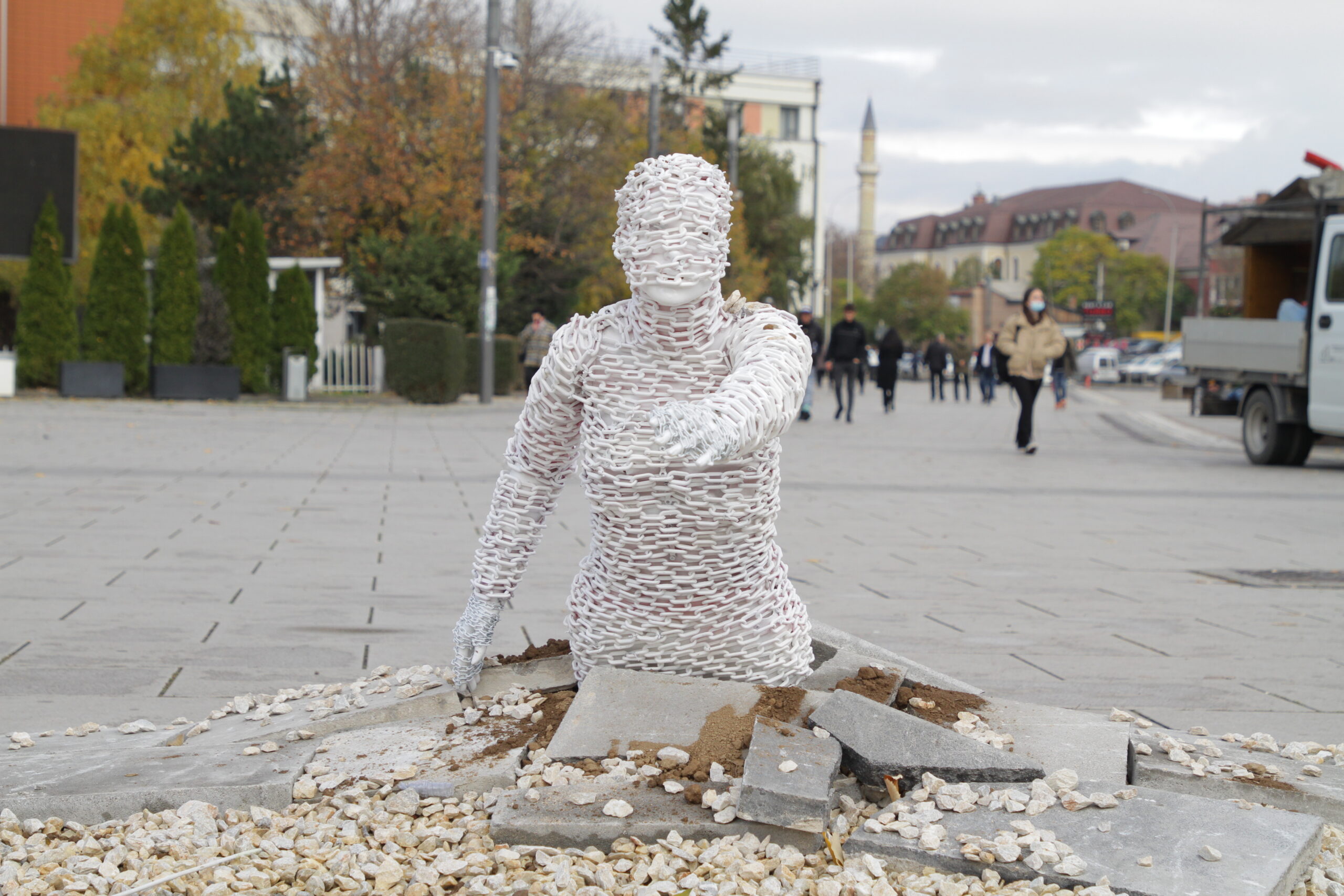
An art installation titled ‘Find Me’, created by Kosovan sculptor Eroll Murati, displayed in the main square in Prishtina in November 2021. Photo: BIRN
According to the study, the PTSD, and at times depression and suicidal ideation, was driven by the brutal reality of guerrilla warfare, very often, fought directly around their homes and communities. A considerable number of the participants in the study, nearly 32%, faced both trauma and depression.
Yet, clinical trauma is only part of the tragedy, as the study also found that profound socioeconomic abandonment heavily amplifies the ex-combatants despair, with 42.8% unemployed and nearly 80% expressing deep dissatisfaction with their financial situation.
The lack of more up-to-date studies and research on this matter and absence of concrete measures and policies that would ease this reality, only burdens their everyday struggles.
Formal and consistent psychological or psychosocial rehabilitation programmes are much needed.
Unfortunately, the main action Kosovo authorities took for almost thirty years was to occasionally subsidise short summer trips to Albania or thermal baths in Kosovo for a portion of ex-KLA combatants. While these actions were welcomed, they were merely ad-hoc measures taken by different governments, lacking any strategic planning.
I witnessed my father joining his former comrades a couple of times on these trips. He was burdened; simultaneously looking forward to the summer trip while feeling bad for leaving his family for a few days. From today’s perspective, it is clear to me that separations, even for a positive reason, left scars and caused him uncertainty.
For years, war veterans’ associations have complained about the lack of government funding for prostheses for veterans with war-related disabilities. In many cases, family members, mainly their children and spouses, turn to crowdfunding platforms to cover veterans’ healthcare needs and become their primary caregivers.
As the current marches and demonstrations for justice are ongoing, this public unity and momentum is actually the perfect opportunity to move beyond symbolic declarations.
Beyond justice, the new generation should demand greater dignity and mental health policy reforms from Kosovo’s institutions, including concrete PTSD support programmes for former KLA combatants, their children and other family members. These demands should also include a more accessible healthcare fund for war-related categories, covering urgent and unexpected medical needs, and a mechanism to fund and support research into the long-term effects of war trauma on Kosovo families, particularly those of former KLA combatants.
True justice can not be delivered in a Kosovo courtroom 2,262km away in The Hague unless it also reflects the justice itself.
Iliria Kajdomqaj is a PhD student in Comparative Politics at ICS-ULisboa in Portugal, focusing on war widows, memory politics, and memorialization within the contexts of Kosovo, Bosnia and Herzegovina, and Rwanda. She has over a decade of experience in transitional justice in Kosovo.
The opinions expressed are of the author and do not necessarily reflect the views of BIRN.