


Children continue to be exploited through street begging in Kosovo, as investigations stall and inadequate social services struggle to provide lasting protection.
At intersections across Kosovo, children weave between cars to clean windscreens and beg for change from drivers. Outside cafes and bars, they can be seen selling cigarettes and other small goods.
In most cases, these children are monitored by adults nearby, who place them in busy traffic, watch them from a distance, and sometimes collect their earnings.
Children are being forced to beg openly in cities across Kosovo, despite laws banning their economic exploitation.
Authorities investigated suspected organised crime links to forced child begging but closed the cases for lack of evidence.
Children instructed to remain silent
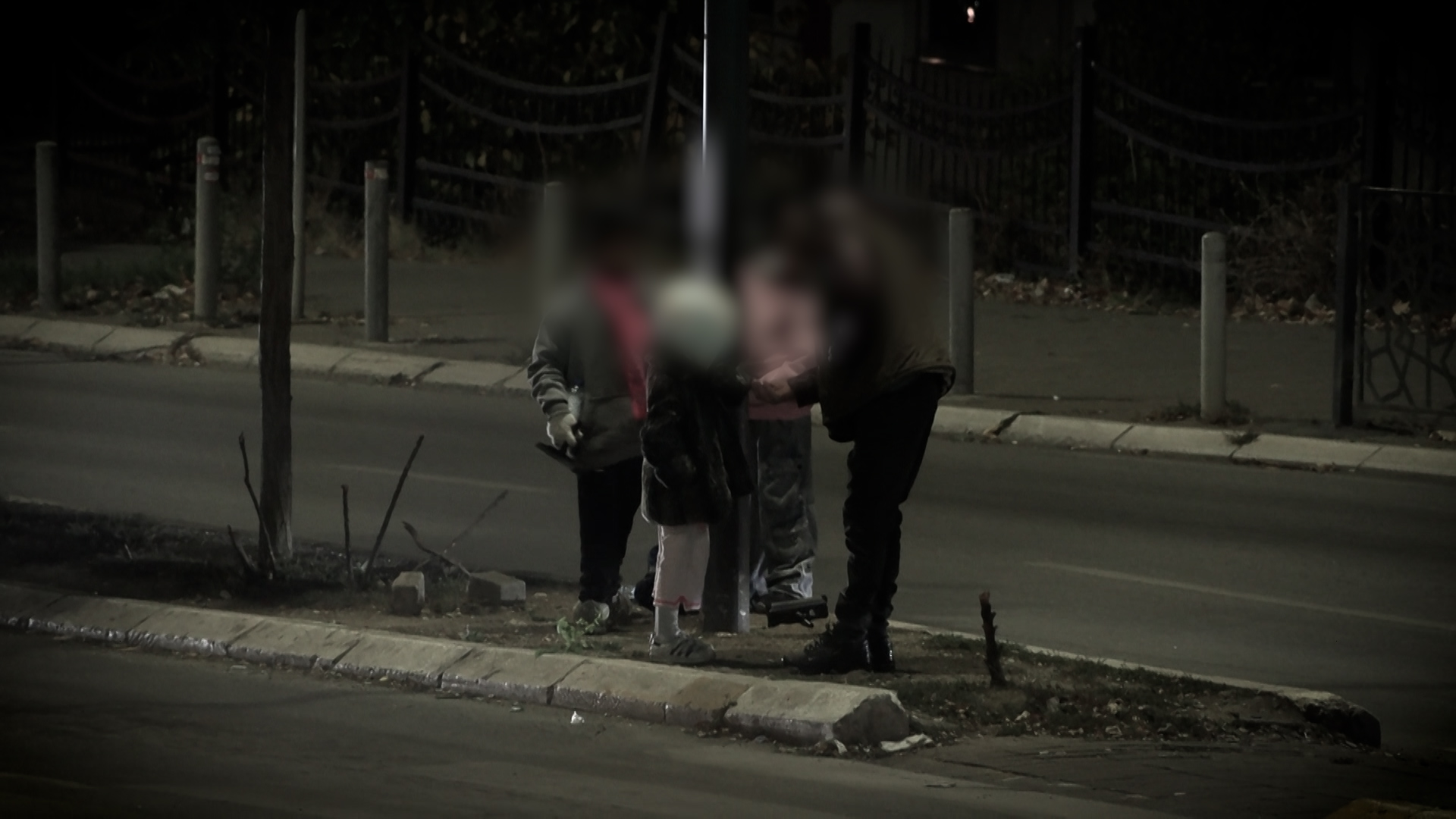
An adult collects money from children at an intersection in Prishtina. Photo: BIRN
Children approached on Kosovo’s streets for a KALLXO.com documentary were reluctant to talk, often refusing to say where their parents were or where they came from.
“I don’t know” was their most common answer.
Footage secured by KALLXO.com shows a man collecting money from children stationed at different corners of an intersection in Prishtina. The scenes of these children being exploited unfold in public.
The children often go barefoot, suffer from malnutrition and are exposed to extreme weather.
The Ministry responsible for social welfare has attributed responsibility for addressing the problem to the Ministry of Internal Affairs. The latter confirmed that 267 children had been identified begging on the streets by September 2026 but could not say what had happened to them since.
Authorities launched several operations amid suspicions of organised crime links to child exploitation, but prosecutors found insufficient evidence and referred the cases back to social work centres.
“We have not encountered organised crime involving bosses who distribute children throughout the city and then take a portion of their earnings from begging,” said Refki Morina, a former senior police officer who led one such operation.
He said authorities must establish how children ended up on the streets.
“Checks should be carried out with the social work centre and police if ties to organised crime or similar networks are suspected, and at border crossings too. Border officials should cooperate with border and regional police to establish whether a person has arrived from Albania, whether they are accompanied by family or someone else, where they are going, where they have been, their destination, and so on.”
Morina also noted that some children repeatedly return to the streets and that social work centres should investigate these cases more thoroughly.
Kosovo’s Ombudsperson Bastri Kastrati called for a comprehensive assessment to establish why these children are living on the streets.
“Instead of focusing only on why the children are there, we need a broader perspective that includes and addresses the mistreatment they suffer from their parents or other abusers, and the violation of their dignity.”
Social protection falls short
When police cannot establish criminal liability, social work centres take responsibility for handling the cases. But former officials and experts who have monitored these institutions say limited capacity, bureaucracy and a lack of commitment have hampered efforts to tackle the problem.
Former Ombudsperson Hilmi Jashari described a case that illustrates how institutional neglect can prevent vulnerable people from receiving even basic assistance.
“An elderly person with mental health problems was standing at the entrance of a municipal building, asking everyone who entered for money. When I asked the director of the centre why they were not helping this person, he replied: ‘He doesn’t know how to fill out the pension application form.’”
Vehbi Mujku, social affairs expert, said that children rarely admit that they are being forced to beg.
“When several children arrive under the supervision of an adult who transports them, positions them, and collects all the money they have earned, this constitutes forced labour. They may be afraid of that person, controlled or intimidated in some way,” Mujku explained.
He added that some children arrive from other areas, including Albania, and seem to know precisely where to position themselves in Prishtina to attract the most people and earn the most money.
“This inevitably raises suspicions that they are being exploited,” he said.
Mujku also mentioned cases in which adults beg while carrying infants or very young children.
“Social services and law enforcement have long since questioned whether these children actually belong to the adults accompanying them,” he said. “In some cases, particularly involving people arriving from Albania, there have been suspicions that children are rented out and exploited for a period before being returned to their families.”
Mursel Zymberi from the Center for Social Work in Gjilan points out that if a child is indeed begging with their own mother, then “that child is being exploited by their own parent”.
He added that the children appeared well organised, often refusing to say where they came from.
In 2019, then Ombudsperson Hilmi Jashari published a special report addressing the issue. According to him, it drew an inadequate response from authorities and children continued to return to the streets.
Jashari criticised the bureaucracy and limited capacity of Kosovo’s social protection system, particularly the responsibilities assigned to social work centres.
Research conducted by his office found that the centres were providing just seven or eight of more than 50 services required by law, with the rest existing only as provisions on paper.
“Almost nowhere else in Europe have social services been decentralised to municipalities as in Kosovo,” Jashari said, emphasising the gap between legal obligations and actual service delivery.
He stated that allowing children to spend their days begging, despite legal restrictions on child labour and exploitation, constitutes a serious violation of children’s rights and international standards.
“These conventions have been incorporated into the Constitution for a reason. Otherwise, there would be no reason to include them. They are not there purely for show,” Jashari said.
Poverty and social exclusion drive children to the streets

A child begs drivers for money at an intersection in Prishtina. Photo: BIRN
Reports by the Ombudsperson and others have repeatedly raised concerns that authorities have turned a blind eye to the problem. Available data show children from marginalised Roma, Ashkali and Egyptian communities are disproportionately affected.
Dren Rexha of UNICEF said a 2023 study identified about 130 children aged six to 17 in street situations across eight municipalities across Kosovo.
“Around 88% of the children identified in the study belonged to Roma, Ashkali, and Egyptian communities,” he said. In approximately 92% of cases poverty was identified as the main reason children were involved in begging.
Rexha explained that the number of children on the streets increases during the summer, when Kosovo experiences a large influx of diaspora visitors. A similar increase is observed around New Year.
He also challenged the widespread assumption that most children begging in Kosovo come from other countries, particularly Albania.
“The study did not find this. The vast majority were children from Kosovo,” Rexha said.
For families facing extreme poverty and limited access to employment, begging can become a source of income, despite the serious risks it poses to children.
Rexha emphasised that the problem cannot be solved just by removing children from the streets.
“Effective intervention must also address the family circumstances, including their financial needs, access to social assistance, and opportunities for employment.”
Zymberi warned that people engaged in begging are among those most vulnerable to trafficking: “This situation is painful because these children are exposed to these circumstances without understanding what is happening to them.”
He said local authorities could intervene in several ways, including removing children from parental care and restricting parental rights in serious cases.
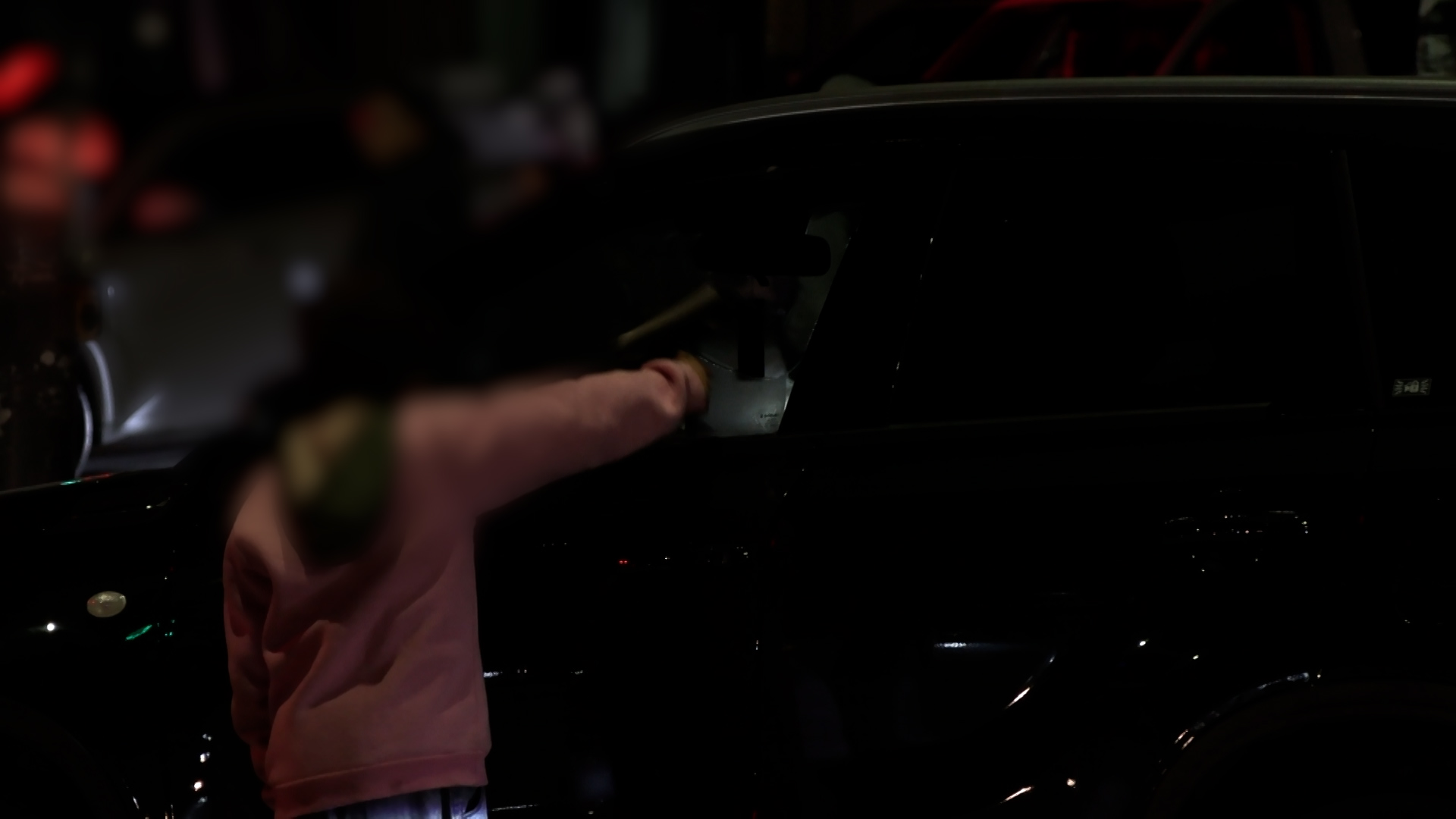
A child cleans car windows on the streets of Prishtina. Photo: BIRN
Former Ombudsperson Hilmi Jashari argued that parents who exploit their children must also face criminal accountability.
“As soon as parental neglect is identified, the social work centre must intervene,” he said.
Jashari also criticised what he described as an inconsistent, reactive approach by institutions.
“In our country, we intervene on a case-by-case basis, following an alert from the media or civil society. The response is often intended to show that something has been done, but the measures are symbolic and lack a systematic approach,” he added.
Morina urged the public to report suspected child exploitation to police. He also cited cases in which foreign nationals were removed from Kosovo following investigations and court rulings.
“With court decisions, we often organised their return by bus and notified the Albanian authorities that they were their citizens,” he explained.
“However, five days or a week later, we would see the same people back in the same locations in Kosovo.”
Morina stressed that stronger cooperation between Kosovo and Albanian authorities is essential to addressing the problem.
Apart from the lack of cross-border cooperation, one of the main challenges is the limited capacity of social work centres to provide sustained assistance.
Social services have been decentralised to municipalities since 2019, but sustainable funding and a shortage of qualified staff remain major concerns.
According to Rexha, social work centres need trained professionals, mobile teams, and the capacity to identify children at risk before they become trapped in street begging.
“It is difficult for a centre with very few staff members to maintain a mobile team capable of going into the field every day, identifying children and their families, developing individual plans, and monitoring their progress as they leave the streets,” Rexha explained.
“Helping a child leave the streets does not happen overnight. It requires sustained rehabilitation so they can return to school and reintegrate into society,” he said.
He cited children who have been begging in the same locations in Prishtina for years.
“They are growing up on the streets, and no solution has been found,” Rexha concluded.
This article was prepared for English publication by Ardita Zeqiri.