


Kosovo’s capital, Prishtina, is grappling with a worsening sanitation crisis as mounting piles of uncollected garbage and recurring sewage system failures leave residents in several neighbourhoods frustrated and concerned about public health.
In mid-October, Kosovo’s capital, Prishtina, and its suburbs are usually awash with autumn colours as leaves fall from the trees. But this year, piles of rubbish line the streets, creating a very different scene.
Residents of Prishtina are facing a growing sanitation problem that extends far beyond the overflowing rubbish bins. Across the capital, waste is piling up in the streets, on pavements, in parking lots and shared public spaces, while sewage water flows onto roads and pedestrian walkways, making everyday commuting difficult and exposing residents to unpleasant and potentially harmful conditions.
Footage obtained by Prishtina Insight during September and October 2026 shows rubbish accumulating at multiple locations across the capital. In several areas, plastic bags and food waste were scattered around collection points, alongside discarded furniture, couches, mattresses, and other household items.
For residents dealing with these conditions every day, the issue goes beyond cleanliness. It raises concerns about public health, quality of life and the failure to provide basic public services.
Milaim Krasniqi, a local resident of the Kalabria neighbourhood, said that some citizens contribute to the problem by dumping rubbish in inappropriate places, but stressed that the companies responsible for waste collection must also do their job more consistently.
For Krasniqi, addressing the problem requires both greater civic responsibility and more reliable waste collection. “Residents should not have to live surrounded by rubbish simply because some people disregard public spaces or because waste is not removed promptly,” he told Prishtina Insight.
While residents express frustration over the state of their neighbourhoods, institutions have offered differing explanations for the causes of the problem and who should be held responsible.
Residents bear the brunt of Prishtina’s sanitation issues
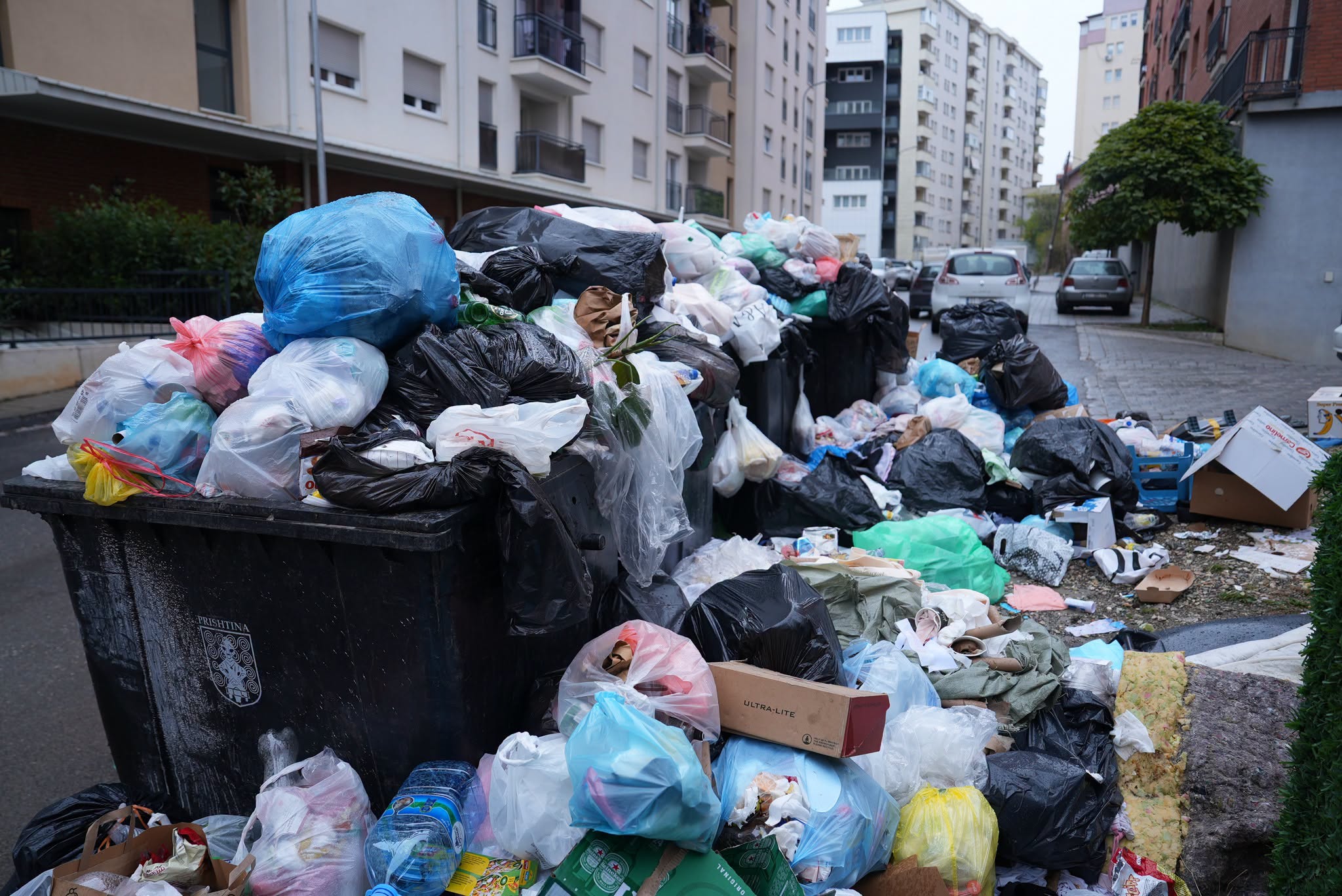
Overflowing garbage bins in Kalabria neighbourhood, Prishtina, October 2026. Photo: BIRN
On September 24, 2026, Prishtina Insight documented waste dumped outside containers at four locations in the capital: Kadri Halimi, Ali Vitia, and Murat Xhakja streets, as well as the parking lot near Shkupi Street. The waste included household rubbish, plastic, and food scraps, while larger discarded items occupied shared public spaces.
The situation persisted into October.
On October 12, Prishtina Insight documented further accumulation of rubbish on Prekazi and Shefqet Pllana streets and near the Mati roundabout. The following day, October 13, waste was also observed on Ahmet Korenica, Uran Ajeti, and Ndue Përlleshi streets.
The repeated appearance of waste in different neighbourhoods has raised questions about whether the existing collection system is adequately meeting the needs of the capital’s residents.
Petrit Reçica, chief executive of the regional waste management company Pastrimi, urged citizens to take large quantities of waste to designated disposal sites, where he said such items are accepted.
“The problem is that the next morning, in the same place where we have removed everything, there is almost the same amount of rubbish again,” Reçica told Prishtina Insight on September 24.
However, he argued that collection alone would not solve the problem. Penalties for illegal dumping and functioning surveillance cameras would also be necessary to identify those responsible.
Politicizing garbage collection
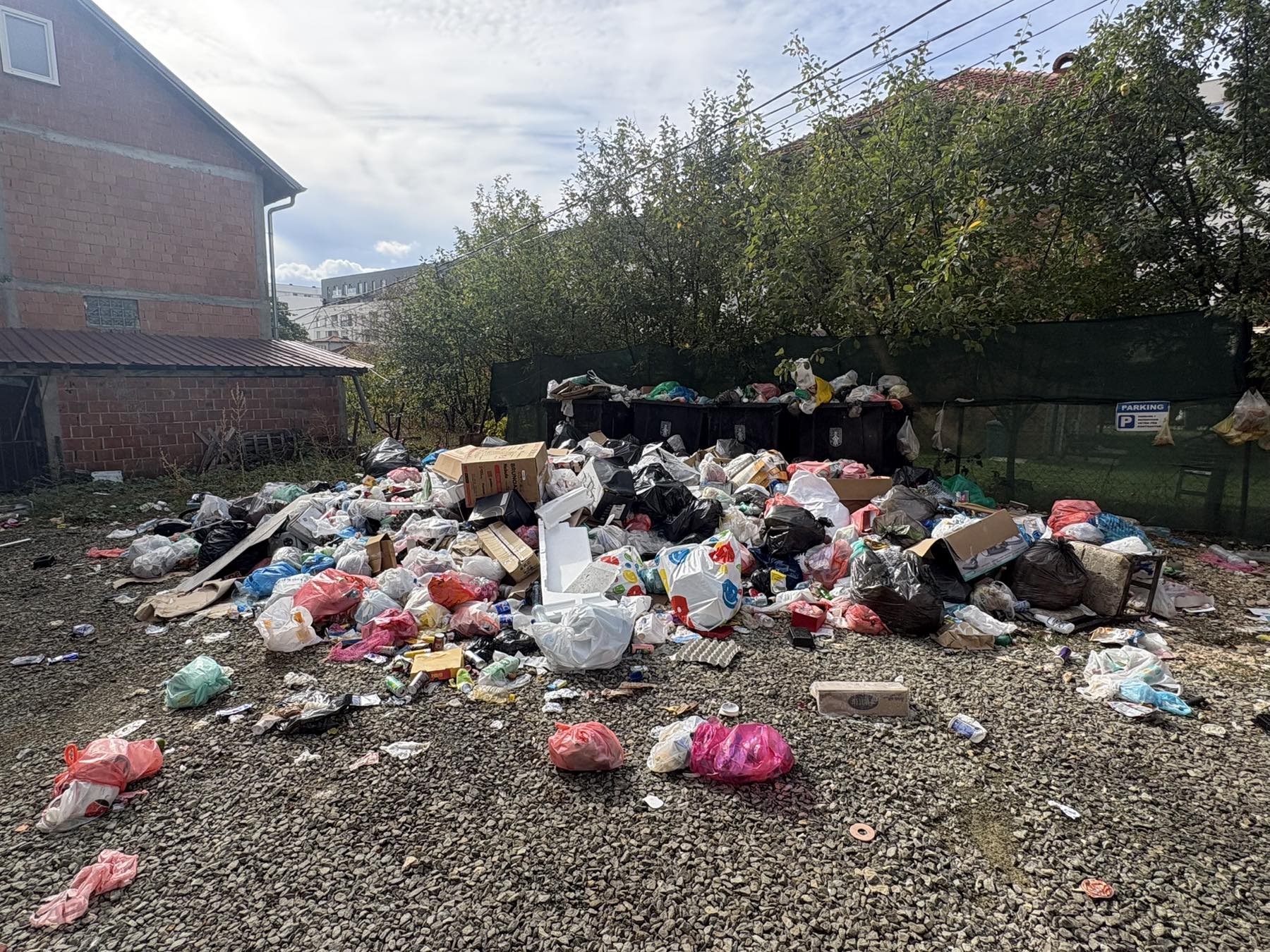
Piles of waste dumped in a Prishtina neighbourhood, October 2026. Photo: BIRN
On October 12, Reçica said that the Kosovo Landfill Management Company, KMDK, had restricted the opening hours of the Mirash central landfill, by accepting waste only until midnight instead of operating around the clock from October 1.
“Our teams have been severely limited by this restriction, because waste collection requires a 24-hour service,” he said.
The next day, the KMDK explained that, “an analysis of the data and an assessment of the situation on the ground found that, during the night shift, particularly at the Mirash Sanitary Landfill, the number of trucks unloading waste from Pastrimi is relatively low compared with daytime activity. Consequently, night-time operations generate additional costs, while technical and human resources are not being used to their full capacity.”
It also cited occupational health and safety concerns, including insufficient lighting in unloading areas, the presence of stray dogs, and difficult working conditions on site.
The KMDK said that in July, August, and September 2026, the Mirash landfill had operated 24 hours a day, seven days a week, following requests from Pastrimi to extend its hours during the summer season.
“A change like that cannot be made solely on the basis of requests from one or more operators. It must be supported by a comprehensive assessment of operational needs, costs, technical capacities, and safety conditions,” the company said.
While the two companies presented their respective arguments, residents continued to face the consequences of waste accumulating in their neighbourhoods.
On October 14, Prishtina Deputy Mayor Besianë Musmurati and Director of Public Services Leutrim Retkoceri held a press conference calling for the Mirash landfill to resume full operations.
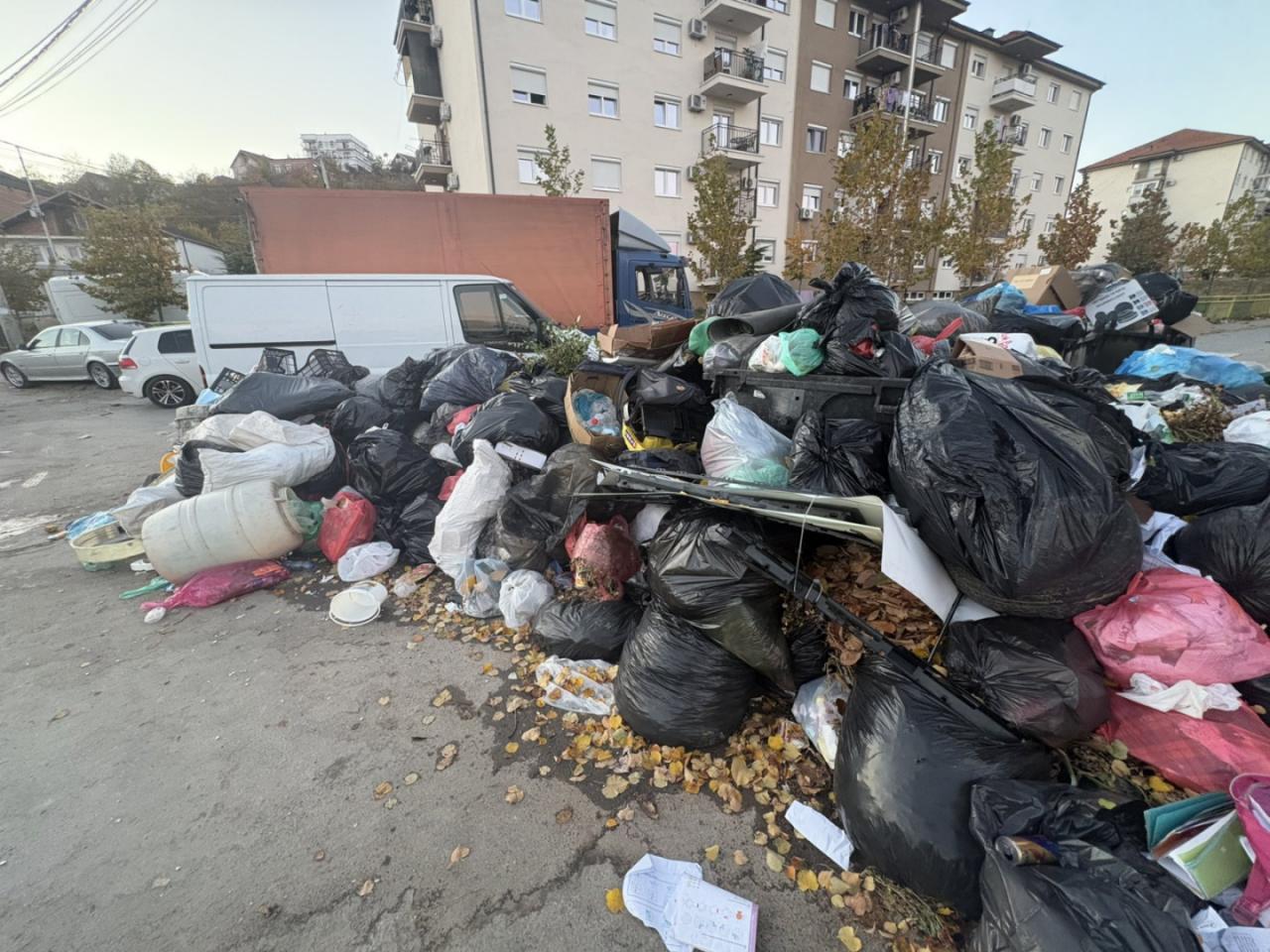
Piles of waste dumped in a Prishtina neighbourhood, October 2026. Photo: BIRN
Musmurati announced that the municipality would file a criminal complaint against the director of the KMDK, Dardan Velija, whom she linked to the landfill’s closure and its alleged consequences for the capital.
Musmurati also accused the minister of finances Hekuran Murati of blocking a project worth approximately 74 million euros with the German Development Bank, KfW, which would provide “an additional 100 waste collection trucks, 10,000 containers, and a recycling centre.”
On October 20, mayor Përparim Rama went on the local TV Dukagjini and blamed the central government for blocking the municipality’s attempts to solve the waste problem.
“The government uses its instruments to stop us from establishing [a new company managed by Pristina municipality to collect the city’s waste], while they close the landfill [at midnight] not allowing trucks to drop off the waste,” Rama said, also accusing minister Murati of not signing the requested budget to buy new trucks and waste containers.
On September 25, Rama had announced that the capital’s Assembly approved the establishment of a sanitation company. “From a regional company that managed the service for six municipalities, Pristina is transitioning to its own enterprise,” Rama said, praising the decision.
One day after Rama’s TV appearance, on October 21, Environment Minister Fitore Pacolli described the situation as an “environmental catastrophe,” and announced that the Environmental Inspectorate had imposed fines on institutions it considered responsible for the waste situation in Prishtina.
She criticised both the Municipality of Prishtina and the public waste company Pastrimi for blaming each other rather than tackling the problem. The inspectorate, meanwhile, has concluded that the pollution poses a direct threat to public health.“If Mayor Përparim Rama and his entire management chain fail at such a basic task, citizens are right to ask what the purpose of this administration is,” minister Pacolli added.
Unearthed sewage
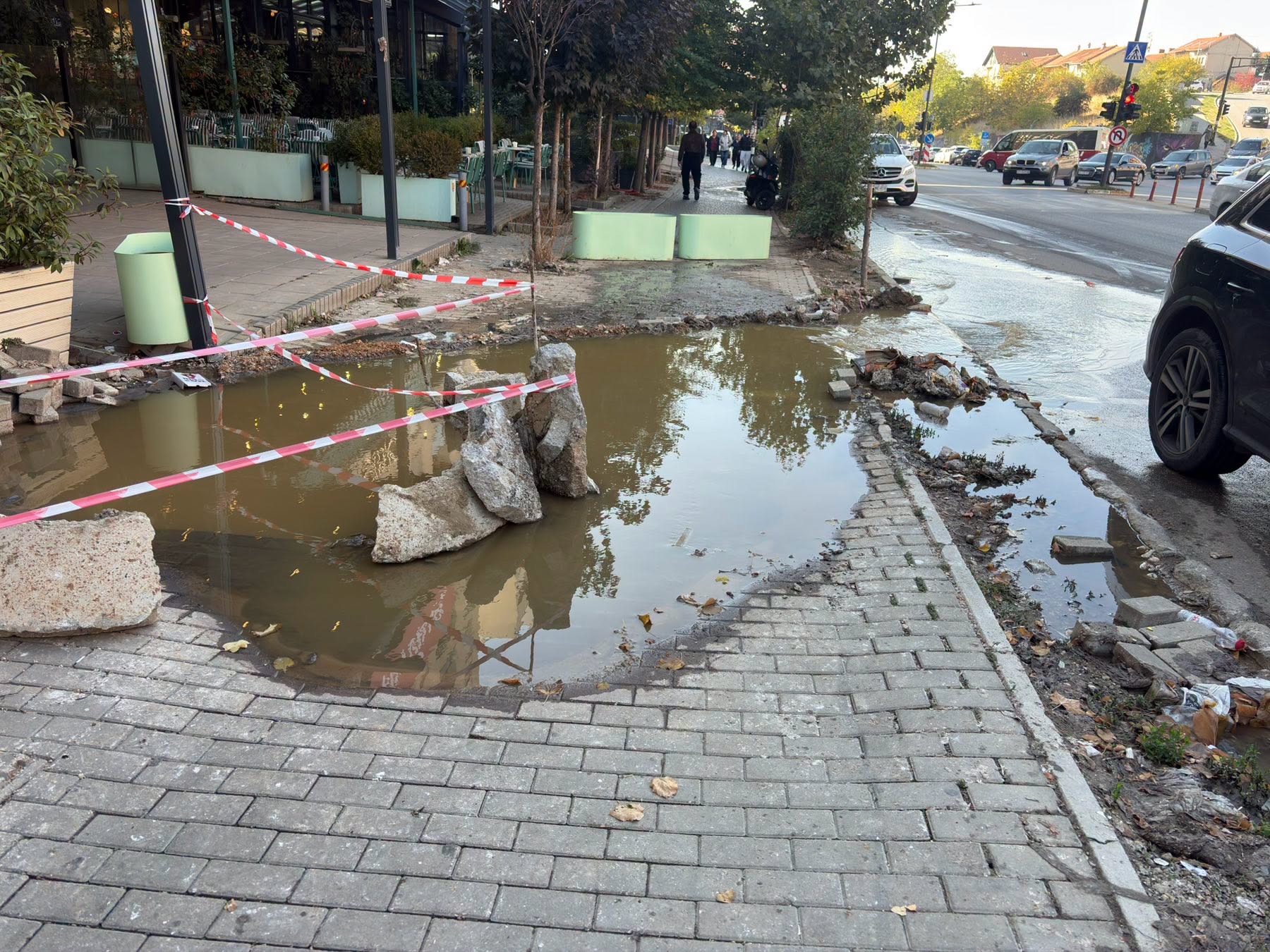
Sewage water in Mati neighbourhood in Prishtina, October 20, 2026. Photo: BIRN
Waste is not the only problem affecting public spaces in Prishtina. Faulty or delayed interventions involving sewage infrastructure have also left residents dealing with unpleasant odours, contaminated water flowing onto streets, and obstructed pedestrian routes.
On October 20, 2026, Prishtina Insight documented sewage leaks at two locations: Muharrem Fejza Street and B Street.
For people living in or passing through these areas, the problem goes beyond inconvenience. Sewage flowing across public walkways makes it difficult for pedestrians to move freely and raises concerns about sanitation and potential health risks.
Shukrie Peci, a resident, described the strong smell and the discomfort of walking through the affected area. She called on institutions to pay greater attention to the condition of roads, sewage systems, and public cleanliness.
“The smell is very bad and extremely unpleasant,” Shukrije told Prishtina Insight as she walked along the coursing waters fountaining from a pit.
“For us as citizens walking along this road, it creates a very bad feeling,” she added.
Muhamet Tashevci, another resident, warned that sewage problems could contribute to the spread of diseases and viruses.
“This is not just an inconvenience; it is a reflection of the leadership and the kind of governance we have. The problem is not limited to this location. It is like this throughout Prishtina. This is not merely a risk; it is a serious public health concern,” he said.
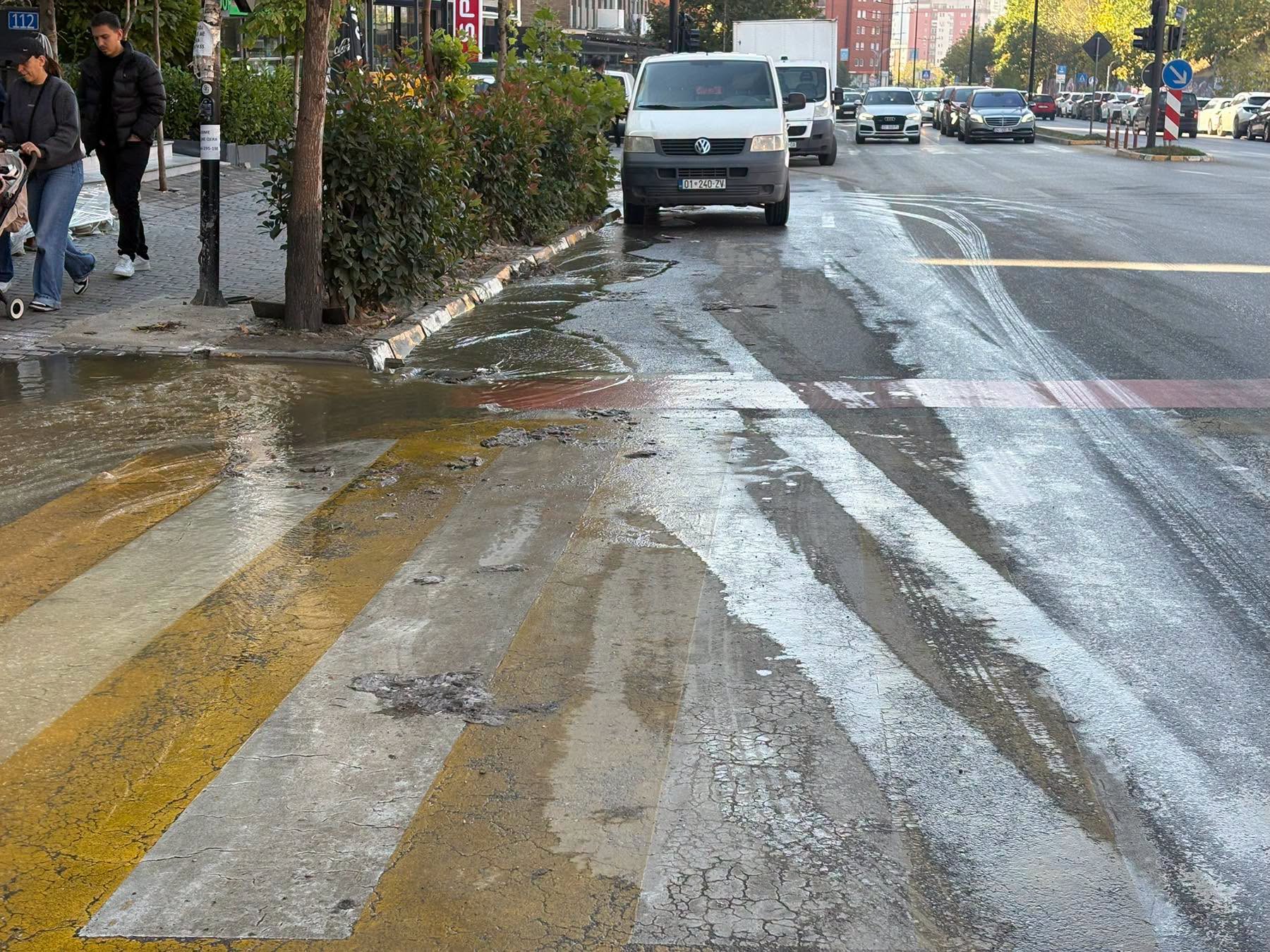
Sewage water in Mati neighbourhood in Prishtina, October 20, 2026. Photo: BIRN
Arjeta Mjeku of the Regional Water Company Prishtina told Prishtina Insight that technical teams were inspecting the affected area verifying the “position of electrical cables to identify potential risks and ensure that the work can be carried out safely.”
Following reports of sewage leaks at two different locations in Prishtina, the Municipality of Prishtina announced on October 21, 2026, that its teams had arrived at the scene to address the problem.
“Since many of you have expressed concern about the sewage problem on B Street, we would like to inform you that repair work has begun. The Capital City’s teams, in cooperation with the Regional Water Company ‘Prishtina’, are on the ground working to resolve the issue,” the municipality announced.
Civil engineer Driton Tafallari told Prishtina Insight that the municipality “should have a permanent economic operator through framework contracts, so that interventions can be carried out as quickly as possible instead of waiting for a new tender to be opened for every case.”
“Unfortunately, the focus has been on constructing high-rise buildings, while infrastructure has, in a way, been neglected. When urban development is planned, buildings must be taken into account, but the supporting infrastructure must also be considered,” he added.