


Helvetas Director Melchior Lengsfeld says energy, ambition, and drive are among the first things that catch attention in Kosovo. In an interview with Kallxo.com, he discussed Helvetas’ mission globally, its long-term engagement in Kosovo, and the contribution of the Albanian diaspora in Switzerland.
In an Interview for Kallxo.com, director of Swiss NGO Helvetas, Melchior Lengsfeld, noted that a sustainable future begins at the local level. Their main mission, therefore, in developing countries like Kosovo is contributing at the local level.
“When governance, economy, and community participation work together, a country can build a future that is both prosperous and sustainable.”
Helvetas NGO, active in Eastern and Southeast Europe since the early 1990s, focuses its work on two main areas: economic development and integration, and political governance.
“One part of our work is about economic development, with a focus on opportunities for young people—how they start their careers, the skills they need, and how they position themselves in the labor market,” Lengsfeld explained.
“The second dimension involves the political aspect: a society functions well only when its political systems function well. That’s why our long-term work in local and municipal governance remains essential.”
Diaspora: A powerful, yet untapped, asset
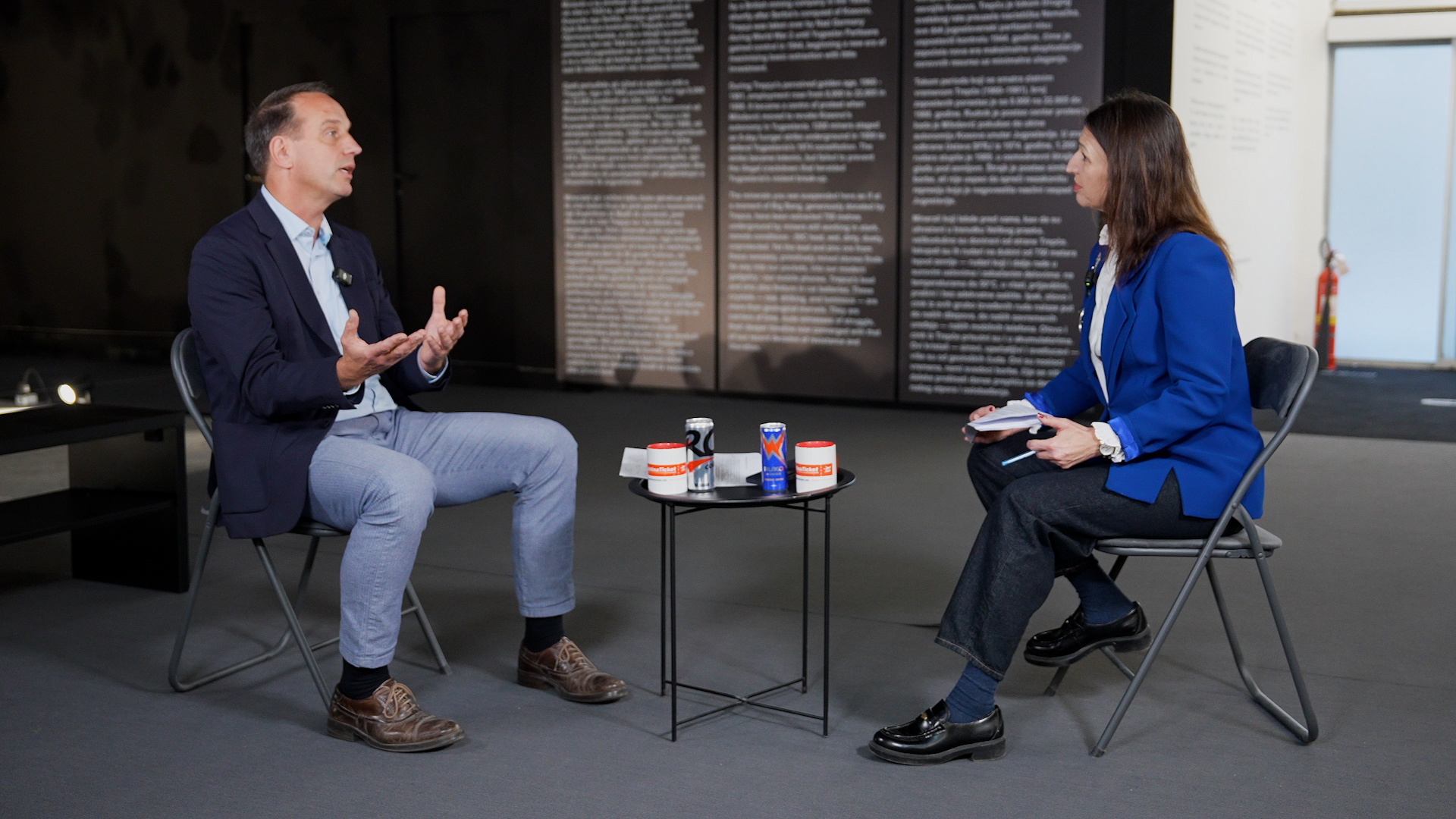
Director of Swiss NGO Helvetas, Melchior Lengsfeld (L), BIRN Kosovo director, Jeta Xharra (R). Photo: BIRN
One of Kosovo’s greatest economic advantages lies in its large community of diaspora. Switzerland hosts almost a quarter of Kosovo’s European diaspora, and Helvetas views this connection as strategically important.
Helvetas is also working on strengthening the connections between the diaspora and Kosovo.
“We start from a basic awareness. When you look at people who migrate—whether out of necessity or by personal choice—they have to find their place in a new reality. They have to struggle a bit to find themselves, because no one was waiting for them there. And this makes them very entrepreneurial and dynamic. We see this in Switzerland, where almost one-quarter of Kosovo’s diaspora in Europe lives.”
He argues that diaspora-led investment is uniquely promising because these individuals understand Kosovo.
“Here we see an important entrepreneurial dynamic, not only bringing financial resources, but also bringing experience and skills. And because they understand Kosovo well, they are much more likely to succeed,” he said.
“For a Swiss person, why would they choose Kosovo as a place to invest? But if you have family ties, a special relationship is created, and there is a different kind of acceptance when doing business here.”
Yet, he admits, this potential remains largely underutilised.
“Our impression is that this potential is still largely untapped, and it would be beneficial to think about ways to develop it further.”
DEMOS: A Kosovo-born innovation
Helvetas is the designer and implementer of the DEMOS program, which introduced performance-based municipal grants in Kosovo. This is a mechanism that evaluates municipalities across sectors such as health, infrastructure, and education, and rewards high performers with grants.
Lengsfeld emphasised that DEMOS is a joint initiative between the Government of Kosovo and Switzerland, with financial support from Sweden and the EU.
“The aim is to work closely with municipalities, support how they manage internal affairs, and help them create added value for citizens. Performance-based grants, in this specific format, are a local innovation that originated here,” he added.
Aside from municipal development, Helvetas is active in civil society development, business support, and women’s economic empowerment.
Since his last visit to Kosovo in 2016, Lengsfeld said that the country’s “dynamism” is what stands out most.
“What stands out is the dynamism, there is incredible energy to move forward, to build businesses, to progress with life despite existing challenges. This mindset is visible not only in Kosovo, but around the world. Yet here, you can feel that every individual wants to advance. This is remarkable..”
He believes that progress relies on collaboration rather than isolated efforts: “Civil society alone cannot drive development, nor can the private sector or government on their own. It is the combination of different perspectives that brings real results.”
Whether in Kosovo there is a system that supports innovative business ideas and Helvetas’ contribution through its projects, he stated that every country develops through its own efforts. “International cooperation is always just a contribution that helps this development,” he said, adding that one of the changes is the program that focuses on youth employment, EYE, to increase opportunities for young people to get employed.
“It’s an initiative supported by the Swiss government. It is not about whether the vocational education system in Kosovo functions or not, but the focus is more on working with companies to see: when someone works in a company, which skills would help them advance further, or what could be the next step.”
Helvetas has been especially committed to empowering young entrepreneurs and women, a group that remains starkly underrepresented in the job market.
He highlighted the urgent issue of low female labour-force participation in Kosovo, which is estimated at below 20 percent.
“The question is not only whether the rate is low, but whether it reflects the aspirations of young women themselves. If a woman wants to choose a profession, what real options does she have? There is the need for training, but also for supporting infrastructure. For young families, childcare availability is essential. Without it, many women simply cannot enter the workforce.”
Kosovo’s path forward
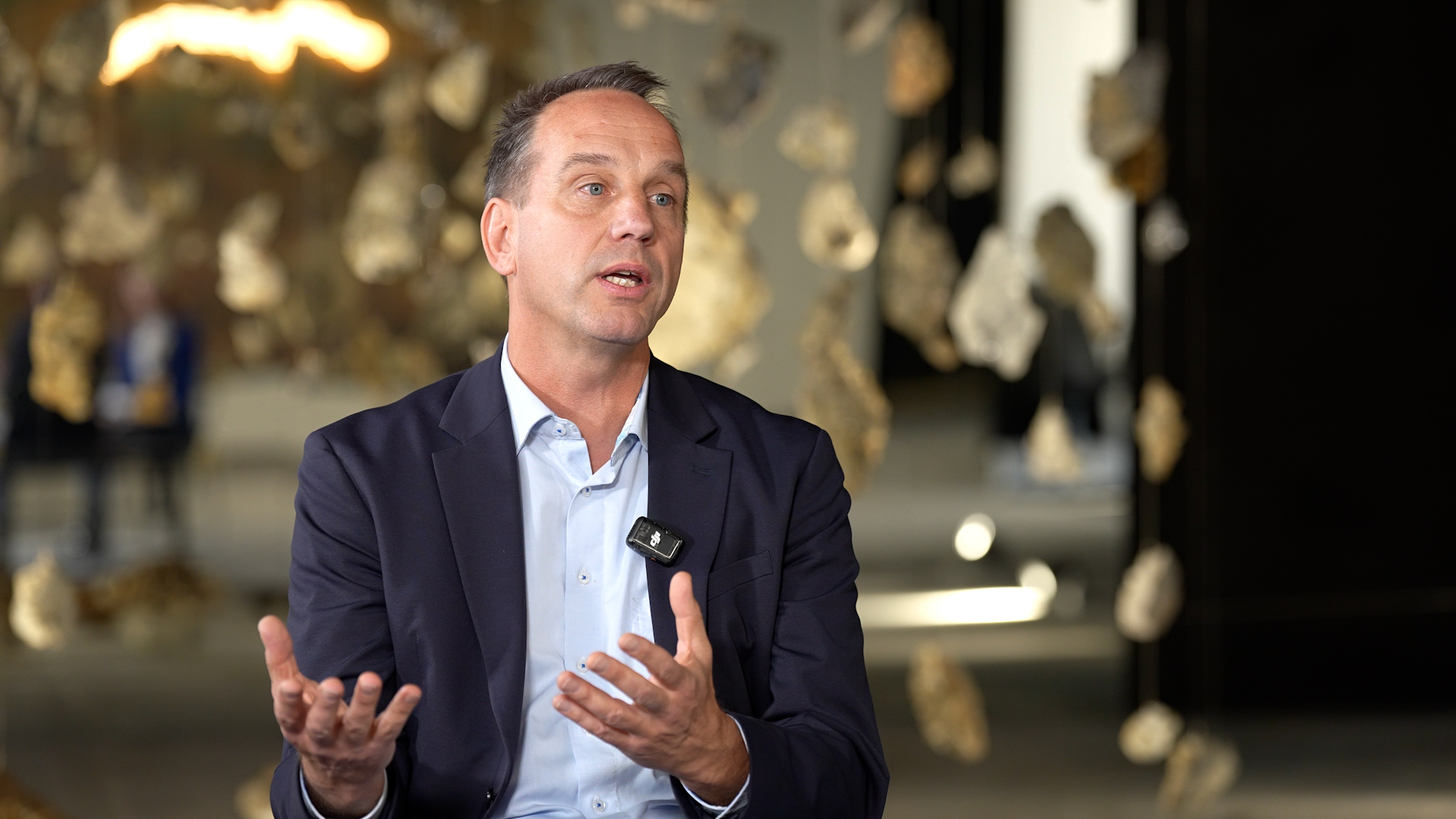
Director of Swiss NGO Helvetas, Melchior Lengsfeld. Photo: BIRN
Reflecting on Kosovo’s development trajectory, Lengsfeld noted that the country’s challenge is the fact that it’s still navigating its transition, which naturally brings social debates about how to move forward.
“Some people are open to change, others prefer the status quo. This debate is healthy—it’s the essence of democracy. But creating spaces for productive dialogue is always a challenge.”
Apart from challenges, he sees Kosovo’s municipalities as a bright spot of their contribution.
Helvetas has also developed tools such as social audits, allowing municipalities to share with citizens what they have done and how.
“Local government is closest to citizens. When people participate in planning—deciding whether the community needs a new nursery or a bridge—they can directly see how decisions shape their daily lives. Participatory planning has become one of the success stories,” he added.
Speaking about Helvetas’ development philosophy, Lengsfeld stressed the importance of environmentally conscious growth and that the true wealth of a country is not its minerals or natural resources, but its people.
“A country’s real wealth is its human capital. How people are educated and how they engage in the labour market. When developing vocational education or linking it with the private sector, we must always consider environmental sustainability.”
Sustainable progress, he says, depends on balancing economic ambition with ecological responsibility.
“It starts with questions like: How do we want our town centre to look? Do we want a park or a parking lot? Both matter, but how do we balance them? The future takes shape through the vision of entrepreneurs combined with the choices of citizens, connected by local democracy,” he concluded.
The article was prepared by Ardita Zeqiri.