


Memory takes many forms at this year’s Etno Fest in Kosovo—from wartime artefacts and stories of underground and parallel education to traditional music and contemporary art.
With Memory (Kujtesa) as its core theme, the 16th edition of Kosovo’s Etno Fest is inviting audiences to revisit the country’s past through exhibitions, installations, music and theatre.
Running from August 3 to 10, the annual festival transforms the hillside village of Kukaj, around 27 kilometres east of the capital Prishtina, into an open-air cultural venue where abandoned stone and wooden houses host art exhibitions, installations, music and theatre performances, and traditional crafts.
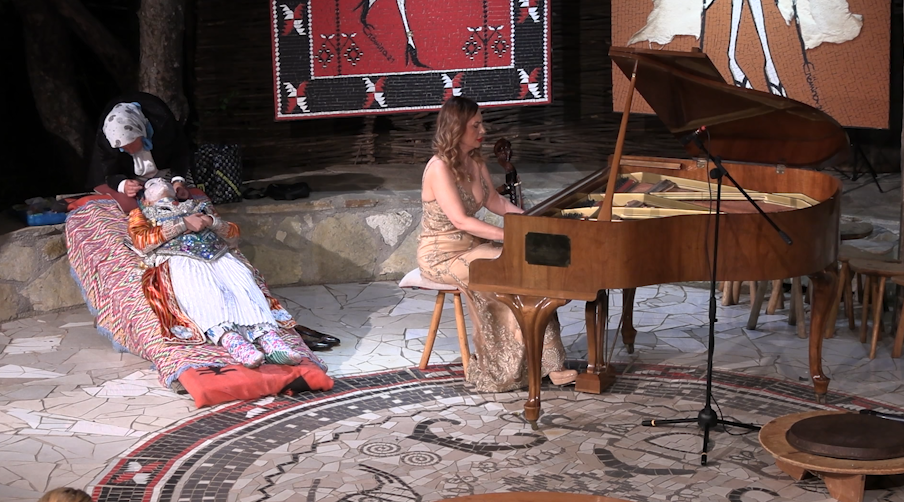
Music and traditional activities at the Etno Fest festival, August 2026. Photo: BIRN.
This year’s programme explores both personal and collective experiences of memory through contemporary art and historical exhibitions.
Festival founder and artistic director Fadil Hysaj said this year’s focus on memory encourages people to examine both their individual and collective identities.
“We want to remember who we were, who we are today and what has happened to us. To search within ourselves, to remember our childhoods, how school, neighbourhoods and different political systems shaped us, and to rediscover the core of our identity,” Hysaj said.
Throughout the week, Etno Fest will host visual art and photography exhibitions, installations, theatre performances, concerts by ensembles from Kosovo, Albania, and Israel, discussions on historical and cultural memory, and documentary film screenings.
Reviving heritage
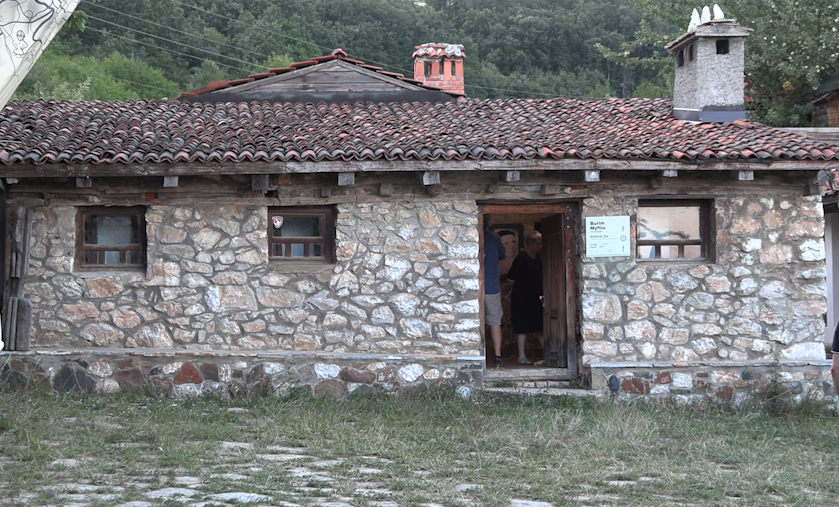
Traditional stone house in Kukaj, where Etno Fest takes place. Photo: BIRN.
Speaking at the opening ceremony, Kosovo’s acting president Albulena Haxhiu said Etno Fest has become an important platform for “saving and promoting the country’s cultural traditions.”
“For years, the houses of Kukaj have opened their doors again, people have gathered in their courtyards, passing songs, stories and traditional crafts on to younger generations,” Haxhiu said.
“Artists come here to listen to local stories and songs, the villagers welcome them into their homes, giving the festival the character that sets it apart.”
Traditional Albanian music also featured in the festival.
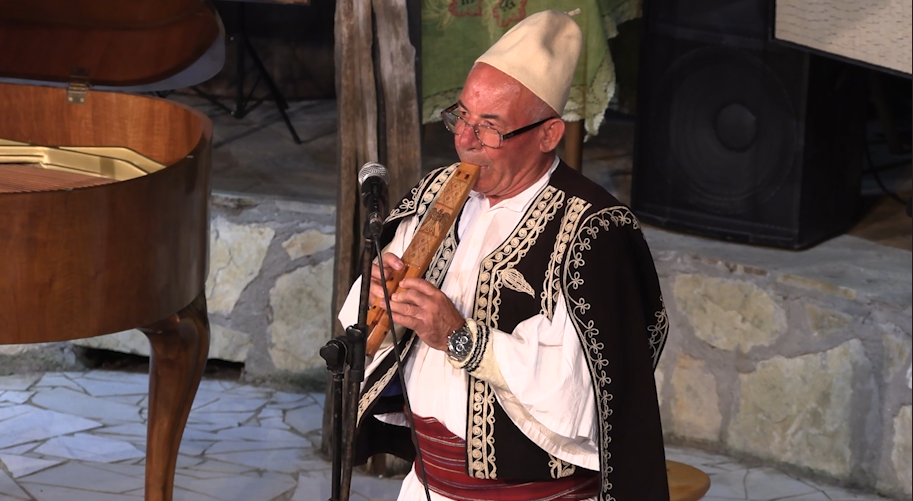
Vendim Kapaj, a master of the Albanian fyell (shepherd’s flute), performs at Etno Fest. Photo: BIRN.
One of the invited guests, Vendim Kapaj, a master of the Albanian flute (fyell), recently contributed to the soundtrack of Christopher Nolan’s film The Odyssey after performing traditional Albanian melodies for Academy Award-winning composer Ludwig Goransson.
“I have played this instrument for more than 50 years. Until yesterday I belonged to Labëria and Albania, but today, thanks to a film watched across the world, I feel proud to belong to all Albanians,” Kapaj told KALLXO.com.
He said Kukaj offered an authentic experience of Albanian heritage.
“Here I truly immersed myself in old Albanian tradition,” he said.
Photographer Ridvan Slivova, whose exhibition “Peaceful Golgotha” is also part of this year’s programme, said his work with footage of the Kosovo war and the aftermath documents the sacrifices made on the path to peace.
“This is history. It is documentation of the truth,” Slivova said.
Parallel living and a nation’s expulsion
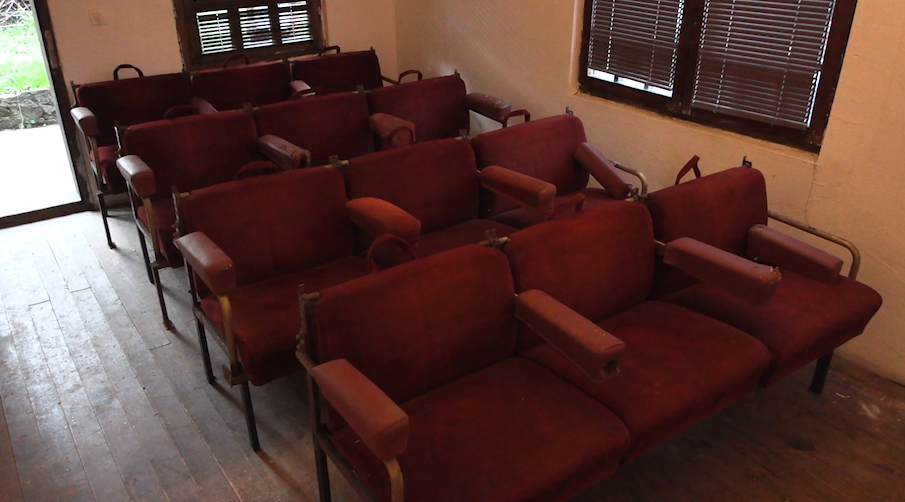
The Exodus ’99 exhibition original train seats from carriages used to deport Kosovo Albanians to North Macedonia during the 1999 war. Photo: BIRN.
Among the many exhibitions are two installations from BIRN Kosovo’s Reporting House museum: “Exodus ’99” and “House School,” produced by BIRN executive director Jeta Xharra and curated by Gazmend Ejupi.
The exhibitions revisit two defining experiences of Kosovo Albanians during the 1990s.
The “Exodus ’99” installation features original train seats from the railway carriages used during the 1999 war, when Serbian forces deported hundreds of thousands of Kosovo Albanians towards North Macedonia.
Exodus ‘99, part of BIRN’s Reporting House museum, presents the stories of 48 Kosovo Albanians who were forcibly deported by Serbian forces in 1999. Housed inside a railway wagon at Prishtina’s Train Station, the very site where so many were forced into overcrowded trains and expelled.
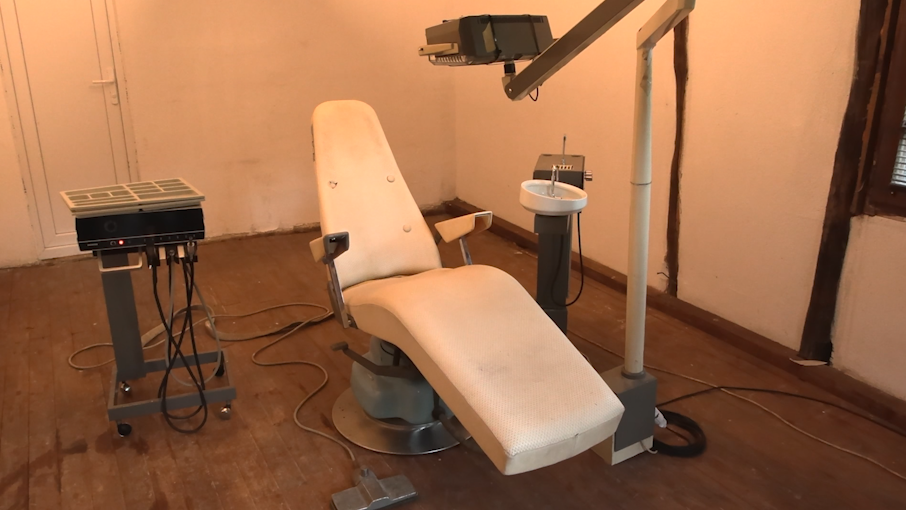
Dental chair used in Kosovo’s parallel education system during the 1990s. Photo: BIRN.
The “House-School” installation centres on a dental chair once used by dentist Merita Gorani-Kuçi, who secretly taught dentistry students in her apartment as part of Kosovo Albanians’ parallel education system after they were excluded from state institutions during the 1990s.
“Merita Gorani held classes in her own clinic, inside her apartment, secretly bringing students there for practical training and even finding patients so they could complete their practice,” Xharra said.
Forbidden to use public buildings for high schools and segregated from Serbs in education, Albanians created and maintained a parallel education system without appropriate facilities, books, or even school supplies throughout the 1990s.
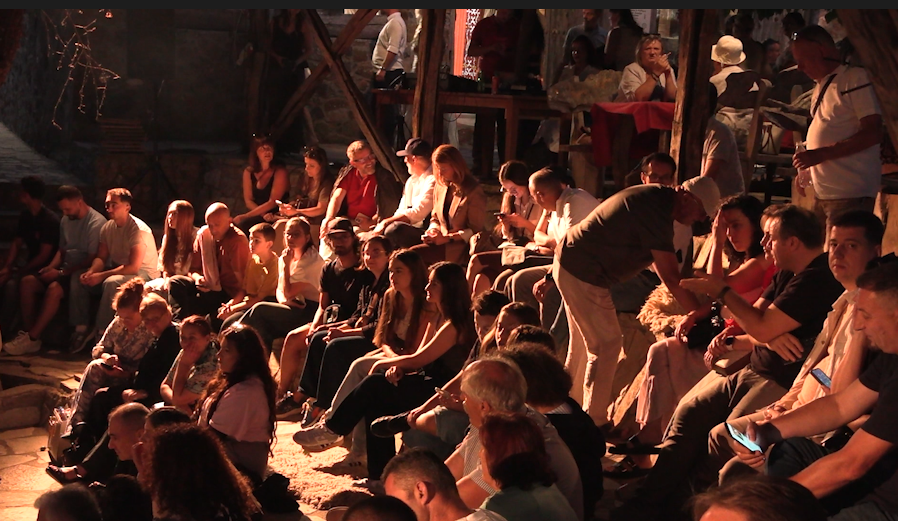
Etno Fest. Photo: BIRN
For curator Ejupi, the installation is an important step in preserving Kosovo’s recent history.
“This is the first time we have physical artefacts from the house-school system. They are extremely valuable for us, and this year’s Etno Fest, with its focus on memory, matches our concept,” he said.
Visitors can also listen to recorded testimonies from the ‘Exodus 99’ exhibition, recounting both the 1999 exodus and the organisation of Kosovo’s parallel education system.
For more than a decade, Etno Fest has established itself as a unique cultural event where Kosovo’s history is not only narrated but experienced, a venue that brings together artists and hundreds of visitors in a setting that preserves the country’s traditional heritage.