

As Kosovo prepares for its upcoming local elections on October 12, female candidates have faced hate speech, disinformation, and gender-based attacks—both online and offline—that threaten to silence their voices and discourage them from entering politics.
Despite years of advocacy for gender equality, women remain underrepresented in Kosovo’s local politics. Of the 206 candidates running for mayor in the October 12, 2025 local elections, only 20 are women—a figure that reflects limited support for female candidates from political parties and a political environment not welcoming to female leadership.
With a lack of support from political parties, women in Kosovo often hesitate to run for leadership positions because it makes them targets of hate speech and disinformation campaigns—attacks that affect their personal lives more than their political platforms.
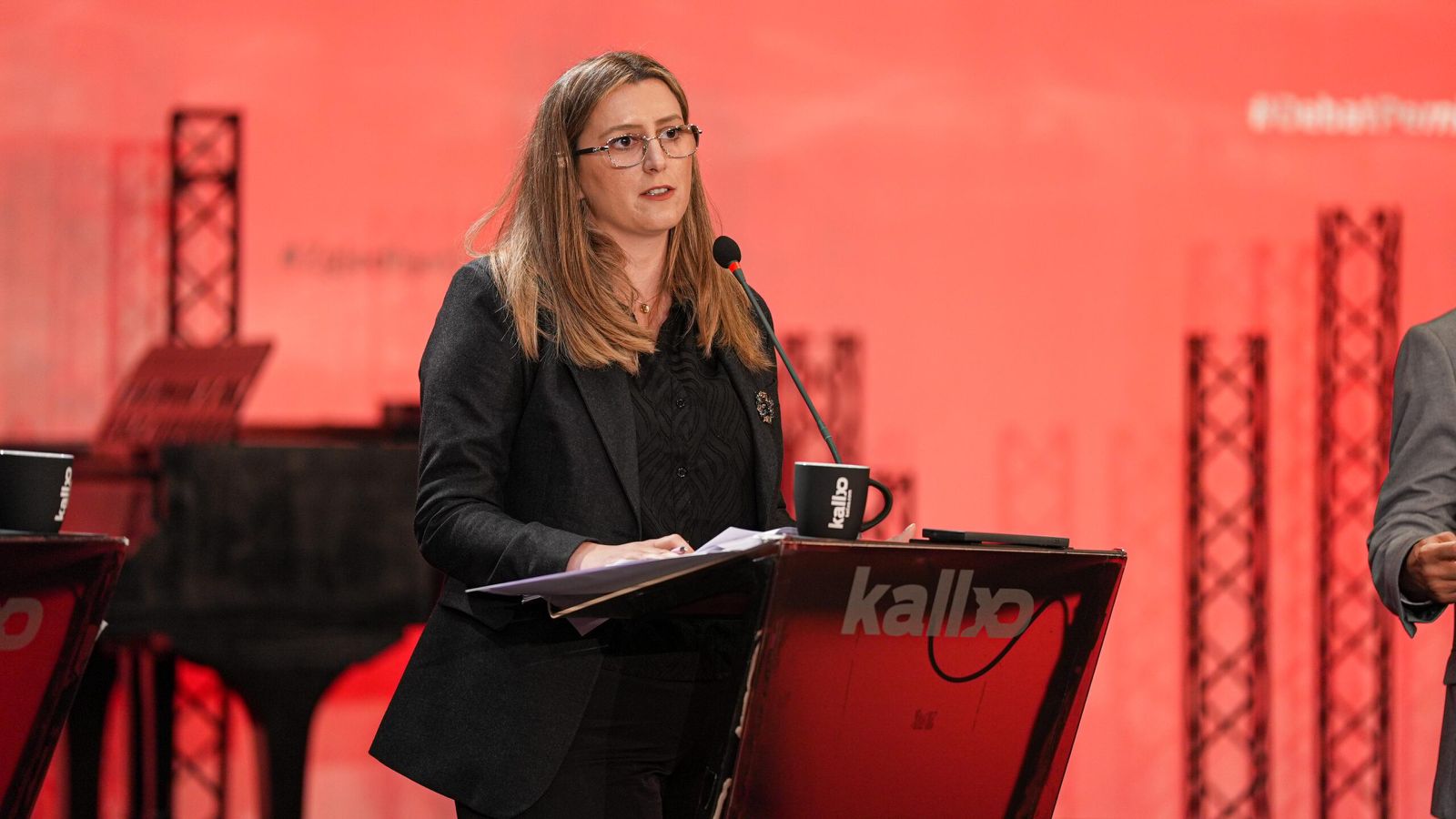
Egzona Tërdevci, Vetëvendosja candidate for Drenas mayor at Kallxo Përnime debate with mayor candidates. Photo: BIRN
Many political parties either fail to recruit women or to support their candidacies in municipalities where victory is unlikely. Activists argue this is not just a question of numbers, but also of meaningful inclusion.
“Parties don’t invest in building female leadership. They approach women at the last minute, when it’s already too late to run an effective campaign,” stated Luljeta Demolli, head of the Kosovar Center for Gender Studies.
For many women, pursuing a career in politics carries significant personal risk.
“The spread of fake news and disinformation is also alarmingly high. Women don’t want their private lives to become a topic of public discussion,” Demolli emphasised in a statement to Kallxo.com. “Their appearance is constantly discussed—the way they dress, behave—they are always targeted,” she added.
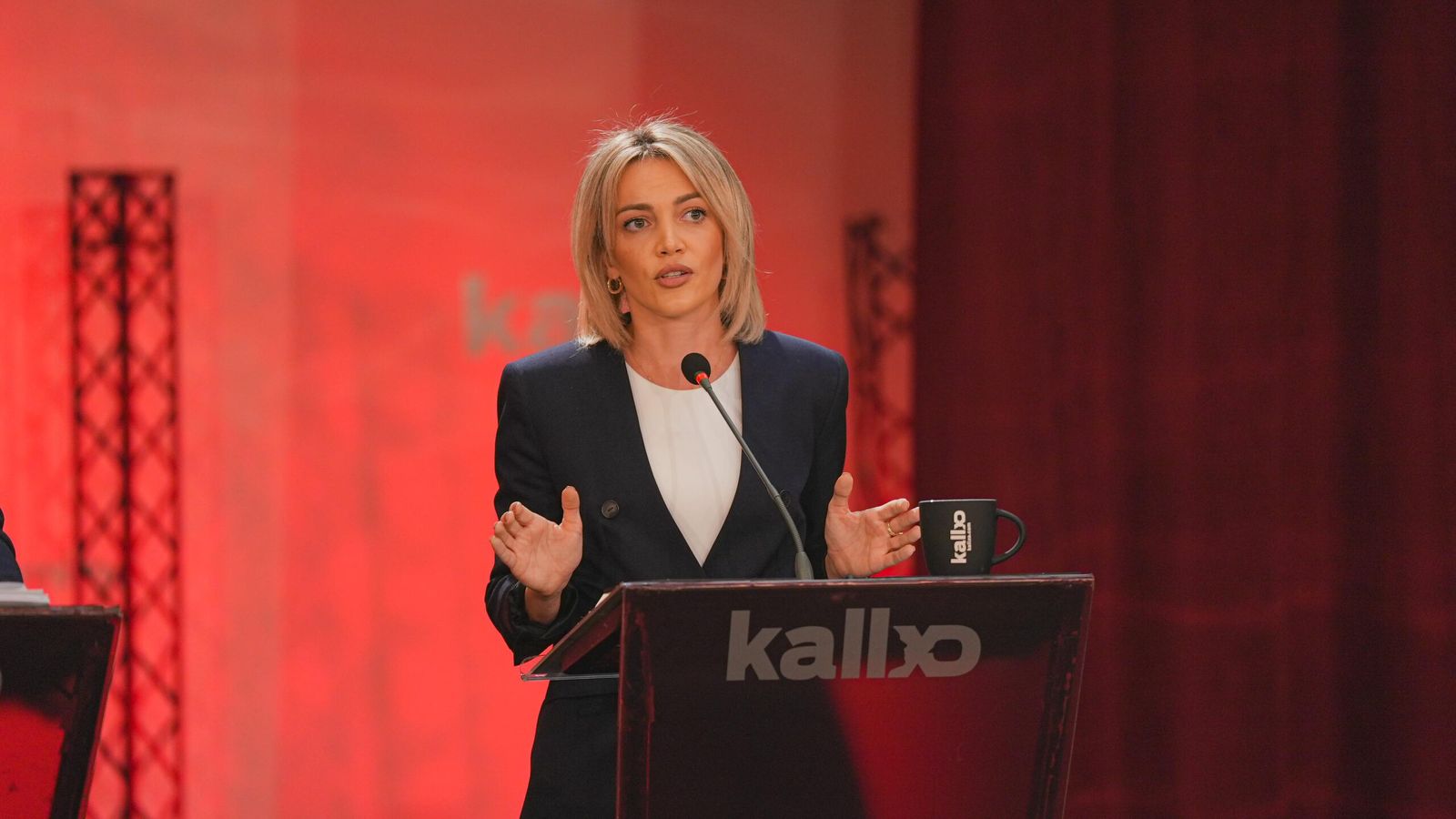
Natyra Kuçi, the Social Democratic Party, PSD, candidate for mayor in Decan, at the Kallxo Përnime debate with mayor candidates. Photo: BIRN
Natyra Kuçi, the Social Democratic Party, PSD, candidate for mayor in Decan, was recently targeted by a false claim on Facebook alleging she had withdrawn from the race. Kallxo.com’s’ factchecking platform ‘Krypometër’, found that the post had used outdated photos from 2019 to spread the rumor.
Kuçi denied it, calling the post “entirely fake.”
“Hate speech has been, and continues to be, a central part of the negative campaign against us,” Kuçi said. “Much of it, I wouldn’t necessarily call outright sexist, but you can definitely find traces of sexism throughout, especially on social media, where anonymity is easier to maintain.”
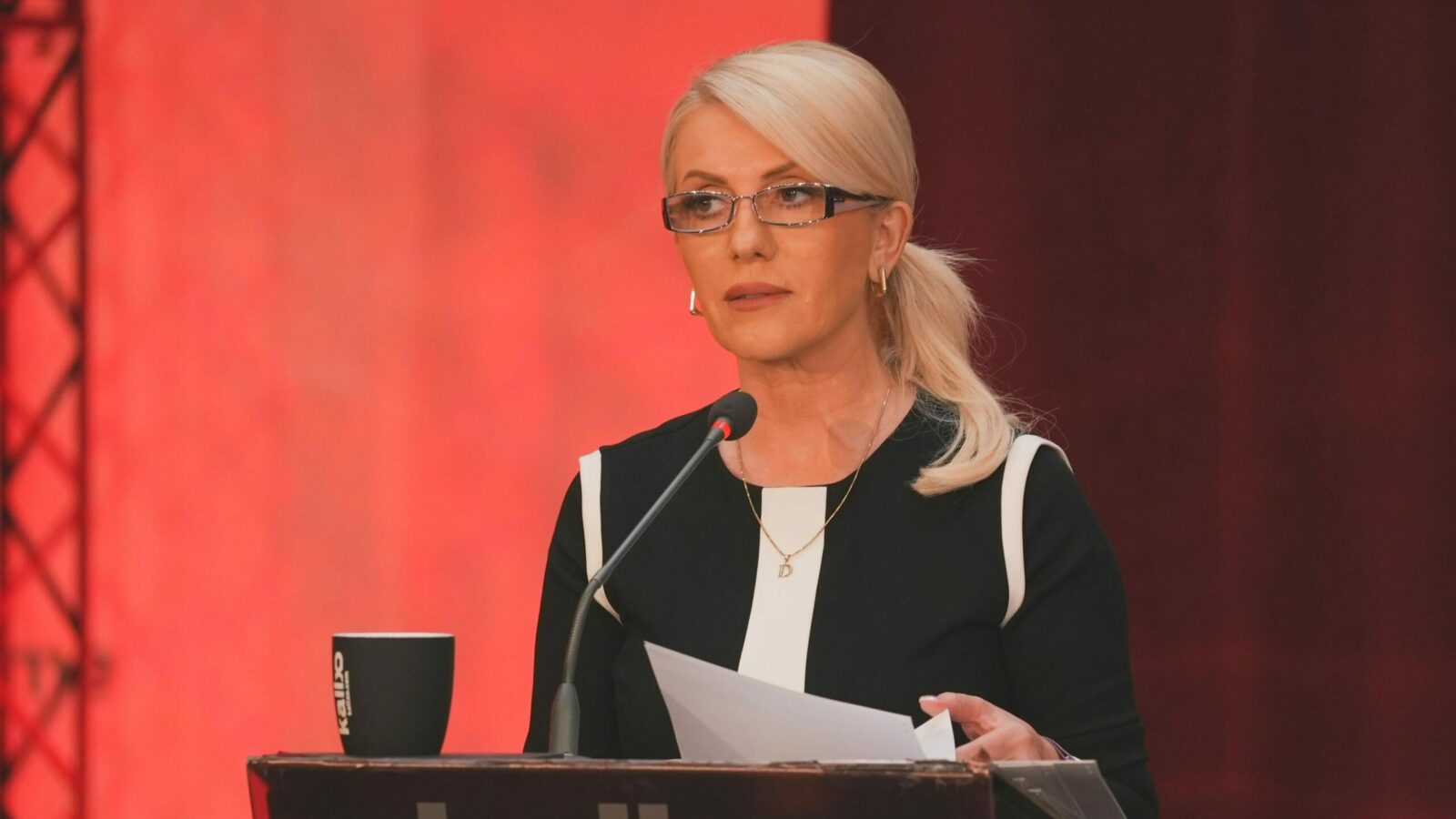
Xhevahire Izmaku, Social Democrat Initiative, NISMA, candidate for the mayor of Vushtrri, at Kallxo Përnime debate with mayor candidates. Photo: BIRN
Kuçi points out that she has repeatedly noticed false content being spread about her, often from fake accounts created specifically to share disinformation and fabricated news.
“These types of posts are circulated far more widely on social media than through any other medium,” she noted.
According to Kuçi, entering politics in such a toxic environment is far from encouraging. However, she emphasises the importance of understanding where hate speech originates and how to respond to it effectively.
“Most of it is carried out anonymously, with a specific agenda and through coordinated effort. Once you recognise it as such, it becomes easier to fight back through work,” she explains.
She believes that eventually, this kind of rhetoric turns against those who use it.
“But that only happens through our continued efforts. Fear can only be overcome through organisation and we, as women, know this all too well.”
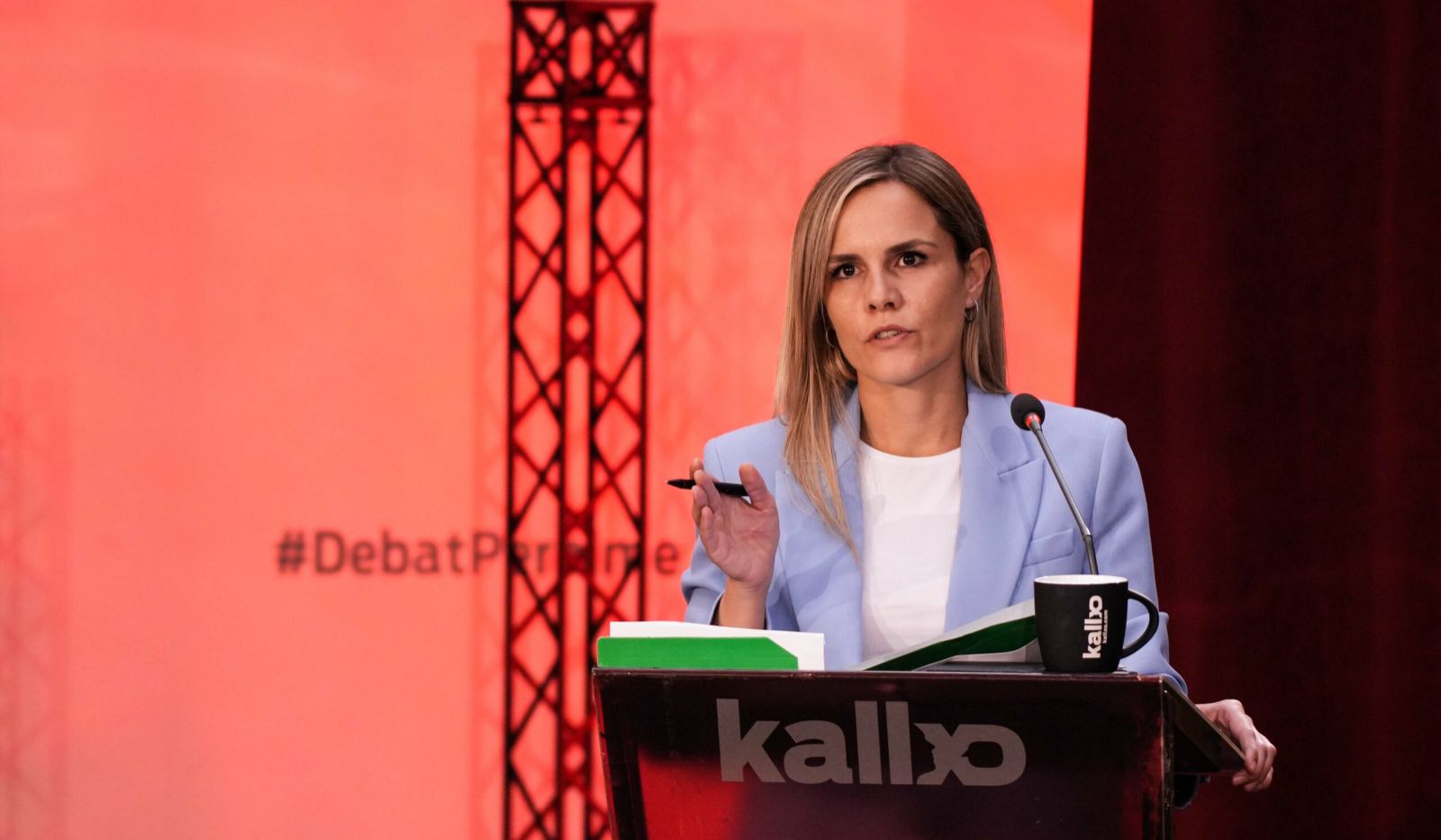
Vildane Latifi, Alliance for the Future of Kosovo, AAK, candidate for the mayor of Fushë Kosovë, at the Kallxo Përnime debate with mayor candidates. Photo: BIRN
Fines for hate speech in politics
The Election Complaints and Appeals Panel, ECAP, empowered by recent legal changes, has already sanctioned several political parties for inappropriate and hateful language during the February 2025 central elections.
The ruling party—Vetëvendosje Movement, LVV—was fined 19 times, the most of any party.
Other parties penalised include the Kosovo Democratic Party, PDK, and the Coalition for Family, each fined 6 times; the Alliance for the Future of Kosovo, AAK, fined 3 times; the Egyptian Liberal Party fined twice; and the Democratic League of Kosovo, LDK, Srpska Lista, and IRDK each fined once.
Meanwhile, the Democracy for Development, D4D, organisation, monitoring social media activity of mayoral and municipal council candidates, identified 32 cases of inappropriate language on social platforms between September 13 and 18.
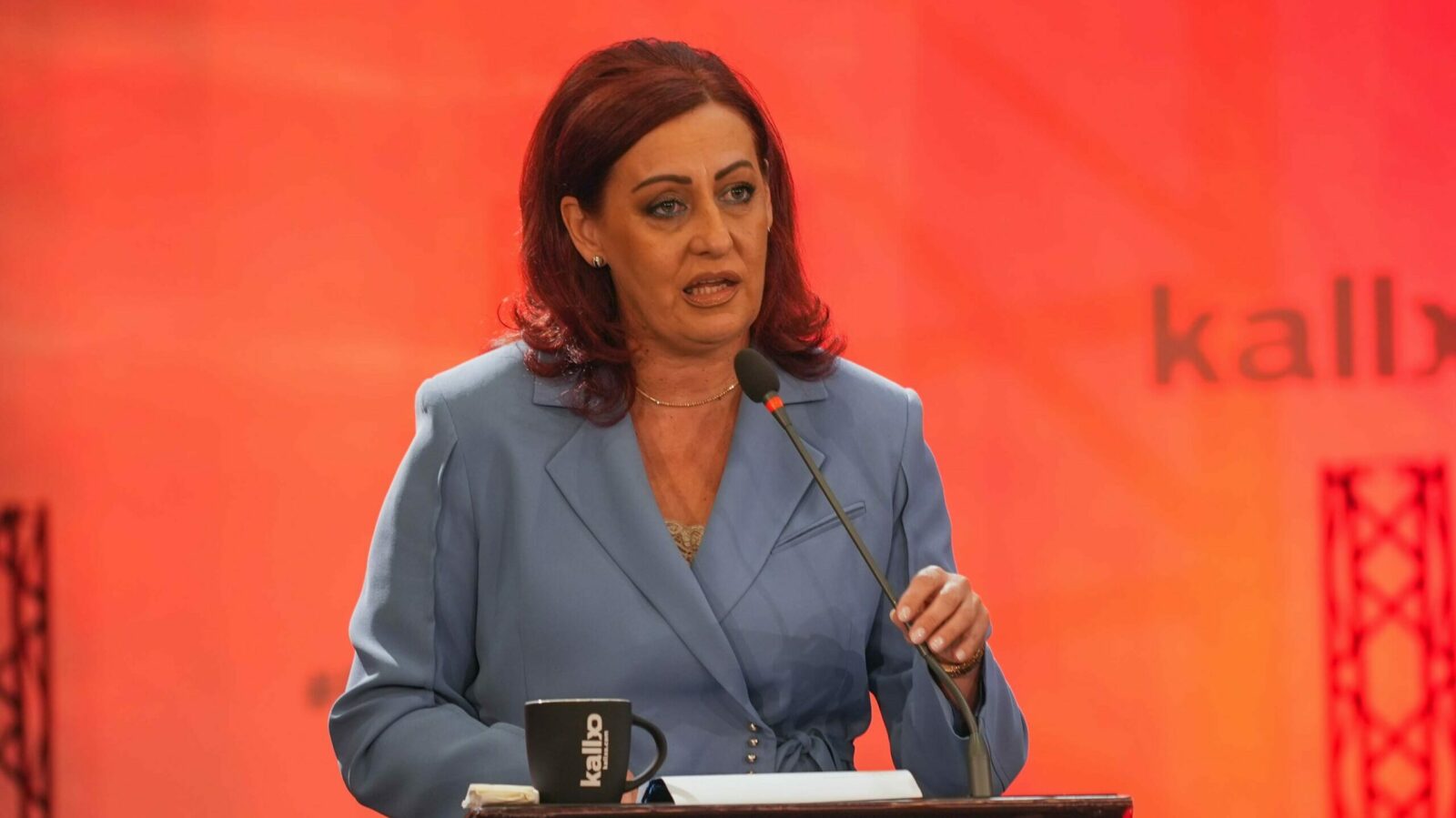
Emilia Rexhepi, Vetëvendosje candidate for the mayor of Prizren at Kallxo Përnime debate with mayor candidates. Photo: BIRN
According to D4D’s findings, most of the 32 incidents involved hate speech, followed by 4 cases each of disinformation and personal bullying. Two incidents cases were classified as sexist or misogynistic.
“Hate speech and disinformation create fear, stress, and a sense of insecurity among women who are considering entering politics,” emphasized Rrezarta Delibashzade-Krasniqi from D4D.
“This type of disinformation is widespread and intensifies during periods when women become candidates, especially for roles that require strong public visibility, such as running for mayor,” added Delibashzade-Krasniqi in a statement to Kallxo.com.
According to Delibashzade-Krasniqi, gender stereotypes make women think twice about running for office.
“The degrading language, which relies on gender stereotypes—such as ‘a woman should stay at home,’ ‘a woman has no place in leadership,’ or criticism based on appearance, voice, or image—discourages potential female leaders from entering the race, particularly for high-profile positions like mayor,” she said.
Furthermore, Delibashzade-Krasniqi explained that the most common disinformation narratives targeting women in politics include claims that they are “not competent for political work,” “emotionally unstable,” “unfit to lead,” or that “women belong in ‘softer’ or ‘traditional’ fields such as education and healthcare—not in leadership positions.”
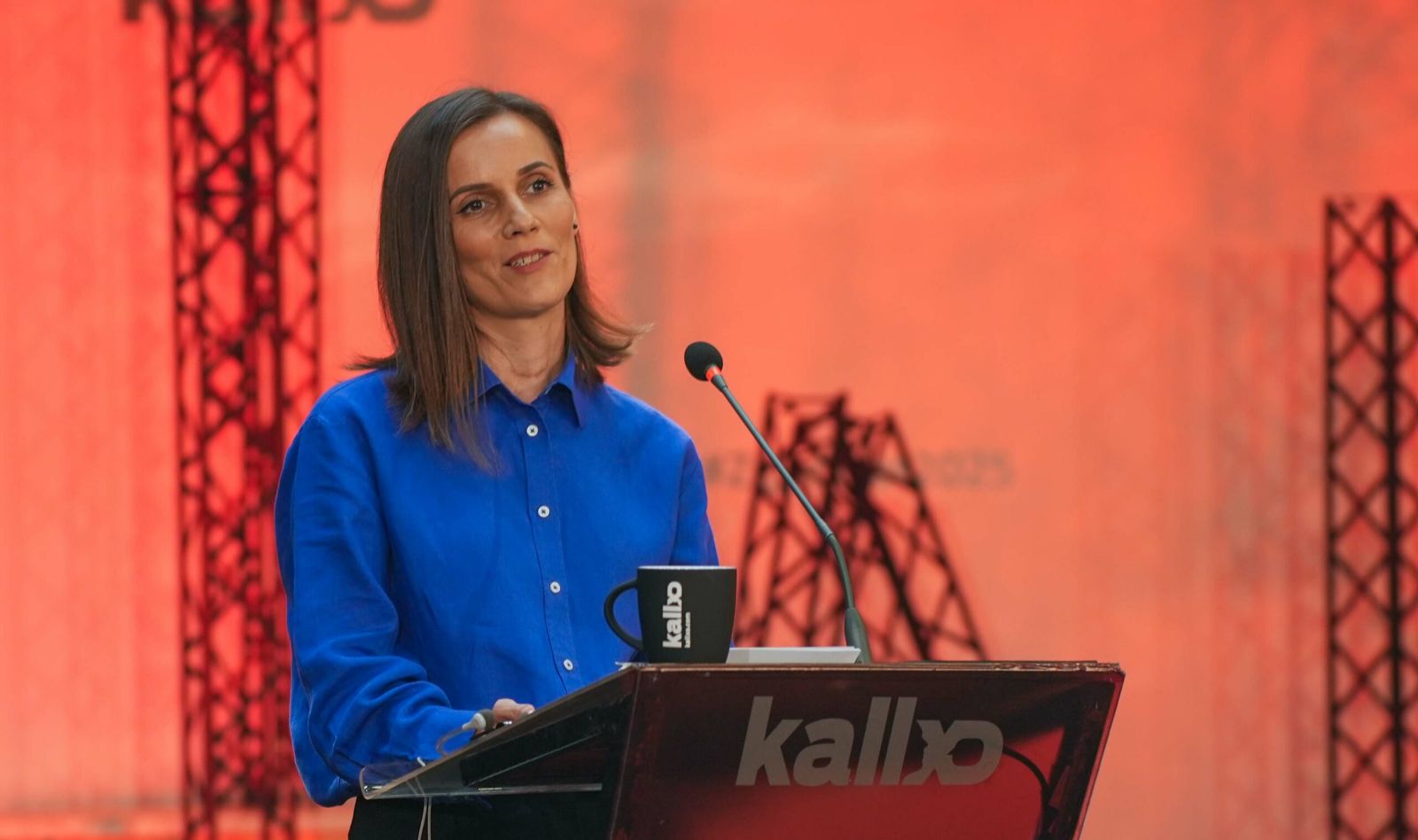
Albulena Balaj-Halimaj, Social Democrat Initiative, NISMA, candidate for the mayor of Prizren at the Kallxo Përnime debate with mayor candidates. Photo: BIRN
Gender stereotypes still run deep
Female candidates are often judged by different standards than men.
“Political parties in Kosovo are still not ready to create genuine space and opportunities for women to run for leadership positions,” remarked Adelina Berisha from Kosovo Women Network, KWN.
“Patriarchal mindsets are still deeply rooted—even within party leadership structures—which struggle to envision a woman as a successful local leader.”
Berisha pointed out that discriminatory and sexist language remains a common barrier, particularly against women candidates.
“Public attention often focuses on their physical appearance, rather than their ideas or political programs.”
“Society places unfair and often unrealistic expectations on women in politics, judging them by their roles as mothers or wives, while men are never questioned about how they care for children or cook. This reflects a clear double standard,” she explained.
Berisha argued that most parties have failed to promote gender equality in a meaningful and sustainable way.
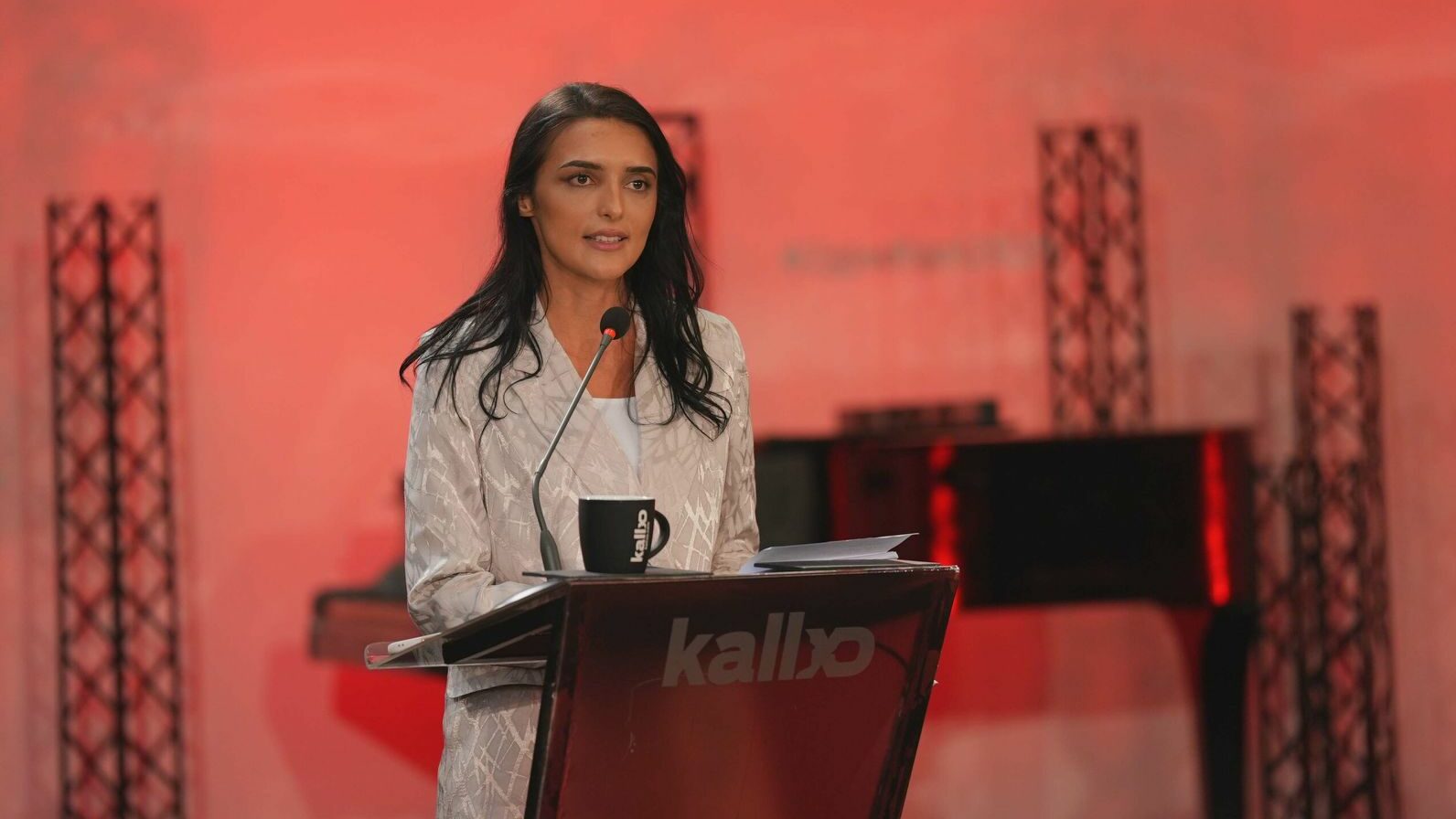
Jona Arifi, Democratic Party of Kosovo, PDK, candidate for the mayor of Kamenica, at the Kallxo Përnime debate with mayor candidates. Photo: BIRN
“Unfortunately, many party leaders still carry patriarchal attitudes and are unwilling to share their power. We’ve even seen cases where women have outperformed men in terms of votes, and instead of being celebrated, they’ve been blocked from decision-making processes by male leaders,” Berisha noted.
“Civil society must continue to advocate for stronger legal frameworks and awareness campaigns to promote fair treatment for everyone, regardless of gender,” she concluded.