


Three hydropower plants built more than a decade ago in the north of Kosovo remain out of operation because of an ongoing dispute between the public enterprise Trepça and the private company Hydro-Line, which constructed the facilities.
Three hydropower plants, located in Shala e Bajgorës, in the Mitrovica region, were designed to produce renewable electricity but have been shut down twice since 2023 because of complaints by Kosovo’s mining public enterprise Trepça. It argues that the hydropower plants’ operation poses technical risks to the nearby Stan Tërg mine. Hydro-Line, the private company which constructed the hydropower plants, disputed these claims.
Hydro-Line obtained all the required licenses for the project and in 2015 Trepça’s management approved the plants’ connection to a 35-kilovolt substation near the Stan Tërg mine, an asset owned by Trepça. Electricity production and transmission through Trepça’s network continued uninterrupted until 2023.
In 2023, Trepça, under new management, disconnected the hydropower plants from their substation. The company cited technical risks, claiming that electricity circulating from the plants was overloading the system, causing defects that could endanger miners working underground.
The standoff has halted domestic electricity production at a time when Kosovo is increasingly dependent on expensive energy imports as well as highly dependent on coal power plants.
The case has been challenged several times in the courts.
Disconnection over safety concerns
Trepça officials say the decision to disconnect the hydropower plants followed several incidents involving damaged cables and equipment, including one case in which miners were temporarily trapped inside the Stan Tërg mine.
In 2023, Hydro-Line requested a security measure from the Kosovo Commercial Court, which required Trepça to reconnect the plants to the electricity grid. In earlier rulings, the Commercial Court ordered Trepça to reconnect Hydro-Line to the 35-kilovolt substation.
Despite these decisions, Trepça disconnected the hydropower plants again in 2025, citing system overload and defects.
According to Muhamer Ibrahimi, representative of Hydro-Line, the electricity produced by the hydropower plants could be sold in Kosovo at regulated prices, cheaper than the imports.
“For the megawatts we should be producing here, electricity is being purchased at three or four times the price. On top of that, transmission costs are paid as well. This causes damage at multiple levels,” Ibrahimi said.
“The price of this project is around 83 euros per megawatt-hour, while two other projects range between 72 and 73 euros per megawatt-hour,” Ibrahimi told Kallxo.com.
“At the moment, Kosovo is losing around 8 megawatts of domestic production and importing electricity from abroad,” he added.
Shyqeri Sadiku, director of the Stan Tërg mine, said that expert reports consistently raise suspicions that Hydro-Line’s connection is responsible for failures in Trepça’s equipment.
“That agreement created long-term problems for Trepça, starting in 2023 and continuing through 2024, 2025, and now in 2026,” Sadiku said.
“There is no financial benefit or security for Trepça with the agreement. The company lacks adequate protection mechanisms to prevent damage. For us, the lives of miners are essential,” he added.
Hydro-Line disputes these findings, claiming that Trepça has never presented verified expert evidence, either publicly or in court.
The dispute unfolds as citizens face rising electricity bills. In January 2026, Kosovo’s main energy operators requested tariff increases of up to 20%, citing high import costs, operational expenses, and winter supply risks. Last year, electricity prices increased by more than 16%.
Kosovo produces around 90% of its electricity from aging coal-fired power plants. While the country has sufficient coal reserves, production capacity cannot meet winter demand, forcing reliance on imports. Meanwhile, renewable investments in wind and solar remain limited.
Ongoing legal battle
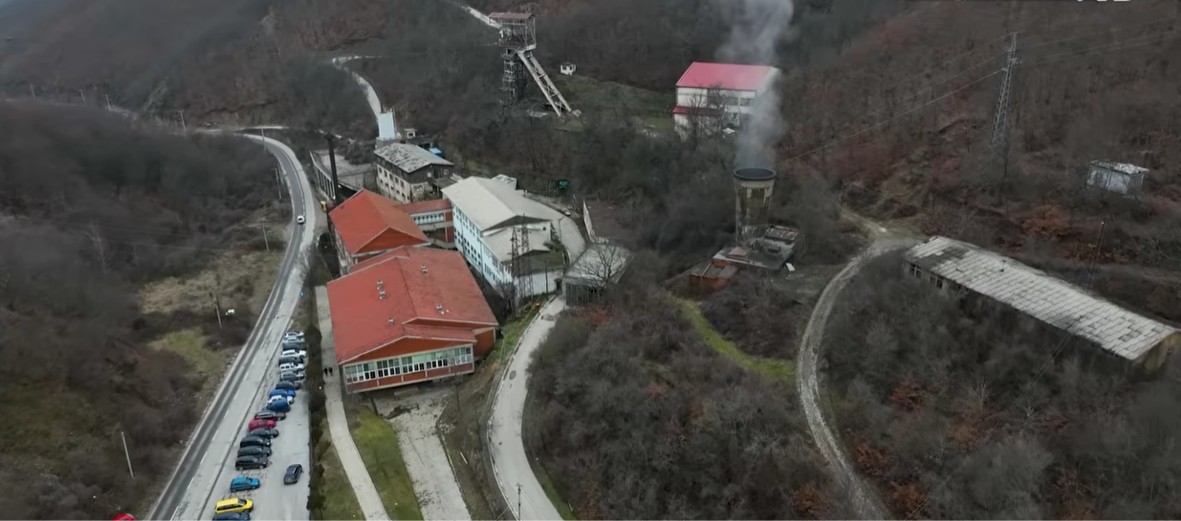
Trepca enterprise facility. Photo: BIRN
In 2025, Trepça formally annulled the 2015 consent that allowed Hydro-Line to connect to the substation. The decision, signed by Trepça’s Chief Executive Officer Faton Ahmeti, was challenged in court by the private company.
The Commercial Court had initially overturned Trepça’s decision and issued a security measure ordering the reconnection.
Trepça appealed, and in February 2026 the Kosovo Court of Appeals overturned the first-instance ruling and ruled in favor of Trepça.
“I annulled the consent issued in 2015,” Ahmeti said. “On February 5, 2026, we received a new decision stating that Trepça has the right to operate its assets and properties in accordance with the law.”
Ahmeti added that Trepça may consider negotiating a future agreement, including rental fees for the use of its infrastructure. He also claimed that Hydro-Line had used Trepça’s assets for more than a decade without compensation, causing financial damage to the public enterprise.
Hydro-Line’s legal team disagreed with this interpretation. According to the company’s lawyer, Muhamet Berisha, “the decision is being deliberately misinterpreted. If read carefully, it states that Trepça’s internal acts cannot override enforceable court decisions. The earlier security measure remains in force.”
The Mitrovica Prosecutor’s Office told Kallxo.com that the case will be handled within legal deadlines, noting that it is a relatively new case from 2025 and that prosecutors are dealing with a heavy caseload.
English version was prepared by Ardita Zeqiri