


Open Art Gallery has already established itself as an innovative and inclusive platform, welcoming different generations, disciplines, media, and approaches.
Prishtina has long needed independent spaces that approach art not merely as something to be exhibited, but as a process of experimentation, exchange, critical reflection, and engagement with the city. In this context, the establishment and continued development of Open Art Gallery represents an important contribution to Prishtina’s cultural life.
Founded by artist Naim Spahiu, the gallery opened in the Çamëria neighbourhood in December 2023 with the regional group exhibition Armistice. Curated by Elton Koritari and developed through an initiative involving Naim Spahiu and Ardian Isufi, the exhibition brought together artists from Kosovo, Albania, North Macedonia, Montenegro, and the wider Albanian diaspora. From the outset, the gallery positioned itself as a meeting point for diverse artistic practices and regional perspectives.
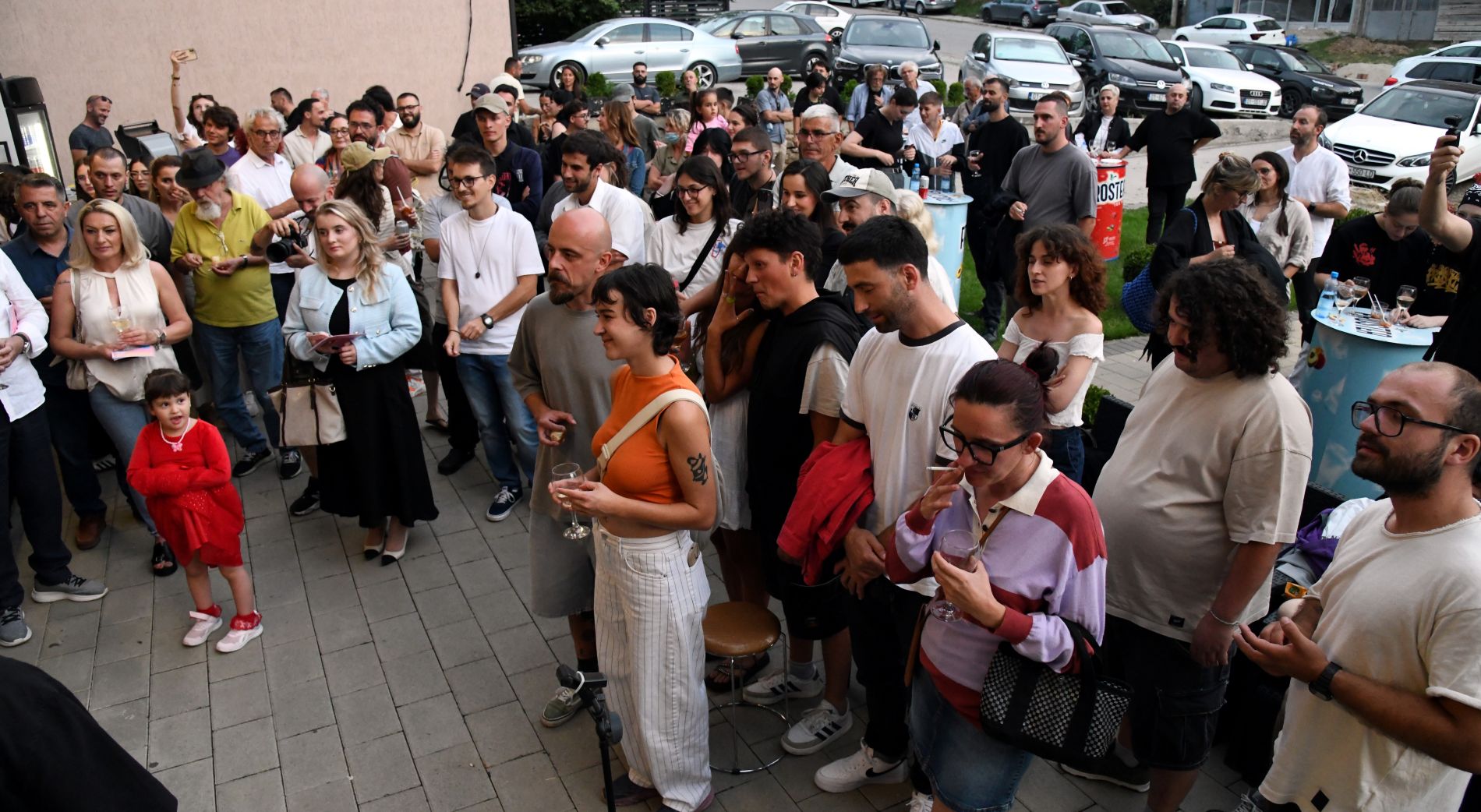
Open Art Gallery. Photo: Enver Bylykbashi.
Open Art Gallery has already established itself as an innovative and inclusive platform, welcoming different generations, disciplines, media, and approaches. Prishtina does not simply need another exhibition venue; it needs an active cultural environment where visual art can interact with music, performance, film, public conversations, publications, education, and international collaboration.
Such a space can help build a cultural community rather than function only as a temporary setting for artworks. It can bring artists and audiences together, encourage interdisciplinary exchange, and allow new ideas to develop beyond conventional institutional structures.
In this respect, Hoxton Square in London offers a valuable point of reference. During the 1990s and early 2000s, Hoxton became closely associated with London’s emerging creative scene. Its influence resulted not from one institution, but from the concentration of artists’ studios, galleries, music venues, design practices, independent organisations, and informal meeting places.
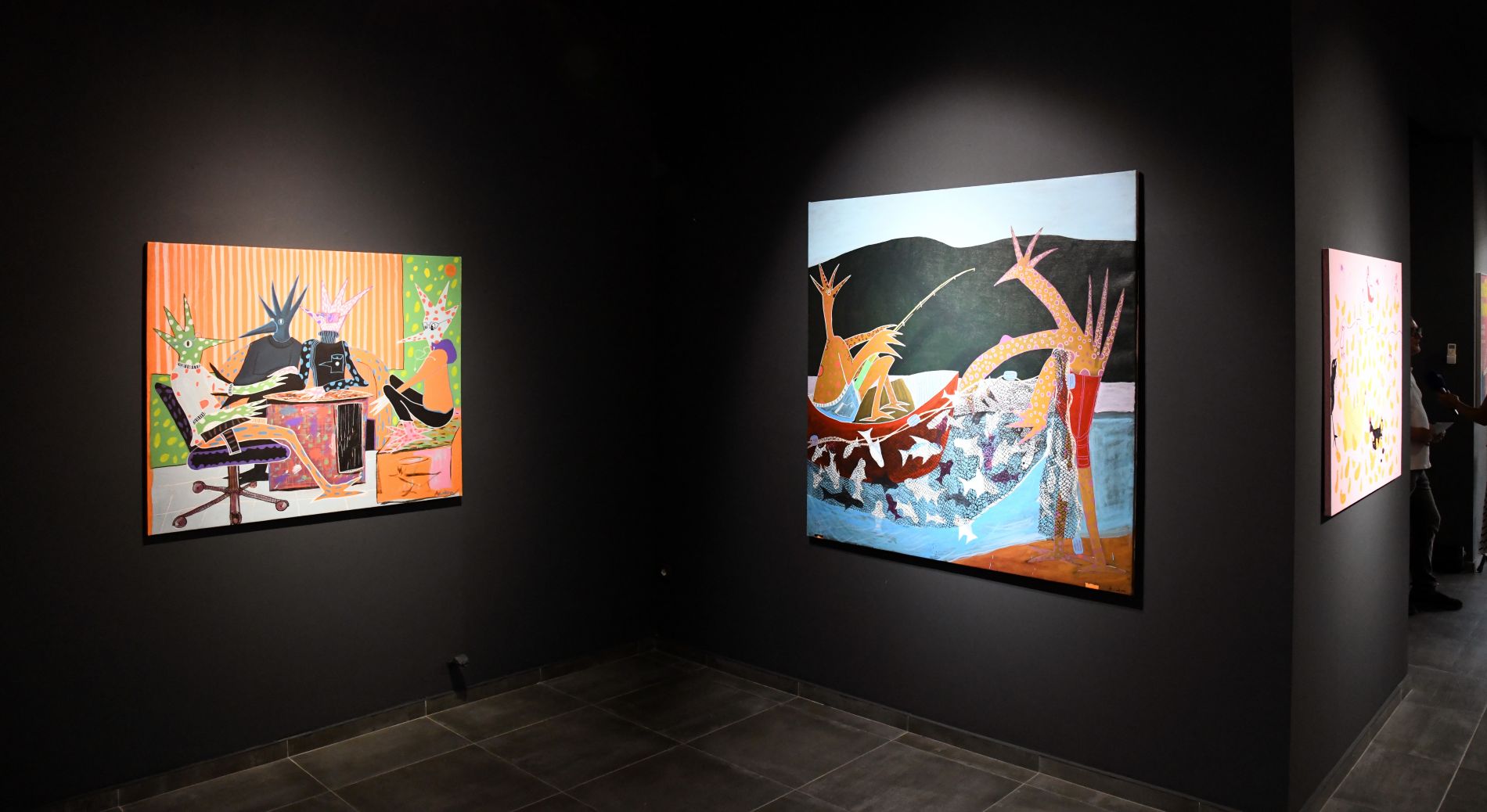
Open Art Gallery. Photo: Enver Bylykbashi.
White Cube opened its Hoxton Square gallery in 2000, contributing to the area’s international recognition as a destination for contemporary art. Yet Hoxton’s wider cultural significance came from the coexistence of art, music, fashion, publishing, architecture, nightlife, and urban culture. Creative production became part of the everyday rhythm and identity of the neighbourhood.
Prishtina possesses a similarly dynamic energy. Its artists, musicians, filmmakers, designers, architects, writers, students, and cultural producers continuously generate new work. What is still needed is greater infrastructure, continuity, curatorial direction, and long-term support to connect these communities.
Open Art Gallery can play an important role within this evolving cultural landscape. By remaining open to moving image, performance, photography, design, fashion, architecture, publishing, and other forms of cultural production, it can attract broader audiences and participate more directly in the social life of the city.
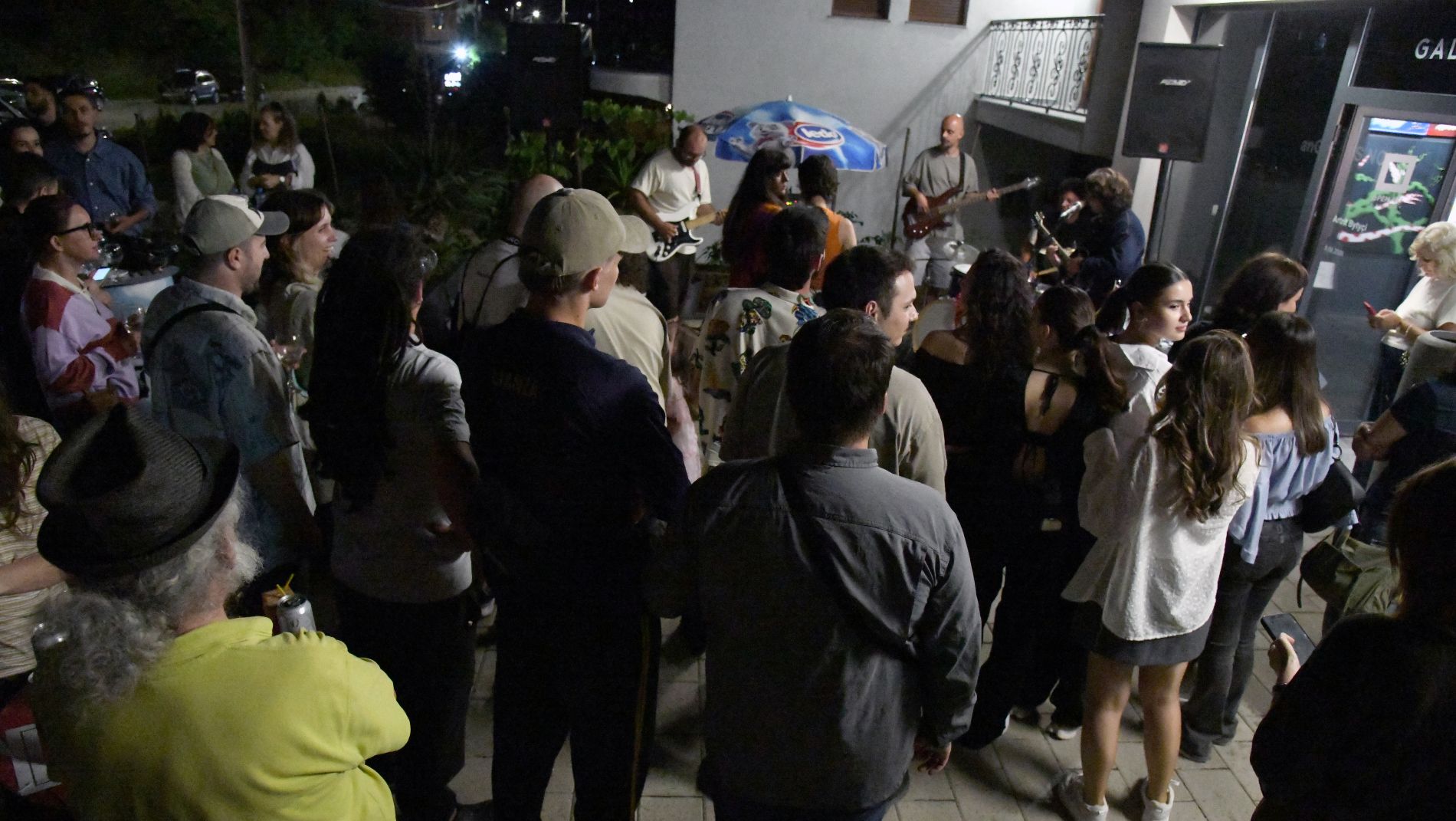
Open Art Gallery. Photo: Enver Bylykbashi.
Its programme has already connected contemporary practice with questions of history, memory, and political experience. Esat Valla’s solo exhibition, Visual Art as Resistance 1990–1999, curated by Zeni Ballazhi and presented in May 2025, brought together works created during one of the most difficult periods in Kosovo’s recent history. Through expressionist paintings and recurring images of bulls, skulls, machinery, and damaged urban environments, Valla appeared not only as an artist, but also as a witness to repression, resistance, and social violence.
The gallery’s most recent exhibition, anGjelus Novus, by artist Arianit Lakna and curated by Artrit Bytyçi, opened on 8 July 2026 with a live musical performance by Zwada. This combination of visual art, curatorial research, and music demonstrated how the gallery can operate as an interdisciplinary platform rather than a conventional exhibition venue.
Zwada’s performance was more than an accompanying element. By introducing sound, live presence, and collective participation, it expanded the experience of the exhibition. The encounter between Lakna’s work, Bytyçi’s curatorial approach, the music, the architecture, and the audience created the kind of active cultural atmosphere that Prishtina needs more frequently.
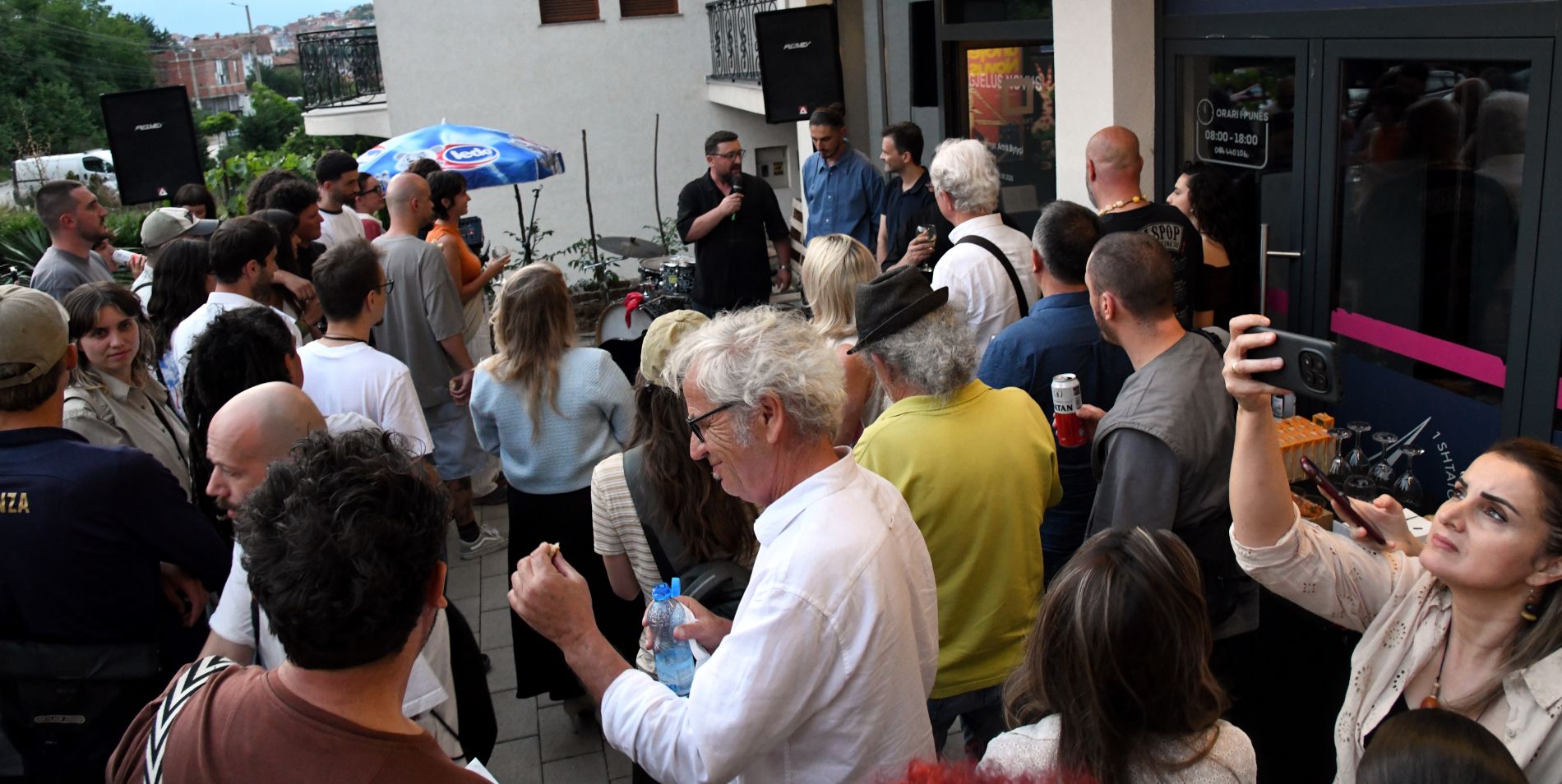
Open Art Gallery. Photo: Enver Bylykbashi.
This approach can be extended through commissioned performances, experimental concerts, screenings, readings, and public conversations. Such programming would allow the gallery to support individual artistic practices while also strengthening connections across Prishtina’s wider creative community.
The next step is to consolidate these activities into a distinctive and recognisable curatorial identity. An alternative space is not defined only by its location, architecture, or ownership, but by the risks it takes, the voices it supports, the questions it raises, and the communities it brings together.
A strong programme should create space for emerging artists alongside established figures, introduce practices that may not find support within traditional institutions, and revisit significant positions from Kosovo’s recent art history. Experimentation should be accompanied by serious research, professional production, documentation, and critical responsibility.
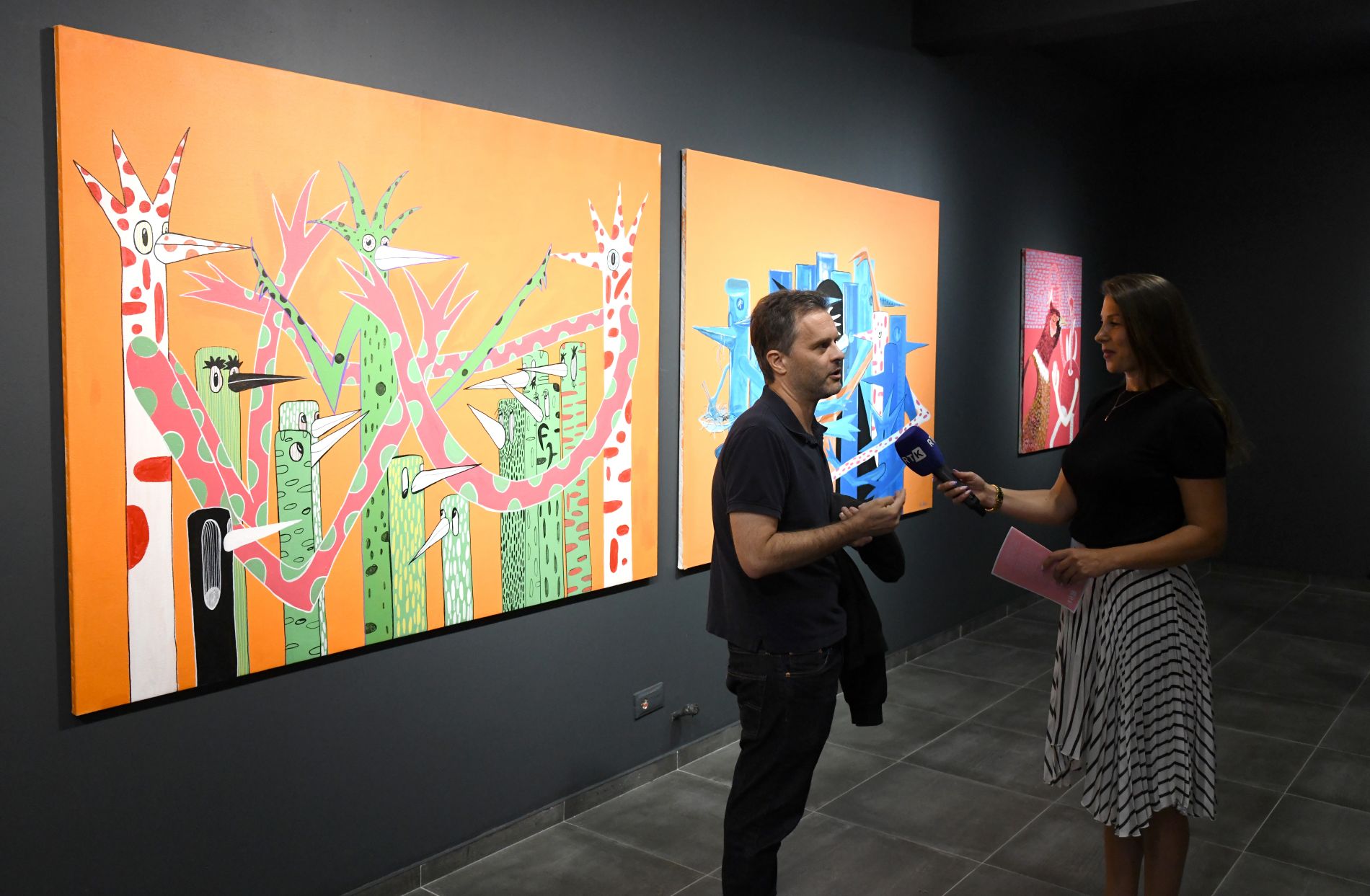
Open Art Gallery. Photo: Enver Bylykbashi.
Open Art Gallery should therefore be understood as more than a venue for exhibitions. It has the potential to become a lasting cultural platform connecting artists, curators, musicians, audiences, researchers, students, and the city.
Through a consistent interdisciplinary programme, a clear curatorial vision, and meaningful local and international partnerships, Open Art Gallery can become an important reference point for Prishtina’s alternative cultural scene—a place where contemporary art enters into dialogue with music, film, design, performance, and everyday urban life.
Prishtina needs spaces that do more than display art. It needs spaces that generate ideas, support artists, encourage critical dialogue, develop new audiences, and contribute to a more open and internationally connected cultural environment.
Open Art Gallery is located at Aqif Blyta street, nr. 61, in Prishtina and is open from Monday to Saturday, 10:00- 18:00.
Gazmend Ejupi is a curator and Founder of Prishtina Biennale.