


Residents of one of Prishtina’s most well known urbanised neighbourhoods, Ulpiana, are opposing plans for new construction linked to the 2030 Mediterranean Games, concerned it puts at risk one of the few green spaces in the capital.
For decades, children and elderly gather daily to play near the fountain, the so-called Fontana, in the Ulpiana neighborhood of the Kosovo capital, Prishtina.
A focal point for people to get socialised, the area has been an under-construction site for months and a new project approved by the municipality earlier in November risks changing the very parts that people hold dear.
“Ulpiana is the only neighbourhood in Prishtina that has all the features of a neighborhood in a capital-city, that provides all the conditions required for people to live properly,” Burim Hana, an Ulpiana resident, told Prishtina Insight.
“It is the only place with green spaces, and I believe it should not be touched,” Hana said.
Indeed, Ulpiana is one of the few neighborhoods with parkland in Kosovo’s capital, a legacy of Yugoslav architecture from the 1960s and 1970s..
On November 6, the Prishtina Municipal Assembly approved the Ulpiana 2030 Legacy project as part of the municipality’s plans to provide additional infrastructure for the 2030 Mediterranean Games.
The Ulpiana 2030 Legacy project foresees an underground parking facility beneath the area surrounding the Ulpiana fountain, as well as a new building intended as accommodation for athletes and accompanying staff.
Prishtina was selected to host the 2030 Mediterranean Games on September 8, 2023, at the General Assembly of the International Committee of the Mediterranean Games in Heraklion, Greece.
As Kosovo is landlocked, neighbouring Albania has pledged to assist with the organisation by providing its coastline for sailing competitions.
Preparations for the ‘Prishtina 2030’ Games have been marked by delays, due to lack of coordination and clashes between local and central governance in Kosovo.
‘Residents will have the final say’
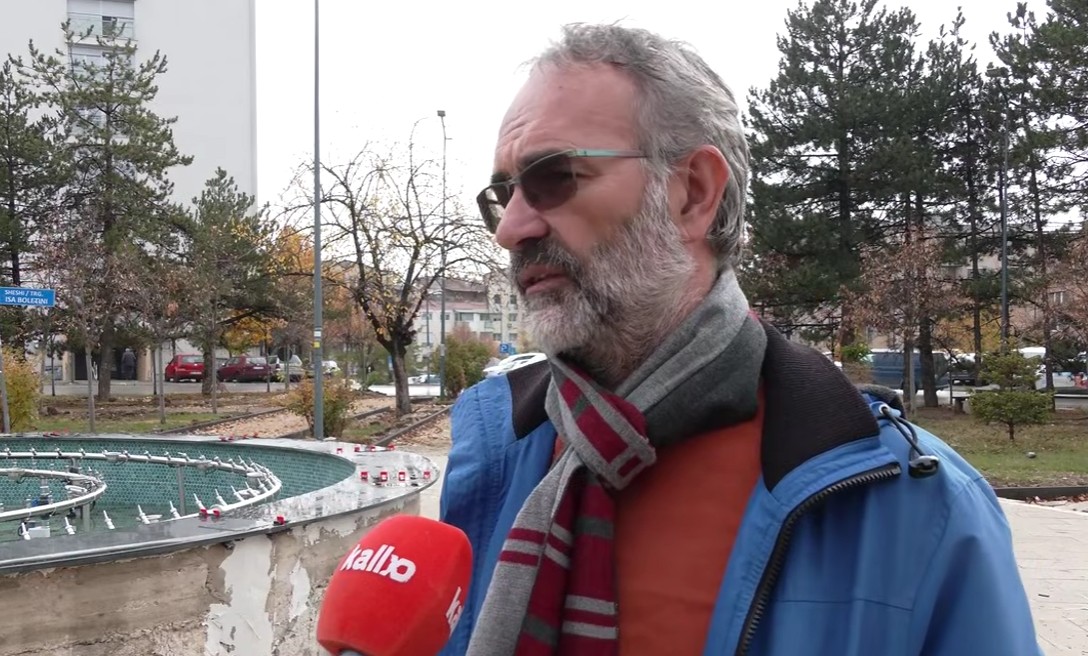
Burim Hana, Ulpiana neighbourhood resident. Photo: BIRN
Hana, highlighted that locals are frustrated by the decision to approve the Ulpiana 2030 Legacy project, because “the decision was made without prior discussion with the residents of Ulpiana. That was the first mistake.”
Following public objections, Prishtina Mayor Përparim Rama said in a Facebook post on November 9 that the project would not go ahead if Ulpiana residents opposed it.
“First, we will discuss it with you. This plan is intended to serve the citizens, and we will make the decision together with you,” Rama wrote.
“The fountain will remain at the heart of the neighbourhood, where it has always been. A symbol of Ulpiana and a source of pride,” he wrote, adding that there was “no reason to be concerned.”
Rama explained that, “the proposed car park would be underground, beneath the fountain area. This would create more parking spaces, allowing us to return areas currently used for parking to residents as green spaces and sports facilities.”
Regarding the proposed construction of a new accommodation building, Rama said, “it will only be constructed if necessary for the Mediterranean Games. The student dormitories [located by the fountain] cannot accommodate all the athletes and accompanying staff. We have, therefore, considered building accommodation with no commercial function, designed to blend in with the neighbourhood’s architecture”.
“After the Games, the space would remain for residents to use!” he added.
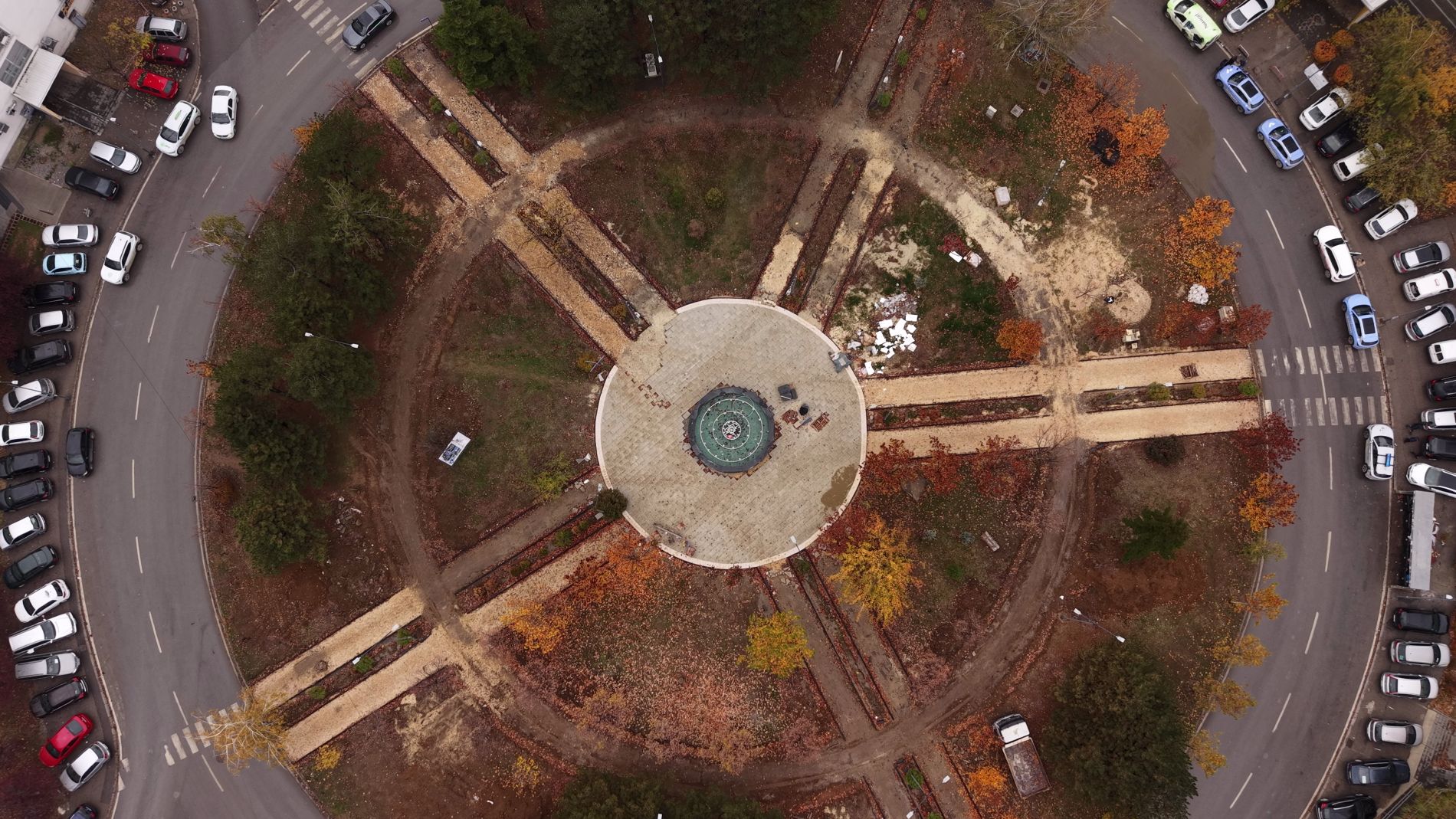
The fountain located at the centre of the five-tower complex, known as the Solitaries, in Prishtina’s Ulpiana neighbourhood. Photo: BIRN
The Democratic Party of Kosovo, PDK, which is part of the governing coalition in Prishtina alongside the Democratic League of Kosovo, LDK, and voted in favour of the plan, described residents’ concerns as legitimate.
Plator Gërdovci, head of the PDK group in the Prishtina Municipal Assembly, told Prishtina Insight that the decision “is just the first phase of a larger process,” not a final determination of the project.
“It is important to distinguish between the designation of the location, project’s content/design, and potential implementation,” he said.
Prishtina Insight also contacted the LDK group but did not receive a response by the time of publication.
Members of Vetevendosje, which leads the central government but is in opposition in the Prishtina Municipal Assembly, have questioned the planning documents and procedures behind the proposal.
Nexhmije Xhema, an assembly member from Vetëvendosje, told Prishtina Insight that her party voted against the decision. The proposed project was, therefore, not included in the development plan.
Xhema warned that “no feasibility study had been carried out” and that the planned construction could put the foundations of five tower blocks at risk. She added that the project could not be justified “by tying it to the Mediterranean Games, when there isn’t even a master plan for the Games.”
Disputes between central and local government
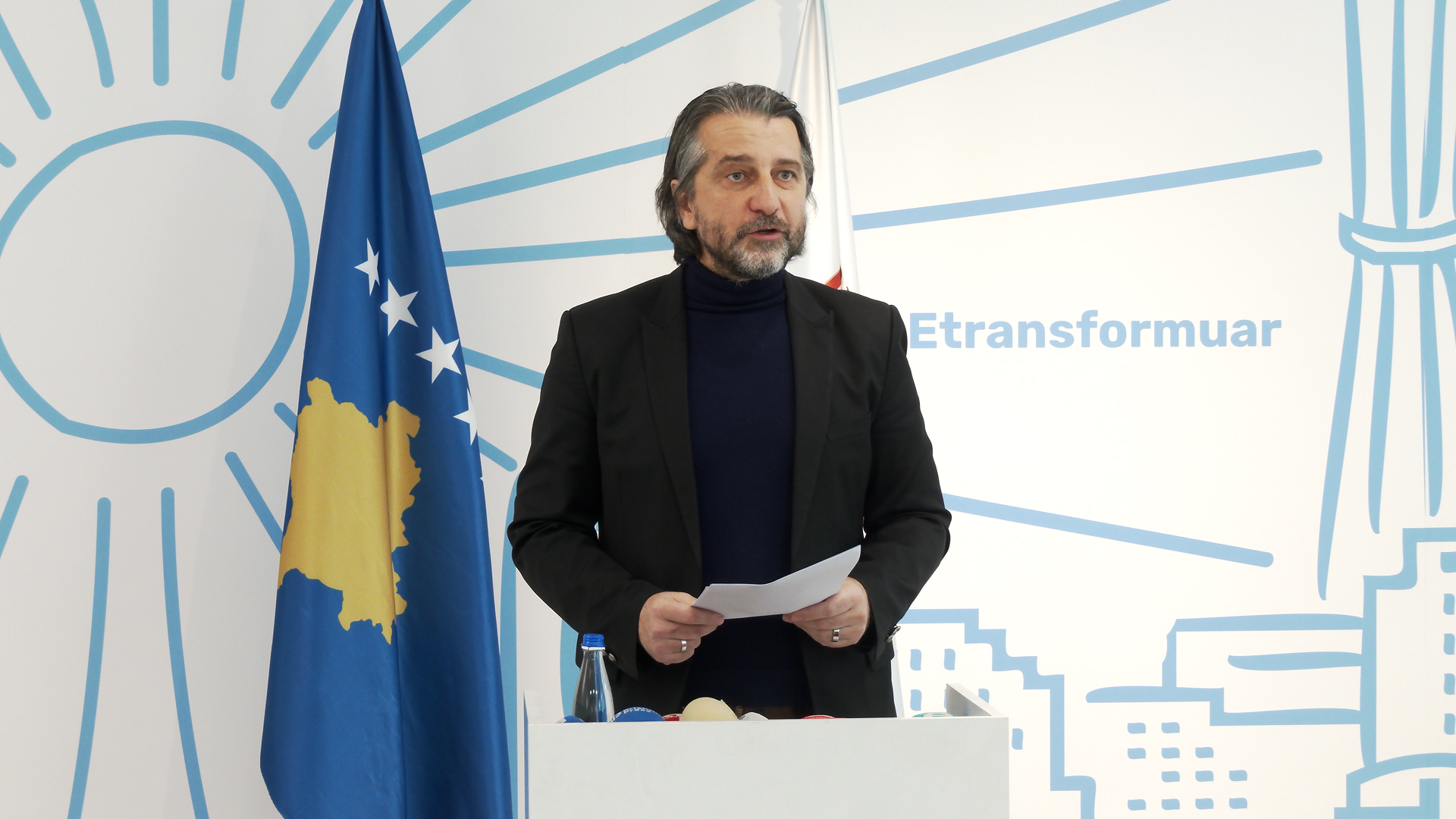
Prishtina mayor Përparim Rama. Photo: BIRN
The Municipality of Prishtina has accused the central government of jeopardizing the Mediterranean Games by not cooperating with local authorities, but the government denies the claim.
Blerim Gashani, the Minister of Culture, Youth, and Sports, told Parliament on November 12 that preparations for the ‘Prishtina 2030’ Mediterranean Games were facing difficulties, both in inter-institutional communication and in relations with the International Committee of the Mediterranean Games, ICMG.
“There is a great deal of communication, friction, and internal disagreement. It is not good to make these issues public, not because we lack transparency, but because doing so would not help the situation,” Gashani said.
Gashani added that one of the main challenges is retaining the geographical scope of the Games, mainly the inclusion of “additional cities in the final plan, including Peja, Gjakova, Prizren, Drenas, and Skenderaj.” Kosovo won the right to host the Mediterranean Games with a bid that included these cities.
Nevertheless, he pointed out that the organisation of the Mediterranean Games was not at risk: “There are communication complications, which are normal for events of this kind.”
On October 15, Prishtina Mayor Rama warned that delays in meeting financial and administrative obligations could jeopardise the city’s hosting of the 2030 Mediterranean Games.
Rama cited a warning letter from the event’s international governing body, the ICMG, and accused the central government of not meeting financial obligations and not cooperating with municipal authorities.
Nonetheless, for residents of Ulpiana, preserving green spaces takes precedence over the municipality’s ambitious project.
“We don’t need parking facilities. What we need is green space,” said local resident Ismet Muhaxheri.