


From unpaid domestic work and unequal wages to sexual harassment and retaliatory dismissals, women in Kosovo face discrimination at every stage of their working lives.
Discrimination against women in the labour market extends far beyond issues of pregnancy and maternity leave. A Kallxo Pernime documentary examines how gender inequality shapes women’s working lives long before they become pregnant or seek to exercise their maternity rights.
Unequal family responsibilities, unpaid care work, and limited access to economic resources all play a role in determining women’s position in the labour market.
Edi Gusia, Director of the Agency for Gender Equality within the Office of the Prime Minister, told BIRN that Kosovo’s Law on Gender Equality recognises unpaid domestic labour, including caring for children, older people, and persons with disabilities, as important for the welfare of the country although without monetary compensation.
According to data presented by Gusia, women spend an average of 6.2 hours per day on unpaid domestic labours, compared with 2.7 hours for men. “This unequal distribution of responsibilities limits women’s opportunities to enter and remain in employment,” she notes.
Gusia says that the only research specifically examining the gender pay gap in Kosovo was conducted by the Agency for Gender Equality in 2019, using data from 2017.
She mentioned the lack of reliable and up-to-date data as one of the country’s ‘chronic problems.’
“The findings showed a gender pay gap of 10.5 percentage points between women and men,” Gusia stated.
She further noted that the Labour Law needs to be amended to add more equal parental leave provisions.
“Currently, fathers are entitled to only three days of leave following the birth of a child, longer periods of leave are possible only in exceptional circumstances, such as the mother’s death or relinquishment of the child.”
Brikena Hoxha from the Kosovo-based organisation Kosovar Stability Initiative, IKS also says that gender inequality in employment cannot be understood solely as workplace discrimination. It is also rooted in the way society functions and how legislation distributes family responsibilities.
“We are still living with the mentality that when a child becomes ill, the woman takes leave from work. When an older family member needs care, the woman stays at home. When a woman gives birth, the father has only two days of leave, whereas he can receive five days when getting married. The mother is in hospital while the father returns to work,” she said.
Sexual harassment: another workplace barrier
Beyond unequal access to employment opportunities, women in Kosovo also face sexual harassment and hostile working environments.
Hoxha says that findings from IKS research show that more than 30 percent of respondents are aware of incidents of sexual harassment, whether through their own experiences or those of their colleagues.
She added that there is still a lack of a clear understanding of what constitutes sexual harassment.
“Women often associate it only with more serious incidents and may not recognise inappropriate comments or vulgar remarks made by colleagues or even members of management as forms of harassment,” she explained.
Leonida Molliqaj from the women’s rights NGO Center for Information, Critique, and Action, QIKA, also points to the widespread nature of sexual harassment in Kosovo’s workplaces. According to her, surveys show that women frequently encounter inappropriate behaviour, “ranging from inappropriate comments and uncomfortable situations presented as jokes to unwanted physical contact and sexual assault.”
She also noted the prevalence of what she describes as “toxic, male-dominated workplace environments, in which women feel uncomfortable or intimidated by colleagues and people in positions of authority.”
Despite the frequency and different forms of sexual harassment, Molliqaj adds that, “Reporting [sexual harrasment to the relevant authorities] is extremely difficult because of the significant stigma attached to girls and women who experience sexual harassment.”
Lawyer Saranda Keçekolla argues that institutions must guarantee confidentiality and protect victims from further discrimination.
She stresses that institutions must ensure that victims are not stigmatised by society or deprived of future employment opportunities.
“What would happen if a woman publicly reported that she had been sexually harassed by her employer? Who would hire her? Wouldn’t everyone point fingers at her simply because she had reported what happened?” Keçekolla said.
Gaps in labour law enforcement and oversight
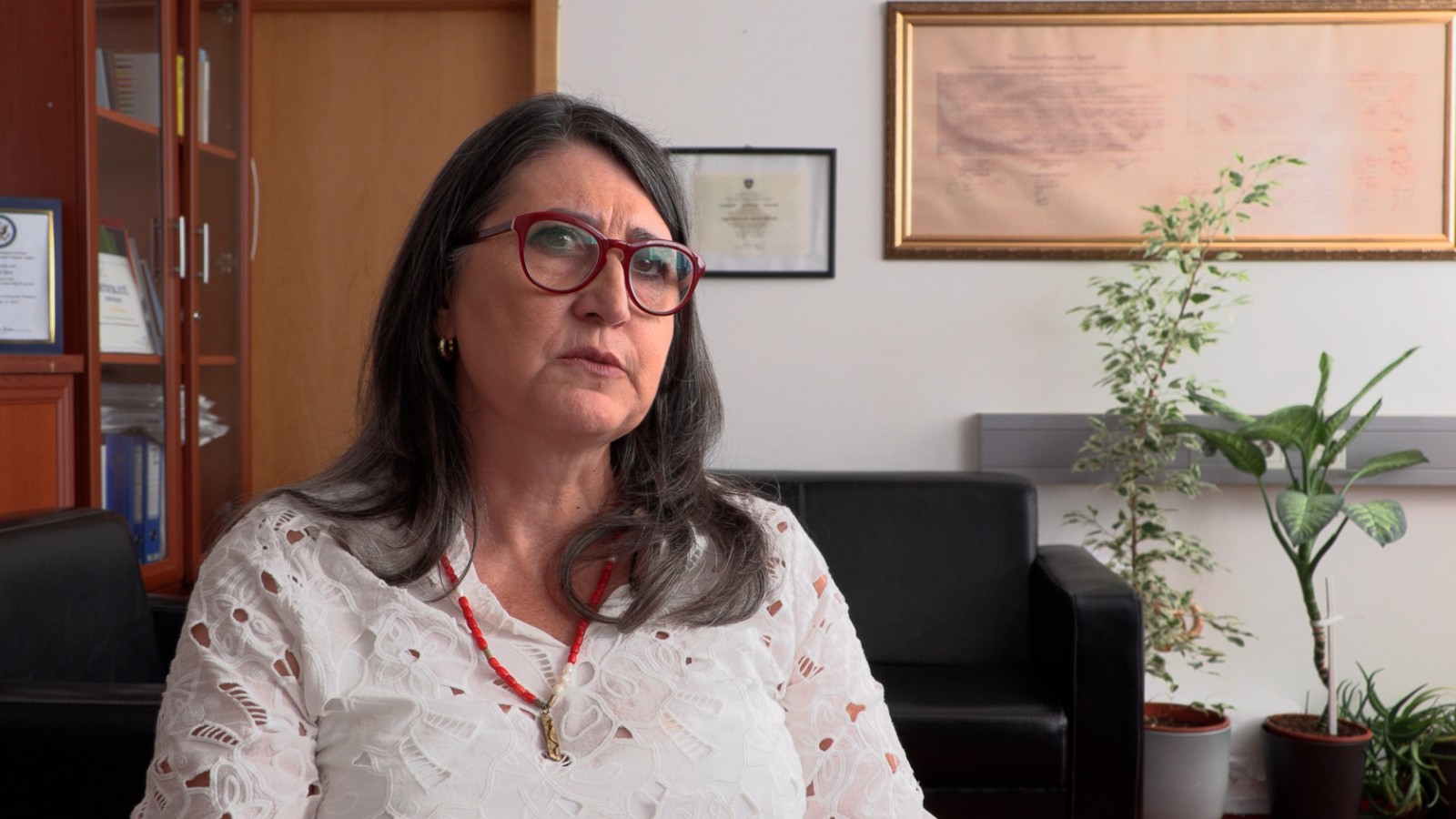
Edi Gusia from Kosovo’s Agency for Gender Equality. Photo: BIRN
The Agency for Gender Equality has recently prepared an analysis of the current situation as a basis for a new strategic document: Kosovo’s forthcoming Gender Equality Programme, which is planned to cover a ten-year period.
Edi Gusia also presented data from 2022 concerning the work of the Labour Inspectorate. According to these figures, the Inspectorate conducted more than 6,316 inspections and covered over 51,000 workers, including 32,698 men and 18,360 women.
The violations identified included work during weekends and night shifts, overtime, work during official holidays, violations concerning annual leave, as well as unpaid allowances and other forms of compensation.
According to Gusia, the Inspectorate imposed several administrative measures, including more than 2,741 warnings, 359 punitive measures and fines, and 88 work suspensions.
However, the existence of inspection mechanisms does not guarantee that workers’ rights are protected.
Molliqaj from QIKA said that the limited number of labour inspectors operating in the field has contributed to violations of workers’ rights across Kosovo, regardless of gender.
But when it comes to women, she emphasizes that, “the discrimination is twofold,” because having a Labour Inspectorate does not mean that women can safely report violations.
“This is because reporting comes at a cost that many women cannot afford, given their limited access to property, real estate, and personal savings,” she concluded.
This article was prepared for English publication by Ardita Zeqiri.