


Following the ban of last year’s edition in Belgrade, the 12th edition of the “Mirëdita, Dobar dan” cultural reconciliation festival between Kosovo and Serbia, opened on Thursday in Prishtina.
The 12th edition of the “Mirëdita, Dobar dan!” festival opened on Thursday at the “Defy Them” Alternative Culture Centre in Prishtina, with a performance by the Belgrade band Pliš, followed by drinks and discussions between young people from Kosovo and Serbia.
Despite the 2024 festival being banned in Belgrade, this year’s edition in Prishtina brings a blend of established and emerging artists from Belgrade’s contemporary cultural and arts scene.
Kushtrim Koliqi, director of the NGO Integra, one of the festival’s organisers, said he was relieved that this year’s edition is taking place in Prishtina after what he described as a period full of challenges and often “inexplicable obstacles.”
“Last year’s edition in Belgrade was banned, reminding us how fragile dialogue is and how easily narratives of division and hatred resurface,” Koliqi said. “We live in a time when nationalist rhetoric is returning across the world. Festivals like this are more important than ever—they remind us that peace requires continuity,” he explained.

Tijana Djuknic (M), program coordinator at the Youth Initiative for Human Rights in Serbia at the opening of “Miredita, Dobar dan” festival in Prishtina. Photo: BIRN
Tijana Djuknic, program coordinator at the Youth Initiative for Human Rights in Serbia, recalled the moment when the festival was banned in Belgrade last year.
“We were excited to meet our colleagues, but then we received a message that the bus from Kosovo had been turned back and the festival would not be allowed,” she said adding, “I felt heavy and upset because our colleagues had gone through such treatment.”
Despite these setbacks, she believes that hope prevails.
“In the middle of the chaos, we realised how strong our connections were. One participant told me: ‘I thought you were on one side and we were on the other, but we are actually together—while others try to divide us.’ That, for me, is the essence of the festival,” she added.
Culture as a bridge
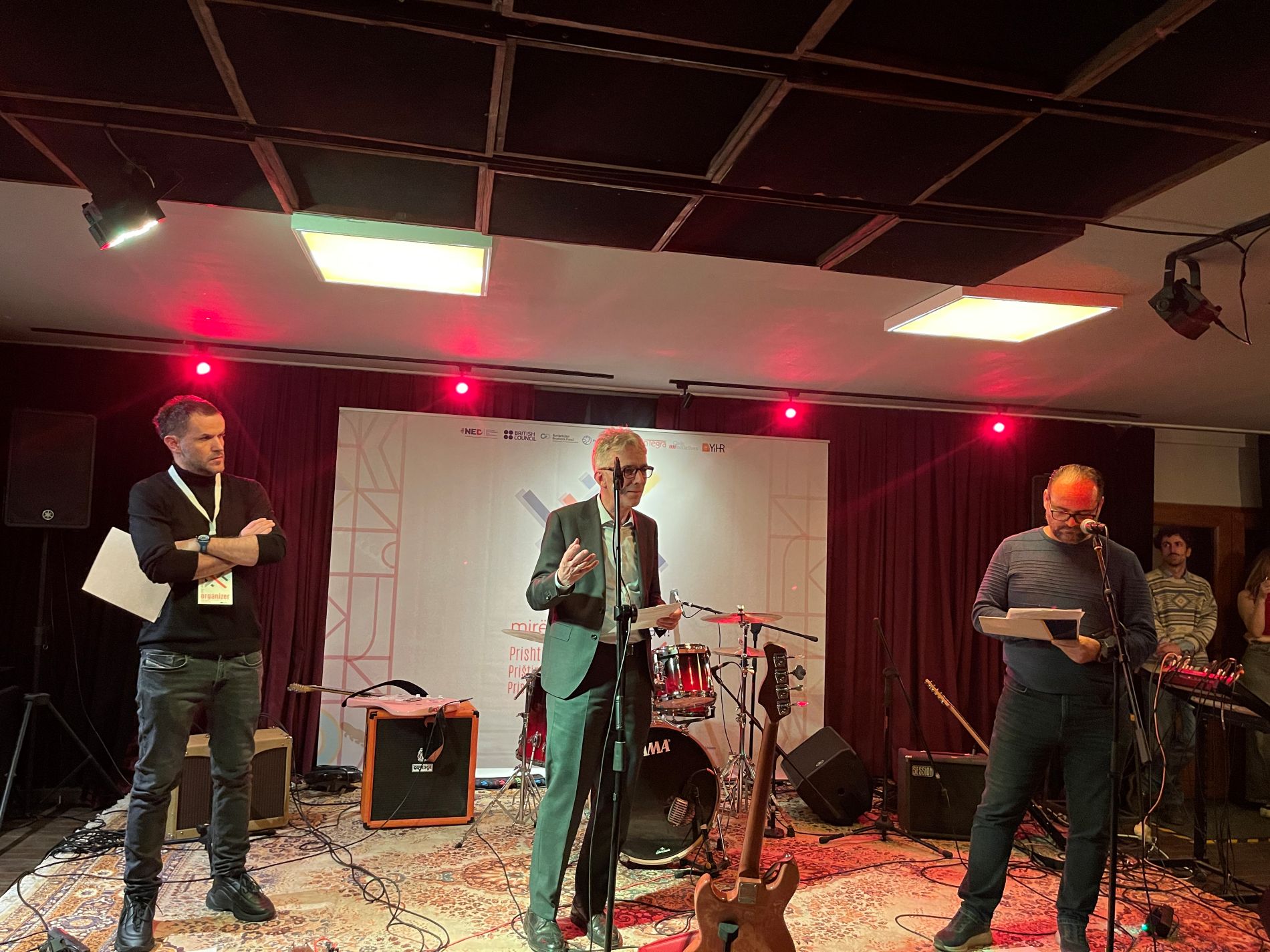
German Ambassador to Kosovo Rainer Rudolf at the opening of ‘Mirëdita, Dobar dan’ festival in Prishtina. Photo: BIRN
German Ambassador to Kosovo Rainer Rudolf noted that the festival demonstrates what culture and dialogue can achieve.
“The festival connects not only the arts scenes, but also the spirits and minds of people from both countries. Reconciliation happens when people experience it in everyday life,” he said.
Meanwhile, Majlinda Mazelliu, Director of the British Council for Kosovo and Albania, emphasised the symbolic importance of the three-day event.
“This festival stands as one of the strongest testimonies to the ideals of unity, trust, and challenging divisive narratives,” she said, adding that organising it is “no easy task considering the political pressures involved.”
Debates, exhibitions, theatre, and film

Performance by the Belgrade band Plis at the opening of “Mirëdita, Dobar dan” festival in Prishtina on November 20, 2025. Photo: BIRN
On November 21, the program continued at the Barabar Centre in the Grand Hotel with a debate titled, “Peace in Times of Global Turmoil: The Future of Serbia–Kosovo Relations.”
An exhibition by Nemanja Jokovic and Mihaela Vucinic, representing a new generation of artists and offering a fresh perspective on contemporary art, will also open on this day.
There will be a theatre performance: “All the Good Barbies,” which tells the story of a young woman returning to her hometown on the eve of her thirtieth birthday, exposing layers of personal defeat, unspoken truths, and childhood wounds.
The festival concludes on Saturday at Barabar Centre with an awards ceremony and a full programme for the day, including a screening of the film “78 Dana” directed by Emilija Gasic.
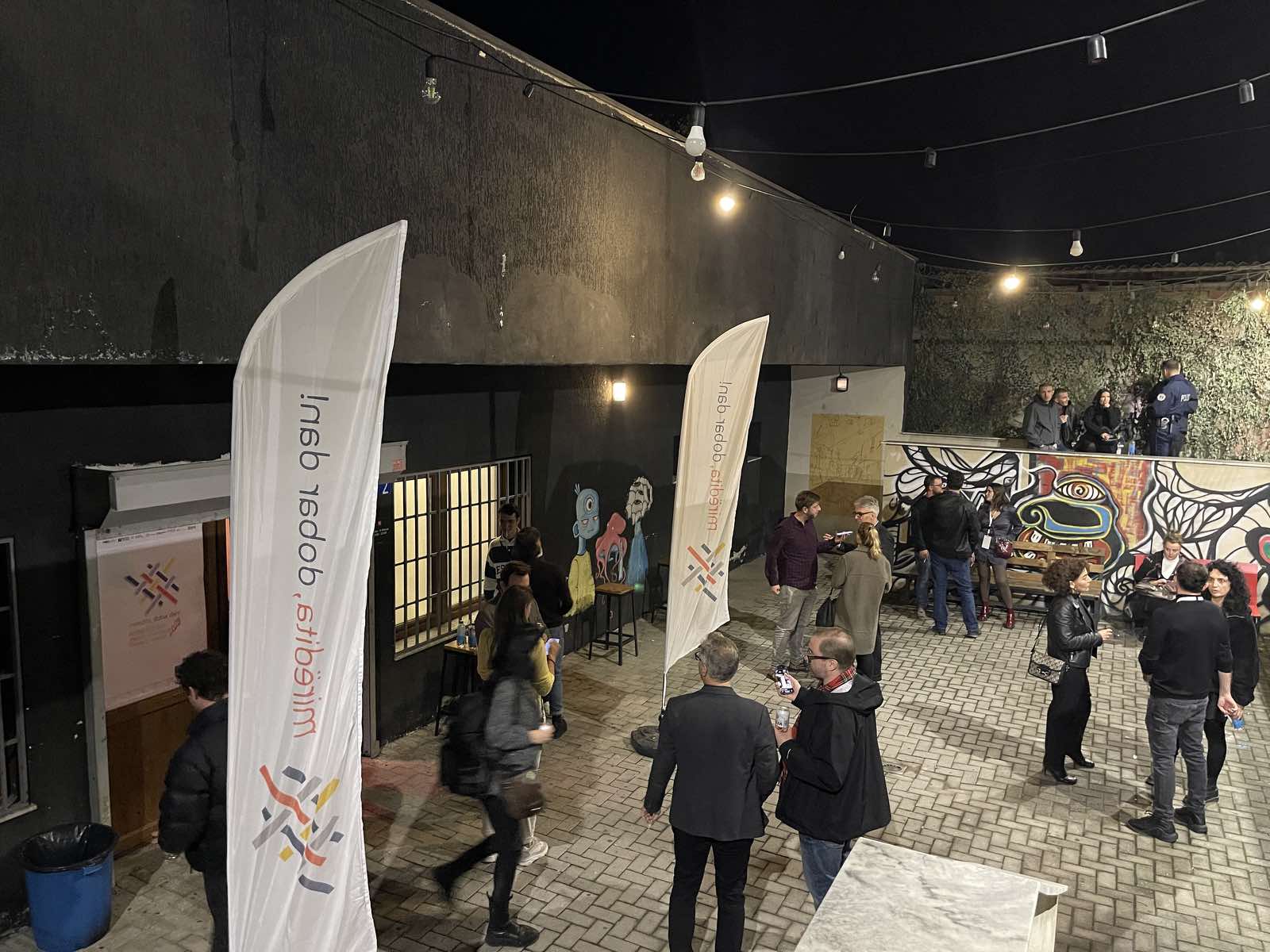
“Mirëdita, Dobar dan” festival opening ceremony in Prishtina on November 20, 2025. Photo: BIRN
The film follows sisters Sonja (17) and Dragana (15) just before their father is enlisted during the 1999 NATO bombing of Serbia. Their world changes when a mysterious boy and his shy younger sister arrive from Belgrade and move into the neighbor’s house, bringing new friendships, first kisses, and first disappointments.
The last day also includes a debate and book promotion: “The Kosovo Knot in Times of Mass Protests in Serbia” and the Launch of “Kosovo Chronology 2.0” by YIHR.
The previous edition of the festival was set to take place from 27 to 29 June 2024. At the time , Serbia’s Interior Minister Ivica Dacic ordered the festival to be banned on ‘security grounds.’ Journalists and some organisers attempting to reach the festival from Kosovo were intercepted by police.
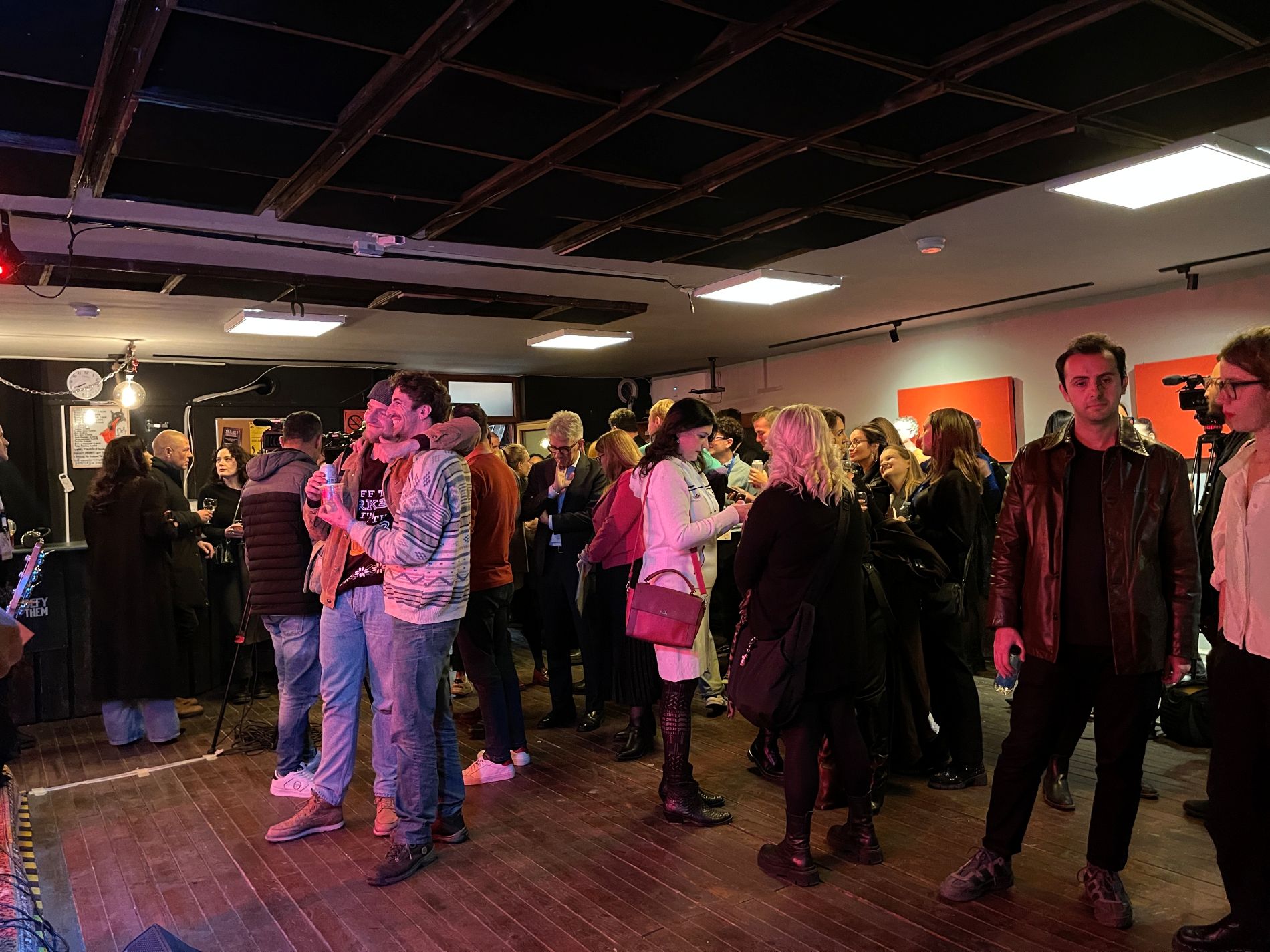
12th edition of the “Mirëdita, Dobar dan” festival opening ceremony in Prishtina on November 20, 2025. Photo: BIRN
A group of young men had gathered near the venue, waving Serbian flags and blocking access.
Police stopped the Kosovo participants 25 kilometres from Belgrade, citing orders “not to allow them to continue further.” After being held for an hour, the organisers and journalists returned to Kosovo. Serbian police had escorted them from the Merdare border crossing when they entered Serbia.
Police Ban Serbia-Kosovo Cultural Reconciliation Festival in Belgrade
Named after the Albanian and Serbian words for “hello,” Mirëdita, Dobar Dan! was founded in 2014 by the Youth Initiative for Human Rights, the Civic Initiative from Belgrade, and the Prishtina-based NGO Integra, with the aim of promoting cultural exchange and building a tradition of cooperation that contributes to lasting peace and normalisation between Serbia and Kosovo.
Since its first edition over a decade ago, the festival—which brings together artists, rights activists, and opinion-makers from both countries—has drawn the attention of the Serbian right-wing. Belgrade authorities generally ignored the festival, but last year’s edition was met with strong criticism from Serbian officials. Meanwhile, no such actions or obstacles were reported when the festival was organised in Kosovo.