


With Kosovo heading toward snap parliamentary elections on December 28, 2025, Kallxo.com debates have seen the parties face off over issues such as justice reform, security, energy policy, and governance.
As Kosovo moves towards the snap parliamentary elections scheduled for December 28, 2025, political parties are campaigning in an environment marked by polarisation, institutional fatigue, and pressure from international partners to deliver credible reforms.
At a time when the impact of disinformation on electoral processes has been widely documented, a series of televised debates aired by Kallxo Përnime has brought representatives of the main political parties face to face, revealing their visions and divisions over issues such as justice reform, security, energy policy, infrastructure development, and the fight against corruption.
These snap elections are a result of Vetëvendosje, LVV, leader Albin Kurti’s failure to form a government on October 26, which left Kosovo in the hands of a caretaker government since the parliamentary elections on February 9, 2025.
Justice Reform: Independence or institutional capture?
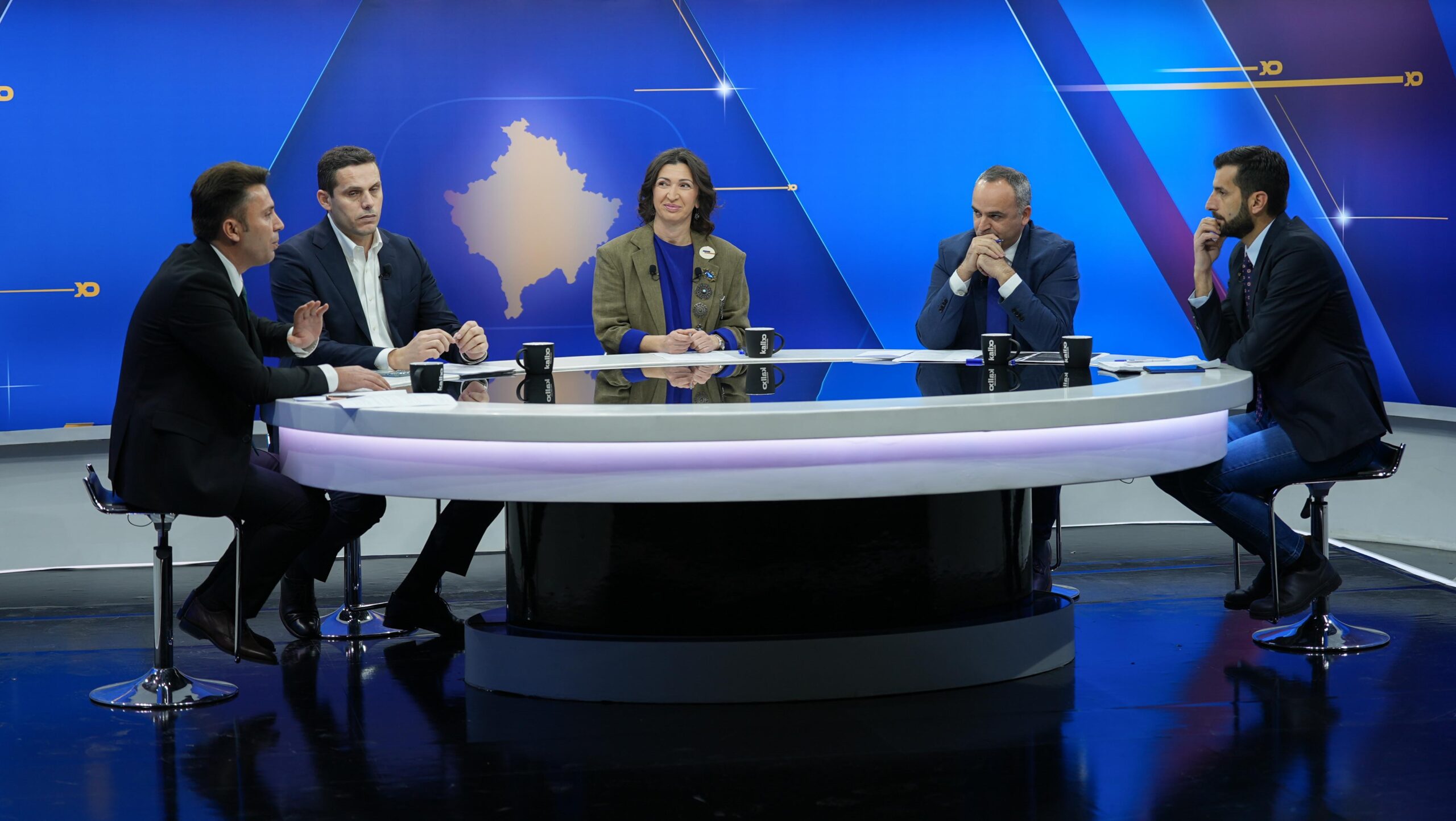
Kallxo Përnime debate on the judicial system and the rule of law on December 17, 2025. Photo: BIRN
Justice reform was the theme that kicked off the national election debates at Kallxo Përnime on December 17, with debaters reflecting on its central role in Kosovo’s EU integration process.
According to the European Commission’s Progress Report, Kosovo has incomplete legislation and weak implementation in the justice sector, falling short of European standards.
The LVV MP candidate, Adnan Rrustemi, said the party, “aims to build an independent, impartial, and efficient justice system, with particular emphasis on fighting high-level corruption.”
Rrustemi highlighted plans to expand the mandate of the Anti-Corruption Agency and to operationalise the Bureau for the Verification and Confiscation of Unjustified Assets, arguing that, “illegally acquired wealth must be returned to the state.”
The Democratic Party of Kosovo, PDK, prioritised the issue of the Specialist Chambers in The Hague. PDK MP candidate Përparim Gruda mentioned plans to adopt a parliamentary resolution calling for a, “fair and normalised process.”
PDK also pledged to, “increase the number of judges and prosecutors and to accelerate the digitalisation of the justice system.”
Shkemb Manaj from The Democratic League of Kosovo, LDK, proposed the, “establishment of a State Investigation Centre of Kosovo Police operating under the Special Prosecution,” while Arton Demhasaj from Alliance for the Future of Kosovo, AAK, noted that, “long-term mandates for judges and prosecutors and financial independence as prerequisites for judicial autonomy.”
Disagreements over the stalled appointment of a Chief Prosecutor for nearly the length of a mandate and the proposed vetting process showed broader tensions between reform efforts.
Manaj accused Vetëvendosje of having “abandoned a key promise,” adding that the Venice Commission has identified attempts to capture the system in the name of reform.
“The draft law is ready, but it requires constitutional amendments that also needs the support of the Serb community,” Rrustemi stated.
Security and the path toward NATO
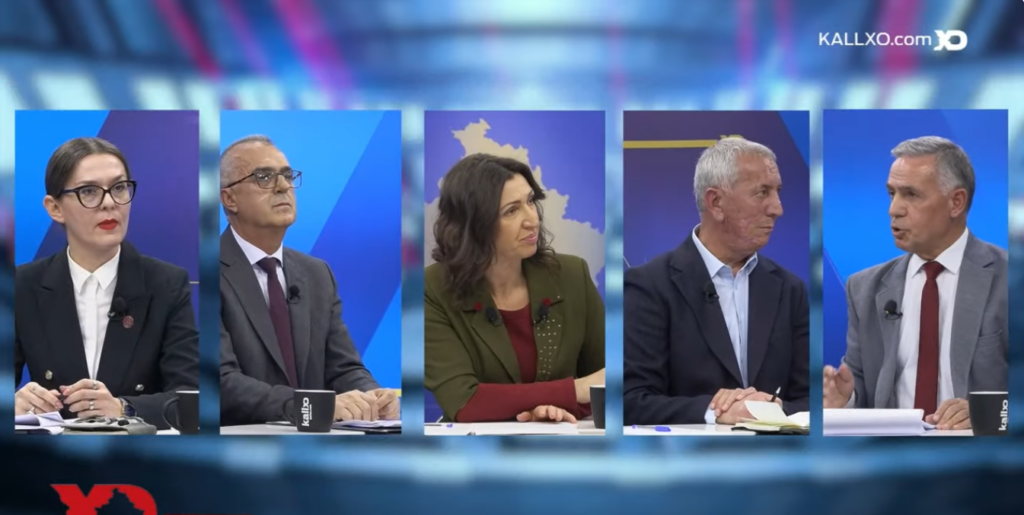
Kallxo Përnime debate on security and NATO integration on December 18, 2025. Photo: BIRN.
Security policy and Kosovo’s path toward NATO membership also featured in the debate on Dec 18, reflecting heightened regional tensions and concerns over Kosovo’s defense capabilities.
Enver Dugolli, MP candidate of LVV highlighted a significant increase in defense spending, pointing to a tripling of the Kosovo Security Force, KSF, budget since taking office, naming it as evidence of “extraordinary progress” in strengthening national defense.
Besa Kabashi-Rama from PDK contested this, arguing that the budget increase was foreseen under the Comprehensive Transition Plan drafted in 2014.
She emphasised that, “restoring a Strategic Partnership with the United States and applying for NATO’s Partnership for Peace as immediate priorities.”
Kabashi-Rama also announced plans to establish a National Guard composed of five regiments, including a helicopter regiment that would also be used for civilian emergencies.
Anton Cuni from LDK called for “specialised institutions covering military, police, intelligence, and emergency response,” while Ahmeti Isufi of AAK proposed “allocating up to 4% of GDP to defense between 2026 and 2029.”
While all parties agreed that NATO integration remains a strategic objective, they differ on defense spending levels and transparency-particularly regarding the use of secret security funds.
LVV emphasised that, “the secret fund is regulated by law,” while LDK called for greater transparency.
“Secret funds are characteristic of states led by dictators. If we claim to be part of NATO, everything should be declared, overseen, transparent, and accountable,” Çuni added.
Energy policy: Between transition and affordability
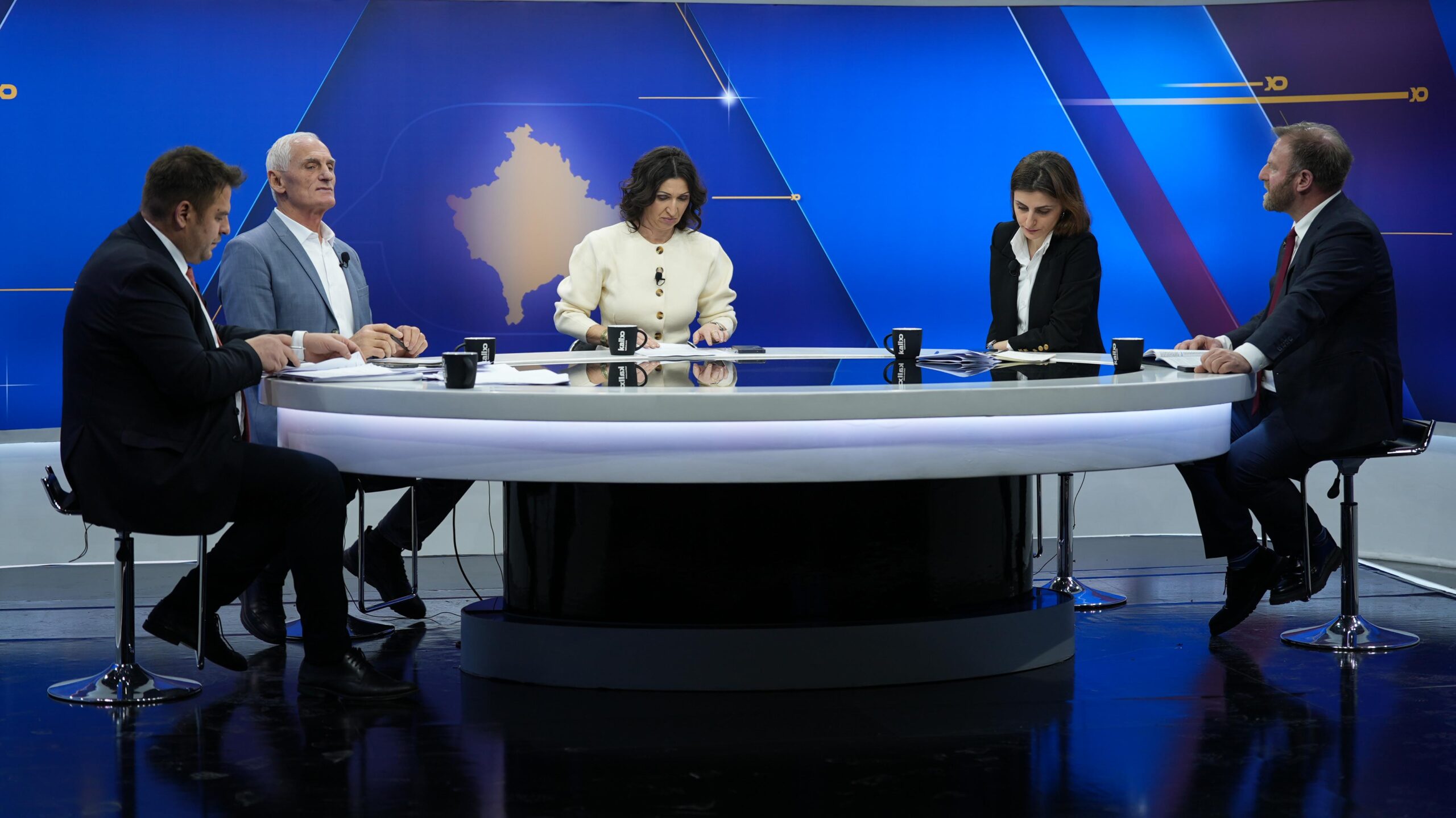
Kallxo Përnime debate on energy policy on December 19, 2025. Photo: BIRN.
The energy sector was one of the most complex and politically sensitive topics discussed at the debates, as Kosovo is struggling with import dependency, aging infrastructure, and pressure to decarbonise.
At the Kallxo Përnime debates, Armend Muja of LVV presented a strategy centered on rehabilitating existing power plants and expanding renewable energy production, aiming “to generate around 30% of total electricity consumption from renewables by 2030.”
Muja also emphasised cooperation with the MCC regarding the energy storage project.
Sylejman Berisha of PDK, proposed “constructing a new coal-fired power plant of 500 MW alongside developing gas infrastructure to connect Kosovo to international networks.”
Janina Ymeri of LDK emphasised the need for short-term supply security.
“We need to secure imports, as we currently import around 20% of electricity without significant repairs. LDK plans to shut down Block A3 after a feasibility study and invest in a new gas-fired power plant,” she added.
She also called for reducing bureaucracy for solar investments.
Haki Abazi of AAK focused on energy efficiency. “Structural losses and inefficient consumption are the main problems of the current system.”
“We propose a national plan for efficiency and home insulation, as winter losses exceed 55%. Additionally, we plan to build five biomass heating centres, in cooperation with Albania for the organic fuel supply.”
Electricity prices were also discussed, with opposition parties accusing the government of mismanagement and of lacking a strategy.
Ymeri argued that citizens are paying for “hidden imports and unprofessional decision-making. We will increase the share of renewable sources to 30% of total consumption.”
Sylejman Berisha linked high prices to a lack of domestic capacity. “As a quick measure, we will remove VAT from citizens’ bills and invest in hydroelectric plants in cooperation with Albania,” he said.
Muja noted that the block-tariff system “has protected most consumers and encouraged energy savings,” adding that, “the price increases are mainly due to international markets, not local mismanagement.”
Corruption: Progress or perception?
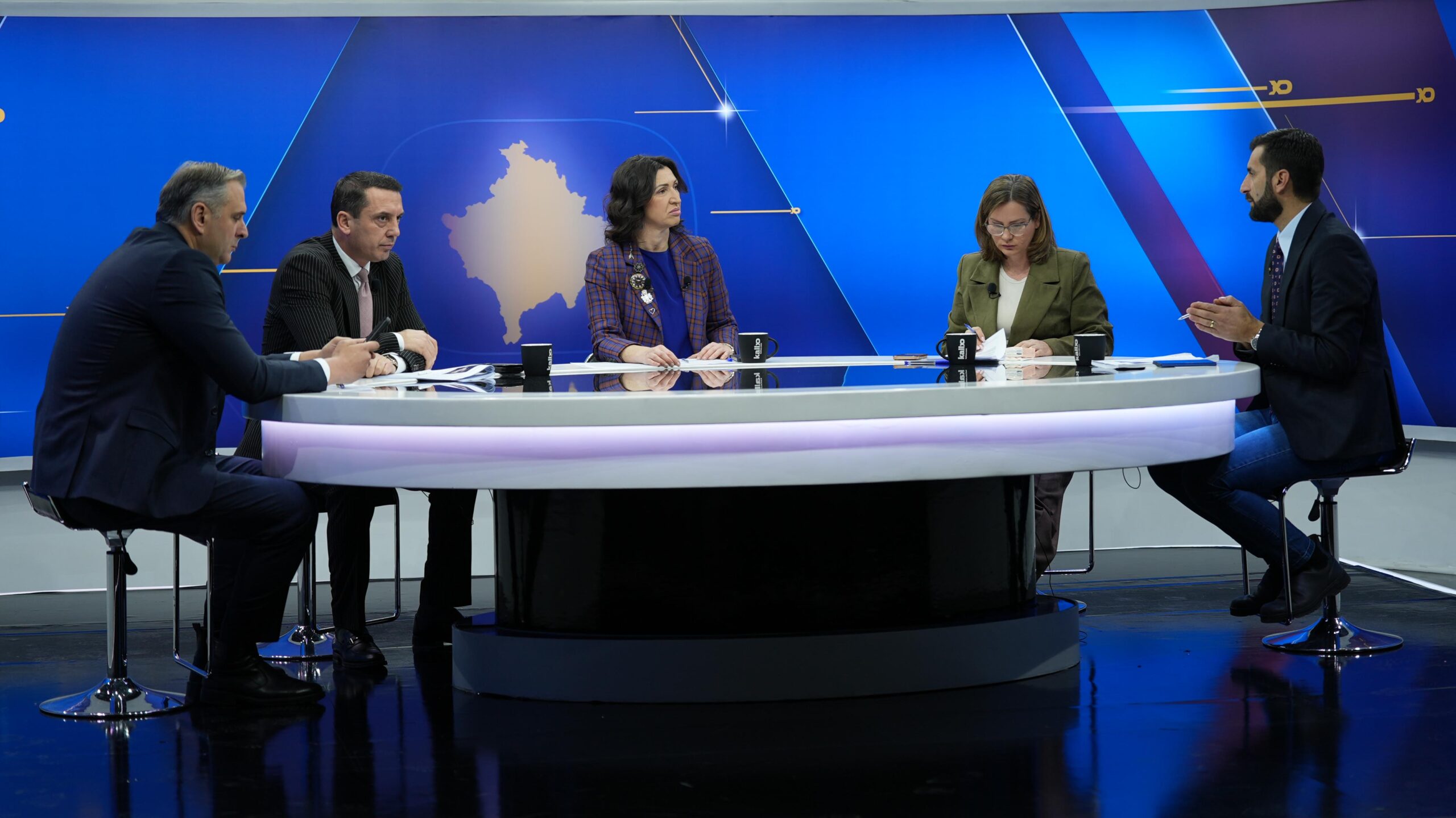
Kallxo Përnime debate on fight against corruption on December 19, 2025. Photo: BIRN.
The fight against corruption was the topic of another debate on December 20.
Corruption remains the main challenge identified in the European Commission’s Progress Report. According to the report, with Kosovo currently lacking a functional anti-corruption strategy the responsible mechanisms are left without clear direction and in a state of institutional lethargy.
Mefail Bajqinovci of LVV said that, “Kosovo ranks 31 places higher on the Transparency International index and is first in Europe and third globally on the Gallup 2025 rule of law index.”
Kujtim Gashi of PDK noted that Kosovo lacks an anti-corruption strategy, adding that, “drafting one for the 2025–2029 period will be the first step for a government led by prime ministerial candidate Bedri Hamza.”
Shqipe Pantina of LDK emphasised that the fight against corruption, “cannot succeed without political will for transparent governance and an independent judiciary free from political influence.”
Arton Demhasaj of AAK said the role of the Assembly and Government should be limited to creating the legal framework, leaving the judiciary free to act. “We propose centralising anti-corruption mechanisms to establish a clear chain of accountability,” he said.
Bajqinovci warned that in a future “Kurti 3” mandate, the strategy would be led by the director of the Anti-Corruption Agency.
Organised crime and public security
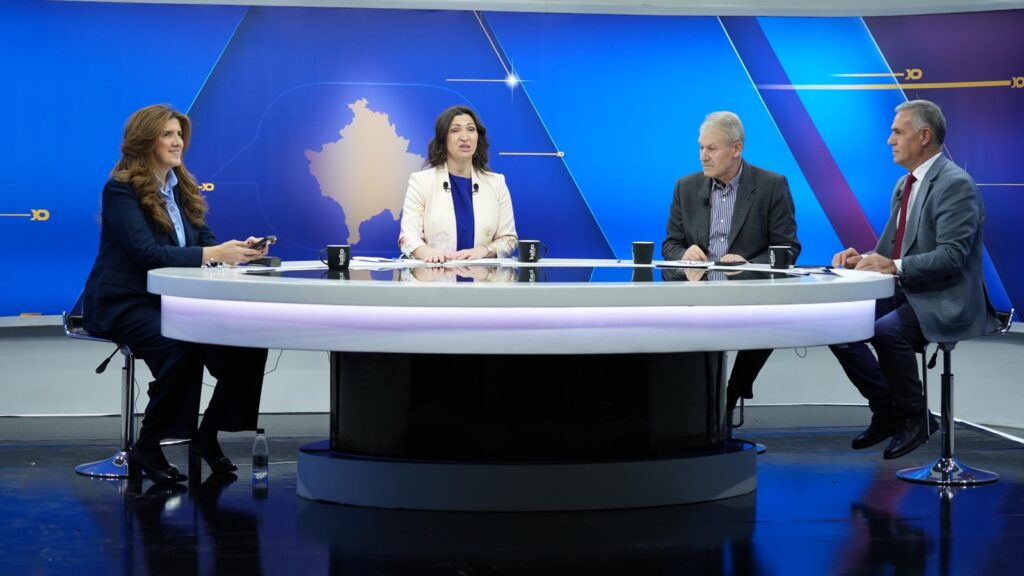
Kallxo Përnime debate on security and organised crime on December 21, 2025. Photo: BIRN.
Debates on organised crime and public security on December 21 highlighted institutional capacity gaps identified by the European Commission, particularly in combating money laundering and cross-border crime.
Ahmet Isufi of AAK stated that the party “plans to increase the number of police officers, especially at the local level, to gain greater control in high-risk criminal areas.”
Ganimete Musliu of PDK highlighted the need to, “increase specialised staff in the Kosovo Police, particularly investigators for organised crime, drug trafficking, and human trafficking.”
Fadil Hadërgjonaj of LDK stressed that, “the independence of institutions is a key condition for the success of this fight, including the Police, the prosecution, and the judiciary.”
The resignation of Serb police officers in northern Kosovo was identified as a major security challenge, with parties supporting open recruitment processes accompanied by strict vetting rather than automatic reinstatement.
Hadërgjonaj stated that LDK does not see the automatic return of the same individuals to the Kosovo Police but supports “opening new recruitment processes accompanied by strict vetting procedures.”
Ganimete Musliu emphasised that, “no one should be given preferential treatment if they have issues with constitutional order and Kosovo’s laws.”
Ahmet Isufi from AAK added that, “the vacancies created by the resignations must be addressed through an open call for all those willing to serve in the Kosovo Police.”
Regarding Kosovo’s relations with international allies and the situation in northern part of the country, Musliu said her party “will not use northern Kosovo to cover government failures,” stressing that maintaining relations with Western allies is essential for the country’s future.
Hadërgjonaj stated that LDK will act in accordance with the law, “without excluding the use of police or military force to enforce constitutional order.”
Ahmet Isufi highlighted that, “any action on Kosovo’s territory must be carried out in cooperation with our allies.”
Infrastructure: Beyond asphalt
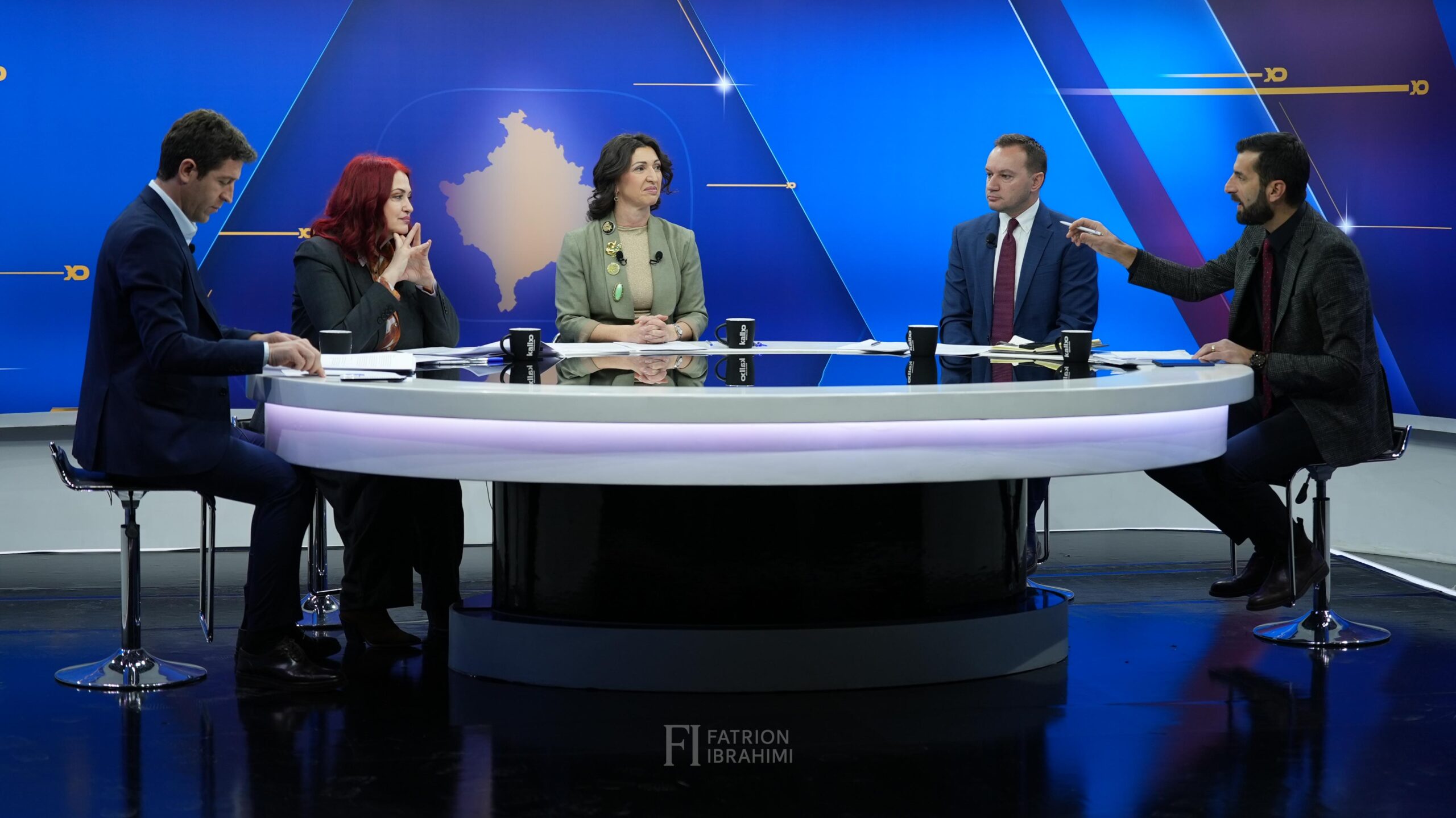
Kallxo Përnime debate about infrastructure on December 22, 2025. Photo: BIRN.
Infrastructure and capital investments were the focus of the debate aired on December 22. The debate covered questions like whether Kosovo’s development strategy has relied too heavily on road construction despite billions of euros invested since 2008.
Valon Hoti of LVV stated that his party aims to shift the focus “from just road construction to a broader infrastructure strategy.”
He highlighted projects including the construction of the Prishtina–Durrës, Prishtina–Pejë, and Klinë–Prizren railways, the creation of a “Dry Port,” and the completion of the Gjilan and the Dukagjini Highway.
Eliza Hoxha of PDK emphasised that large investments in highways during previous governments were development-oriented and aligned with Kosovo’s Spatial Plan.
She added that PDK “aims to complete the Gjilan highway, connect the road network with Merdarë, and develop intelligent transport systems and digitalisation.”
Alban Zogaj of LDK noted that his party’s infrastructure program is not limited to roads but also includes energy, healthcare, and sports.
He mentioned priorities such as completing the Prishtina–Podujevë, Prishtina–Mitrovicë, and Prishtina–Gjakovë highways, as well as building Prishtina’s outer ring road.
Arton Demhasaj stated that AAK plans to complete several highways within a year and implement the Dukagjini Highway.
During the debate, participants also discussed road maintenance and signage following European Commission recommendations for Kosovo. Party representatives stated that current signage is poor and road safety remains a serious issue.
The potential introduction of a toll on highways, particularly for vehicles coming from outside Kosovo, as a way to secure maintenance funding was also discussed.