


After the December 2025 snap elections, Kosovo is braced to inaugurate its new parliament, ending a year of institutional paralysis, with the ruling party, Vetëvendosje Movement, able to form a government without needing to cooperate with the other big parties.
Kosovo is set to leave behind a wasted year as 2025 saw MPs lead the country into an institutional paralysis as they consistently failed to inaugurate a new parliament.
MPs were not able to form institutions deriving from the February 2025 elections, they only elected a Speaker of the Assembly in August, and they did not vote for a Vetëvendosje led government. This incompetence led to extraordinary elections on December 28, 2025. These second elections delivered the Vetëvendosje Movement an opportunity to form the government without needing to knock on other big parties’ doors for a coalition.
Following the announcement of the preliminary results by the CEC on Dec 28, 2025, acting Prime Minister Albin Kurti stated that, “the sooner the election results are certified, the sooner the institutions will be formed” and the sooner we will be able to “cooperate on international agreements.”
Kurti was the candidate with the most votes nationwide, receiving 404,241 votes.
Vetëvendosje secured just over half of the vote with 486,994 votes—the highest number ever received by any party—translating into 57 seats in the 120-member Parliament. This is 9 more seats than in the February elections. The Democratic Party of Kosovo, PDK, came in second with 22 seats, losing two seats from February. The Democratic League of Kosovo, LDK, came in third with 15 seats, losing 5 seats from the February elections.
On January 8, PDK tried to change the results by requesting the annulment of around 20,000 ballots sent by mail from the diaspora citing deadline violations. The Election Complaints and Appeals Panel, ECAP, overruled the request the next day because it was submitted after the legal deadline.
On December 28, 2025, PDK’s prime ministerial candidate and new leader, Bedri Hamza, expressed his hopes for a quick establishment of institutions and support for initiatives that “serve Kosovo’s interests, including international agreements.”
After an LDK meeting held on January 13, PDK’s leader Lumir Abdixhiku stated that he “would offer his resignation” at the party’s General Assembly which is expected to be held soon.
“I have a moral obligation to take responsibility and, by offering my resignation to the LDK General Assembly, I will allow the Assembly to decide. Until then, everyone has the right to put forward their candidacy,” he stated.
The rise of new names
Kosovo election results over the years
One of the most notable results of the December 28 elections is the number of first-time MPs, particularly from Vetëvendosje, PDK, and LDK.
Vetëvendosje alone is bringing nine first-time MPs into pParliament, among them Rufki Suma, Blerim Gashi, Taulant Kelmendi, Fatos Geci, and Vigan Qorrolli.
Arian Tahiri, PDK’s candidate for mayor of South Mitrovica in the October 2025 local elections, who lost the mayoral race in a very close vote to LVV’s candidate, ranked as the party’s second most-voted candidate nationwide. Despite this being his first time running for Parliament, Tahiri surpassed senior party figures, including former ministers and vice-chairs, in the number of votes, receiving over 70,000.
Within the LDK, Janina Ymeri, a relatively new public figure, secured a parliamentary seat with around 20,000 votes. First-time candidates Adelina Thaçi-Meta and Ermal Sadiku also outperformed incumbent MPs.
Several MPs who secured seats in the Kosovo Parliament in the regular elections held in February 2025 failed to retain their mandates in the snap elections of 28 December 2025.
The MPs who will not return to Parliament from the Vetëvendosje Movement are Bajram Mavriqi, Arijeta Rexhepi, Driton Hyseni, and Bylbyl Sokoli.
Unlike in the February elections, LVV did not put forward Halil Thaçi as a candidate because he was elected Mayor of Obiliq, nor did they nominate the former minister of agriculture Faton Peci, who won the mayoral race in South Mitrovica.
Well known figures from the PDK, such as the former head of the PDK Parliamentary group Abelard Tahiri and well known artist Eliza Hoxha failed to secure parliamentary mandates. Former PDK leader Memli Krasniqi also did not run.
The LDK is also missing a few of its members, including former deputy mayor of the capital Pristina, Alban Zogaj, and well-known figures like Arben Gashi, or Paris Guri.
Meanwhile, the Alliance for the Future of Kosovo will be without Lahi Brahimaj, ahe former official of the Kosovo Liberation Army,as an MP.
The process of forming new institutions will formally begin only after the CEC certifies the final election results.
Following the constitution of the Parliament, the President will nominate a prime minister-designate, who will then have 15 days to present a cabinet for parliamentary approval. Although 61 votes are required to form a government, LVV’s expected 57 seats mean the party can reach a majority with support from non-Serb minority representatives.
A lot of work ahead
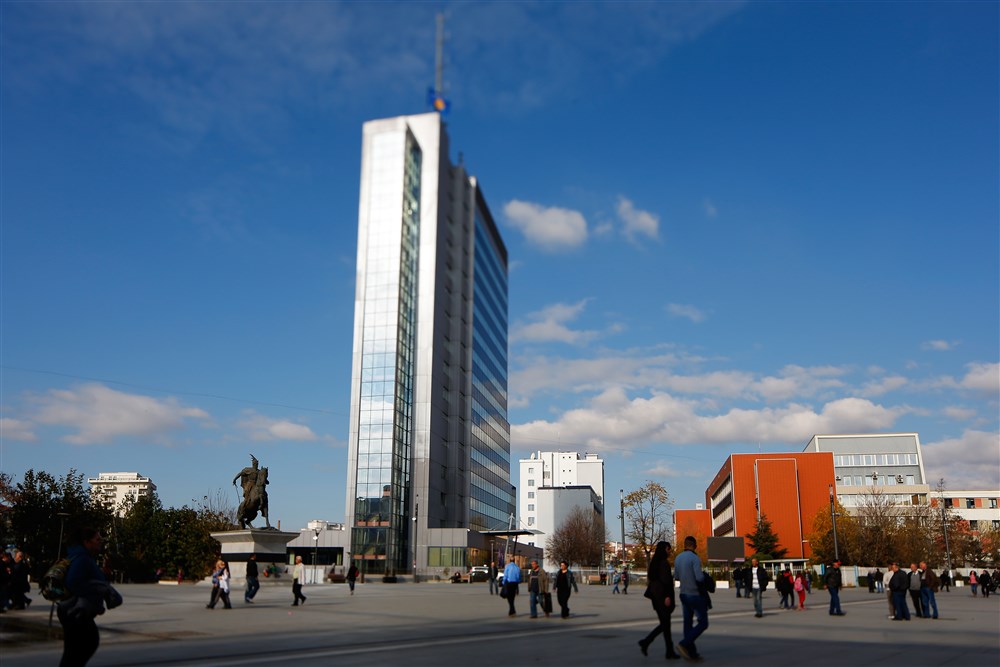
Kosovo Government Building. Photo: VALDRIN XHEMAJ/EPA
Kosovo’s new legislature follows a turbulent period in which the Parliament failed to pass a single law for more than a year. The Ninth Legislature, formed after the regular elections in early 2025, collapsed amid political deadlock, disagreements over parliamentary leadership, and the absence of a governing majority.
In a statement for Kallxo.com, senior researcher at the Democratic Institute of Kosovo, KDI, Vullnet Bugaqku, noted that the damage caused by the inability of the Parliament to function properly and the absence of a legitimate government affected many sectors.
“There has been a lack of parliamentary oversight and absence of parliamentary control over the work of the executive, because, due to problems in constituting the Parliament, the MPs of the new legislature (of February 9 2025) did not have the opportunity to elect a government or to monitor and supervise the parliamentary and executive activities of this government,” he said.
Bugaqku added that many independent institutions have been left without boards and without parliamentary oversight.
Vetëvendosje’s Win Opens Way for Rapid Govt Formation in Kosovo
Meanwhile, 20 seats are guaranteed for non-majority communities, nine of which were won by the Srpska Lista (the Belgrade backed party) and the tenth seat was secured by Nenad Rasic’s ‘For Freedom, Justice and Survival’ party, an ally of Prime Minister Kurti who held the post of Minister for Communities and Returns in the previous term.
Two of the ten seats reserved for non-Serb minority communities were secured by the Kosovo Democratic Turkish Party.
The remaining seats were won by other non-majority community parties, with one seat each going to: Vakat, the New Democratic Initiative of Kosovo, the Social Democratic Union, the Liberal Egyptian Party, PSA, the New Democratic Party, the United Gorani Party, and the Kosovo Roma Progressive Movement.
Professor of Political Science at the University for Business and Technology, Dritëro Arifi, considers that the consequences of a year-long blockade are severe, even for a developed country, let alone for a small country like Kosovo, where he believes everything is “fragile and limited.”
“There will be damage starting with the political aspect, both internally and externally, as we do not have relations with the EU and the US in the way we should. The economic aspect is also a problem because we have not carried out deep economic reforms or had a digital transformation,” he added.
Kosovo needs the rapid formation of its institutions following the December 28 elections, as the country faces a backlog of legislative work and pending international agreements.
The new government, led by Vetëvendosje and Prime Minister Albin Kurti, will confront numerous challenges, including budget approval, EU-related funds, and the restoration of negotiations with Serbia.
The Presidential election set for early 2026 risks becoming another source of political instability.
The mandate of President Vjosa Osmani ends in April 2026, and a presidential election requires at least 80 MPs to be present in the Parliament for the vote to be valid.
In an interview for Radio Free Europe on December 29, 2025, Vjosa Osmani stated that she is “aiming for another term as president.”
On 31 December 2025, Kosovo’s acting Prime Minister, Albin Kurti, stated that he will be meeting with President Vjosa Osmani to discuss the election of the country’s next president
“The result is clearer than ever before. There are no obstacles to forming a new Parliament or a new government,” Kurti said.