


An open-air exhibition in Prishtina commemorates the 27th anniversary of NATO’s military intervention to end the Kosovo war and the ethnic cleansing of ethnic Albanians.
An exhibition entitled “Massacres in Kosovo 1998-1999” opened at Mother Teresa Square in Prishtina on Tuesday as Kosovo marked 27 years since NATO launched its air campaign against Yugoslavia on March 24, 1999.
The exhibition showcases in chronological order 49 massacres committed during the 1998-99 war, displaying statistics, images and quotes from survivors, presenting visual evidence of war crimes.
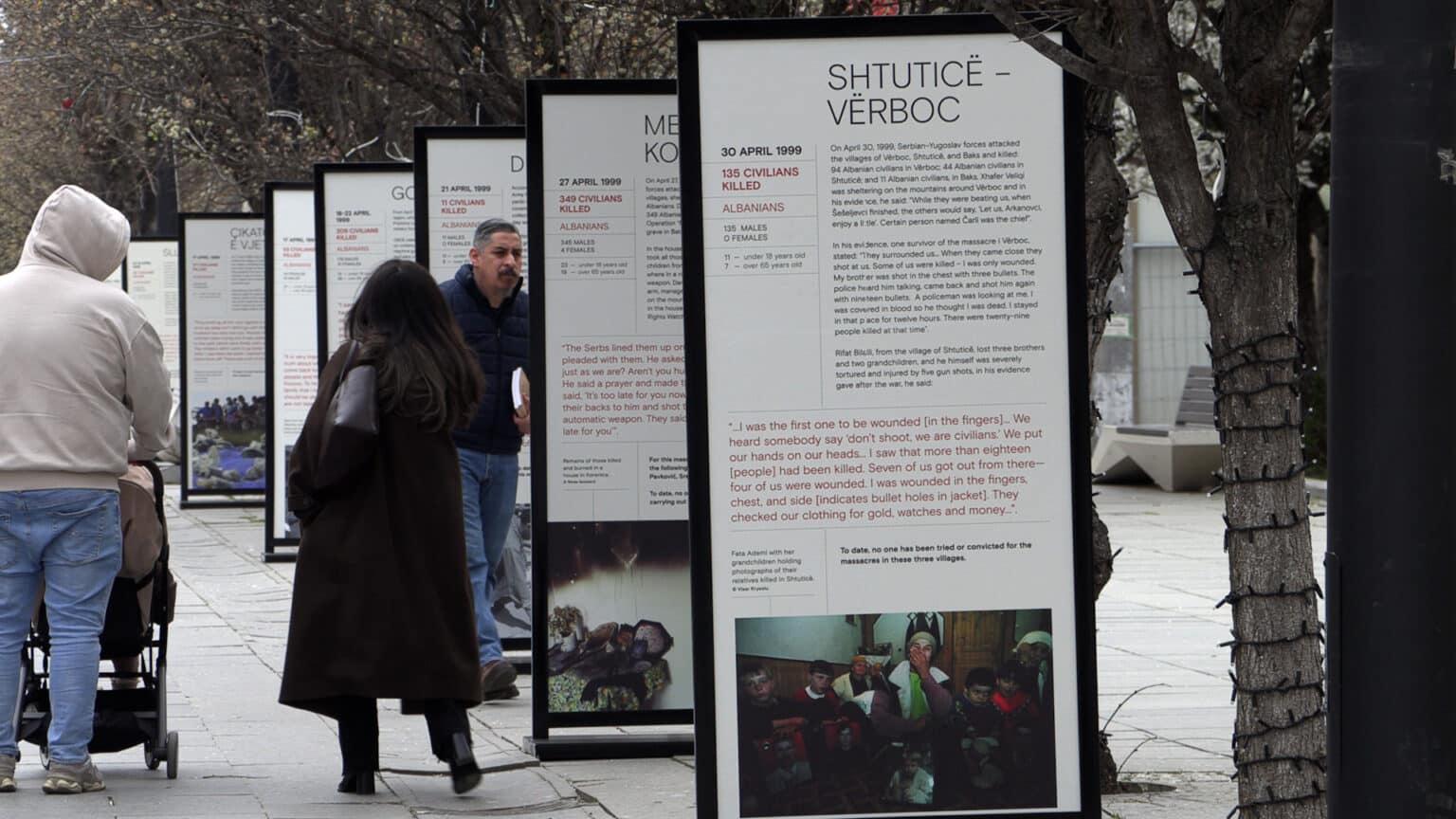
Exhibition in Prishtina city centre about Kosovo wartime massacres. Photo: BIRN/Jetmir Hoxha.
Its timeline runs from the massacre in Likoshan-Qirez on February 28, 1998 to the massacre of the Bala family on June 12, 1999 – the day when Yugoslav forces started to withdraw from Kosovo following an agreement signed with NATO to end the alliance’s 78-day bombing campaign.
At the exhibition, parliament speaker Albulena Haxhiu said that “NATO’s intervention changed the course of Kosovo’s history.
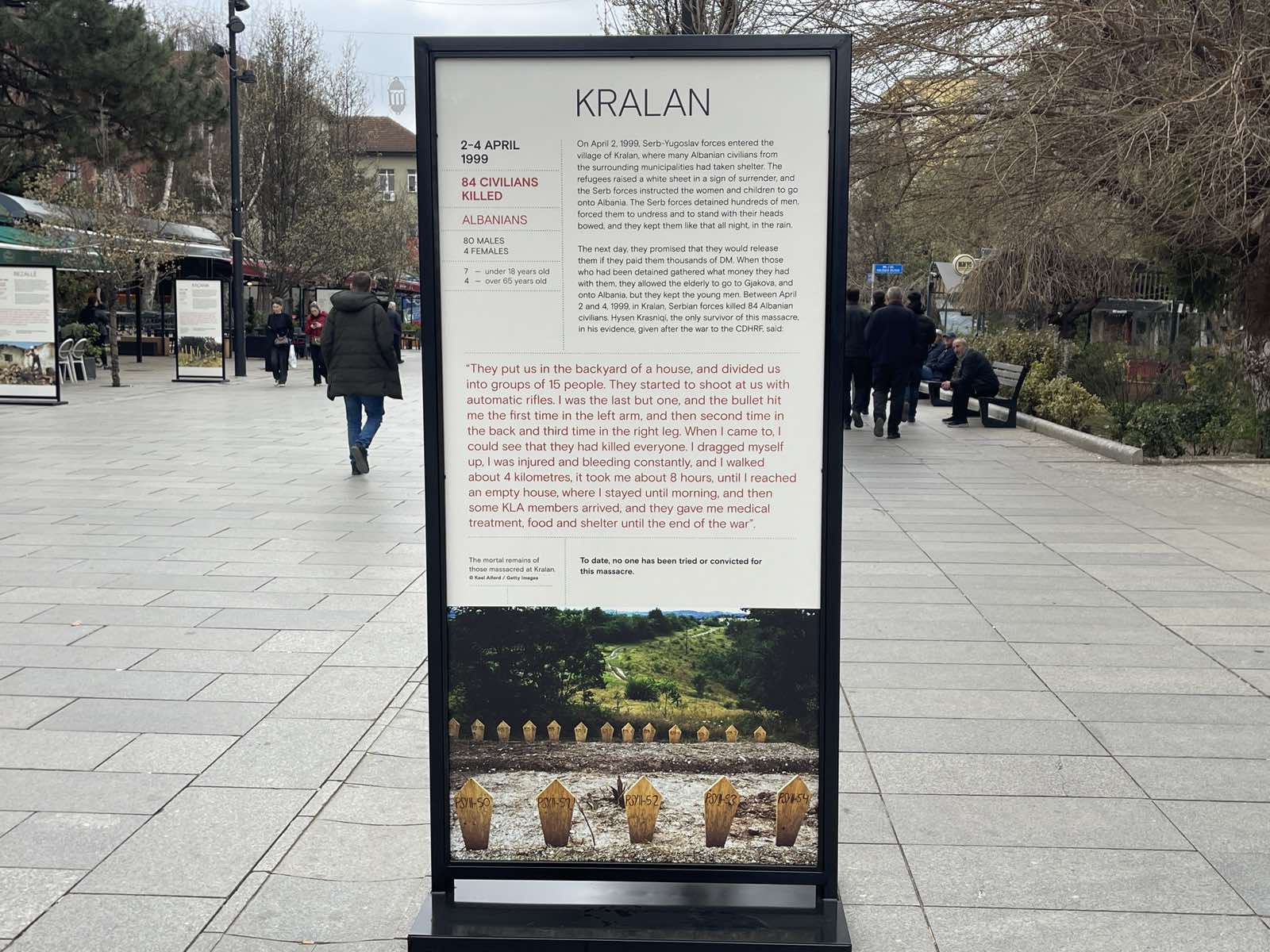
Photo: BIRN/Jetmir Hoxha.
“The country’s liberation was achieved through the combined efforts of the Kosovo Liberation Army and NATO,” she added.
The exhibition, which will be open until April 7, is based on a 2024 publication by the Admovere and Integra NGOs.
To mark the anniversary, political leaders in Kosovo also released statements hailing the NATO intervention.
“NATO acted. Kosovo does not forget. Alliances that protect freedom must be preserved just as much as freedom itself,” President Vjosa Osmani wrote on Facebook.
Her message was accompanied by footage of then US President Bill Clinton announcing the start of the bombing campaign.
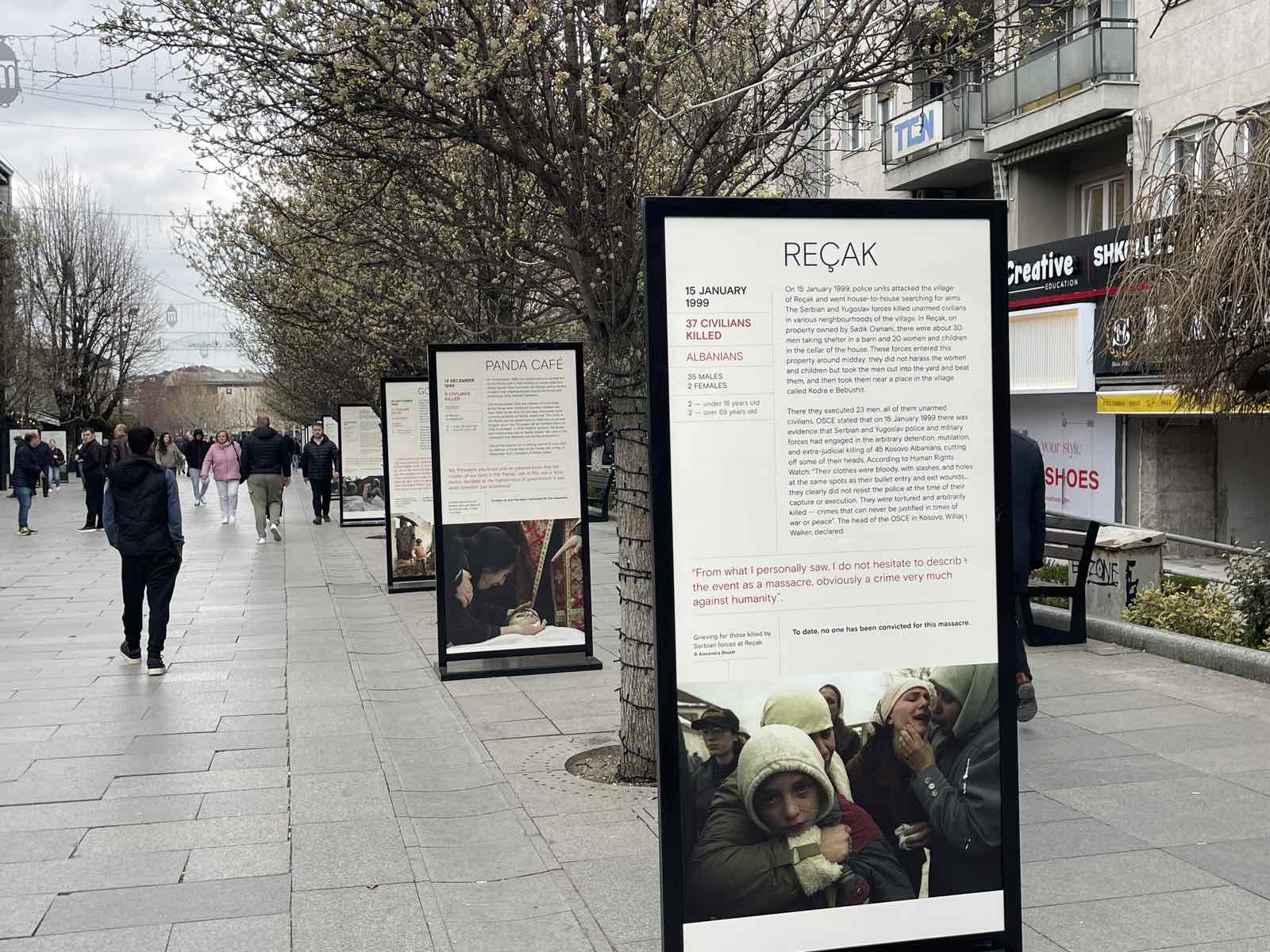
Photo: BIRN/Jetmir Hoxha.
Prime Minister Albin Kurti wrote on Facebook that the crimes committed during the war “prompted the largest military alliance in history, NATO, to take action and intervene militarily in order to halt genocide, ethnic cleansing and other state-sponsored crimes carried out by Serbia against Albanians in Kosovo”.
The NATO airstrikes followed the collapse of peace talks, as the Western military alliance decided to strike targets in Serbia and across what was then Yugoslavia.
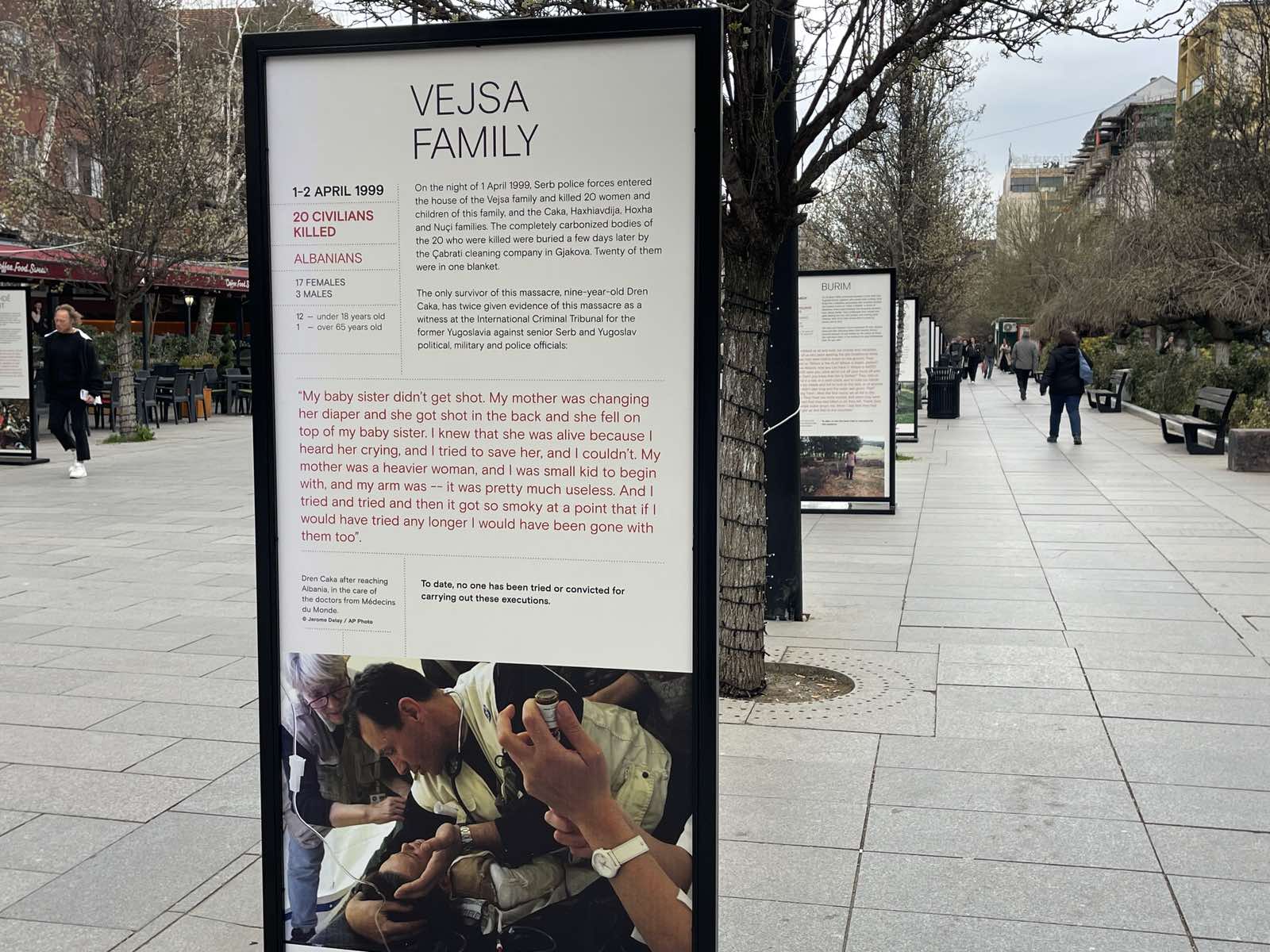
Photo: BIRN/Jetmir Hoxha.
According to the watchdog organisation Human Rights Watch and the Humanitarian Law Centre NGO, about 13,000 people were killed during the war in Kosovo. Most of them were ethnic Albanians, while around 1,600 people remain missing.
To mark the anniversary of the NATO air campaign in Serbia, state officials and civilian and military representatives laid flowers at monuments across the country dedicated to Serbs killed during the bombing.