


Kosovo marked the 27th anniversary of the Krusha massacre, where 241 civilians were killed by Serbian forces, many of whom were burned and thrown into a river in an attempt to cover up the crime.
On Thursday, hundreds of citizens gathered in Krusha e Madhe/Velika Krusha village in southern municipality of Rahovec to commemorate the 27th anniversary of the Krusha massacre, one of the worst atrocities committed by Serbian forces during the 1998–99 war in Kosovo.
Between March 25 and 27, 1999, Serbian forces killed 241 civilians in the village of Krusha e Madhe. Among the victims were seven children, five women—including one who was pregnant—and nine elderly people over the age of 65.
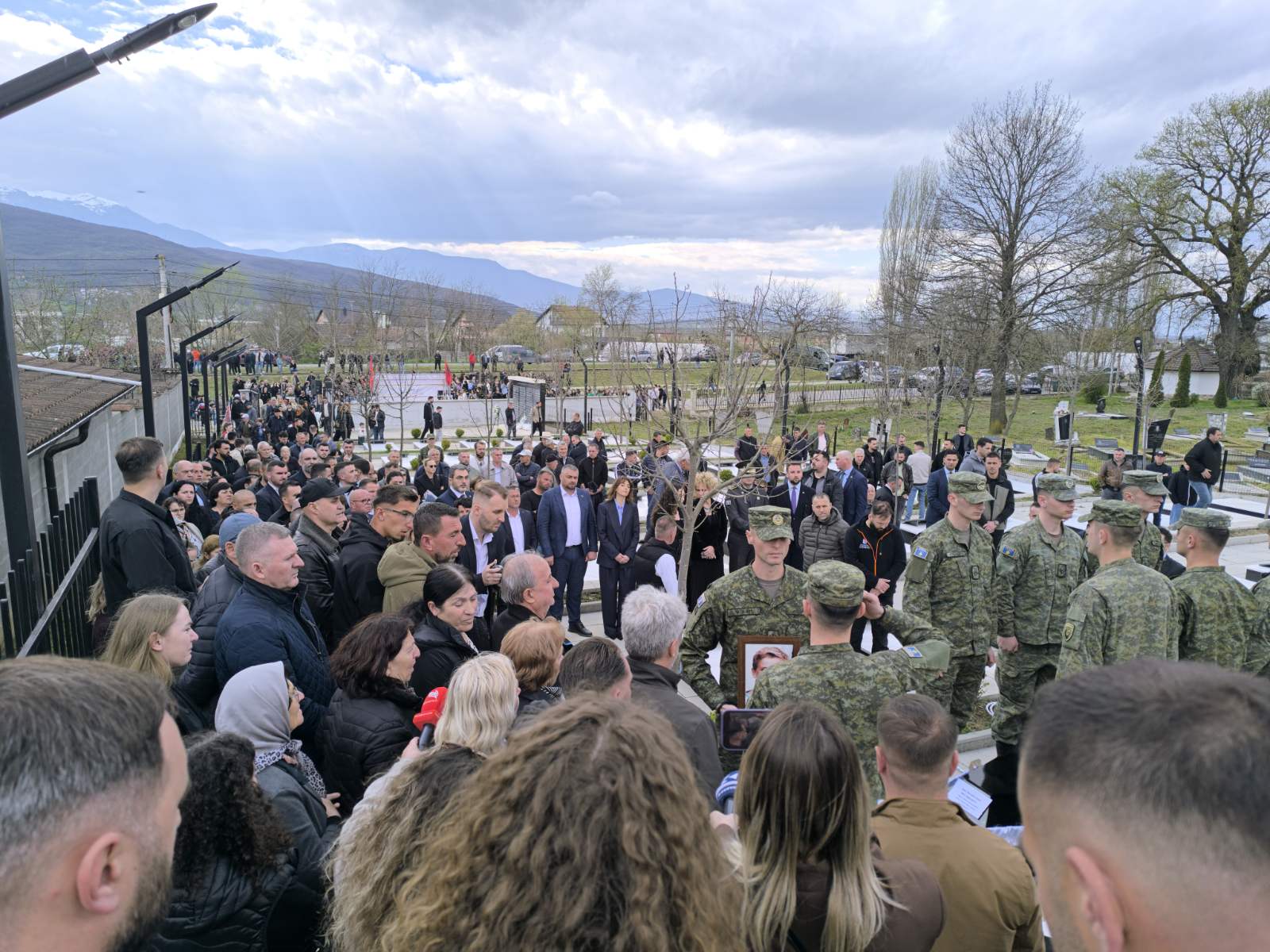
Citizens gather to honour the victims of the March 25–27, 1999 massacre in Krusha, Rahovec, who were killed by Serbian forces. Photo: BIRN.
Victims’ bodies were burned in a truck and submerged in the Drin river in an attempt to destroy evidence and cover up the crime. Witnesses later confessed that some victims had been torched alive.
Charred bodies were later found by NATO troops that entered the Prizren area on June, 1999, paving the way for Albanian refugees to return home.
According to official records, 64 people remain missing following the massacre.
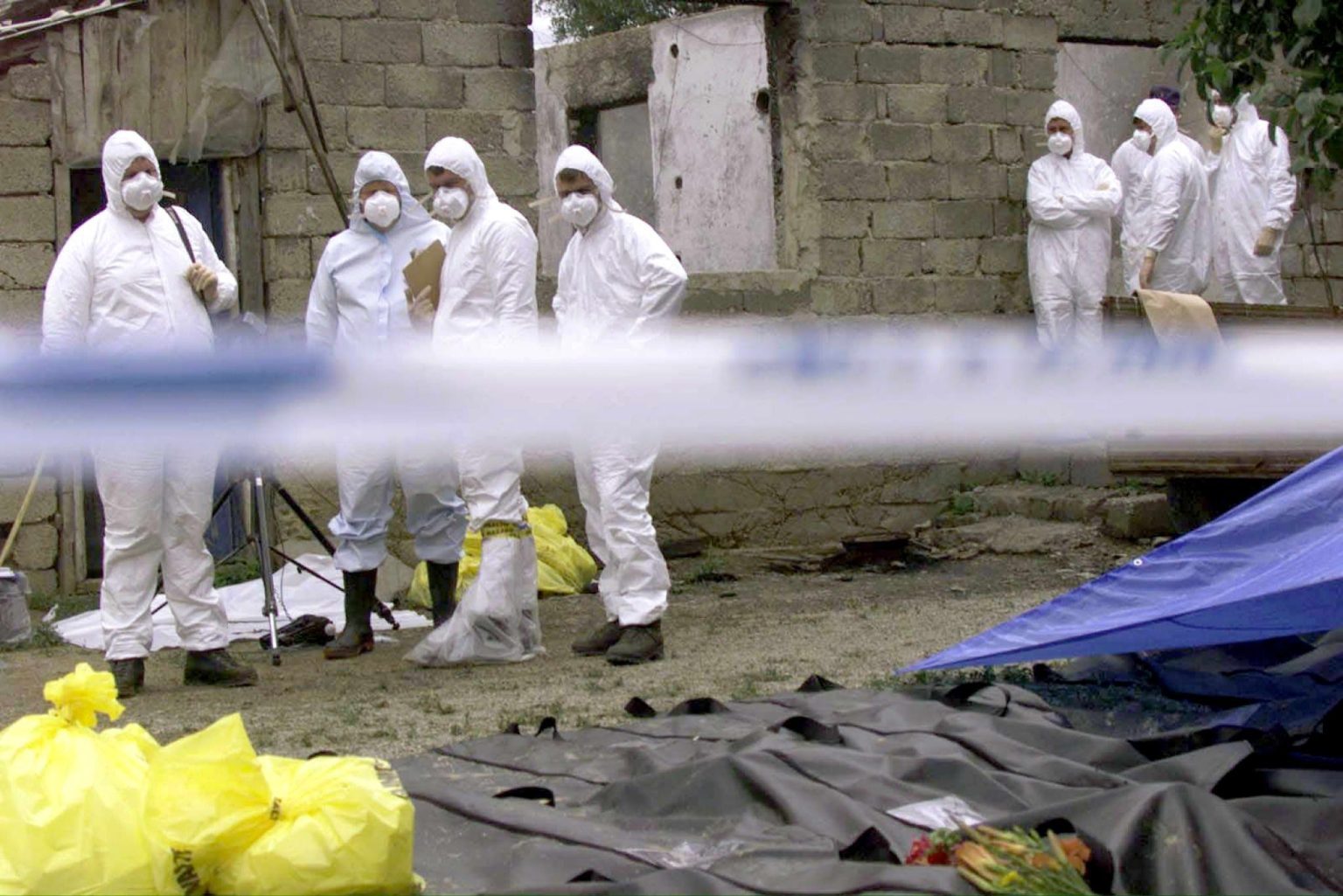
Forensic specialists look over a mass grave site and body bags containing some of the victims in June 1999 in Krushe e Madhe/Velika Krusa. Photo: EPA/AP POOL/DAVID GUTTENFELDER.
Speaking at the commemoration, President Vjosa Osmani described the killings as a “deliberate and premeditated crime.”
“They were not killed in battle, but in their village, in their homes. We demand that the perpetrators of these crimes face justice,” she said.
At the commemoration, Rahovec’s Mayor Smajl Latifi said that attempts to destroy evidence were efforts to deny the crime.
“By burning the traces, they believed that if there are no bodies, there is no crime,” he declared, while adding that, “their only ‘fault’ was that they were Albanians.”.
A day earlier, Prime Minister Albin Kurti said that Serbian forces intensified their campaign against Albanian civilians in late March 1999, as international intervention began.
“In the final days of March 1999, as the international community moved to stop the violence, Serbia escalated killings, expulsions, and the systematic destruction of the Albanian civilian population in Kosovo,” Kurti wrote on Facebook.
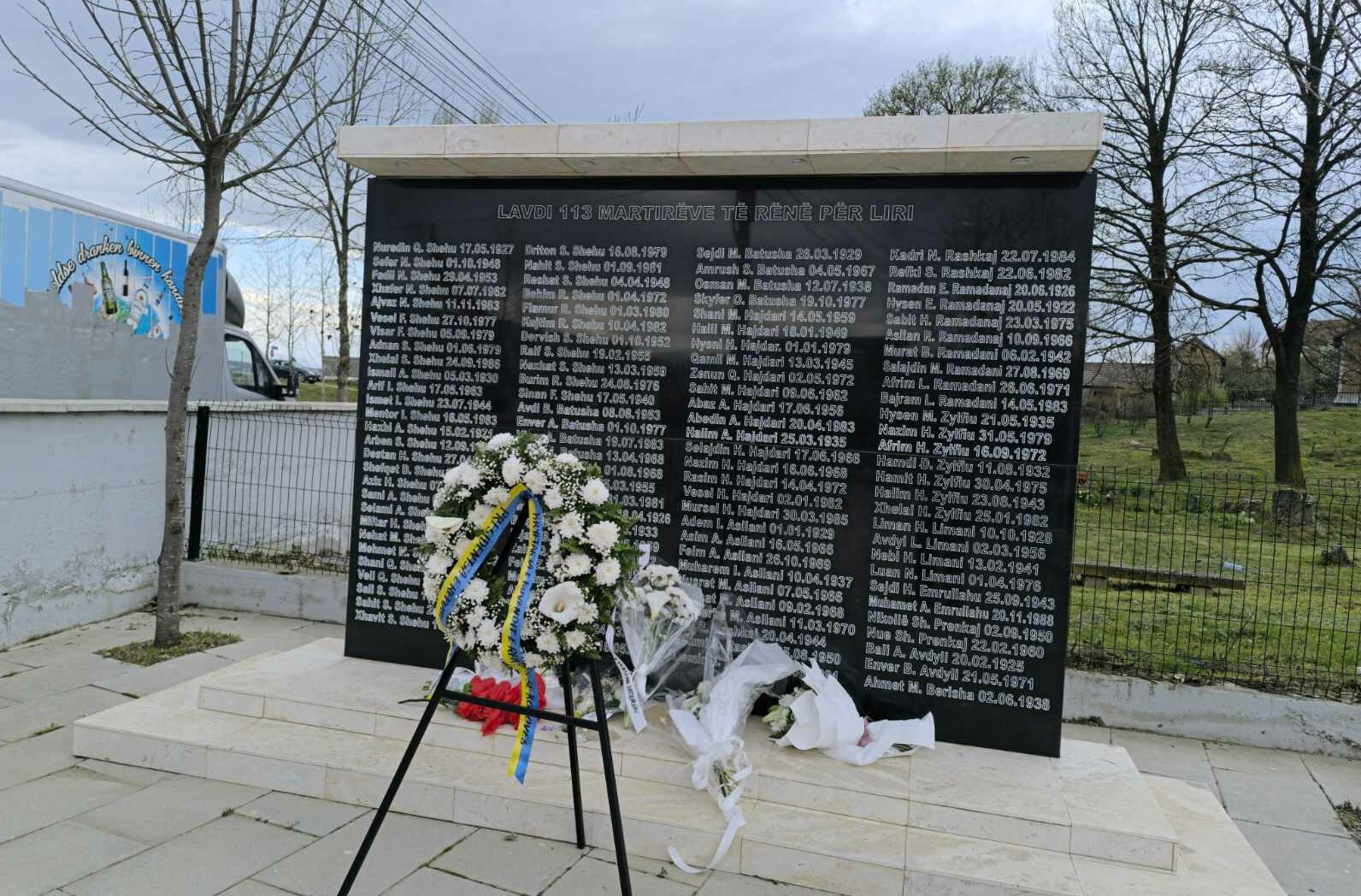
Memorial honouring the victims of the March 25–27, 1999 massacre in the village of Krusha e vogel, Rahovec. Photo: BIRN.
The massacre took place shortly after NATO launched its aerial bombing campaign on March 24, 1999, with the aim of halting the repression and ethnic cleansing of ethnic Albanians in Kosovo under the rule of Slobodan Milosevic.
The Krusha massacre was later included in the indictment against Milosevic by the Hague Tribunal. He died in 2006 before a verdict was reached.
On Tuesday, an exhibition titled “Massacres in Kosovo 1998-1999” opened at Mother Teresa Square in Prishtina as Kosovo marked 27 years since NATO launched its aerial bombing campaign against Yugoslavia on March 24, 1999.
Kosovo Stages Massacre Exhibition to Mark Anniversary of NATO Air Strikes
Its timeline runs from the massacre in Likoshan-Qirez on February 28, 1998 to the massacre of the Bala family on June 12, 1999—the day when Yugoslav forces started to withdraw from Kosovo.
According to the watchdog organisation Human Rights Watch and the NGO Humanitarian Law Centre, about 13,000 people were killed during the war in Kosovo—most of whom were ethnic Albanians—while around 1,600 people remain missing.