


Despite the social stigma and numerous obstacles he faced throughout his life, Betim Bregovina, a Kosovo Albanian visually impaired school psychologist and writer, claims the trust pupils have in him makes everything worth it.
In a primary school on the outskirts of Prishtina, in Besi village, where the corridors echo with the voices of hundreds of children, a quiet yet powerful story of resilience unfolds every day. Betim Bregovina, a 39 year old school psychologist and writer by passion, is a man whose life journey demonstrates perseverance against odds that many would find overwhelming.
Bregovina, blind since early in life, told Prishtina Insight that his motivation for facing his physical limitations and external struggles, such as social prejudice, derives from “the economic poverty of my family and a simple internal desire to be strong.” However, everything is worth it for the love and support he now receives from the pupils he assists.
His presence in primary schools today is not defined by limitation, but by impact. Bregovina mainly works at the primary school “Nexhmi Mustafa” in Besi, but he also covers nearby schools in the villages of Prugoc, Rimanishta, and Lebana. He is responsible for more than 500 pupils.
Beyond everyday physical challenges, he has faced poverty, discrimination, and deeply rooted societal biases. Still, Bregovina is distinguished by his refusal to be defined by the obstacles in his life.
“I was very very emotional when I received my first Bachelor’s degree in 2011. When I realised that prejudice, rejection, stereotypes, discrimination were waiting for me. I somehow knew in some form that it would be very difficult to get a job,” Bregovina recalled.
He completed three undergraduate degrees in the fields of physiotherapy in 2008 at around 22 years old, psychology in 2011, and pedagogy in 2013. “After finishing these I finished the program for advancement of pedagogues in 2021, and I also finished a master’s for general theoretical-scientific pedagogy at the Faculty of Education. So about three basic studies and two third-level studies, or post-graduate studies,” Bregovina told Prishtina Insight, when speaking modestly of his field and demonstrating his unwavering determination to build a life beyond imposed limitations.
Bregovina’s transition from education to employment was not without emotional cost. He recalls the weight of being judged and underestimated by others, an experience that, while painful, prepared him for the realities of entering the workforce.
He always wanted to be a psychologist, but he pursued extensive academic studies because of “the inability to find a job, which influenced me not to return home and become passive, but to pursue one direction and then another direction, but all with the hope that one day God would bring an opportunity, would grant me the opportunity to get a job.”
“It’s life itself”
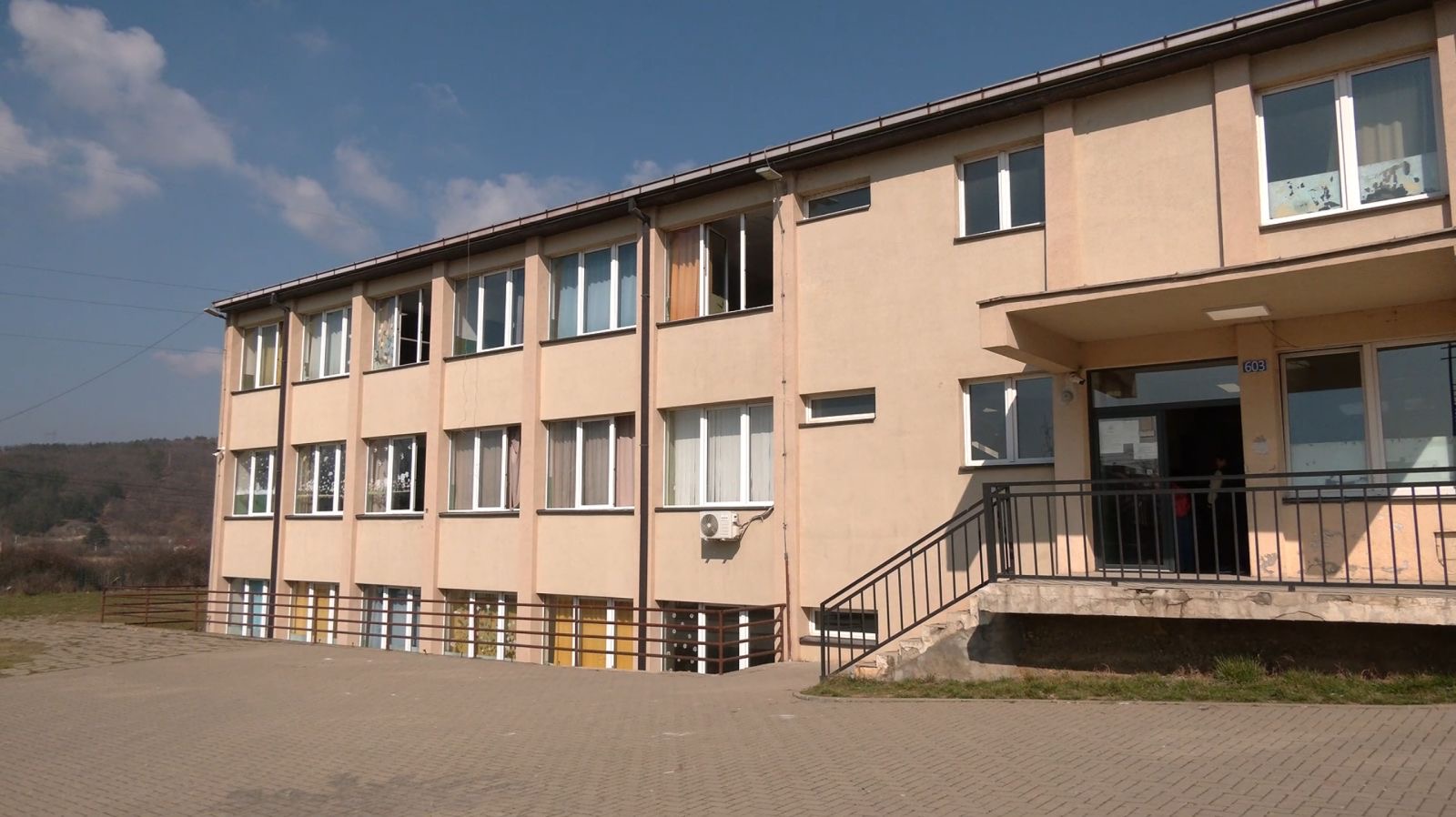
‘Nexhmi Mustafa’ primary school in Besi village, municipality of Prishtina. Photo: BIRN
“Just one hug from a pupil pays me back for all the difficulties of almost eleven active years at the University as a student,” Bregovina said happily, adding that for him, being a school psychologist “is life itself.”
Bregovina says he has “around 500 pupils at ‘Nexhmi Mustafa’ school. Not a month passes—let alone a semester—but not a month passes without having physical contact with over 70 percent of the pupils.”
Being a psychologist for primary schools is not just about “alleviating some difficulties” for pupils, it is also “educating the staff about the role of the psychologist,” especially in a country where seeking and providing mental health assistance is highly stigmatized. However, for Bregovina specifically, it has been very important that he experienced “acceptance from the community because of the education that I started three years ago, and also the acceptance of my students.”
In a school environment often shaped by routine, Bregovina has cultivated something rare, a space of trust, warmth, and emotional safety.
“I can’t walk through the corridors of these two floors and go out into the yard to go somewhere without at least 20-30 students blocking my way and asking me for a hug. That unconditional love that these children have for me, is irreplaceable.”
His presence in the school has not gone unnoticed. Colleagues and students alike describe a shift—a more open, supportive atmosphere where the role of the psychologist is no longer misunderstood or stigmatized.
The school’s director, Xhevrie Osmani, told Prishtina Insight that, “where he works, some of the conditions have been met—a computer, a printer—all these things he needs to do the job. Otherwise, regarding the infrastructure of the building, no, nothing has been adapted.”
However, she emphasized that, “we have gotten used to needing a psychologist. And I have seen it, both the parents and the children no longer consider the title ‘psychologist’ taboo. Children today, aside from the referrals made by parents and teachers, often go into his office themselves for any problem they might have.”
Students also speak highly of him, as someone who listens, understands, and genuinely cares.
“The students’ relationship with the psychologist is very good, because the psychologist always deals with us seriously and, that is to say, speaks with us, advises us about our worries and all our concerns, holding regular sessions with us,” Osmani claimed.
“I would like to be remembered for at least one good thing”
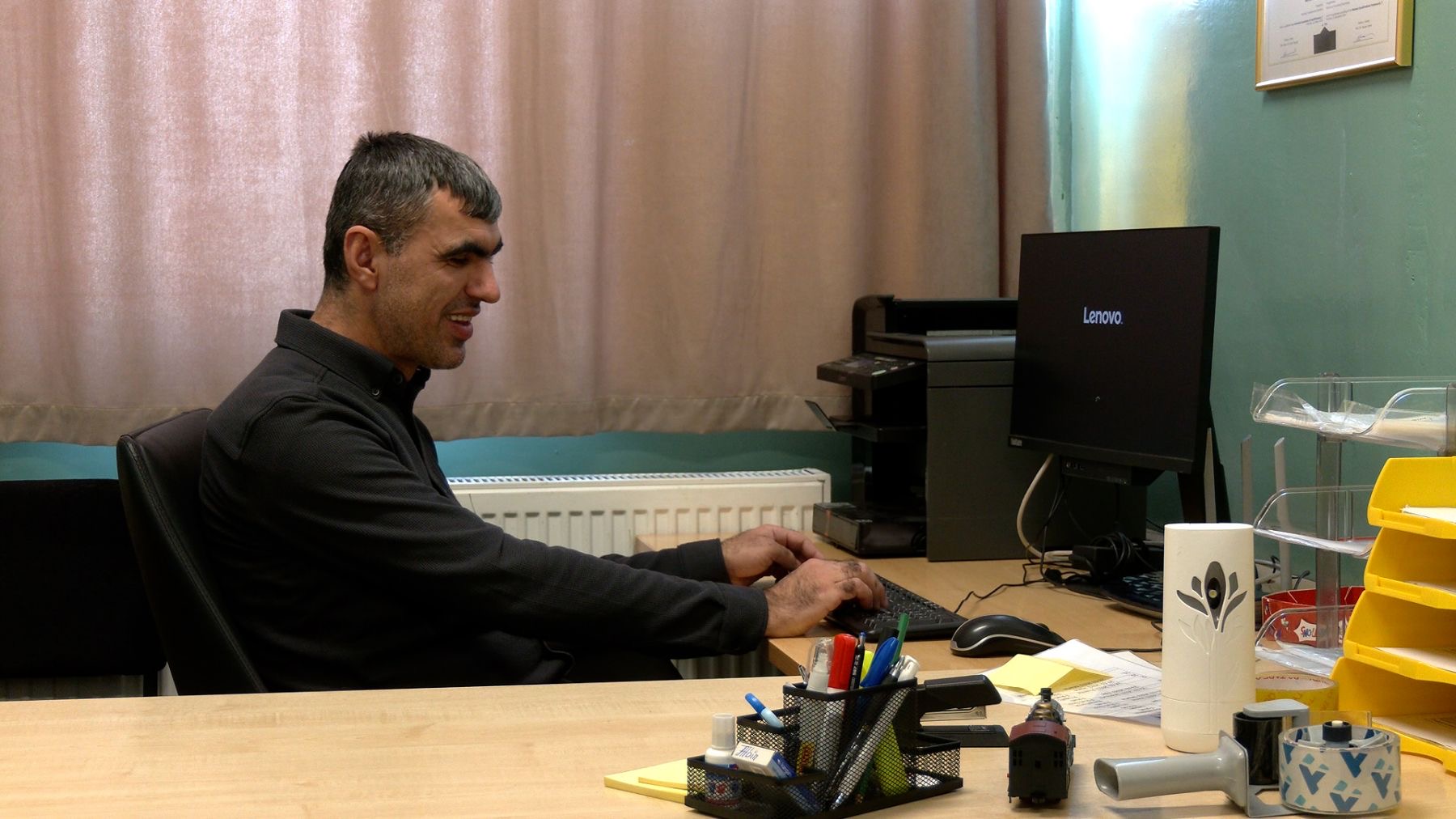
Betim Bregovina. Photo: BIRN
Beyond his work in education, Bregovina’s inner world finds expression through literature. His writing journey began in his teen years, in 2002. Over the years, he has authored and co-authored around 22 works, ranging from works inspired by Albanian folklore and cultural heritage to the emotional complexities of adolescence.
“At the end of 2024, I published my first novel,” he told Prishtina Insight, explaining that despite writing about many different topics, his favourite stories are coming of age romances.
“I like the more emotional things, when it comes to writing. But I also really like the traditional part, the traditions, the odas [traditional room in Albanian households for hosting guests], the castles, the fortresses, the objects, down to the smallest details of our cultural heritage,” he expressed.
For Bregovina, success is not defined only by degrees or publications, but by the impact he leaves behind, by being remembered for at least one good thing in his life.
“Osho, in the ‘Orange Book’ about meditation techniques, says: ‘I would like to be remembered for at least one good thing.’ Similarly, I consider that I have fulfilled my life’s mission, if with this interview or in general in my professional and personal life, I motivate just one family, just one individual in a difficult moment, and become a source of ease for them.”
According to Bregovina, if his journey helps even one person find strength then all the years of struggle and effort have been worth it.
“If we achieve nothing else for people, we can at least do one thing: show love, and allow our word, our hand, look, listening, and our intention to ease someone’s difficulty.”