


Announcements about the planned integration of Serbian-run ‘parallel’ education and healthcare bodies into Kosovo’s own system are unsettling local Serbs.
Milena Jevtic is a law student at the University of Prishtina. Not the one in Prishtina, but in North Mitrovica, where the institution is run according to the Serbian education system.
That the university in North Mitrovica carries the name of Kosovo’s capital is the result of Serbia’s decision to ‘relocate’ Serbian public services out of Albanian-majority areas at the end of the 1998-99 Kosovo war, when Serbian forces withdrew and the then southern Serbian province became a ward of the United Nations.
While Kosovo declared independence in 2008 and some institutions, such as the police and courts, have since been reintegrated, this ‘parallel’ system in education and healthcare largely persists today, run and funded from Serbia.
Now, announcements by Prime Minister Albin Kurti and his government that they plan to pursue integration are causing concern among Serbs, who are a minority in a country where 90 per cent of the people are Albanians.
In September last year, in a video message in Serbian prior to local elections, Kurti said his government planned to fully incorporate Serbian-run institutions into the Kosovo system, saying the “dualism of the health and education systems is unsustainable”.
“I do not want to do this against you or without you,” he stressed, and said that the ultimate goal was not “to limit any rights, but to strengthen them”.
Such assurances are lost on many Serbs, however.
“There is no trust in the system and many do not see studying within such a system as a viable option,” said Jevtic. “A significant number of students have decided not to enroll because of the unclear status and uncertainty surrounding this process.”
EU urges ‘coordination’ with Kosovo Serbs
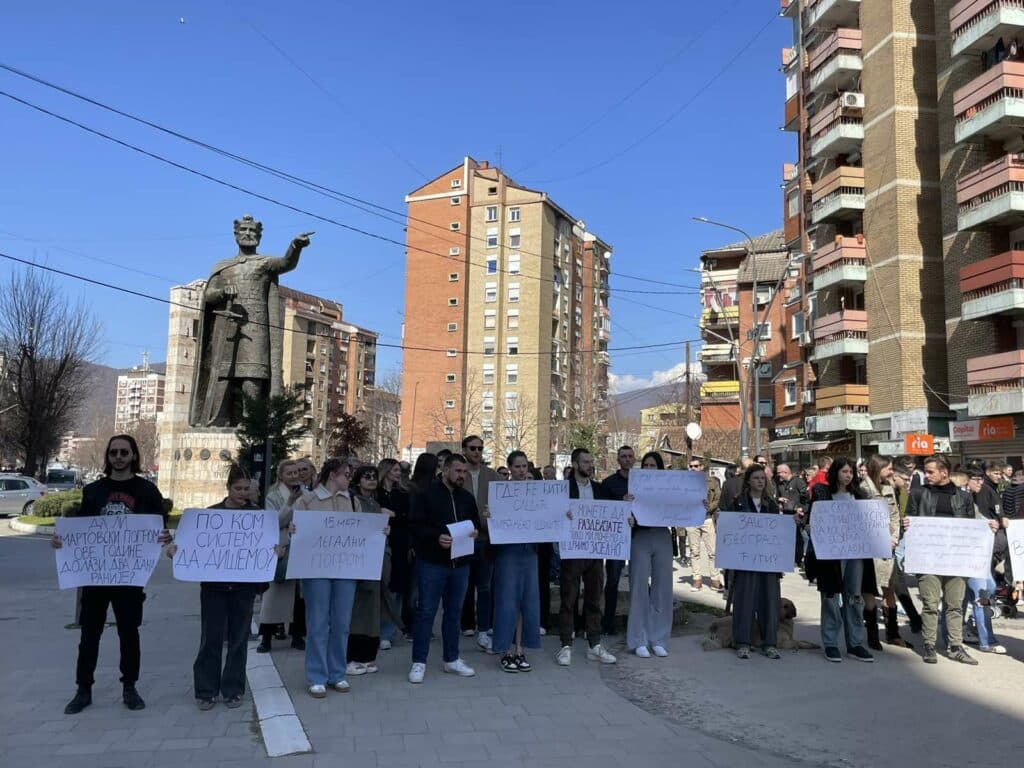
Kosovo Serb students and academic staff at the university in North Mitrovica took to the streets of North Mitrovica on March 11, 2026 in protest against the integration of the Serbia-run institutions into the official Kosovo system. Photo: BIRN/Florinda Kelmendi
Kurti’s government has not unveiled the concrete steps it plans to integrate educational institutions and healthcare providers.
As a first step, however, it has begun implementing a law originally adopted in 2013 and which requires everyone living in Kosovo to hold a Kosovo ID card or residence permit. This is the bare minimum before integration can be attempted.
Many Kosovo Serbs only have IDs issued by Serbian-run bodies considered ‘parallel’ by Kosovo, while there are also Serbs who moved from Serbia to work temporarily in ‘parallel’ healthcare or education institutions and hold only Serbian-issued ID.
On March 14, the day before full implementation of the law, Kurti said Kosovo Serbs would be permitted to swap their Serbian-issued IDs for a regular Kosovo ID, and that Serbs from Serbia working in healthcare and education would be provided with temporary residence permits based on their employment, despite the fact Kosovo considers these institutions illegal.
He also said: “The Ministry of Health and Ministry of Education, in continuous coordination with the EU Special Representative for the dialogue and in cooperation with the providers of these services, will initiate the necessary procedures and determine timelines for full incorporation, including the licensing of institutions and the engaged staff.”
Kurti’s announcement came after a meeting with Peter Sorensen, the European Union’s envoy to talks between Serbia and Kosovo, and Aivo Orav, the head of the EU Office in Prishtina.
An EU spokesperson told BIRN that any steps towards integrating the Serb-run system must be in line with agreements reached in the dialogue between Serbia and Kosovo, and “in close coordination with the Kosovo Serb community and their representatives”, as well as Sorensen.
Unconvinced, in March Serb students and academic staff took to the streets of North Mitrovica in protest. They held banners asking ‘According to which system should we breathe?’ and ‘Why is Belgrade silent?’
The integration of Serb-run institutions has been a major source of dispute for years. It was first formally addressed in the 2013 Brussels Agreement between Kosovo and Serbia, which also provided for the creation of an ‘association’ of Serb-majority municipalities. The Agreement was never fully implemented.
Lack of trust
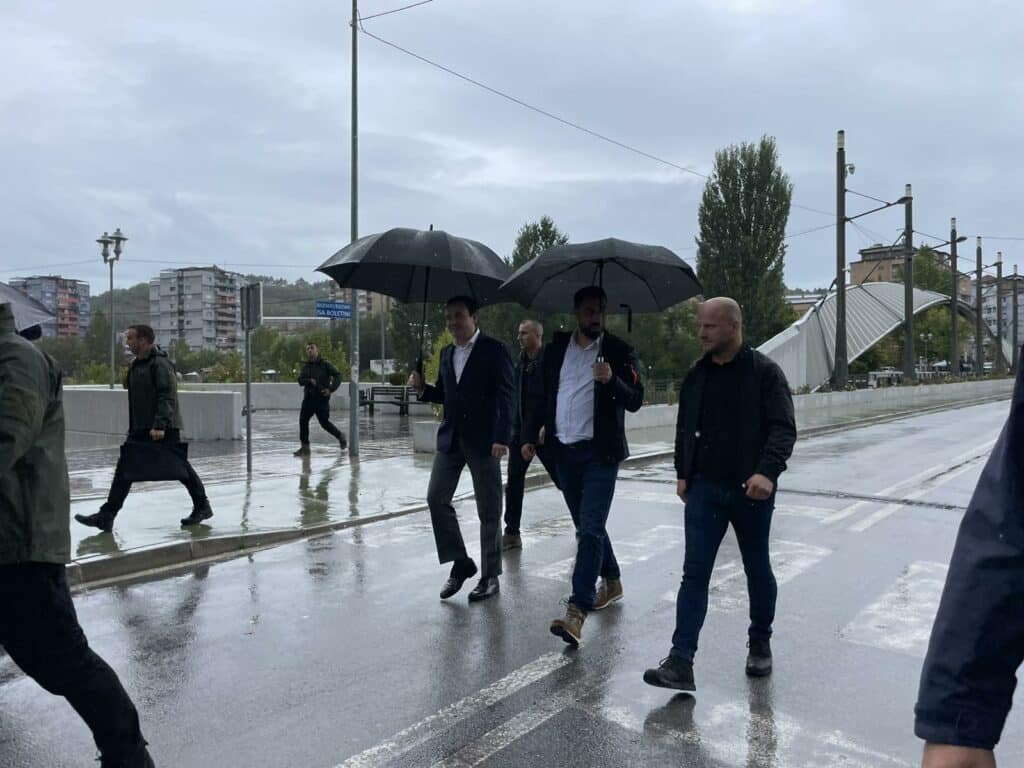
Kosovo Prime Minister Albin Kurti crosses the bridge across the Ibar river, which runs through ethnically divided Mitrovica, September 2024. Photo: BIRN.
One professor in North Mitrovica, who asked not to be named, told BIRN: “The Serbian system is both different and, in my view, more functional and better suited to the needs of the community it serves.”
“Although integration is technically always possible, it is a very complex and sensitive topic. I do not consider it a good option, and I am sure all the Serbs in Mitrovica share my opinion.”
According to the professor, integration is not simply an administrative matter, but “a far more complex issue” involving legal frameworks, health insurance, curricula, and institutional loyalties.
There may, she said, be “high levels of institutional distrust, legal uncertainty, disruption of continuity of the existing services, access to education and healthcare in one’s native language, and diploma recognition at all levels of the educational system”.
The professor also said integration raises issues such as “who employs and pays the staff, and under what terms and conditions of possible further political tensions?”
“In such a context, integration appears not only difficult, but counterproductive for the main users of the current health and educational system, and will lead to increased instability, institutional confusion, and a deterioration in the quality of services currently provided.”
The professor said she was reluctant to entrust her children’s healthcare to “a system I am unfamiliar with and which is not supported by the insurance system I’ve been paying into for the last 20 years”.
She also worried that healthcare might not be provided in Serbian, despite Kosovo law recognising Serbian as an official language alongside Albanian.
“The main users of the current education and health systems are schoolchildren and patients,” the professor told BIRN.
“They are vulnerable groups and people who depend on access to education and healthcare in their native language, and such services are currently available to them free of charge. The consequences of integration may lead to structural and systemic changes that make the everyday life of Serbs more difficult, potentially encouraging emigration”.
Recognition
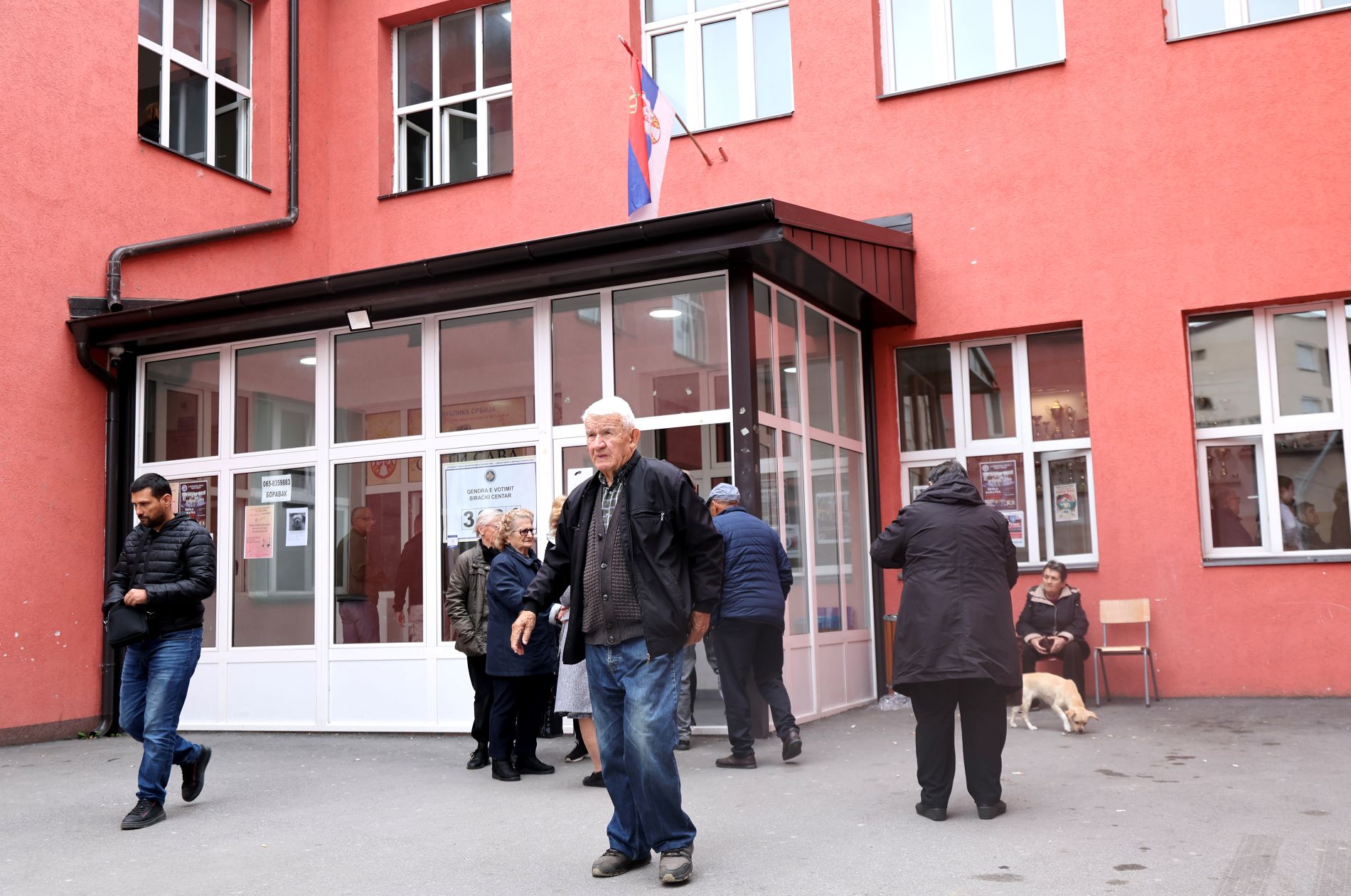
People leave a polling station after casting their ballot in local elections in North Mitrovica, Kosovo, October 12, 2025. Photo: EPA/Georgi Licovski
Dukagjin Pupovci, a former Kosovo deputy minister of education and currently director of the NGO Kosovo Education Centre, said the success of integration depends on the willingness of Kosovo Serbs to cooperate.
“Kosovo’s legislation provides enough space for integration while preserving school identity,” he said.
By law, Serb-majority municipalities such as North Mitrovica, Gracanica, and Shterpce/Strpce have expanded powers in secondary healthcare and higher education, including the registration and licencing of health institutions, employment, salaries, and training of staff.
In higher education, the municipality of North Mitrovica is authorised to offer university-level programmes including the registration and licencing of educational institutions, hiring teaching staff, paying salaries, and training academic and administrative personnel.
The university in North Mitrovica is the only one in Kosovo not managed at the central level.
If it is integrated into the Kosovo system, Pupovci said, “it must obtain accreditation from the Kosovo Accreditation Agency rather than from Serbia”. It would also have to change its name to ‘University of North Mitrovica’ and drop the reference to Prishtina.
“Their documents must also recognise the Republic of Kosovo,” Pupovci told BIRN.
Textbooks are an issue at school level. While schools in Serb areas have the right to use the Serbian curriculum and textbooks, he said, they must also seek approval from Kosovo’s education ministry.
“The problem is that they neither wish to recognise the ministry’s authority nor submit a formal request.”
Jevtic, the law student, complained that Serbs have been left in the dark.
“There is very little transparent communication,” she said. “Information often circulates through unofficial channels, leading to confusion and insecurity among members of the public.”
The Serb-run University of Prishtina located in North Mitrovica “does not recognise Kosovo as a state, while Kosovo does not recognise the university as part of its system”, Jevtic said.
In his September 2025 video message, Kurti cited Kosovo’s verification of 425 diplomas issued by the university in North Mitrovica, providing their holders with access to Kosovo’s labour market. But Jevtic said there was still great uncertainty.
“Uncertainty regarding diploma recognition, quality of education, and future professional prospects leads many young people to see their future outside Kosovo,” she told BIRN.