


Youth in Kosovo nowadays are far more likely to be exposed to extremist ideas in their daily digital interactions than in any physical setting.
Social media platforms, encrypted messaging apps, and online gaming communities have become the new frontline of radicalisation for Kosovo’s youth.
An investigation by KALLXO.com found that since 2023, Kosovo’s security institutions have handled at least ten cases of online radicalisation—some of which involved children and minors between 12-16 years old.
The number of cases is increasing annually, with only one case recorded in 2023, three in 2024, and five by 2025. In just the first three months of 2026, another case is already under investigation.
Experts say that constant exposure to online content, combined with a lack of critical thinking skills among young people, is creating fertile ground for extremist ideas.
Burim Ramadani, a former inspector at Kosovo’s Intelligence Agency, says the process often starts with exposure which is the most critical phase.
“At the beginning, it does not look dangerous, but over time, these ideas shape how young people think, behave, and see the world,” he told Kallxo Përnime TV Programme on April 3.
First contact: Unaware exposure
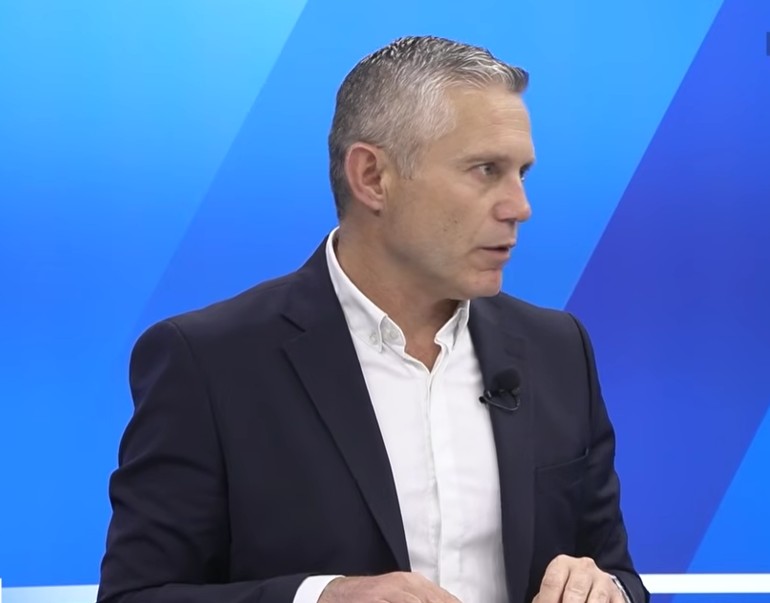
Burim Ramadani, former inspector at Kosovo’s Intelligence Agency. Photo: BIRN
Radicalisation spreads gradually—it does not just emerge as a completely coherent ideology.
According to Ramadani, trends change in response to events happening around the world, and these situations then create space on social media for conspiracy theories and extreme ideologies.
Young users encounter content packaged as entertainment—short videos, memes, or viral posts—that carry underlying messages. “Platforms like TikTok and Telegram play a significant role in this process. What begins as casual scrolling can gradually shape beliefs, behaviors, and in some cases, openness to violence,” Ramadani said.
Algorithms amplify this effect, Ramadani explained, adding that “regardless of the lies or manipulations, when something is repeated excessively, even older individuals can begin to believe it.”
He added that recruiters often target vulnerable individuals—people who feel isolated, unsupported, or disconnected from their surroundings.
Kreshnik Gashi, editor-in-chief of BIRN Kosovo and Internews Kosova co-publication, KALLXO.com, pointed to language as a key vulnerability.
“Young people here don’t play games in Albanian—they play in English,” he said. “That opens them up to a global audience. And not everyone on the other side has good intentions.”
A generation online and exposed
Kosovo’s youth are deeply connected to the digital world, but not always equipped to navigate it safely.
Gashi explained that “the person on the other side could be someone whose aim is to radicalise them and lead them down the wrong path.”
At the same time, gaps in digital literacy and critical thinking make it harder for young users to distinguish between credible information and manipulation.
International assessments such as the Programme for International Student Assessment, PISA, exam have shown that many students in Kosovo struggle with evaluating information and critical thinking.
Across three rounds of the PISA tests, conducted in 2015, 2018, and 2023, Kosovo ranked near the bottom globally.
In its latest results in 2023, in mathematics, Kosovo students ranked 74th out of 80 participating countries. In reading, it placed 76th out of 80, and in science, it ranked 77th out of 80 countries.
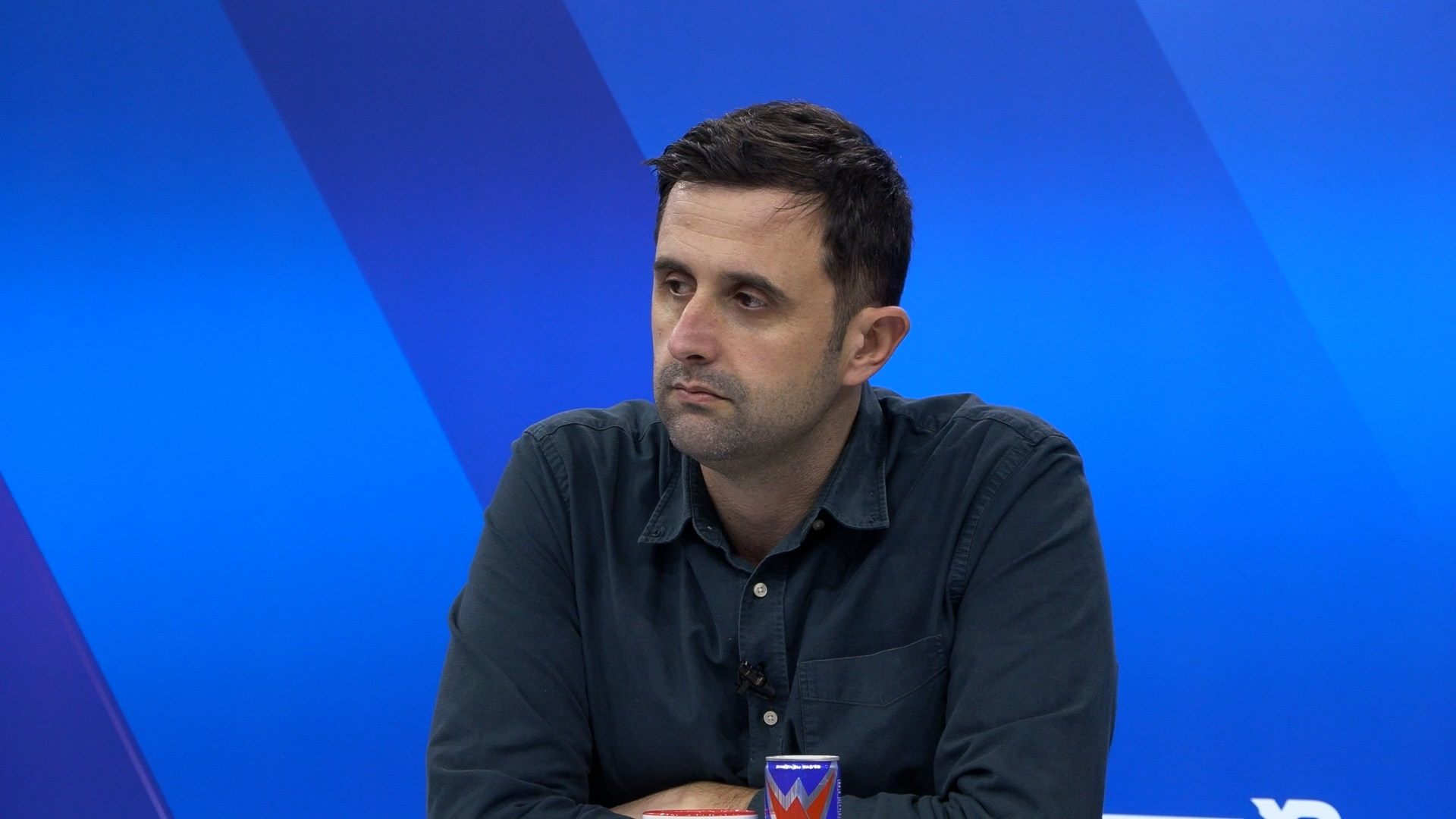
Kreshnik Gashi, editor-in-chief at Kallxo.com. Photo: BIRN
According to Gashi, the length of time recruiters spend depends on the individual they target for radicalisation.
“It can happen in five minutes or may take five years, depending on the crisis, the emotional state, the circumstances, and the context. There can be situations where a child experiences a very minor trauma, but radicalizers can escalate this into extreme outcomes and lead the child into doing something that could be very harmful to society,” Gashi added.
That combination of high exposure and low resistance creates what experts describe as an “ideal environment” for online radicalisation.
According to Gashi, recruiters no longer need physical access to identify vulnerable individuals. A single social media post can reveal thousands of potential targets.
“It’s astonishingly easy to identify thousands of dissatisfied individuals with just one post—by asking people to comment and seeing who responds,” he adds, noting that, “people who comment negatively can be singled out, and this is something algorithms can do effortlessly.”
He further clarifies that once these individuals are selected, the next step is engaging them directly.
“When these people group together—virtually, through games let’s say—they create a community. At that point, the individual in Prishtina becomes disconnected from the reality in which they live. Solutions for their personal problems are no longer sought within their own community or culture—they start looking elsewhere,” Gashi continues.
The role of AI and emotional targeting

Adelina Hasani, researcher in security and international relations. Photo: BIRN
Behind the scenes, technology is evolving faster than society’s ability to respond.
Enis Hyseni, a systems and AI engineer, says algorithms are not designed to protect users—they are designed to keep them engaged.
“Behind the algorithm is data which shows how much attention a topic attracts and how it influences youth radicalisation. The critical age is 12 to 16, because individuals are forming their identities and are more emotionally vulnerable. Online content, especially when trivialised, makes it easy to target them and shape a different identity,” Hyseni said.
According to him, radicalization is facilitated through presenting the recruiters as saviours.
“The material is structured and distributed—even fake news generated by AI. The algorithms do not work to protect the person, but to serve them content that captures their interest. Social media doesn’t measure intellectual capacity, only emotional responsiveness, and this is where youth radicalisation happens,” Hyseni explained.
While social media often takes the spotlight, online games are equally important and often overlooked.
“For example there have been cases where campaigns within Roblox [a popular videogame] are identified as harmful to children’s mental health or promoting certain agendas or forms of radicalisation,” Hyseni said.
Regarding the identification of closed groups on social media that radicalise young people, Hyseni had the following to say, “The only way is to infiltrate them yourself by attempting to become part of these groups online.”
He adds that this is partly because Kosovo, like many other countries, does not have the capacity to regulate these platforms.
Gashi also says that institutions in Kosovo do communicate and hold discussions with global online platforms, but it is difficult to regulate the situation through legislation alone.
Adelina Hasani, a researcher in security and international relations, notes that young people often turn to online spaces in search of identity, purpose, and answers.
“The main topics that have influenced and radicalised youth in online spaces have been nationalism and, in particular, gender-related issues,” Hasani explains.
In a country still shaped by its past, while also facing ongoing social and economic challenges, that search can be especially intense.
“If there are no strong state or social structures, and no physical community where young people can regularly meet, they turn to online spaces to search for answers to very complex questions” Hasani adds.
Both Hasani and Gashi say there is a lack of social infrastructure to engage young people in activities that would prevent dangerous groups from reaching them.
“There is a lack of social infrastructure—like cultural clubs, artistic spaces, and extracurricular activities in Kosovo. There are many activities young people could be involved in, but this has consistently been identified as a major issue, especially in urban areas,” Gashi explained.
Warning signs at home
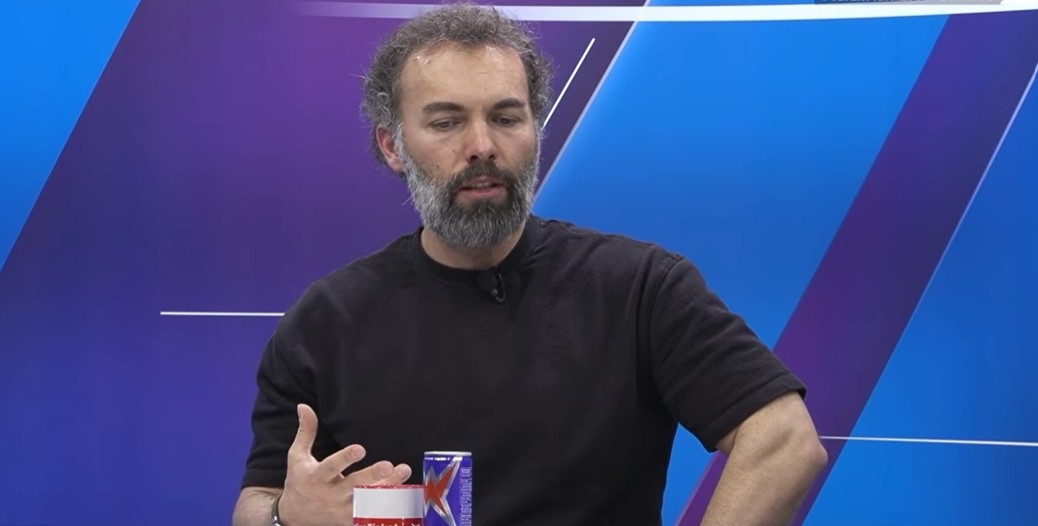
Enis Hyseni, systems and AI engineer. Photo: BIRN
For parents, detecting radicalisation can be difficult. Much of it happens in private digital spaces, often invisible to outsiders.
Ramadani says that there are different warning signs parents should watch for.
“If a parent notices that their child is becoming isolated, spending excessive time online, refusing to consider different opinions, and developing a rigid mindset along with an interest in violent tools,” Ramadani explained.
Rather than strict control, Hyseni suggested engagement. “The solution is not to ban everything, but to be present—to understand what your child is watching, playing, and experiencing online.”
Overly restrictive approaches, he warns, “can push young people toward more hidden and potentially harmful spaces.”
English version prepared by Ardita Zeqiri