


Kosovo marked the Memorial Day for Survivors of Wartime Sexual Violence, honouring thousands affected during the 1998–1999 war and renewing calls for justice, recognition, and support.
On Tuesday, state leaders, survivors, and citizens gathered at the “Heroinat” memorial in Prishtina to pay tribute to more than 20,000 victims of sexual violence during the war in Kosovo.
Survivor Vasfije Kraniqi spoke about the personal impact of the day, recalling that she was just 17 years old when she reported her case and sought justice.
“For many of you, it may be just another day on the calendar, but for me it is the day that changed my life and took away my childhood (as a 16 year old girl). When I spoke publicly in 2018, changes began. What may seem like a small change to some is significant to others. Since I spoke out, four cases have resulted in convictions.”
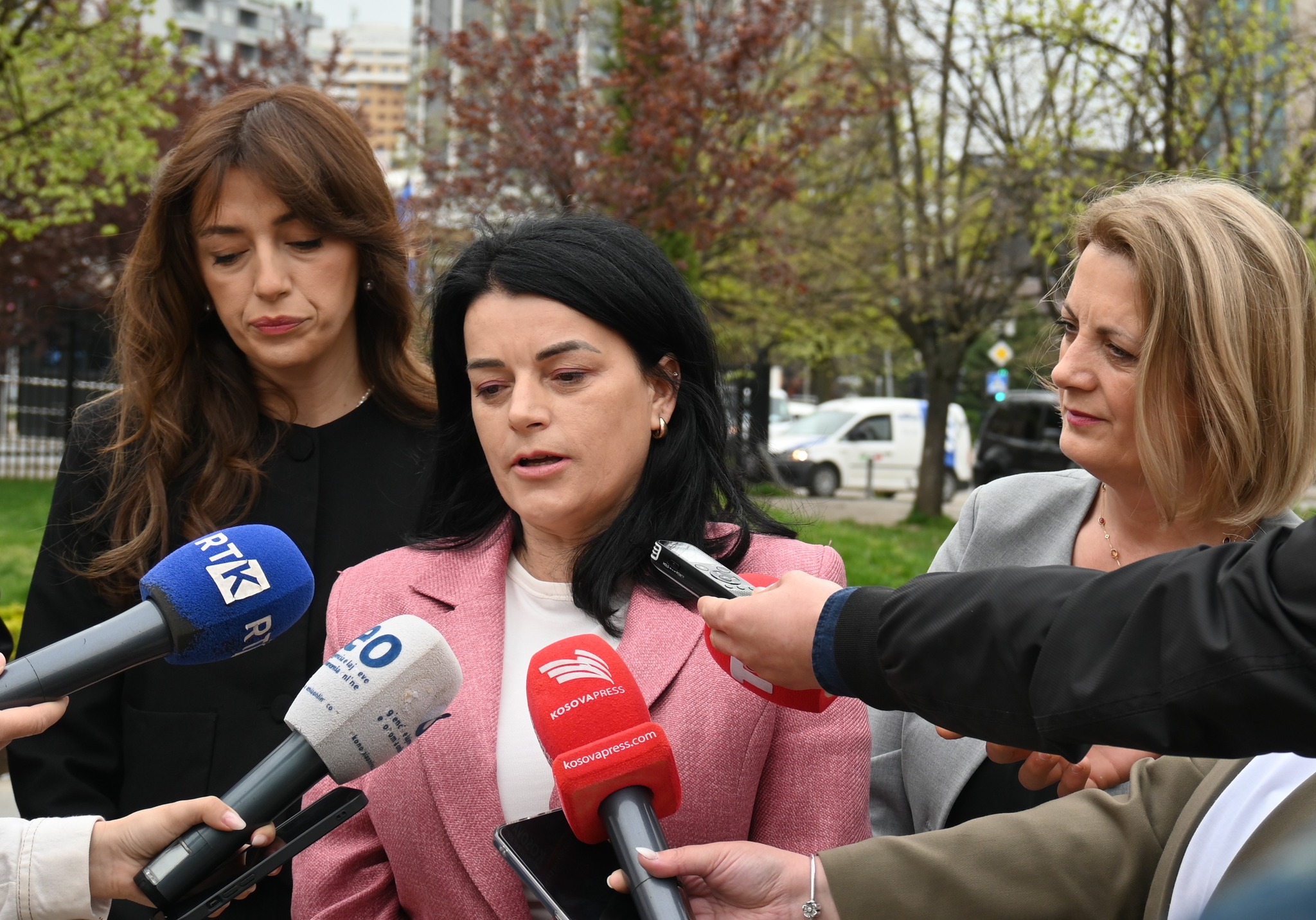
Vasfije Krasniqi, war sexual violence survivor. Photo: KRCT
April 14 was set as the memorial day for sexual violence victims in response to a request by Krasniqi, who is among few women that publicly talked about the violence.
Ramadan Nishori, the first man in Kosovo to publicly share his experience of wartime sexual violence in 2025, marked one year since speaking out. He called on survivors to seek support from organisations and pursue legal action.
“Do not keep your truth in silence. Do not let fear or prejudice stop you. Seek justice. Because justice is part of healing and the restoration of our dignity”
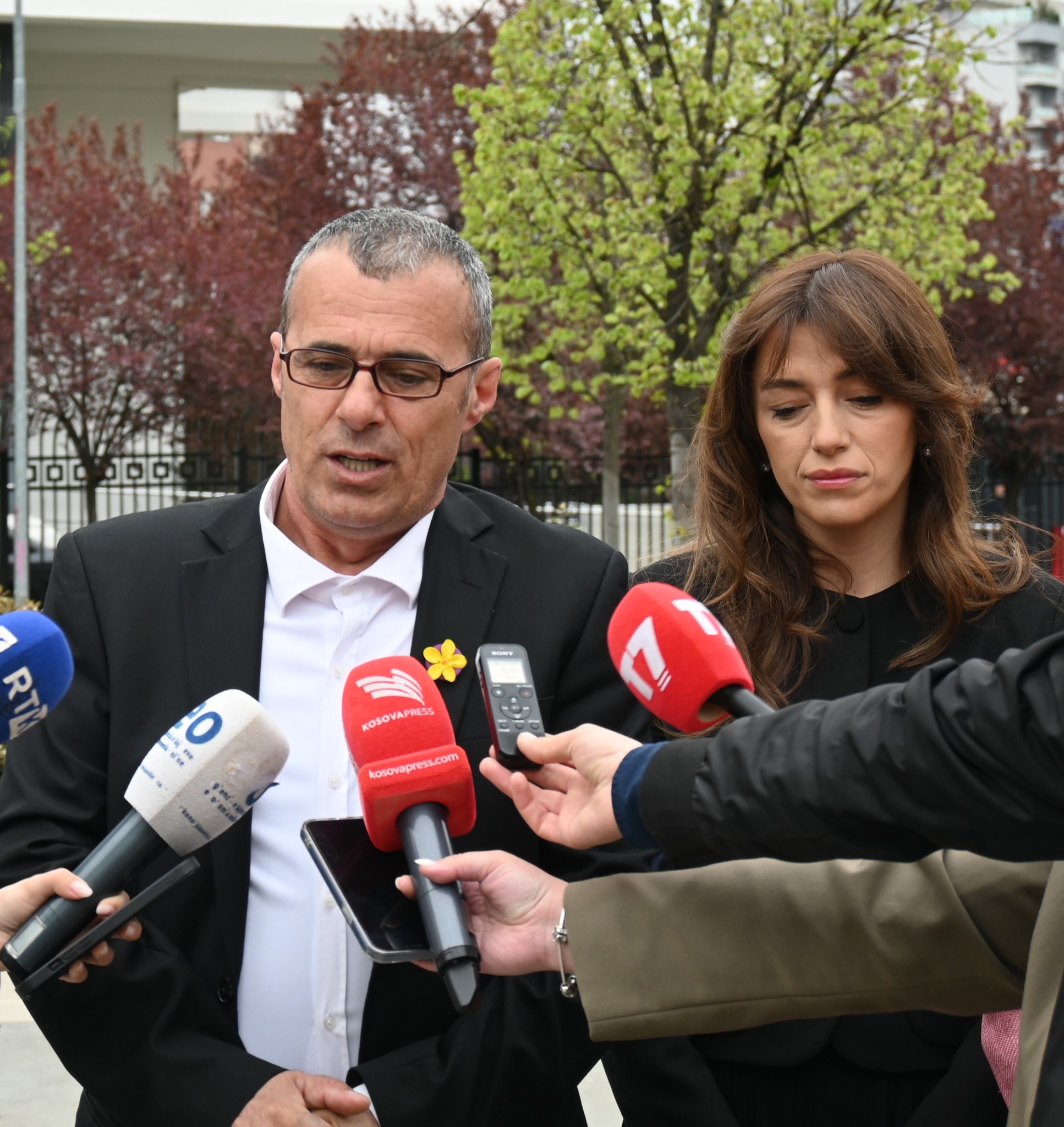
Ramadan Nishori, war sexual violence survivor. Photo: KRCT
Acting President Albulena Haxhiu said the stories of survivors reflect both deep pain and remarkable resilience.
“Girls, women, boys, and men who survived this violence show us that there is still much work to be done in addressing our responsibilities, especially when it comes to justice. Twelve indictments have been filed for sexual violence, and we have four convictions,” she added.
She called on international partners to pressure Serbia to hand over perpetrators to Kosovo’s institutions.
“We are enabling trials in absentia in order to at least ease the pain of families and survivors,” she said.
At a government-organised roundtable, Prime Minister Albin Kurti described sexual violence during the war as one of the most severe and stigmatised wounds of the war.
“Many survivors still live in silence, burdened by stigma. They continue to hesitate to seek what rightfully belongs to them: justice, recognition, and support. With our moral and institutional responsibility, we reaffirm that we will not allow this pain to remain invisible.”
Former President Vjosa Osmani stated that sexual violence was used as a weapon of war and called for international accountability.
“Sexual violence was used by Serbia as an instrument of war. This fact is documented through countless testimonies and by the voices of survivors who continue to speak out with courage. This truth demands justice and international accountability.”
The Kosovo Rehabilitation Centre for Torture Survivors, KRCT, marked the day with a regional conference on improving access to justice and compensation for survivors, while also calling for justice for the victims.
Executive Director Feride Rushiti emphasised that justice must include compensation, noting the long-term consequences many survivors continue to face.
“These women were also mothers, some lost their children as a result of the violence, and many never married or have been unable to move forward in life. A judicial process without compensation is not complete justice,” she added.
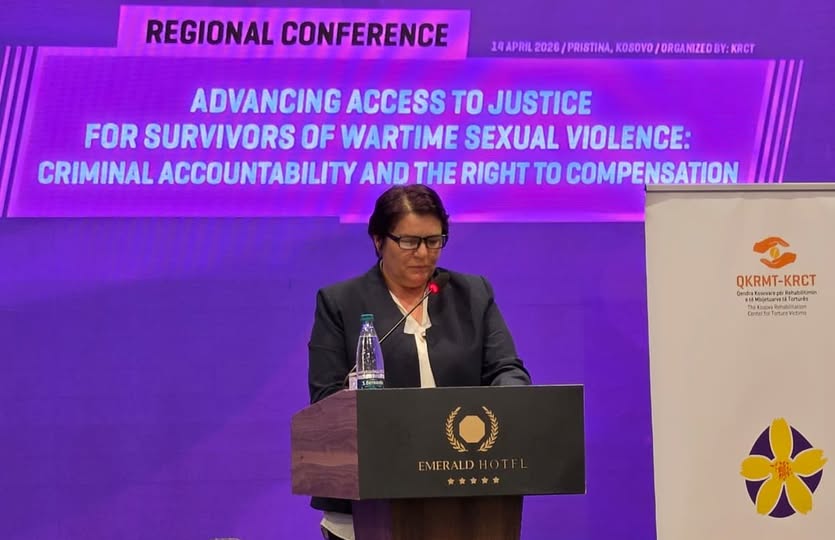
Shyrete Tahiri, war sexual violence survivor. Photo: KRCT
At the conference, survivor Shyrete Tahiri encouraged the victims to seek justice.
“I have made my step, I have sought justice, and I will never give up until I achieve it. I do not want anyone else to remain silent as I once did.”
According to international humanitarian organisations, more than 20,000 women and girls in Kosovo were victims of sexual violence during the war. So far, 1,925 survivors have been officially recognised by the government commission.
Since 2025, survivors of wartime sexual violence and NGOs have called on the Government of Kosovo to remove application deadlines for victims seeking to come forward and claim official survivor status, as according to them, “trauma has no deadline.”
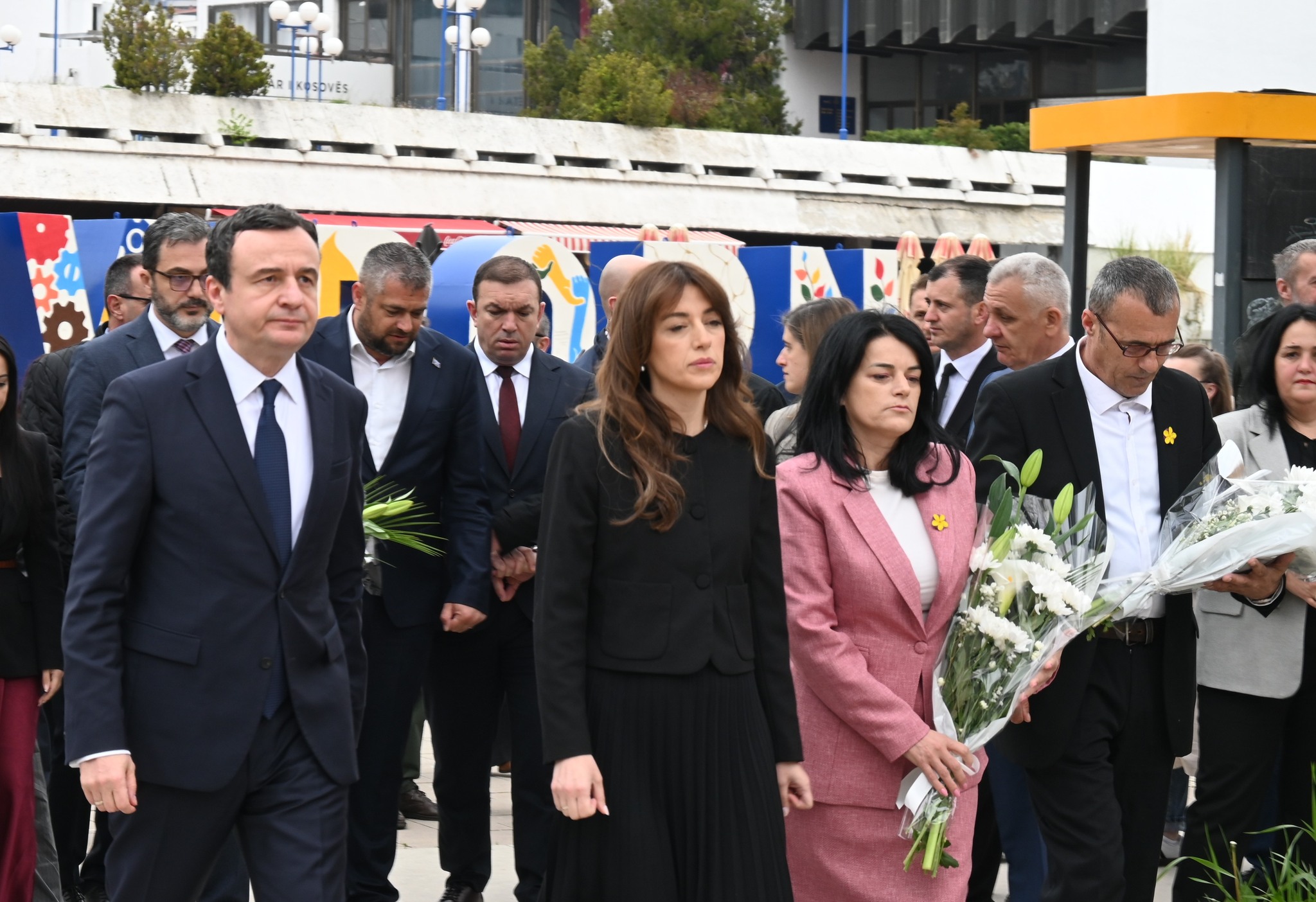
Prime Minister Albin Kurti (L), Acting President Albulena Haxhiu (M), and sexual violence survivor Vasfije Krasniqi (R) at the Heroinat Memorial on April 14, 2026. Photo: KRCT
Albulena Haxhiu noted that there are many complaints to remove the deadline and the government is working on addressing the survivor’s needs.
“The purpose of setting deadlines was to encourage as many victims as possible to apply. We believed that these deadlines would motivate and increase applications.”
Kosovo introduced the possibility of war crime trials in absentia in 2019 and embedded the mechanism in the new Criminal Procedure Code adopted in 2022, largely because most war crime suspects are not accessible to Kosovo authorities, with many having found safe haven in Serbia, but also in other countries. So far, three convictions have been handed down.
The cases involve offences under international humanitarian law and international criminal law that were committed between January 1990 and June 1999.