


Kosovo commemorated the 27th anniversary of the Meja massacre, the largest mass killing of civilians by Serbian forces during the 1998–99 war, while marking the National Day of Missing Persons.
In Mejë village, near Gjakova, 377 civilians were killed by Serbian forces on April 27, 1999, including 36 children. The massacre, carried out alongside attacks in the nearby village of Korenicë, is the biggest massacre in Kosovo committed by Serbian forces during the 1998-99 Kosovo war.
In March, Ahmet Bajrami from Meja recalled the killing of his brother Xhavit, who was 23 at the time.
“A friend told me that they didn’t hear gunshots that night, even though they were nearby,” he said. “ When I received the death certificate, it stated: ‘Death by cold weapons.’”
Xhavit’s remains were found three years later, in 2001, in a mass grave in Batajnica, Serbia, alongside more than 700 other bodies of Kosovo Albanian men, women, and children that had been transported from different places in Kosovo.
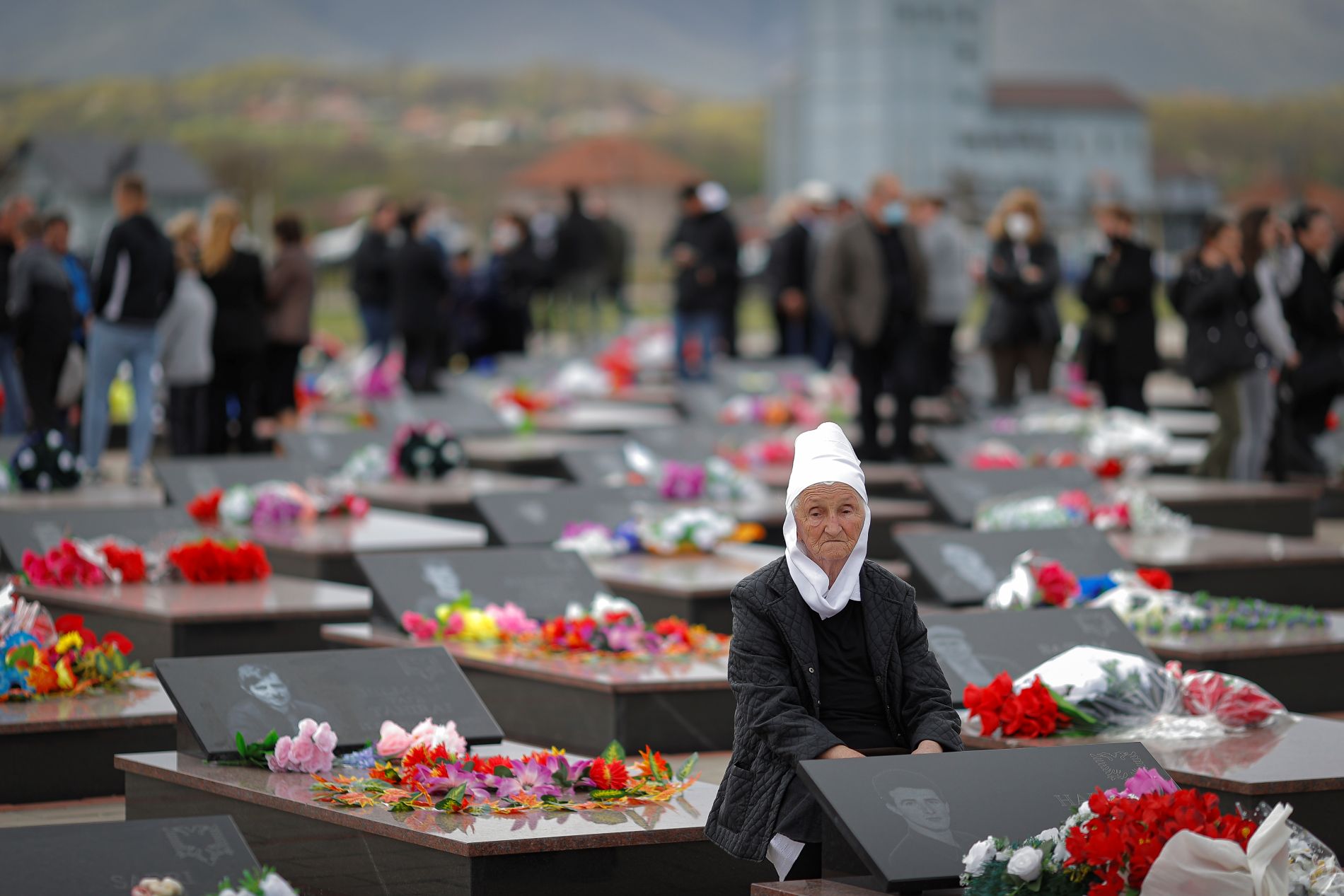
Vase Tahiraj, 89, mourns her son during the ‘Day of Missing Persons’ ceremony at the cemetery in Meje, Kosovo, on April 27, 2021.
At commemorations held in Gjakova, acting President Albulena Haxhiu described the killings in Mejë and Korenicë as the largest massacre of the Kosovo war.
“Three hundred and seventy-six unarmed Albanian civilians were killed,” she said. “In an attempt to hide and destroy evidence, their bodies were removed and reburied, with many transferred to mass graves in Serbia, including Batajnica and Rudnica.”
According to the International Criminal Tribunal for the former Yugoslavia, ICTY, the attacks in Meja and Korenica formed part of a broader military operation known as “Reka.” Thirteen persons remain missing.
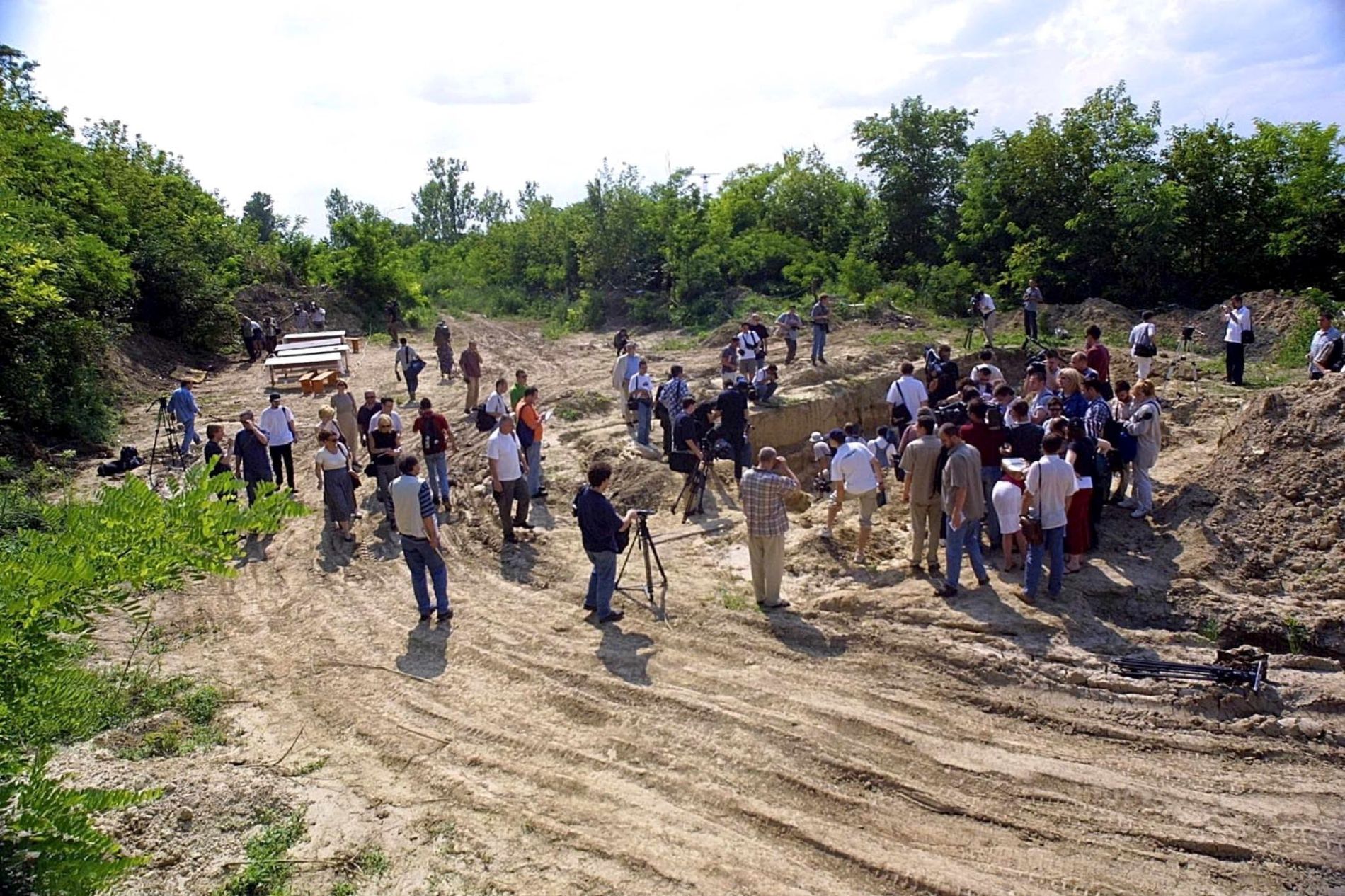
Journalists take pictures at the mass grave in Batajnica near Belgrade in July 2001, where agents of the Slobodan Milosevic regime hid the bodies of Kosovo Albanians. Photo: EPA/SASA STANKOVIC
In December 2023, Kosovo’s Special Prosecution filed a war crime indictment in absentia, charging 53 former members of Serbian military and police forces in connection with the massacre. This is the biggest war crimes case in absentia so far in the country.
On June 16, 2025, the initial hearing in this case was held. Following the session, the defense filed a motion seeking either the dismissal of the indictment or the exclusion of certain evidence as inadmissible. This request was rejected by the Prishtina Basic Court.
Dissatisfied with the Basic Court’s decision, the defense has appealed the case to the Court of Appeals.
Calls for accountability continue
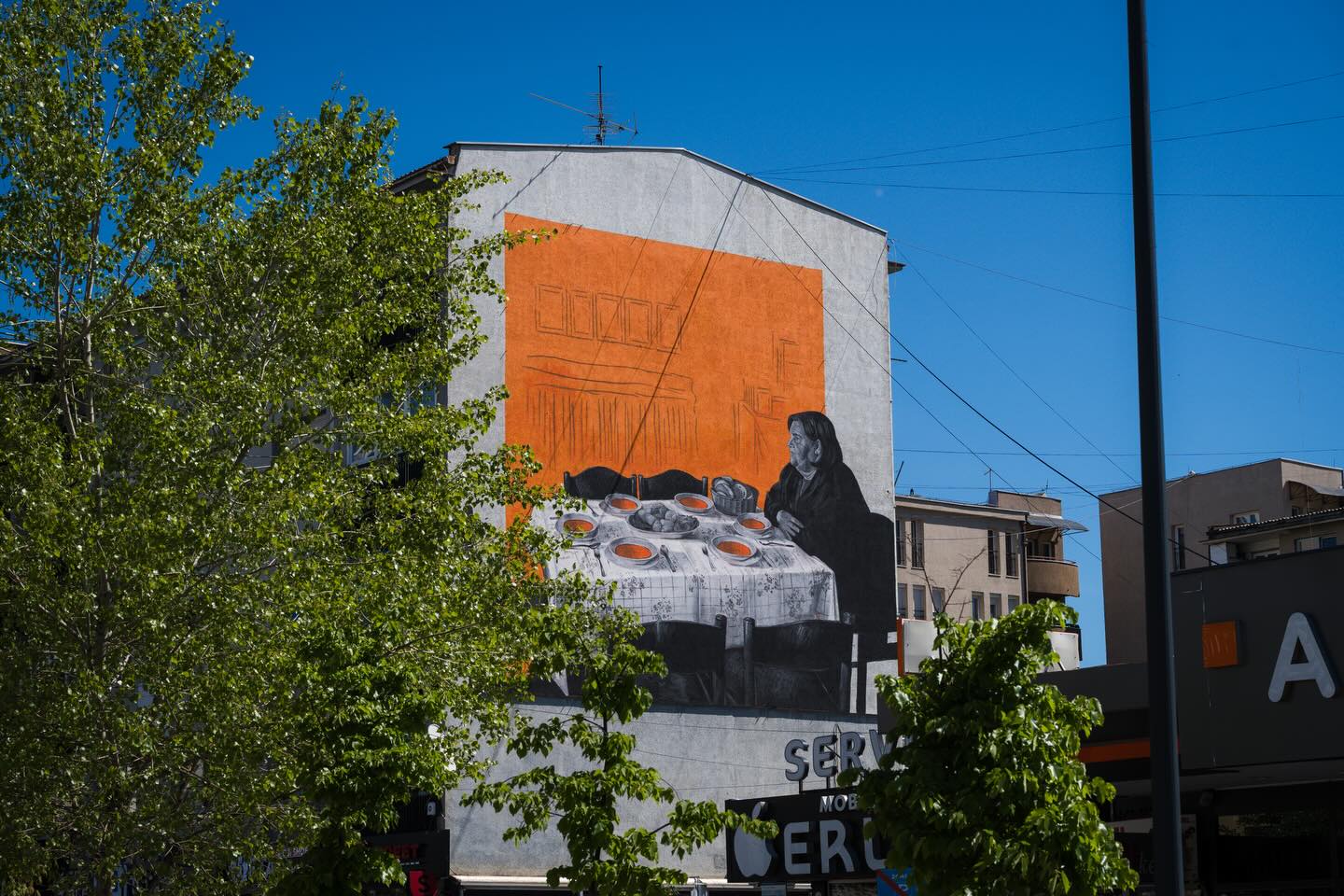
The mural dedicated to Ferdonije Qerkezi unveiled in Prishtina on April 27, 2026. Photo: Youth Initiative for Human Rights
April 27, marks the National Day of Missing Persons, which commemorates the thousands of forcibly disappeared persons during the 1998-99 Kosovo war, around 1,600 of whom remain unaccounted for nearly three decades after the war.
During a commemoration ceremony in Prishtina, on Monday, Prime Minister Albin Kurti called on “the international community to increase pressure on Belgrade to reveal the truth, as responsibility lies with them. There are still 11 suspected mass grave sites in Serbia for which no information has been provided, only five have been uncovered so far with more than 1, 000 bodies found.”
In January 2026, about two-and-a-half years after Kosovo’s premier Albin Kurti and Serbian President Aleksandar Vucic agreed to a declaration on missing persons in May 2023, the two countries took an important step towards implementing this declaration: the establishment of a Joint Commission on Missing Persons.
The move raises hopes that around 1,600 people still missing from the 1998-99 Kosovo war may be found, as efforts to find missing persons’ remains have stalled in recent years due to lack of information about burial sites. Most of the missing are Kosovo Albanians, but also some Serbs.
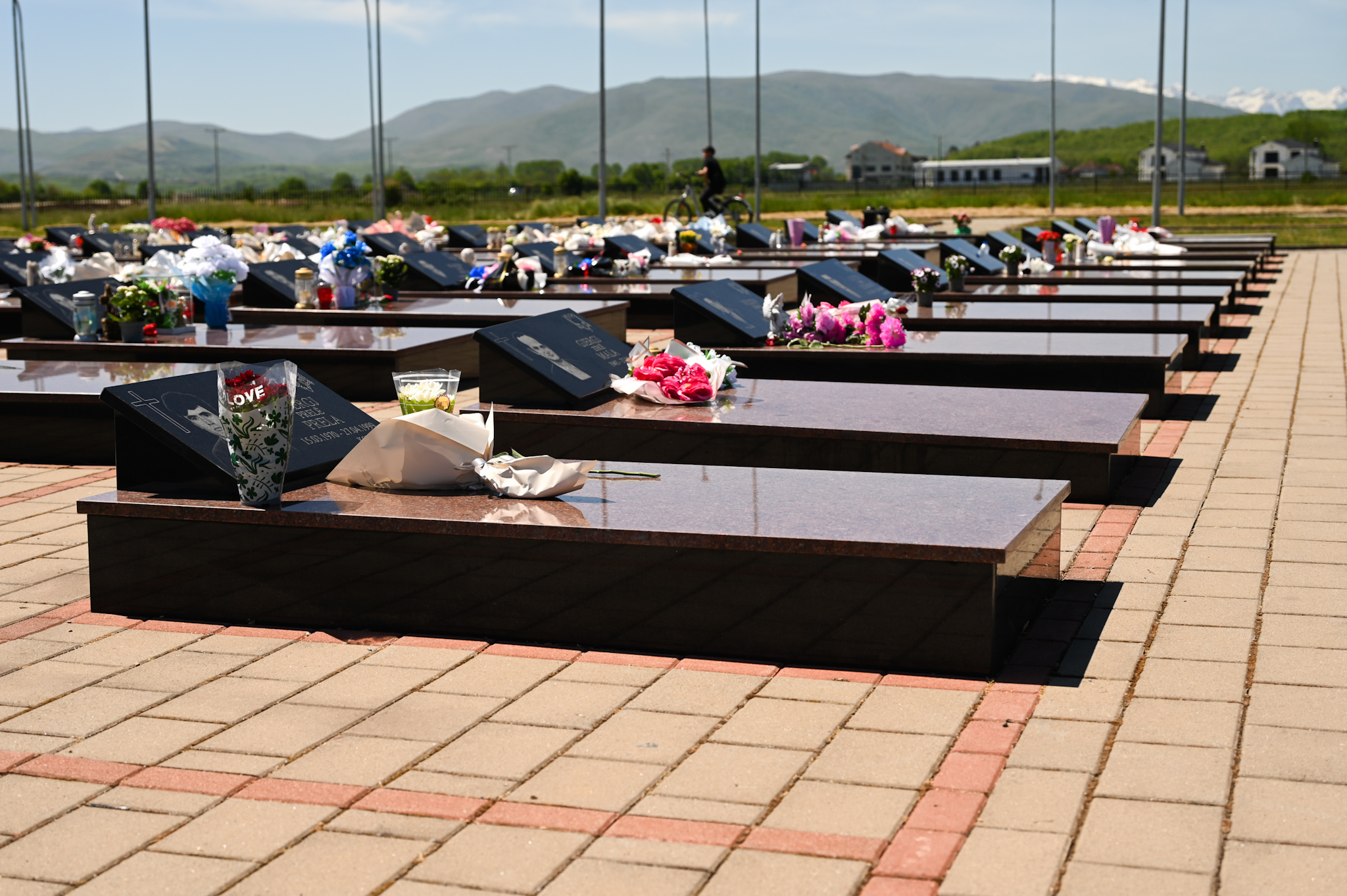
Meja massacre cemetery. Photo: Prime Minister’s Office
The OSCE Mission in Kosovo also took part in the commemorations at the memorial for the missing persons, stressing that resolving the fate of the missing will help restore their long-denied dignity.
“Without truth and accountability, injustice risks repeating itself. On Missing Persons Day, we stand with families and institutions in Kosovo in honoring those who remain unaccounted for.”
The European Union in Kosovo similarly expressed their support, with Acting Head of Office Eva Palatova standing in solidarity with families of the missing and reaffirming the EU’s commitment to efforts aimed at clarifying the fate of people still unaccounted for.
Moreover, on Monday, the NGO Youth Initiative for Human Rights, YIHR, unveiled a mural dedicated to Ferdonije Qerkezi from Gjakova, widely known as “Mother Ferdonije,” whose husband and four sons were killed during the war.
Qerkezi, whose house has turned into a museum, has spent decades seeking answers about the fate of her family. While the remains of two of her sons have been identified, her husband and two other sons remain missing.
The mural shows a widely known photograph of Qerkezi sitting at the dinner table with six full plates and five empty chairs.
Her persistence has made her a symbol of the thousands of families in Kosovo still living with unresolved loss.
Marigona Shabiu, Executive Director of YIHR Kosovo, said the mural highlights the importance of collective memory in building a more just society.
“It represents a woman who embodies this reality—not only through what she has endured, but through her strength in continuing to seek out the truth,” Shabiu said.