


“DUA,” the new movie by Blerta Basholli, set to premiere at the Semaine De La Critique in Cannes Festival, tells the story of a young girl coming of age in late 1990s Kosovo.
Based on the writer’s lived experience, “DUA” follows the coming-of-age journey of a 13-year-old girl whose life begins to shift as political tensions in Kosovo escalate, transforming her adolescence into a portrait of identity formation under pressure.
The movie will have its world premiere at the Semaine de la Critique of the Cannes Film Festival, marking the first time a Kosovan feature has been selected for the programme, where “DUA” is competing for four main awards in the feature movie category.
For Basholli, the story is rooted less in events than in memory and feeling.
“I focused on portraying the feeling, the atmosphere, and the way I experienced that time as a child,” Basholli told Prishtina Insight.
“The memories, the silences, the invisible tensions, these are elements that come from my own experience and stayed with me throughout the writing,” Basholli noted further.
Set against the context of a society on the brink of war, the movie reflects a period that continues to shape both individuals and collective identity in Kosovo.
“Unfortunately, it is also relevant to what is happening in the world today.”
Rather than portraying the war directly, Basholli focuses on the psychological imprint it leaves.
A girl’s perspective
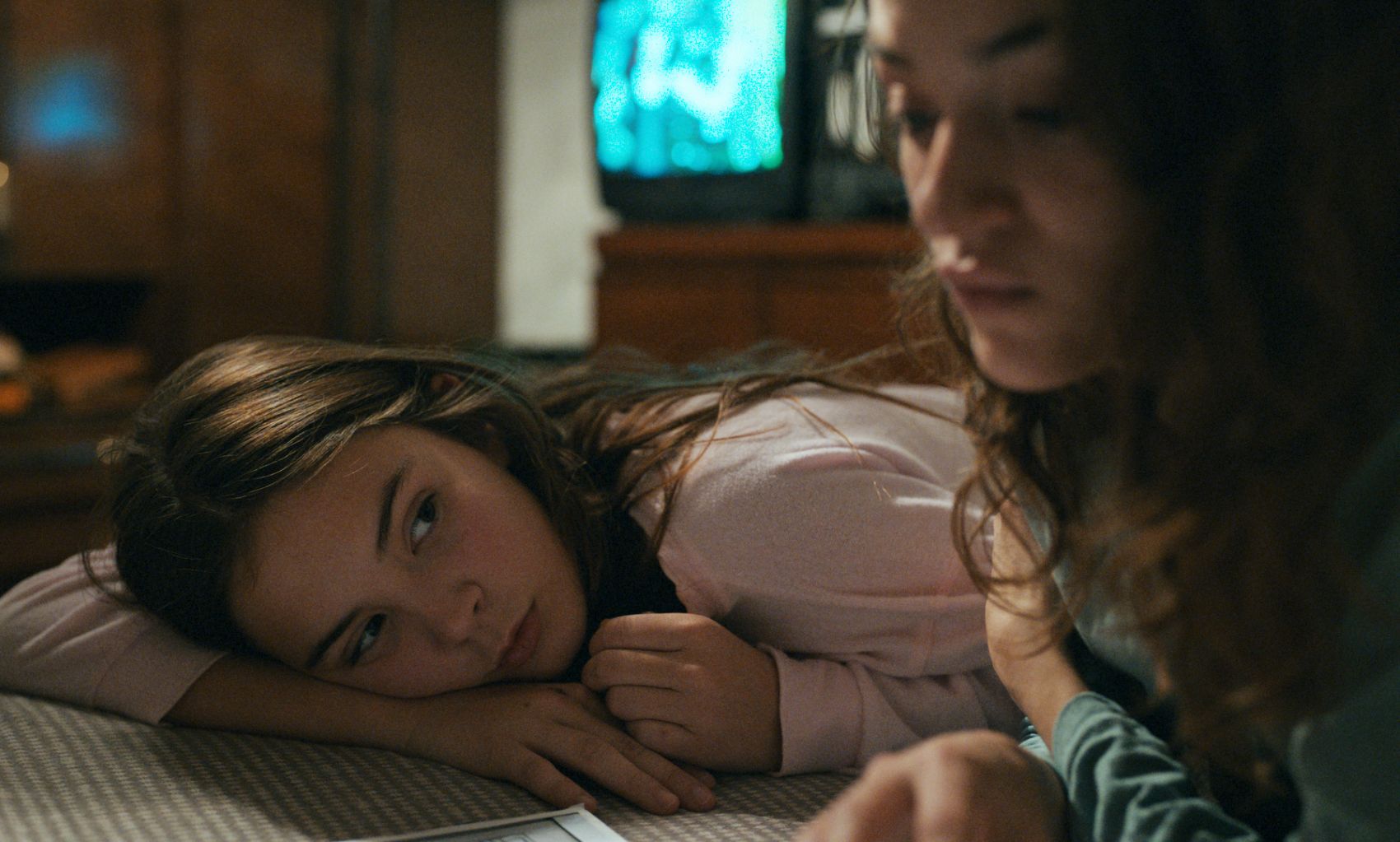
Footage from the movie. Photo courtesy of Ikonë Studio
As war and ethnic tensions in Kosovo escalate, Dua struggles to find her place among her peers and within her changing body.
Told through the eyes of a young girl, “DUA” explores how violence and instability are absorbed in quieter, more internalised ways.
“Girls experience war differently,” Basholli said. “Often in quieter, more internalised ways, with a constant sense of insecurity and danger that is not always visible. I wanted this to exist as a tension that shapes how she sees the world and herself.”
Pinea Matoshi, the actress playing Dua, a girl from Prishtina, first caught the attention of Basholli during a months-long casting process in primary and high schools.
“I wasn’t just looking for someone who could act in a traditional way, but someone who could hold a lot inside—through presence, through silence.”
Finding the right Dua was a delicate process.
“During auditions, there was something very authentic about her, and I couldn’t get her out of my mind.”
She described the young actress as instinctive, able to express complex emotions without explanation.
“That was essential for the character. After that I told her: I have a few options for Dua, but I think you are the right one. Fortunately she agreed.”
“DUA” is an international co-production between Kosovo, France and Switzerland, a collaboration Basholli describes as both necessary and creatively enriching.
“Each country brought a different perspective and experience, both creatively and in terms of production,” she said.
A universal story
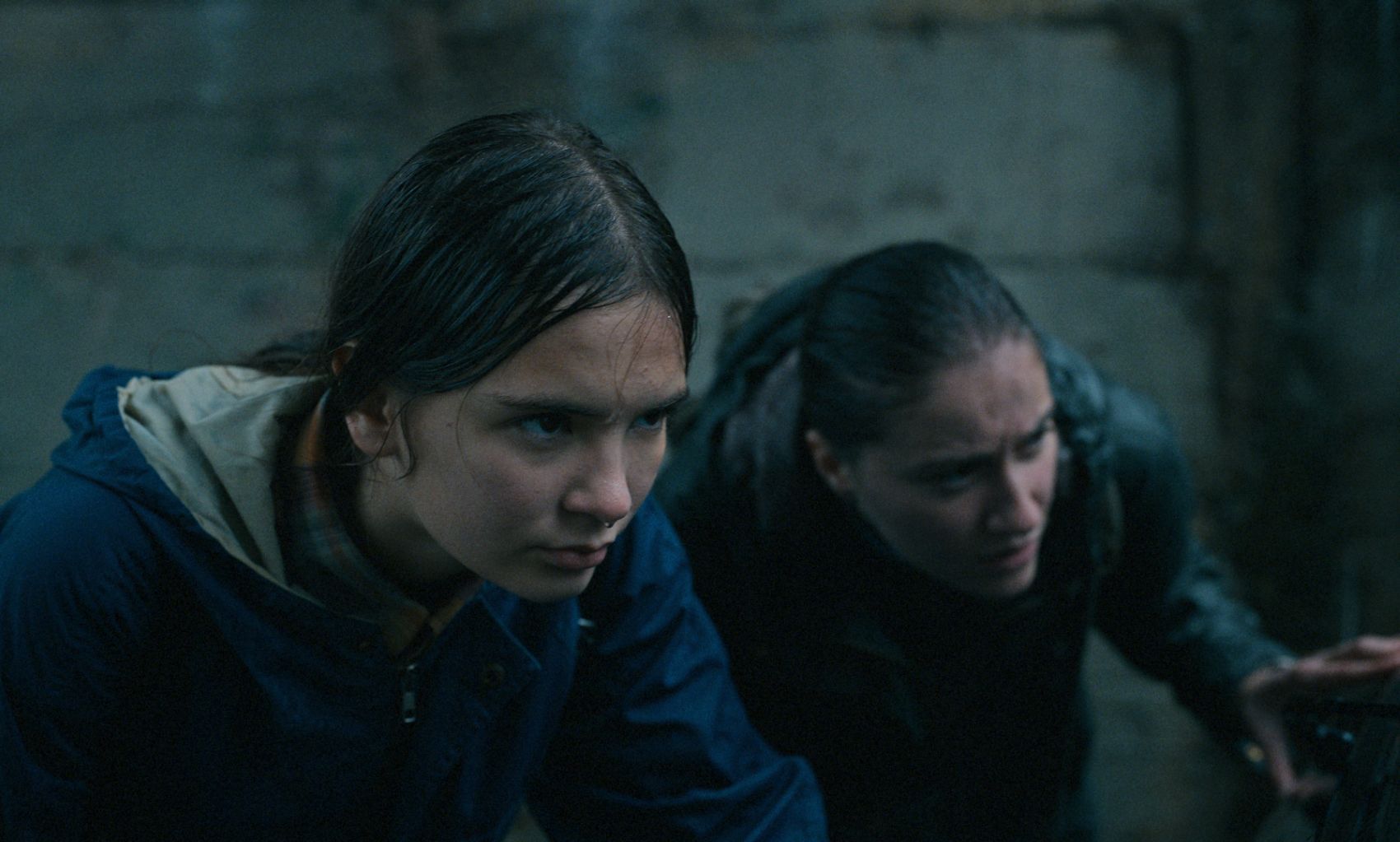
Footage from the movie. Photo courtesy of Ikonë Studio
The movie being selected for Semaine de la Critique at the Cannes Film Festival is seen as a very important moment both personally for Basholli and the movie.
“Being selected in this section means strong international visibility. I also think it is important for Kosovo, because it continues to place our cinema in a wider dialogue with the world.”
Basholli hopes audiences will connect emotionally with the character beyond her specific context.
“Even though the story is very specific, the feelings of belonging, insecurity and the desire to be accepted are universal.”
“DUA” is among seven feature movies in competition.
“Being among a small number of movies, including debuts and second features, makes this experience even more special.”
“DUA” is produced by Valon Bajgora and Yll Uka of Ikonë Studio (Kosovo), with co-producers Britta Rindelaub and Thomas Reichlin of Alva Film (Switzerland), and Amaury Ovise of Kazak Productions (France).
Semaine de la Critique is one of the most prestigious and selective sections of the Cannes Film Festival.
The 65th edition of the programme will take place from May 13 – 21, 2026.
Alongside “DUA,” the competition includes “A Girl Unknown” by Zou Jing, “The Station” by Sara Ishaq, “Seis meses en el edificio rosa con azul” by Bruno Santamaría Razo, “La Gradiva” by Marine Atlan, “Tin Castle” by Alexander Murphy, and “Viva” by Aina Clotet.