


Kosovo has seen an increase in measles infections among children over the past two years, with health professionals and institutions noting that vaccine hesitancy fueled by conspiracy theories and online disinformation has contributed to the situation.
Between April 16 and May 19, Kosovo registered 17 measles cases, all involving children who had not received the measles, mumps and rubella, MMR, vaccine, according to the National Institute of Public Health, IKSHPK.
All infected children required hospital treatment, with one of them in intensive care.
“The fact that every confirmed case needed hospital care shows the serious complications measles can cause,” the IKSHPK said on May 12.
The Institute told BIRN that vaccine hesitancy is being driven by conspiracy theories which have spiked following the COVID-19 pandemic.
Dropping rates of vaccination
Photo: BIRN
The rise of measles infection follows a broader trend recorded in 2025, when Kosovo registered 72 measles cases—a significant increase compared to the previous three years—during which the country recorded only one imported case annually.
“In 2022, 2023, and 2024 there was only one case each year, and all were imported,” IKSHP said.
According to the IKSHPK, MMR vaccination coverage in Kosovo fell to 82 percent in 2025, significantly below the threshold recommended by the World Health Organisation to prevent outbreaks. “To prevent measles outbreaks, vaccination coverage above 95 percent is recommended,” the IKSHPK said.
Meanwhile, the share of vaccinated children with MMR in 2024 was 89 percent.
The MMR vaccine protects against measles, mumps and rubella and is first administered when children reach one year of age.
“Delays in vaccination are mainly linked to parental hesitancy, disinformation and failure to follow the vaccination calendar,” the IKSHPK told BIRN.
Numbers show that resistance is strongest toward the first dose, while coverage for the second dose—given between ages five and six—remains higher at 94 percent.
Autism conspiracies influencing parents

Photo: National Institute of Public Health (IKSHPK) Facebook account
Health professionals from the IKSHPK noted that one of the most persistent claims is the conspiracy theory linking the MMR vaccine to autism, despite extensive scientific evidence disproving any connection.
“This claim has been refuted by many international scientific studies. Our advice to parents is to inform themselves only through healthcare professionals and official sources,” the IKSHP told BIRN.
The Director of the Infectious Disease Clinic, Vera Berisha Ndrejaj, told BIRN that the children affected by measles were born in 2025.
“One of the cases experienced a very severe complication and required intensive care. The other cases have not had serious complications,” Ndrejaj said.
Fear surrounding autism has become one of the most common concerns expressed by hesitant parents online, according to health officials.
“Incorrect information and conspiracy theories often create fear and uncertainty among parents, contributing to lower vaccination coverage. During this period, many conspiracy theories and disinformation narratives have spread on social media, negatively affecting public trust in vaccination,” the IKSHPK said.
In January, Kosovo Police arrested social media figure Arianit Sllamniku on suspicion of illegally practicing medicine and falsely claiming he could treat autism in children.
Prosecutors allege he demanded thousands of euros from parents seeking treatments for autistic children.
“Sllamniku, without the relevant professional qualification, without a license, and without legal authorisation to perform medical or pharmaceutical activities, carried out medical treatments and medical and advisory consultations allegedly aimed at curing autism,” the court noted. On March 18th, Sllamniku’s house arrest was terminated.
On December 11, 2025, the World Health Organisation, WHO, expert group’s analysis reaffirmed there is no link between vaccines and autism.
“Based on available evidence, no causal link exists between vaccines and autism spectrum disorders, ASD. The conclusion reaffirms WHO’s position that childhood vaccines do not cause autism”, the WHO noted.
The analysis, discussed by the Committee on November 27, 2025, focused first on the relationship between thiomersal-containing vaccines and ASD, and the association between vaccines in general and ASD.
“Evidence based on 31 primary research studies, published between January 2010 and August 2025, including data from multiple countries, strongly supports the positive safety profile of vaccines used during childhood and pregnancy, and confirms the absence of a causal link with ASD,” the WHO noted further.
Autism is a neurodevelopmental condition affecting communication, behaviour and social interaction. While there is no cure, therapeutic support can improve quality of life and developmental outcomes.
COVID-19 and social media deepened distrust
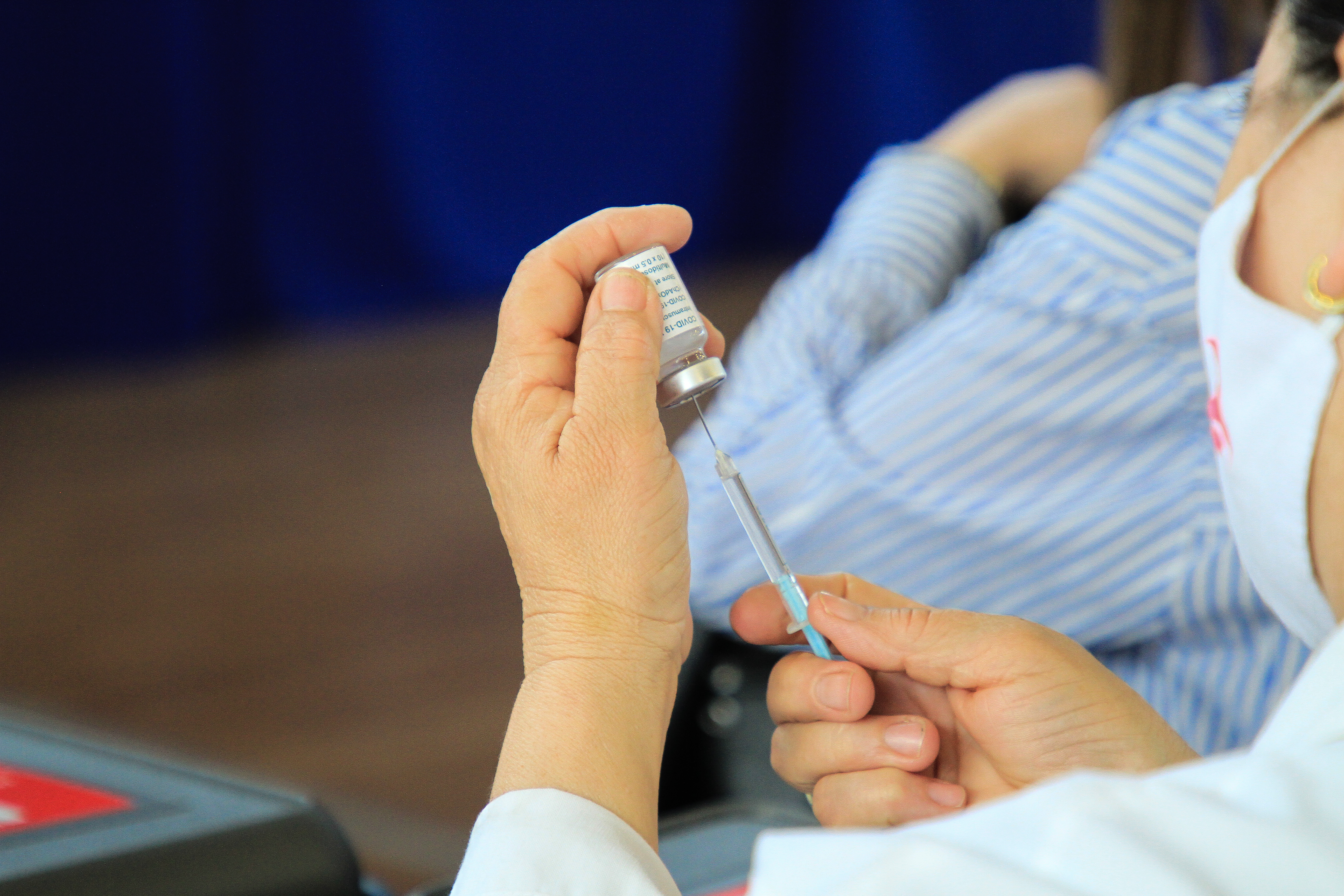
Vaccination against COVID-19 in Prishtina. Photo: BIRN/Urim Krasniqi.
The Institute added that during this period, many conspiracy theories and disinformation narratives spread on social media, negatively affecting public trust in vaccination.
“Inaccurate information and conspiracy theories create fear and uncertainty among parents,” the IKSHPK said. “This has negatively affected confidence in vaccination.”
A European Commission report published last year found high levels of belief in conspiracy theories in Kosovo compared to EU countries.
More than 60 percent of respondents in Kosovo agreed with claims that viruses are deliberately created to control populations or that cancer cures are hidden for financial interests.
The report also found declining confidence in vaccines. The share of Kosovans who believe vaccines will have a positive impact on their lives over the next two decades fell from 46 percent to 35 percent, while negative perceptions doubled.
In response to the current situation, Kosovo’s Ministry of Health and the IKSHPK and local institutions have intensified public awareness campaigns through television appearances, social media outreach, and direct communication with parents.
Authorities have also prepared specialised materials for paediatricians, family doctors and nurses aimed at improving communication with vaccine-hesitant families.
Measles is a highly contagious and serious viral disease which spreads mainly through the air, respiratory droplets and direct contact. The virus first infects the respiratory tract before spreading throughout the body.
The first symptom of measles is usually a high fever, which typically begins around 10 to 12 days after exposure to the virus and lasts between four and seven days.
Other symptoms include a runny nose, cough, red and watery eyes, and small white spots inside the mouth. After several days, a rash appears, usually beginning on the face and neck.
Complications are more common among children under the age of five and adults over the age of twenty.