


Stranded between traumatic memories and everyday life, many survivors of wartime massacres in Kosovo, continued living inside the houses where their relatives were murdered.
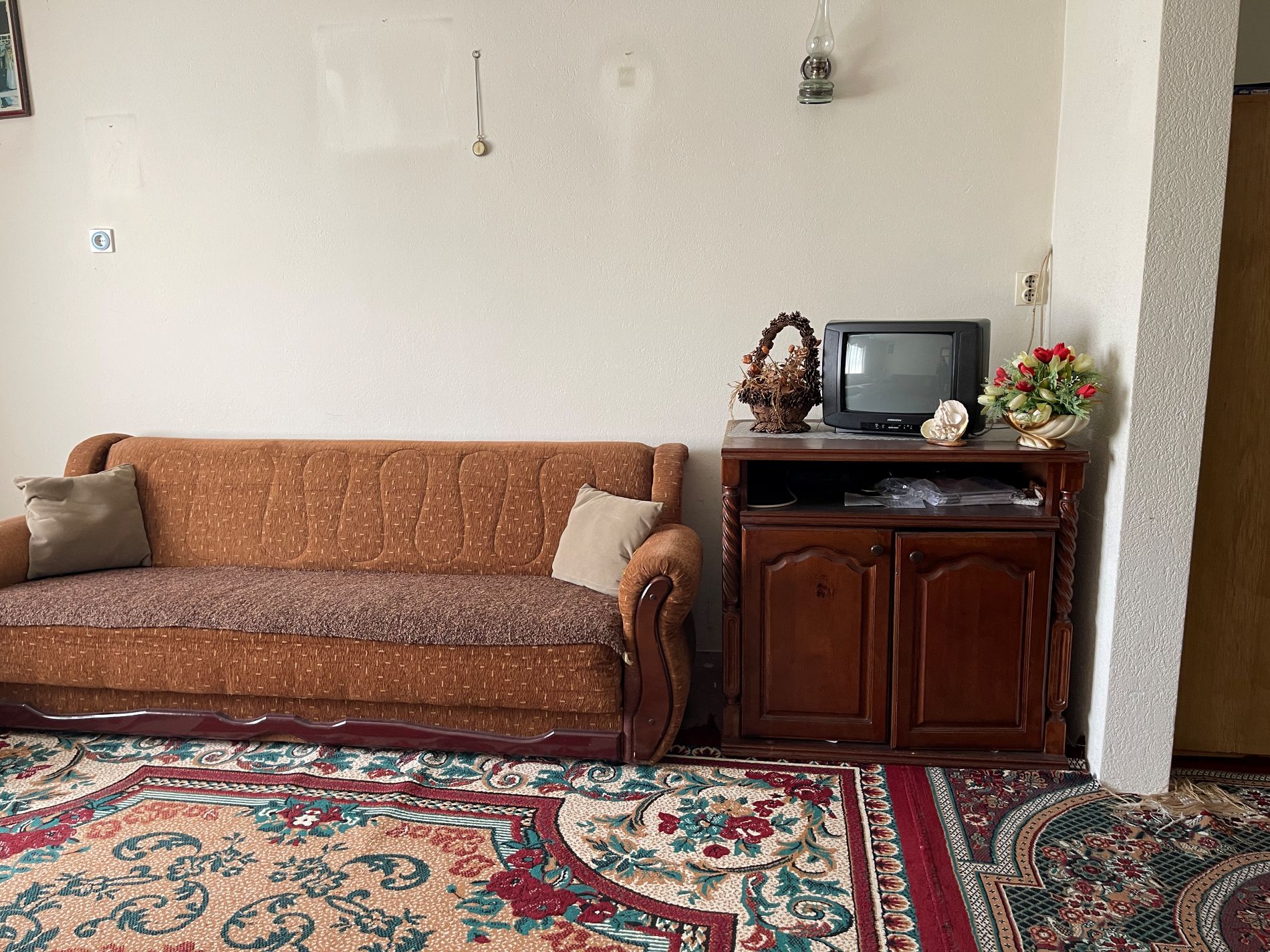
In the living room of the Gërxhaliu house, in Studime village in Kosovo’s northern municipality of Vushtrri, the photographs of 13 family members who were murdered by Serbian forces on May 31, 1999, are carefully arranged across the family’s old sofa.
Seven of the victims were children.
“Here, I lived with Lisa,” Gërxhaliu told Prishtina Insight, referring to his daughter Elisa by her nickname. He was sitting in the room where the massacre took place.
Nexhmedin Gërxhaliu returned home from Germany in mid June 1999, several days after NATO troops entered Kosovo following a 78-day air bombing campaign.
A place that held countless childhood memories had turned into the site of a massacre.
Gërxhaliu, now 64, and his daughter Elisa, now 20, would continue to live in the house where thirteen of their family members had been massacred for 19 years—until 2018.
The house has been empty since then and is set to become a museum. It is one of several sites in Kosovo linked to wartime massacres that institutions are attempting to preserve as memorials.
However, the Ministry of Culture told Prishtina Insight that the process has proven difficult. In some cases, survivors of massacres or family members of the victims continue to live at these sites, often because they have no other option.
For many survivors across Kosovo, wartime crime scenes are not distant memorials but spaces of everyday life.
That end of May, Gërxhaliu lost his first wife, son, brother, sister-in-law, mother, six nieces and nephews, and cousin. Another nephew was killed several days earlier in the city.
His brother Selatin along with his son Shaban, and cousin Xhemajl, were executed outside, the others were killed inside the house.
While “the tragedy was difficult,” the decision to “come back and live in this house” was not, he explains, adding that “life afterwards was catastrophic-with injustice, with no answers.”
The challenges of turning homes into memorials
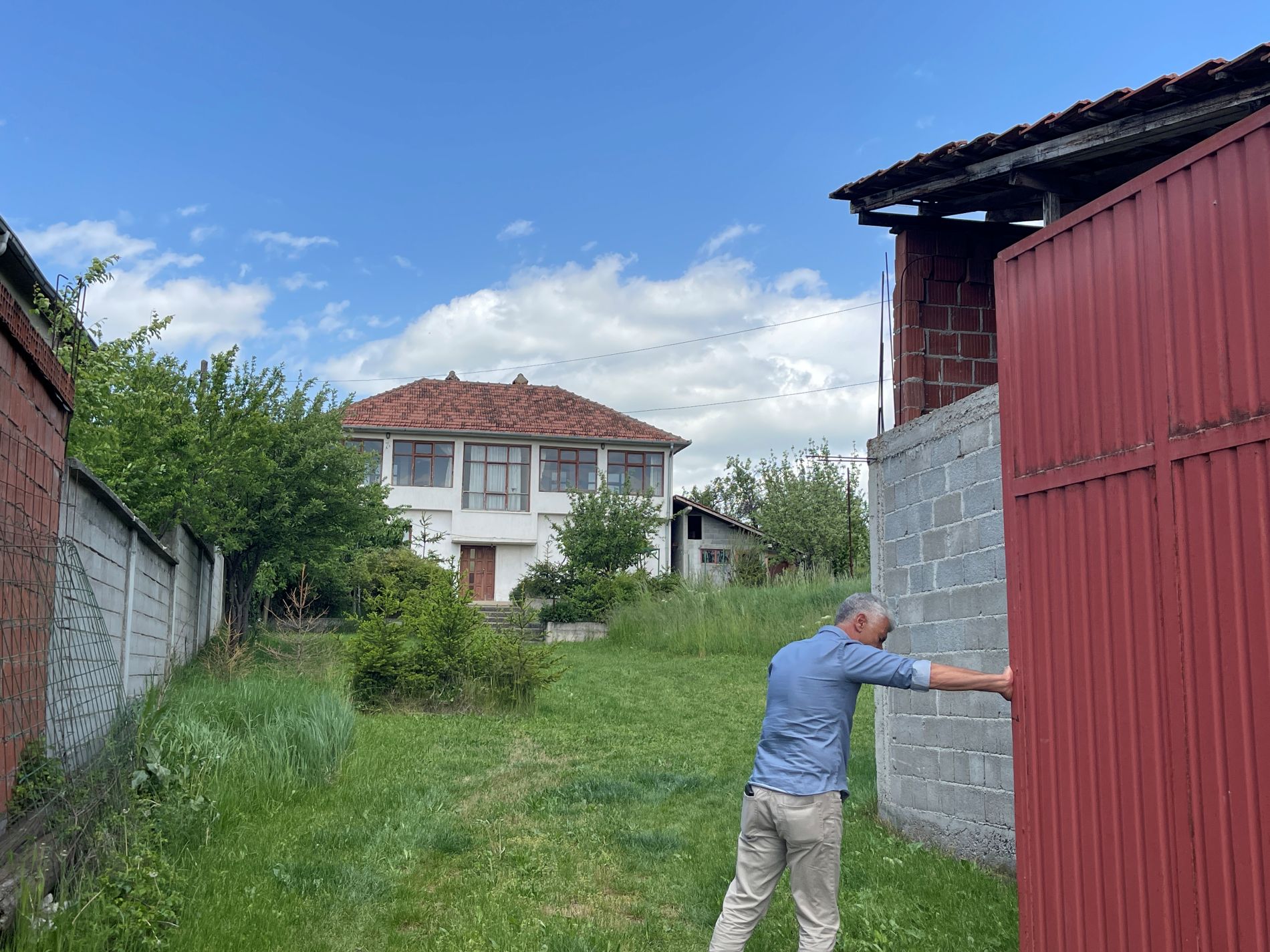
House in the village of Studime, Vushtrri, where the Gërxhaliu family were killed by Serbian forces on May 31, 1999. Photo: BIRN
Almost nothing has changed inside the Gërxhaliu house since that day in 1999.
Bullet holes are still visible on the walls. The furniture remains exactly where it was.
“Even the sofas are the same,” Gërxhaliu said. “We covered them because they are full of bullet holes.”
He now lives nearby but returns regularly to maintain the property. Living there, he said, was never frightening—it made him proud.
“While we lived here, we made peace with it somehow. Now that I come less often and stay further away, it feels heavier.”
For Elisa, too, the house never felt haunted. “For me and my father, it was never scary or traumatising to live here,” she said.
Yet, recalling growing up surrounded by absence while standing before the photographs of her half brother and relatives she never met, her voice broke while she recalled how she grew up seeing her father and aunts cry for the relatives they had lost. As the youngest member of the family still living in the house, she now feels the weight of carrying the family’s future on her shoulders.
House in the village of Studime, Vushtrri, where the Gërxhaliu family were killed by Serbian forces on May 31, 1999. Photo: BIRN
“I am the last of this bloodline remaining in this house,” Elisa said, adding that “I’ve thought a hundred thousand times about how life would have been if they were alive.”
According to the Kosovo Ministry of Culture, conservation projects are carried out by heritage experts “with the aim of preserving historical authenticity and collective memory.”
The ministry told Prishtina Insight that the Agency for the Protection of Monuments has conserved or treated several houses associated with war crimes, including homes connected to the massacres in the villages of Likoshan, Poklek, and Recak.
In Poklek village, 53 civilians were killed in the house of Fadil Muqolli on April 17, 1999. 51 of the victims were executed inside the house, after which their bodies were burned repeatedly. Among the victims were pregnant women and 23 children, ranging in age from six months to 14 years old, while the oldest victim was 75.
The house in Poklek has been turned into a memorial museum. It contains photographs, clothing, books, school notebooks, and the personal belongings of the victims.
Officials note that the process is far more complicated because there are houses that are still inhabited by survivors or relatives of victims.
“One of the main challenges of preserving and memorialising these houses remains the fact that some are still used as homes,” the ministry emphasised, adding that, “in certain cases, we have encountered disagreements from family members regarding how the buildings should be treated.”
“We live in the shadow of crimes”
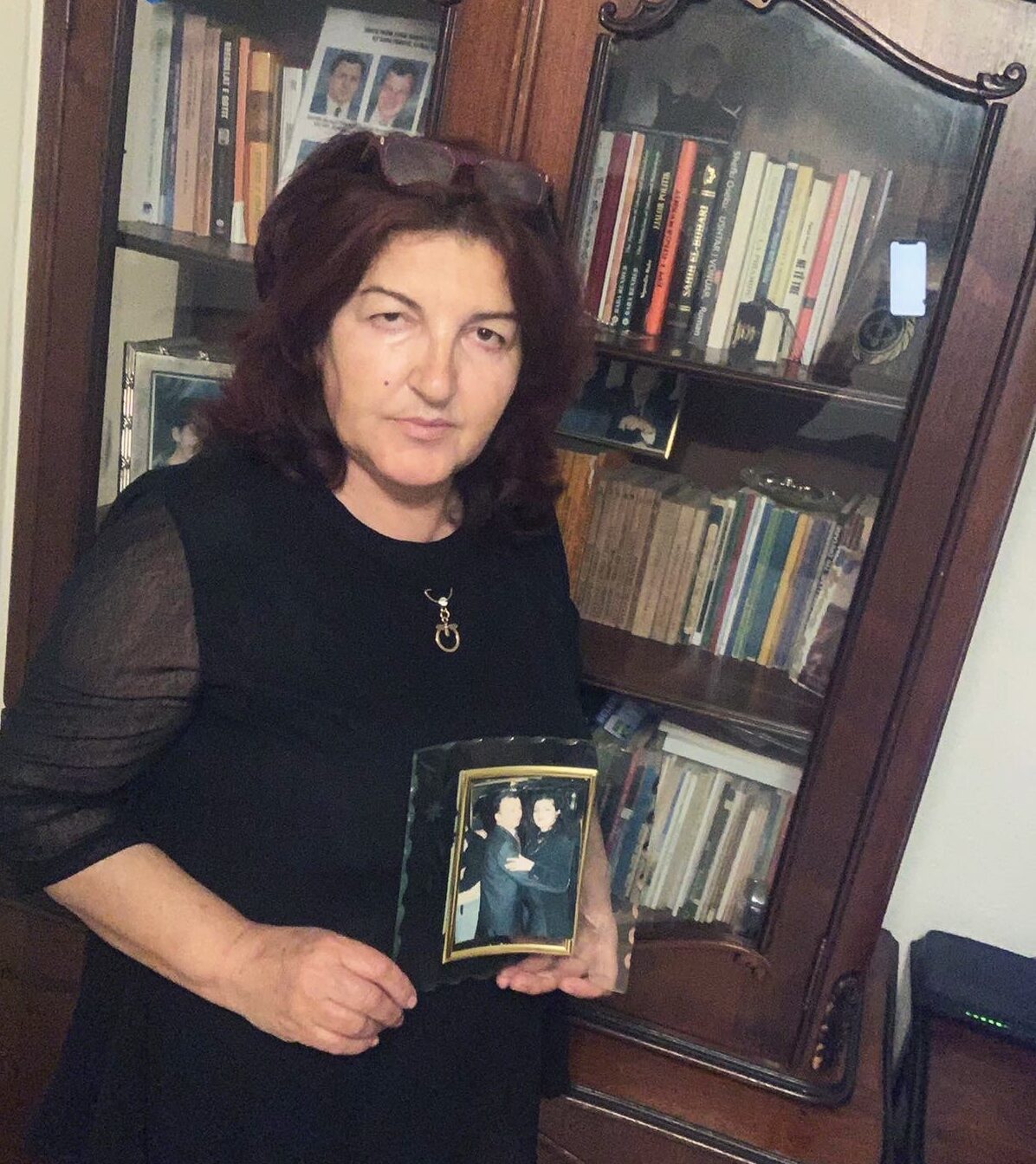
Pranvera Sharani holds a photograph of her and her husband, Tahir Sharani, who was killed by Serbian forces in the yard of their home on May 10, 1999. Photo courtesy of Pranvera Sharani
Unlike the Gërxhaliu family, whose house now is on the way to becoming a museum, many families still continue to live in properties where killings once took place. Beyond being homes, these places are evidence of wartime crimes.
In Gjakova, Pranvera Sharani and her four children spent years sleeping in the same house whose courtyard was the execution site for 11 of their family members and neighbours in May 1999.
“I thought about leaving from the very first day,” she said, looking across the courtyard. “Do you see this yard? They were all lined up here. Sometimes when I get upset, I say: ‘We are walking on their blood.’ I still don’t know how I sleep here. We live in the shadow of crimes,” she told Prishtina Insight, recalling how she had seen her family members and other men from the neighbourhood lined up by Serbian forces.
“I saw them lined up,” she remembered. “The police dragged me out, asking where to find the money in the house. When I came out of the house again, I saw them against the wall. As I was leaving, I heard the gunshots.”
Three days later, she returned to the area with some of her neighbours. “We saw a municipal garbage truck carrying the bodies. A neighbour even recognised the clothes of her husband.”
On May 10, 1999 six members of the Sharani family were killed, including her husband Tahir, 43 at the time, brothers-in-law Skyfter, Mentor, and Isuf, and two nephews. Five men from neighbouring families were also gathered and executed in their yard.
Pointing to a photograph of herself with her husband, Tahir, Sharani paused. “My husband… my life,” she said.
Pranvera’s sister-in-law, Luljeta, lives next door, sharing a yard. Luljeta lost her husband, Skyfter, 48 years old at the time, and their two sons, Valon, 22, and Visar, 20.
“When the army entered, I told my sons to hide,” Luljeta recalled in an interview for a BIRN’s documentary on missing persons aired on May 16.
“Valon told me: ‘Where can we hide mother? The whole neighbourhood is surrounded.’ When we were forced outside, they stopped 11 men, while the women and children were ordered to leave,” she said.
At the time, her 15-year-old daughter had already fled with the other women and children.
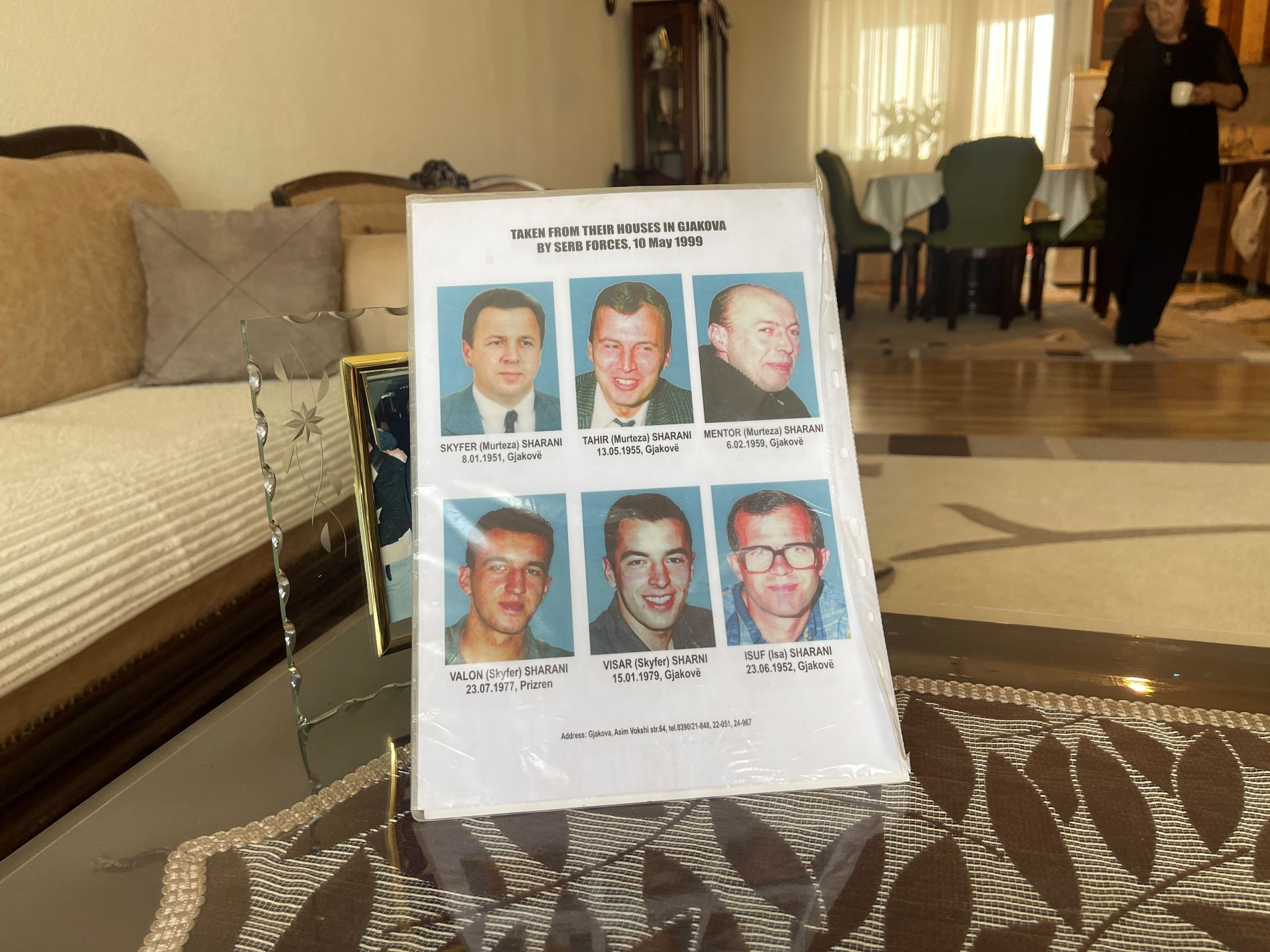
Sharani family members killed by serbian forces on May 10, 1999. Photo: BIRN
Luljeta says the family spent years without knowing where the bodies had been taken, protesting repeatedly until they were eventually discovered in the Batajnica mass grave in Serbia alongside more than 700 other bodies of Kosovo Albanian men, women, and children that had been transported from different places in Kosovo.
“On December 23, 2003, they began returning the bodies in coffins,” she said.
“My brother-in-law Tahir’s body was returned with the first group. Four months later, on April 18, 2004, they returned the second group, which included Skyfter, Mentor and Isuf.” Around three years later, on January 15, 2007, “which was also Visar’s birthday, they returned my sons.”
Pranvera had returned with her four children, aged between 7 and 14 years old, and eventually did some renovations on their house as it had been burnt. In 2002, she moved with her children to Prishtina where she worked as a history teacher at a primary school. “School and my students were my salvation,” she said.
Two years ago, after she retired, she returned again to Gjakova and settled in the same house. “It is painful to live in a place where you once had a good life, and then in five minutes everything changed.”
Today, she regrets renovating the house: “I think we should never have renovated it. It should have remained exactly as it was, as evidence of war.”
Trauma remains inside the walls
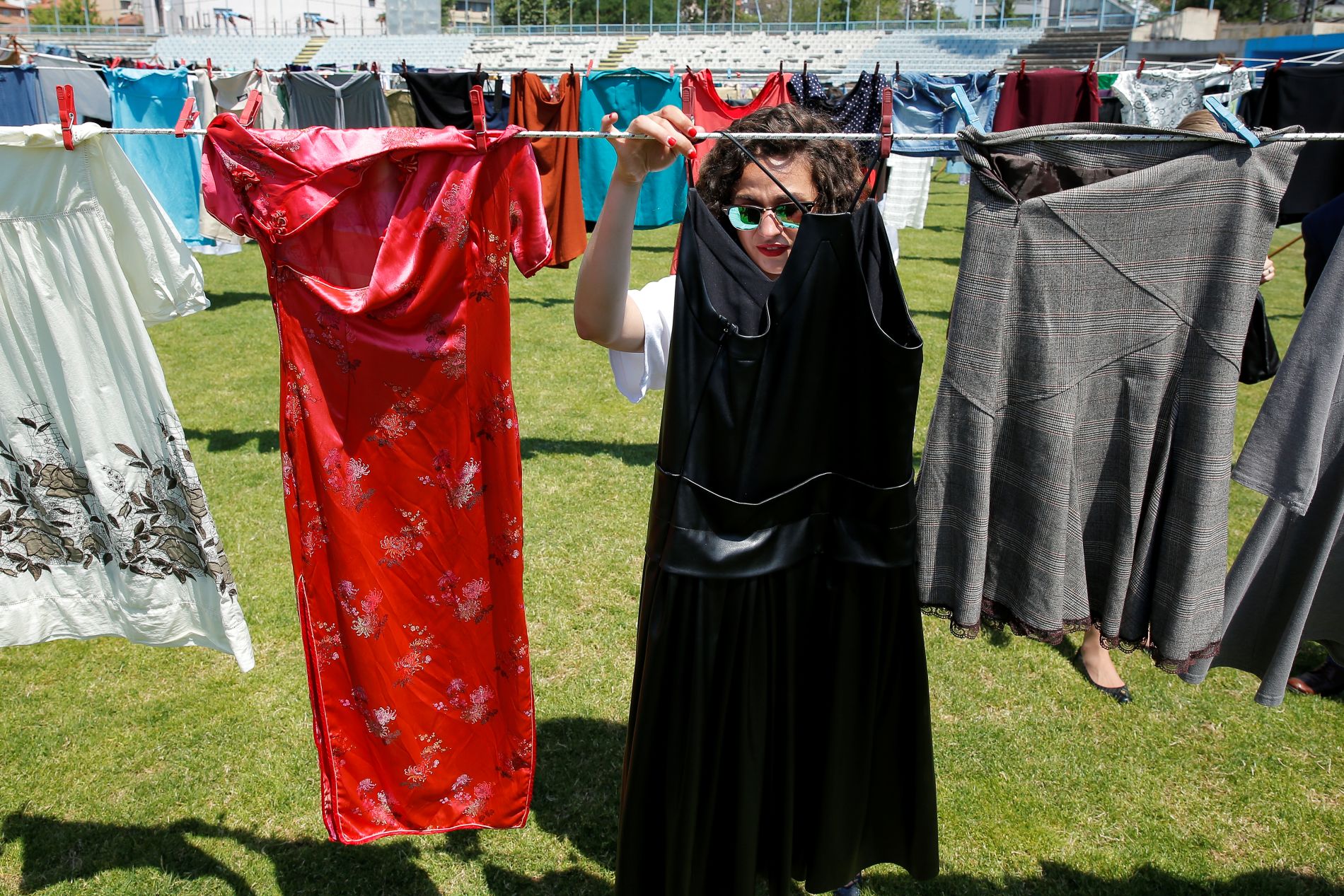
Thousands of dresses and skirts hang across Prishtina’s main stadium as part of the “Thinking of You” installation honoring survivors of sexual violence during the 1998–99 Kosovo War, in June 2015. Photo: EPA/VALDRIN XHEMAJ.
For many survivors, the violence tied to their homes went beyond the murders of their loved ones, yet many never received the mental health support they needed.
Sharani told Prishtina Insight that as war crimes’ survivors “we never even had psychologists, despite all the trauma. Mental health was not talked about much at that time. The trauma was transferred to the children too because they witnessed terrible sights and abuse.”
She recalls taking her eldest son with her when asked to identify her husband’s remains. “It was a mistake. It affected him deeply,” she said. Meanwhile, her daughter still struggles to stay in the house.
“Every time she comes, she tells me: ‘Mom, I can’t stay here. You cannot live in this house.’ And even for the rest of us, it’s not as if we stay here willingly, if we had somewhere else to go.”
“Even today, when I see police cars, something like anxiety takes over me.”
In addition to the killings, sexual violence and rape were also committed inside houses across Kosovo, and many women were forced to continue living within those same walls.
The Prishtina based NGO Kosovo Rehabilitation Centre for Torture Victims, KRCT, told Prishtina Insight that many survivors of wartime sexual violence still live in the homes where the sexual abuse occurred, often because economic hardship leaves them with no alternative.
“In these situations, the home often remains both a place of daily life and a constant reminder of trauma. This can trigger painful emotions, anxiety and feelings of insecurity,” the organisation explained, adding that with professional support, survivors can gradually rebuild a sense of safety within the same space.
“When clinically appropriate and after sufficient stabilisation, exposure-based approaches can help survivors see the house differently. The goal is to separate the traumatic past from the present reality and gradually transform the home from a symbol of danger into a space of recovery and life,” KRCT told Prishtina Insight.
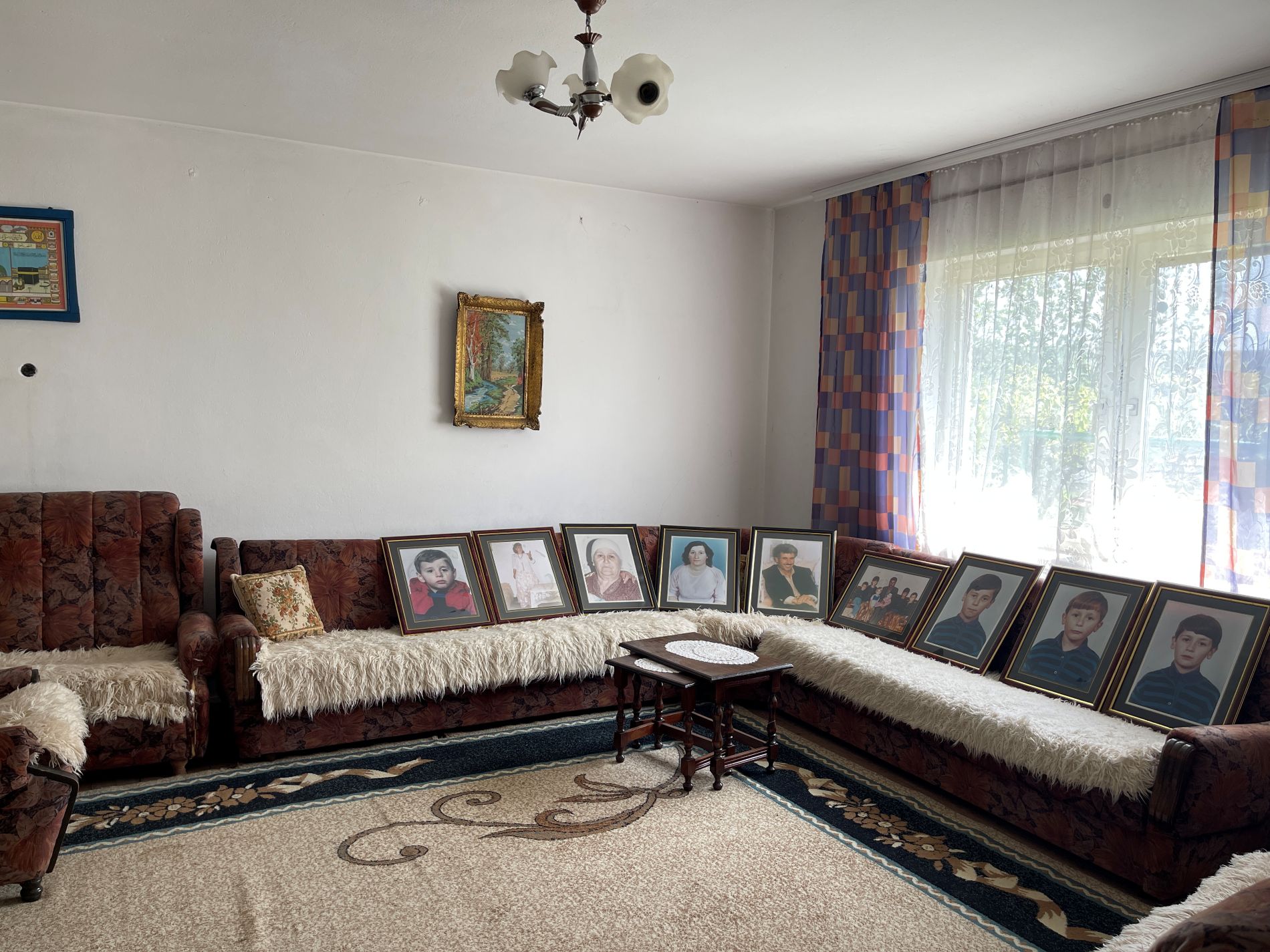
The room in the house in Studime where Serbian forces killed members of the Gërxhaliu family on May 31, 1999. Photo: BIRN
For Gërxhaliu, however, the line between memory and daily life has never disappeared.
Holding a book documenting the killings, he looked again at the photographs arranged on the beds.
“The hardest part,” he said, “is when I come here and look at these photos.”
“When I open those doors down there,” he added, “it feels like I can still see the children exactly as I left them.”
Disclaimer: This article was produced as part of the Academy on Reporting in the Field of Dealing with the Past, DwP, and Conflict-Sensitive Journalism, implemented by Pro Peace – Kosovo Program in cooperation with the Association of Journalists of Kosovo, AJK. The views and opinions expressed in this article are solely those of the journalist and do not necessarily reflect the views of Pro Peace or AJK.