


During the electoral campaign for June 7 snap parliamentary elections, Kosovo political parties have revived promises regarding the energy system ignoring policies already in place.
Kosovo is heading to the polls on Sunday, June 7, for the third time in the last 16 months, to elect their representatives in the parliament. During the electoral campaign in the past couple of weeks, energy has once again become a central political battleground.
Political parties revived promises of gasification, new gas-fired power plants, lignite gasification technologies, and even new coal-based generation. These proposals are presented as straightforward solutions to energy security, affordable electricity, and economic development.
Yet one fundamental question remains largely absent from the debate: how do these promises fit within the country’s energy context?
The current political discourse creates the impression that Kosovo has no energy strategy, no climate commitments, and no obligations beyond its borders. However, in reality, Kosovo has adopted an energy strategy, is finalizing its National Energy and Climate Plan with all its policies and measures, is a Contracting Party to the Energy Community, and is gradually aligning its energy and climate policies with those of the European Union.
These are not abstract policy documents. They define the direction of the country’s energy sector, channel investment decisions, shape access to international financing, and determine how Kosovo will integrate into the European energy market over the coming decades.
Yet much of the current debate proceeds as if none of this exists and during the electoral campaign energy policy was mainly reduced to slogans. Gas is presented as a strategic solution. Coal is portrayed as a guarantee of energy security. Imports are treated as evidence of failure. The energy transition itself is often blamed for higher prices and uncertainty.
Coal dependency doesn’t bring energy security
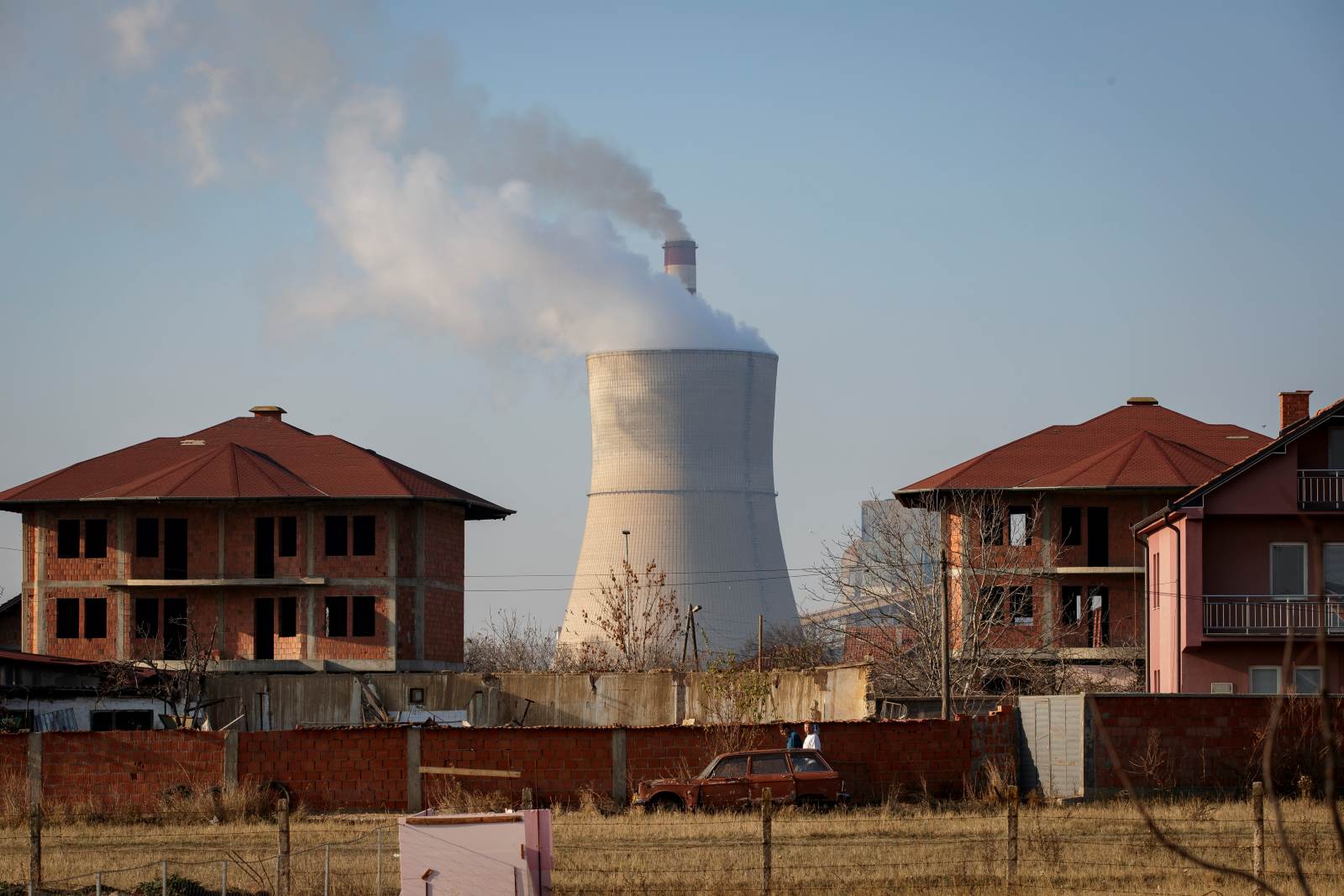
Chimneys of coal-fired power plants between houses in the town of Obiliq, near the capital Prishtina, Kosovo. Photo: EPA/VALDRIN XHEMAJ
For years, Kosovo relied on the belief that its vast lignite reserves guaranteed energy independence. Reality has challenged that assumption. The country has faced repeated scheduled and unscheduled outages, expensive emergency imports, and growing costs associated with maintaining aging infrastructure. The lesson is not that coal has no role in Kosovo’s present energy system. The lesson is that dependence on aging coal infrastructure does not automatically deliver energy security.
This is particularly relevant at a time when some political actors are proposing new coal investments. Such proposals deserve scrutiny beyond campaign slogans. Political parties have made big promises regarding the country’s energy.
The Vetëvendosje Movement, which has ruled Kosovo for the past five years, has pledged energy independence and affordable electricity prices. The party has not promised to build any new power plants, but rather to renovate existing power plants and invest in solar and wind energy. Vetëvendosje has also promised to triple the capacity of renewable energy sources, through public investments, support for private investments, and central heating across the country.
The party led by acting PM Albin Kurti has promised coal gasification for energy production, as well as intensifying cooperation to build joint energy capacities with Albania.
The main promise of Kosovo’s main opposition party, the Democratic Party of Kosovo, PDK, is the construction of the “Kosova e Re” thermal power plant with a capacity of about 500 MW. The party argues that the project would ensure a stable energy supply for the coming decades, reduce dependence on imports, stabilize the price of energy, create new jobs, and simulate economic development.
Like Vetëvendosje, PDK has also promised investments in existing capacities such as the “Kosova A” thermal power plant, aiming to extend its lifespan for at least 25 years.
The Alliance for the Future of Kosovo, AAK, has promised to build a new coal-fired power plant. They have promised to modernize basic capacities, by investing in the revitalization of existing power plant blocks, with the aim of ensuring a sustainable capacity of up to 500 MW.
It remains unclear who will finance these coal power plants investments considering the lack of interest for investing in coal. Moreover, it is not clear how the coal power plants fit into existing energy modelling and pathways or what technology model is being proposed.
What are the expected costs? What are the emissions implications? How does this investment fit within Kosovo’s decarbonisation pathway, given the implications of carbon pricing already being tested through the Carbon Border Adjustment Mechanism and through Emissions Trading System once Kosovo joins the EU?
So far, these questions remain largely unanswered.
The same applies to the growing enthusiasm for fossil gas.
Gas proposals remain unclear
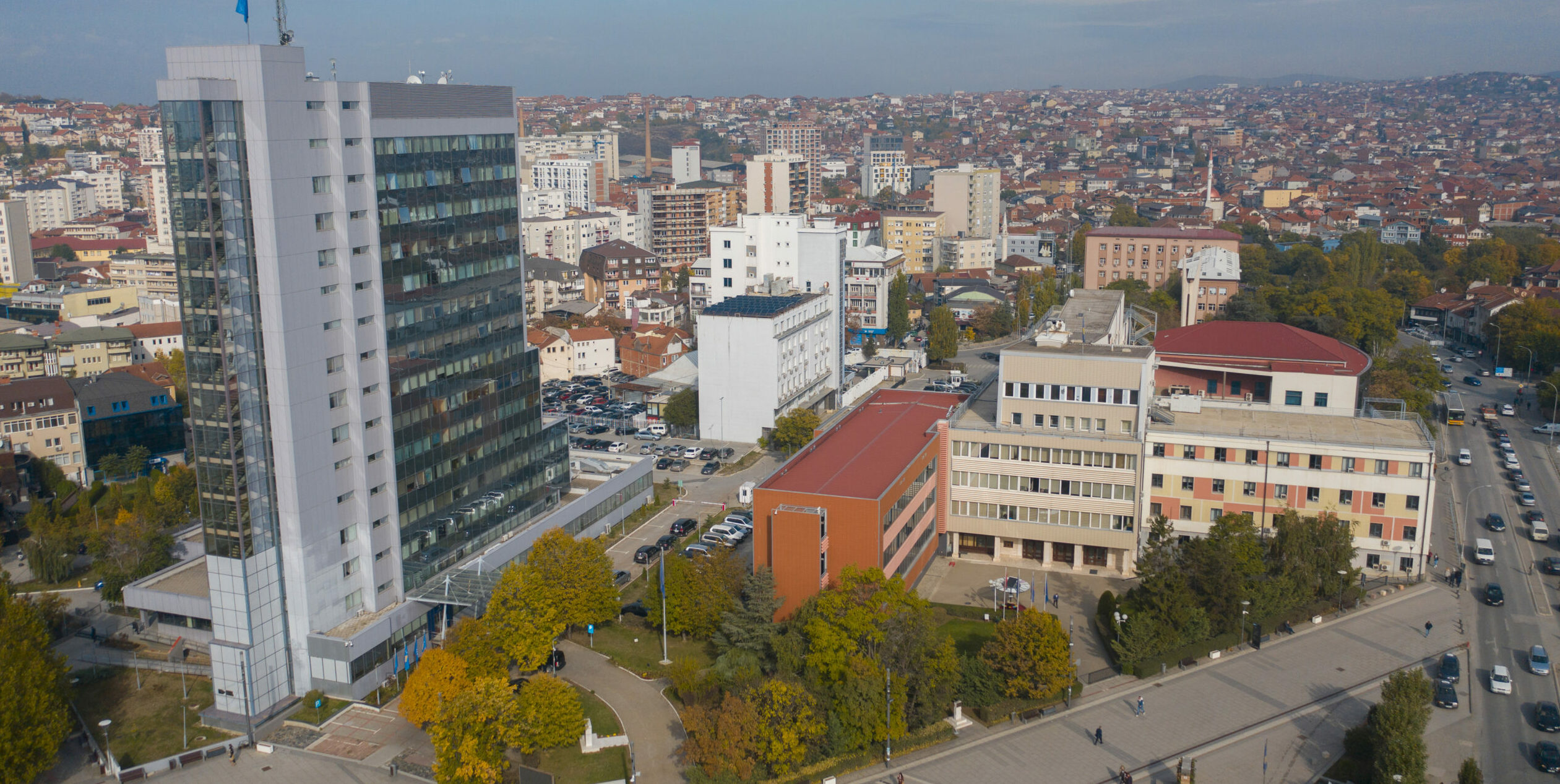
Kosovo government and parliament buildings in Prishtina. Photo: BIRN/Denis Sllovinja
Current political discussions focus on building a gas-fired power plant but less attention is paid to the actual infrastructure required to make such a project viable. Kosovo has no domestic gas network, no gas storage facilities, no gas distribution system, and no established gas market. A gas-fired power plant is only one piece of a much larger puzzle.
The third biggest party, the Democratic League of Kosovo, LDK, has promised the construction of an “American liquefied gas power plant,” with an investment of 500 million euros. LDK has promised the gasification of Kosovo via a gas line from Hani i Elezit to Mitrovica, worth around 120 million euros, which, according to them, will enable the supply of American natural gas through the existing network in North Macedonia.
AAK also has also promised to build a gas pipeline interconnection with North Macedonia and connect Kosovo to the TAP gas pipeline, making gas a key source for industry and energy diversification.
Gas is increasingly presented as a modern, strategic, and even inevitable component of Kosovo’s future energy system. The argument often draws on Europe’s experience following Russia’s invasion of Ukraine, when American LNG helped replace Russian gas supplies and stabilize European markets.
This interpretation, however, tells only part of the story.
Europe did not turn to LNG because it abandoned decarbonisation. Europe turned to LNG as an emergency response to an extraordinary geopolitical crisis and managed the supply shock. At the same time, European governments accelerated investments in renewable energy, energy efficiency, electrification, storage technologies, and grid modernization. LNG was part of a short and medium-term diversification strategy, not a rejection of the broader transition.
This distinction matters because Kosovo is not deciding how to respond to a temporary supply shock, nor how to replace gas suppliers. Kosovo is deciding what kind of energy system it wants to build for the next thirty years.
And that raises a crucial question: where exactly does gas fit within that system?
Building the necessary infrastructure would require major investments in pipelines, regulatory institutions, market structures, balancing mechanisms, and long-term supply arrangements. So, the supporting infrastructure is as significant a challenge as the energy generation asset itself.
Yet these costs are not discussed at all.
Equally absent from the debate is the question of financing.
There is a widespread assumption that because international financiers no longer support new coal projects, they will naturally support gas infrastructure instead. This is increasingly doubtful. Many international financial institutions, like European Bank for Reconstruction and Development, or the World Bank, have significantly reduced support for fossil gas projects as well, particularly where long-term decarbonisation objectives are concerned. While others such as the European Investment Bank have abandoned it altogether.
A gas project initiated today would likely still be operating, and potentially still repaying its investment, during the very period when Europe aims to achieve significant emissions reductions and climate neutrality. That creates a genuine risk of stranded assets and raises legitimate questions about long-term economic viability.
Perhaps most strikingly, the debate often overlooks the measures that are already part of Kosovo’s transition strategy.
The illusion of simple solutions
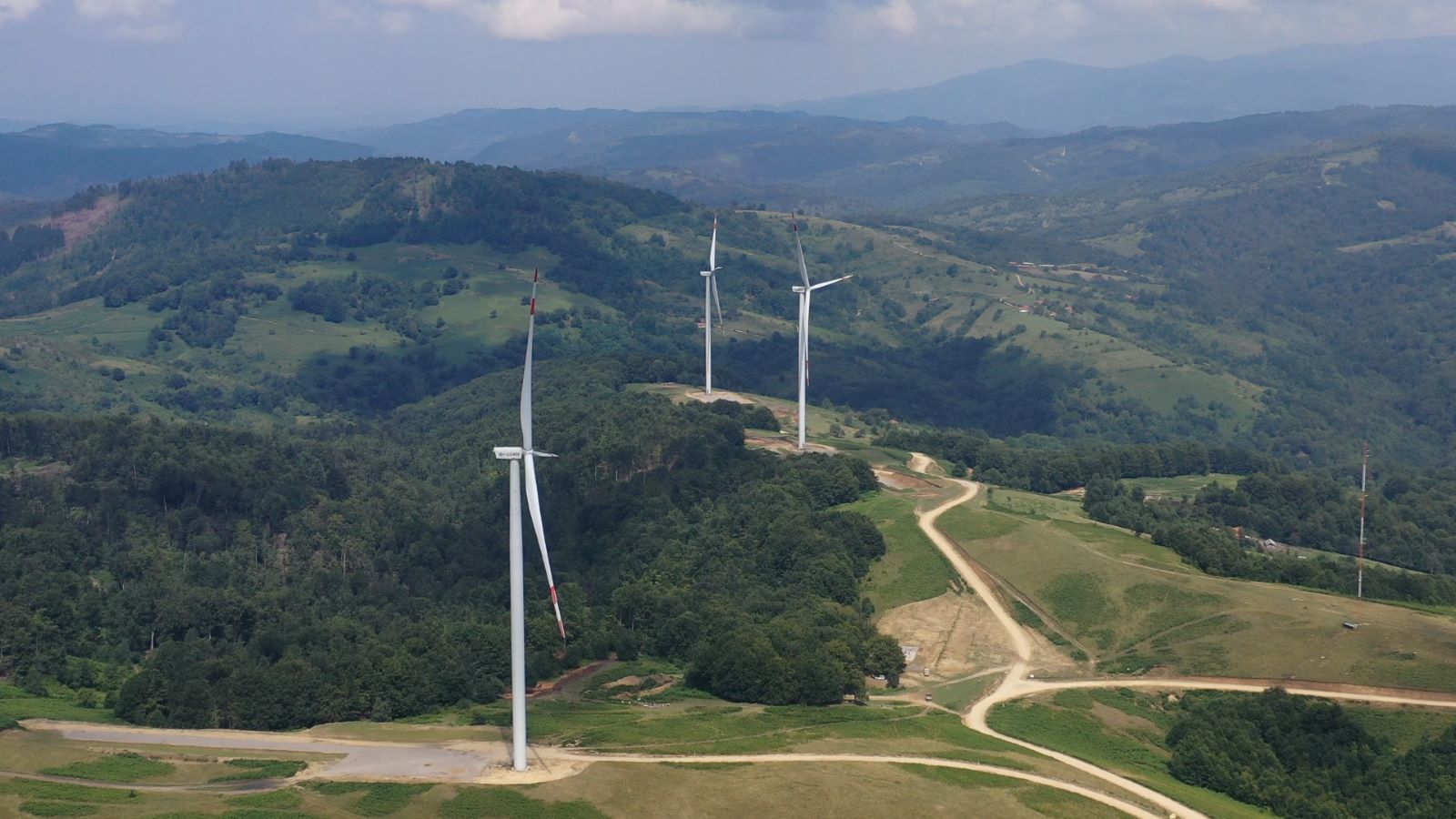
Kitka Wind Farm in Kamenica, Kosovo. Photo: BIRN
The National Energy and Climate Plan is not built around fossil gas. It is built around expanding renewable energy, improving energy efficiency, strengthening regional market integration, reducing greenhouse gas emissions, and increasing system flexibility. Significant investments are already planned or underway in solar and wind energy, battery storage, grid modernization, and demand-side management.
The recent battery storage investments are a good example. They address one of the most frequently cited challenges of renewable energy integration—system balancing. Yet discussions about Kosovo’s energy future often devote far more attention to hypothetical gas infrastructure than to projects that are already being implemented.
This reflects a broader problem in the public debate.
The conversation is increasingly focused on technologies that require the largest investments, the longest timelines, and the greatest uncertainties, while paying comparatively little attention to measures that can reduce demand, lower bills, improve efficiency, and strengthen resilience now.
Vetëvendosje has promised to triple the capacity of renewable energy sources, through public investments and support for private investments. PDK also promised investments in solar and renewable energy. Other than investment in renewable energy, LDK has promised the development of charging infrastructure, and fiscal and regulatory incentives to make electric vehicles more accessible to families.
However, energy planning requires openness to different scenarios and technologies. But serious policy discussions must begin with evidence, costs, financing realities, and strategic coherence.
The question is not whether gas sounds attractive in a political campaign.
The question is whether the promises being made are compatible with Kosovo’s existing energy strategy, the complexities of world energy pressures, its climate commitments, its obligations under the Energy Community, its European integration path, and the financial realities of the twenty-first century.
Kosovo’s energy future deserves a debate grounded in facts rather than slogans. The country already faces difficult choices. Creating the illusion of simple solutions will not make those choices easier. It will only postpone the effective work towards decarbonisation that Kosovo ultimately needs to do.
Viktor Berishaj is Senior Policy Officer at the Brussels- based EuroNatur and an Energy Transition Expert.
The opinions expressed are those of the author and do not necessarily reflect the views of BIRN.