


Kosovo is heading for early parliamentary elections on June 7, the third elections in two years, following a prolonged political deadlock over the election of a new president.
Kosovo’s citizens will head to the polls on Sunday, amid political deadlock over government formation and the election of a new president.
The last snap parliamentary election on December 28, delivered a landslide victory to Albin Kurti’s Vetëvendosje. Many expected this win to end the country’s year-long political deadlock and for Kurti to resolve the backlogged issues of inaugurating a parliament, forming a new cabinet, and ensuring that parliament elects a new president.
While Kurti easily resolved the first two matters, the election of a new President proved more difficult. The process has concluded with an unwanted result: the dissolution of parliament and announcement of more snap elections, just four months after voters last went to the polls.
With the elections announced for June 7, this will be the third time Kosovo voters head to parliamentary elections within 16 months, in a serious political and financial burden on a small country that declared its independence just over 18 years ago.
While the election process cost the country’s budget another 10 million euro, the caretaker government spent millions more two weeks ago on a package of one-off payments and subsidies, drawing criticism from the opposition, election monitors, and experts.
The government unveiled what it described as an “Inflation Relief Package 2.0,” including one-off payments of 100 euros for pensioners, students, children, and private-sector workers with wages under 1.000 euros, an increase in maternity benefits to 500 euros per month, and a 2-million-euro subsidy scheme for airlines operating flights to Kosovo during the summer season.
“This package does not address all problems and needs, but it does, at least to some extent, ease the burden for every family in our country. Because, unlike the opposition bloc, our government ensures that the hand of the state reaches everyone,” acting Kosovo prime minister Albin Kurti stated during the government session on May 22.
Applications for some categories remained open until June 5, less than two days before voters head to the polls.
Prime Minister Albin Kurti denied accusations that the measures were linked to the election campaign, noting that the “package was part of the government’s broader response to rising living costs”.
“I believe citizens understand that this is related to our commitment to the Inflation Relief Package 2.0,” Kurti told Politiko, a programme broadcast on Kanal10, on May 31.
“Should we postpone helping citizens until autumn simply because elections are being held?” he added.
The government noted that the package is intended to help households with the rising cost of living.
“It does not distort the competition; we won 51% last election, it does not distort any competition whatsoever,” Kurti emphasised.
Inflation reached 7.5 percent during the first four months of 2026, according to data from the Kosovo Agency of Statistics, KAS.
Kurti also announced that maternity benefits would increase from 325 euros to 500 euros per month, matching the new minimum wage due to enter into force in July.
“This year, starting in July, the minimum wage will become 500 euros per month. We are not waiting until July, we are doing it now, starting this month,” Kurti declared on May 22.
In addition, a day after, the government allocated 2 million euros to support airlines, stating that rising fuel prices and reduced flight capacity could affect travel to Kosovo during the summer months.
Regarding the airline subsidies, in an interview on May 31, Kurti said that the measure was aimed “at supporting the diaspora and also at protecting Kosovo’s economy.”
“It is not only the diaspora that travels, but also tourists. Many countries are introducing similar support as fuel prices rise and airlines reduce flights. We allocated a 2 million euros fund to help maintain operations,” he declared.
He added that the subsidy program would cover the entire summer season until October, not just the election period.
When asked who the beneficiaries among the airlines would be, Albin Kurti added, “We do not know who benefits, but we do know that Kosovo’s economy benefits when flights are not canceled.”
Opposition questions timing of relief packages
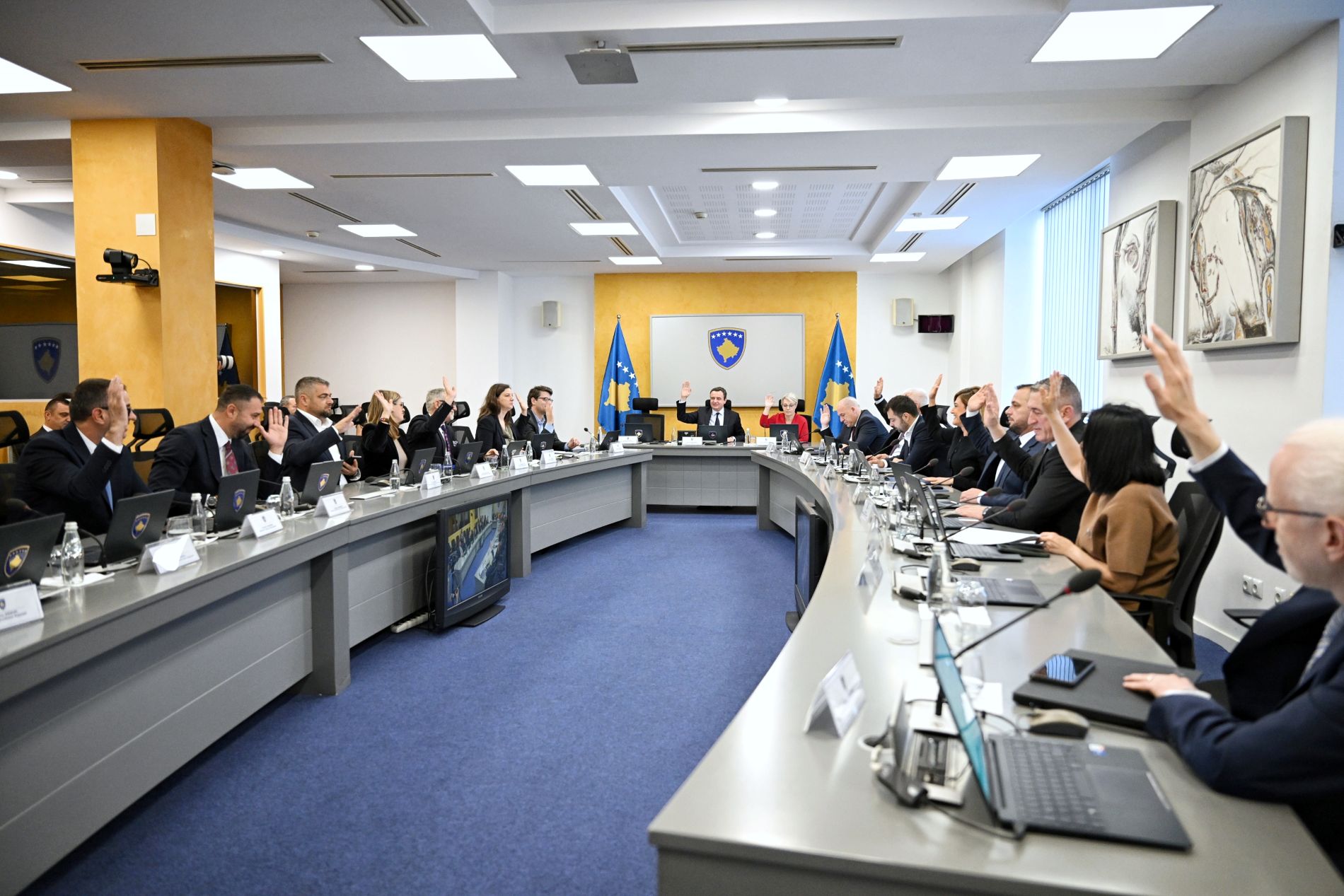
Kosovo caretaker government approves additional payments for several categories of citizens at a session held on May 22, 2026. Photo: Prime Minister’s Office
The timing of the measures has sparked criticism from opposition parties and civil society groups, which state that the package risks erasing the line between social policy and electoral campaigning.
Lumir Abdixhiku, leader of the Democratic League of Kosovo, LDK, accused Albin Kurti of using “every possible means to remain in power at any cost.”
“This is not an inflation-relief package. This is a package aimed at buying votes. It is a belated attempt to cover up governing failures with the citizens’ own money,” he wrote on social media.
Democracy in Action, DnV, a coalition of NGOs monitoring elections in Kosovo, described the decision as a “classic case of misuse of public resources during an election period,” adding that large-scale financial transfers shortly before voting day can affect the fairness of the electoral contest.
“This principle applies in all cases, including the use of state funds, government vehicles, public offices, and the civil service during an election campaign to gain electoral advantages,” the statement said.
DnV said Kosovo’s electoral legislation prohibits the use of public resources in ways that influence, or could influence, voters’ choices.
However, Kosovo’s election law does not explicitly regulate whether a caretaker government can adopt financial support measures of this kind immediately before the start of an election campaign.
The American Chamber of Commerce in Kosovo also expressed concern over what it called the “growing reliance on one-off support measures as a response to inflationary pressures.”
A familiar pre-election pattern
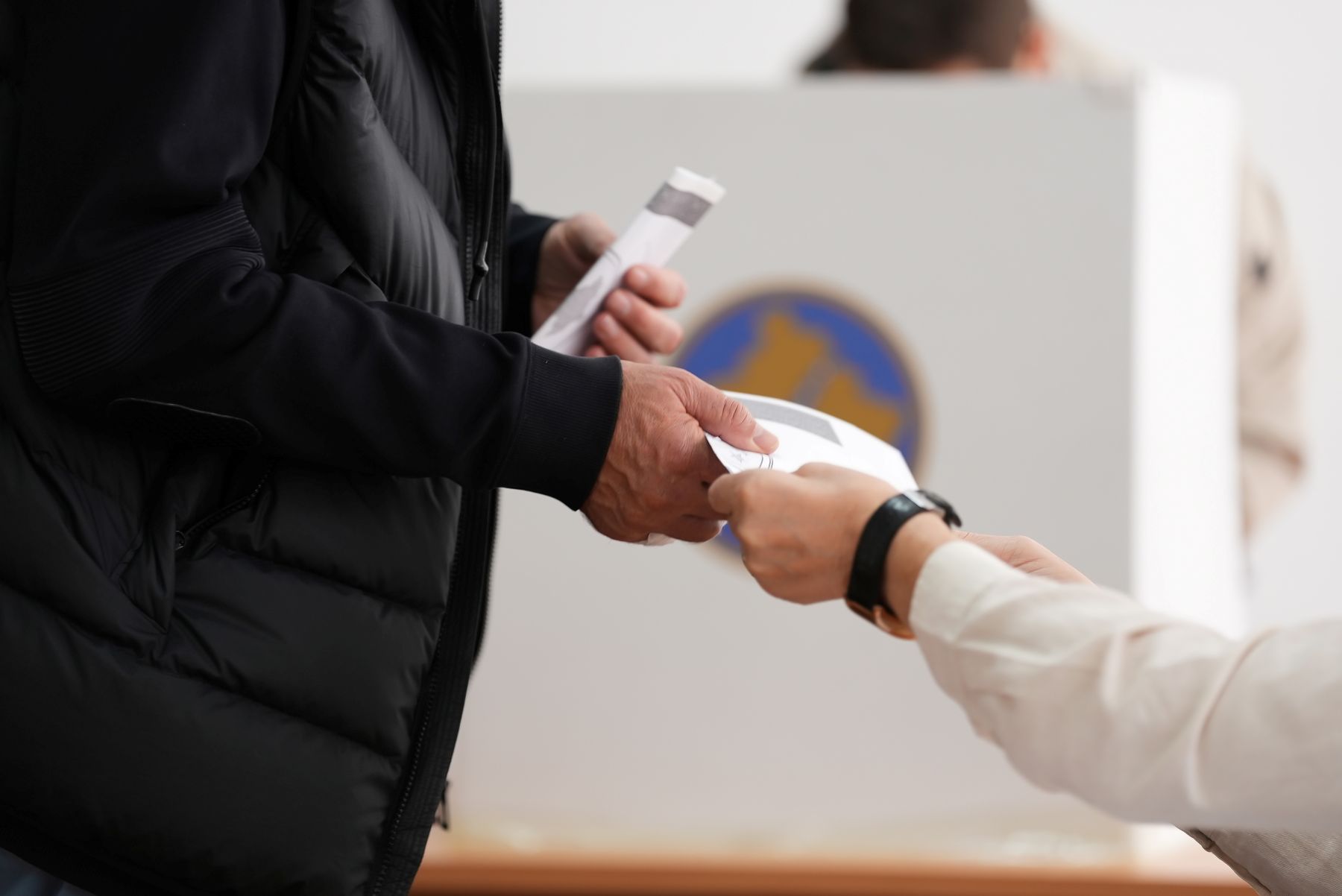
Local elections in Kosovo on October 12, 2025. Photo: BIRN/Denis Sllovinja.
Similarly, ahead of the previous elections held in December 2025, the Kurti government distributed 100 euros payments to pensioners and students.
Economic analyst Blendi Hasaj of the GAP Institute said the timing of the payments inevitably gives them an electoral dimension.
“The distribution of 100 euros to several groups shortly before elections carries a negative electoral connotation and can be perceived as an attempt to influence beneficiaries to vote for the ruling party,” Hasaj told Prishtina Insight.
At the same time, he noted that similar practices have been used by successive governments in Kosovo.
According to Hasaj, governments have repeatedly introduced wage increases, pension hikes, collective agreements, or direct financial support shortly before elections, creating a long-standing pattern of politically sensitive spending.
Examples include public-sector wage increases before the 2010 and 2014 parliamentary elections, collective agreements signed ahead of the 2017 and 2021 elections, and salary increases and cash transfers introduced by Kurti’s government before elections in 2024 and 2025.
While noting that inflation has affected pensioners and low-income households, Hasaj warned “Injecting funds in this manner-all at once, for many groups, and often using a uniform approach, raises concerns among economists that such measures may negatively affect the inflation situation,” he added.
According to him, unplanned expenditures made through ad hoc decisions such as these are not in line with good practices in this field.
“In Kosovo, the public budget has already been heavily burdened by spending on various schemes and salaries in the public sector.”
Hasaj raised similar concerns about the 2 million airline subsidy fund, adding that the measure would have made more economic sense if introduced earlier in the year.
“If the decision had been made in March of this year, shortly after the start of the U.S.–Iran conflict, when fuel prices also rose significantly, it would have made sense, because the increase in fuel prices was genuinely threatening the operations of many airlines around the world,” he explained.