


Exodus ‘99, part of BIRN’s Reporting House museum, presents the stories of Kosovo Albanians who were forcibly deported by Serbian forces in 1999. Housed inside a railway wagon at Prishtina’s Train Station, the very site where so many were forced into overcrowded trains and expelled.
The testimonies of 48 Kosovo Albanians on the mass expulsions by Serbian forces, from March to June 1999, have been brought together by the Reporting House in the newly opened Exodus ’99 exhibition, housed inside a railway wagon at Prishtina’s Train Station.
During the 1998-99 Kosovo war, hundreds of thousands of Kosovo Albanians were forced into crowded railway wagons at this same railway station and forcibly deported, mainly to what was then Macedonia.
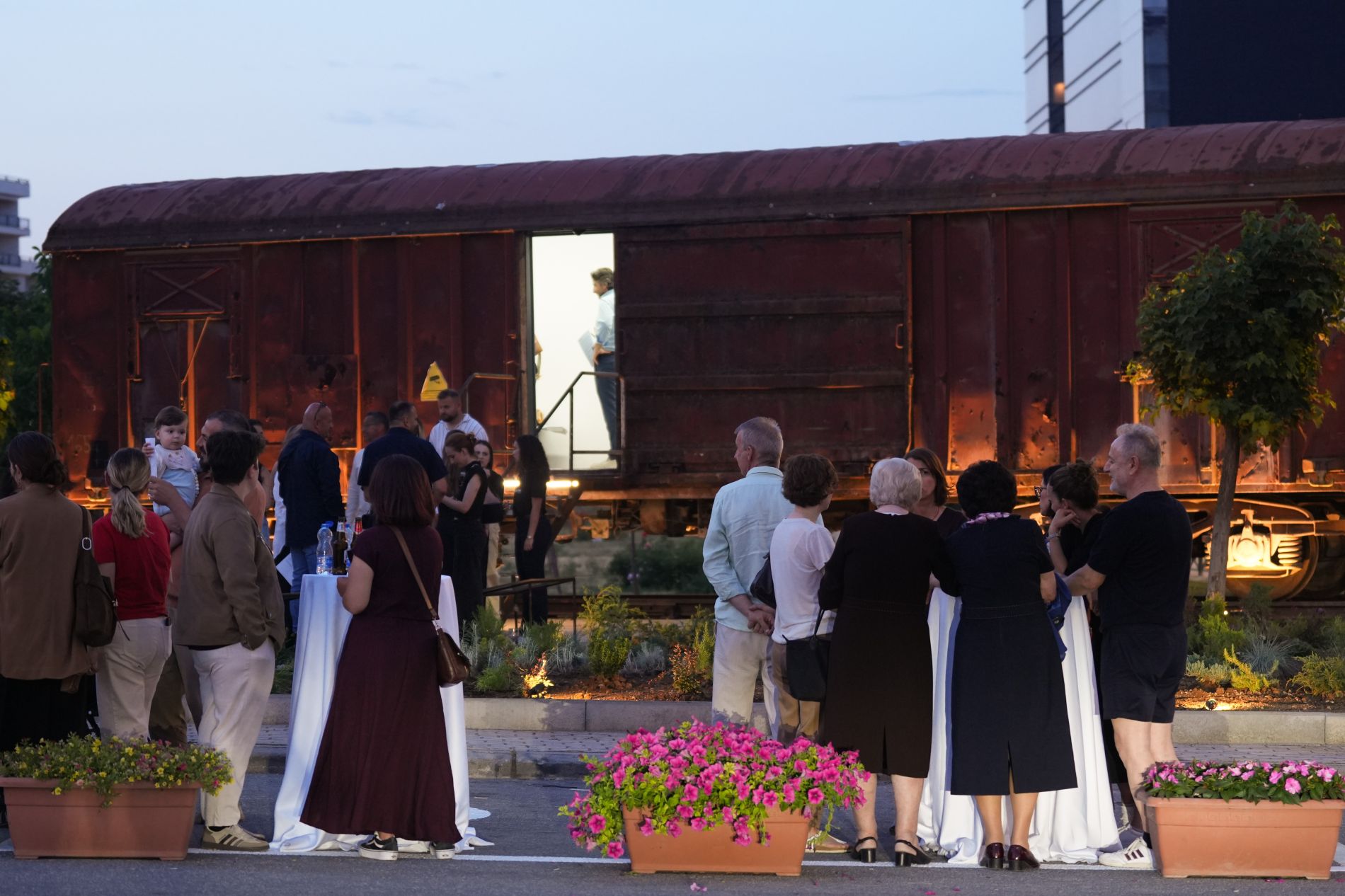
The ‘Exodus ’99’ wagon, the second location of BIRN’s Reporting House exhibition, at Prishtina railway station. Photo: BIRN
Jeta Xharra, executive director of BIRN Kosovo and producer of the Reporting House, noted the importance of recording the testimonies of people who survived the war so younger generations also learn the country’s history, highlighting that, “this period is not covered sufficiently in school textbooks. It should be presented in a visual and modern way; not only through words.”
“After a year of work collecting the stories of refugees, we have succeeded in bringing to the public and future generations a museum dedicated entirely to the 1999 exodus,” Xharra said.

Citizens gathered at the Exodus ’99 exhibition in Prishtina, June 10, 2026. Photo: BIRN
The exhibition, inaugurated on Wednesday evening, is housed in an old train wagon outfitted with monitors on which visitors can watch the testimonies, which inlcude recollections of being forcibly deported and held in inhumane conditions, of avoiding expulsion and going into hiding, and of joining the Kosovo Liberation Army’s, KLA, armed resistance.
Curator Gazmend Ejupi said that the manner in which “we preserve and honour our history is the greatest respect we can offer to future generations.” The exhibition is organised around four themes: expulsion, life in refugee camps, staying with host families, and returning to Kosovo.
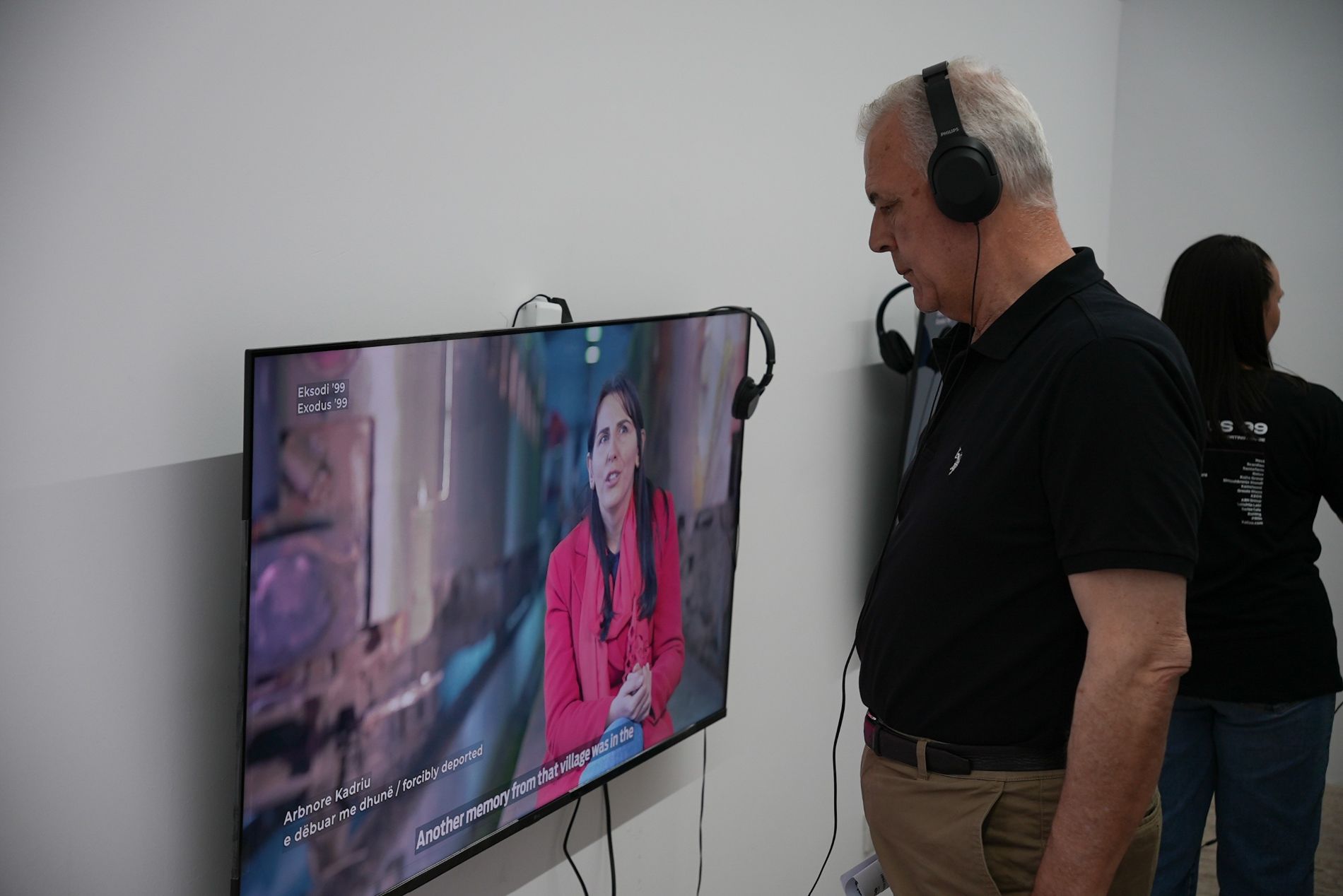
A visitor at the Exodus ’99 exhibition in Prishtina on June 10, 2026. Photo: BIRN
By the time NATO launched its air campaign in March 1999 to halt the war in Kosovo, and as armed repression by Serbian forces intensified, more than 300,000 people had already fled their homes after more than a year of fighting and failed international efforts to resolve the conflict.
But the largest wave of deportations occurred during the air strikes, when nearly a million people were forced to flee. Soon after NATO began their air campaign in March 1999, Serbian forces emptied entire neighbourhoods, confiscated personal documents and compelled Kosovo Albanian families to leave their homes.
One of the participants in this project is Ali Misimi, who, together with his family, was expelled from his home in Prishtina by Serbian police forces on March 30, 1999.
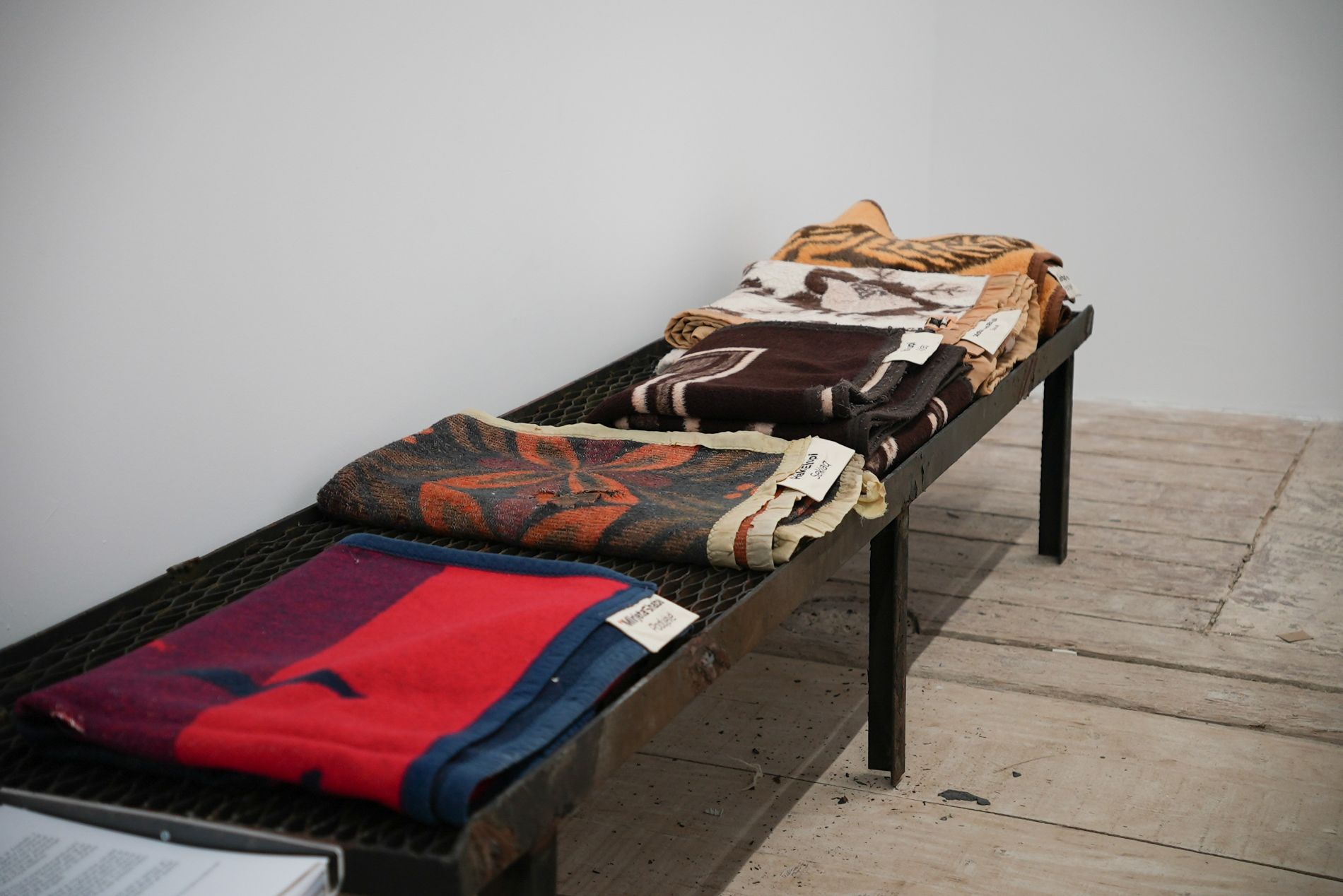
Blankets donated by citizens who were forcibly expelled by train displayed at the Exodus ’99 exhibition in Prishtina. Photo: BIRN.
“They forced us out and told us that nobody would remain in the house,” Misimi recalled. “We felt deeply violated in our dignity and in every aspect of our lives. Having someone come and force you out of your own home was extremely difficult.”
During the journey, Misimi and his family did not know where they were being taken until they realised they were heading toward the Prishtina Train Station
“It was a chaotic situation,” he said, recalling confused and scared pregnant women, children, and elderly people who had to be carried in their wheelchairs.
“We entered through the windows into a compartment normally meant for six passengers. There were 27 of us inside.”
An abandoned public toilet beside Prishtina railway station has also been turned into a mini-gallery that exhibits some artefacts from the new museum. Among them is a document from the archives of INFRAKOS, the public railway company, which shows how Serbia organised additional train carriages and sent extra freight wagons from Belgrade for the mass deportation of Kosovo Albanians.