


Public disputes among senior figures of the opposition party Democratic League of Kosovo, LDK, have raised questions about the stability of the oldest political party in Kosovo.
Calls for Democratic League of Kosovo, LDK, leader Lumir Abdixhiku to resign following the party ‘s disappointing results in the June 7 parliamentary elections, alongside efforts to collect signatures for an extraordinary party assembly to vote on his dismissal, have exposed deep divisions within the party.
The party was in high spirits on June 7 as the preliminary election day results gave them hope for increasing their presence in parliament with 20 MPs in the 120-seated chamber. As the count went to close, the party had only secured 18 seats, which for many too little compared to what they aspired to.
A handful of party branches, along with senior officials, are now demanding the leadership reflect on the results and resign, opening the way for new internal elections.
However, following weeks of growing dissatisfaction, the LDK Presidency convened on Thursday and expressed unanimous support for party leader Lumir Abdixhiku.
In an official statement, the Presidency noted that the party’s result in the June 7 elections had fallen short of expectations. It said responsibility for addressing the shortcomings “lies with all leadership structures within the party.”
“The presidency expresses its full support for LDK Chairman Lumir Abdixhiku in carrying out his mandate to lead the party’s political and organisational processes, as well as the process of forming the institutions of the Republic through discussions with other parliamentary parties,” a press release said.
The meeting came as party members continue collecting signatures to convene an extraordinary LDK Assembly that would undertake a confidence vote on Abdixhiku’s leadership.
Speaking after the meeting, Abdixhiku said no signatures had yet been formally submitted.
“There have been no signatures deposited so far. Procedurally, one-third of the Assembly members are free to submit them whenever they choose. Regular party elections are scheduled for next year. Once the signatures are submitted, I will convene the Assembly,” he said.
Abdixhiku also said he wanted to avoid further divisions inside the party, adding that “unilateral initiatives only damage the LDK ”.
However, the LDK MP Armend Zemaj said he had signed the request for an extraordinary Assembly and claimed more than 150 signatures had been collected in favour of early internal elections.
“I belong to a branch [Peje] that unanimously concluded there should be early elections in all LDK structures. Not only have I signed, but there are more than 150 signatures supporting this request. I don’t know whether they have been officially submitted,” he told the media. “There were differing opinions during the Presidency meeting, with some supporting early elections and others backing the chairman,” Zemaj noted further.
Election disappointment deepens existing tensions
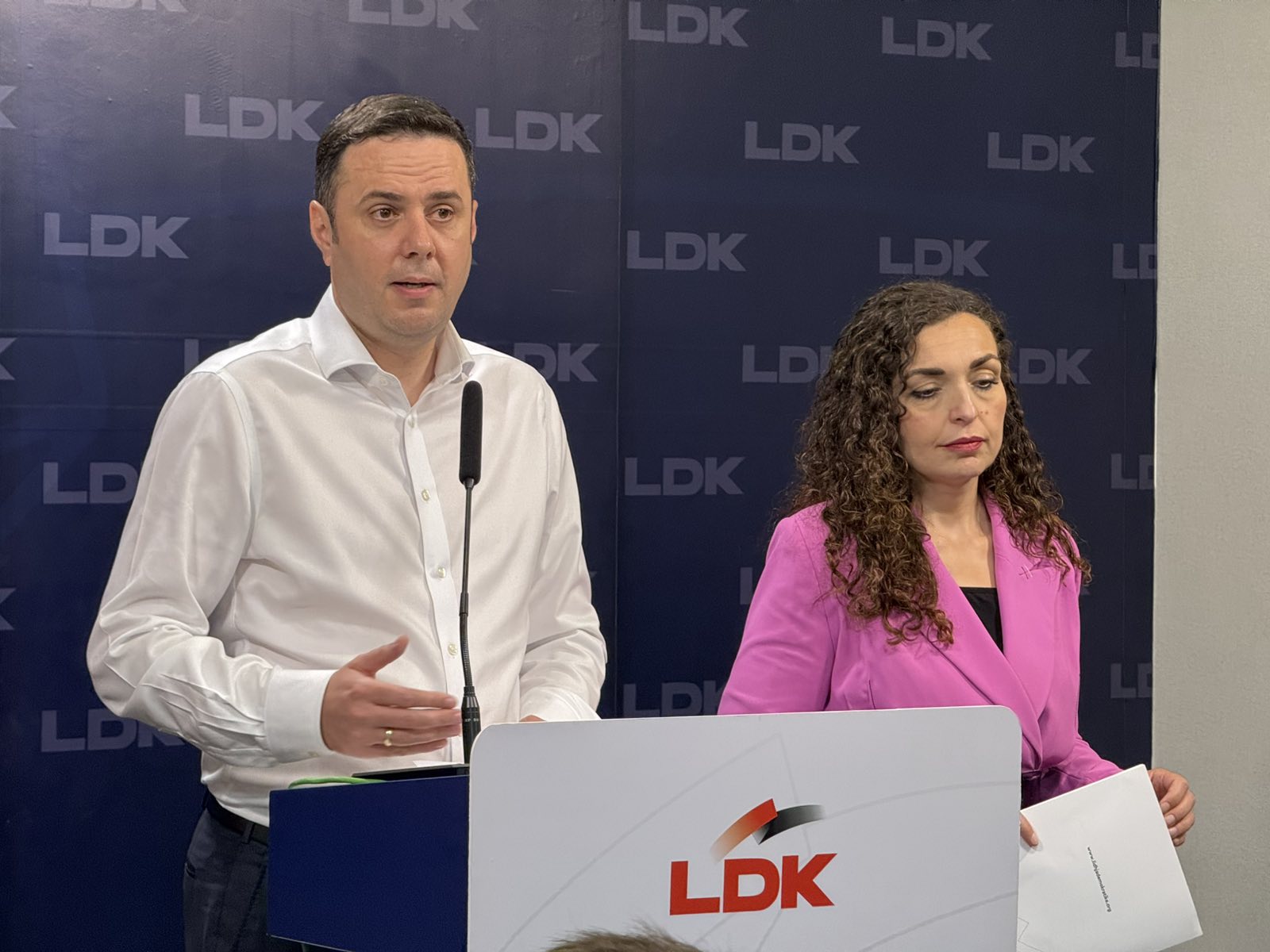
Former President Vjosa Osmani and LDK leader Lumir Abdixhiku at a press conference following the announcement of the election results on June 7, 2026. Photo: BIRN.
The latest dispute follows months of internal dissatisfaction that intensified after former President Vjosa Osmani was accepted to head the party’s candidate list for early elections.
In the June 7 snap elections, LDK again finished third behind the ruling Vetëvendosje Movement and the Democratic Party of Kosovo, PDK, failing to improve on its previous electoral performance despite a campaign centred on Osmani.
Vetëvendosje secured 53 seats in the 120-member Assembly. PDK won 22 seats, LDK secured 18 seats, while the Alliance for the Future of Kosovo, AAK, won seven. The remaining 20 seats are reserved for non-majority communities, including nine held by the Belgrade-backed Srpska Lista.
Former Prime Minister Avdullah Hoti, several MPs, and a number of LDK mayors have since argued that the party leadership should accept responsibility for the disappointing result.
Earlier, on June 23, Abdixhiku responded publicly to calls for his resignation made by Muhaxheri and Lipjan Mayor Imri Ahmeti.
“Will you never have enough?” he wrote on social media, arguing that such concerns should have been raised privately.
“I agree that the result in these two branches is not satisfactory. In municipalities where we govern, finishing third reflects the extent of deep internal sabotage and a project that is not aligned with the LDK,” he added.
Founded in 1989, the LDK was the first political party representing ethnic Albanians in what was then a southern province of Serbia, a Yugoslav republic. Led by Ibrahim Rugova, the LDK masterminded a decade of passive resistance, parallel education and administration in response to Serbian repression.
Under Rugova, it spearheaded the Kosovo Albanian policy of non-violence, creating a parallel school system and parallel government after then Serbian strongman Slobodan Milosevic abolished Kosovo’s autonomy.
Yugoslavia fell apart in war, and by the late 1990s, the LDK strategy had been eclipsed by a guerrilla insurgency. Even so, when the 1998-99 Kosovo war ended and Kosovo became a ward of the United Nations, the LDK swept the board in the first free elections for local municipalities in 2000.
The party continued to dominate until Rugova died in January 2006. The following year, it lost to the Democratic Party of Kosovo, PDK, which grew out of the guerrilla Kosovo Liberation Army, KLA. Since then, the rise of Albin Kurti’s Vetevendosje has pushed the LDK even further down the pecking order.
Analysts warn of party fragmentation
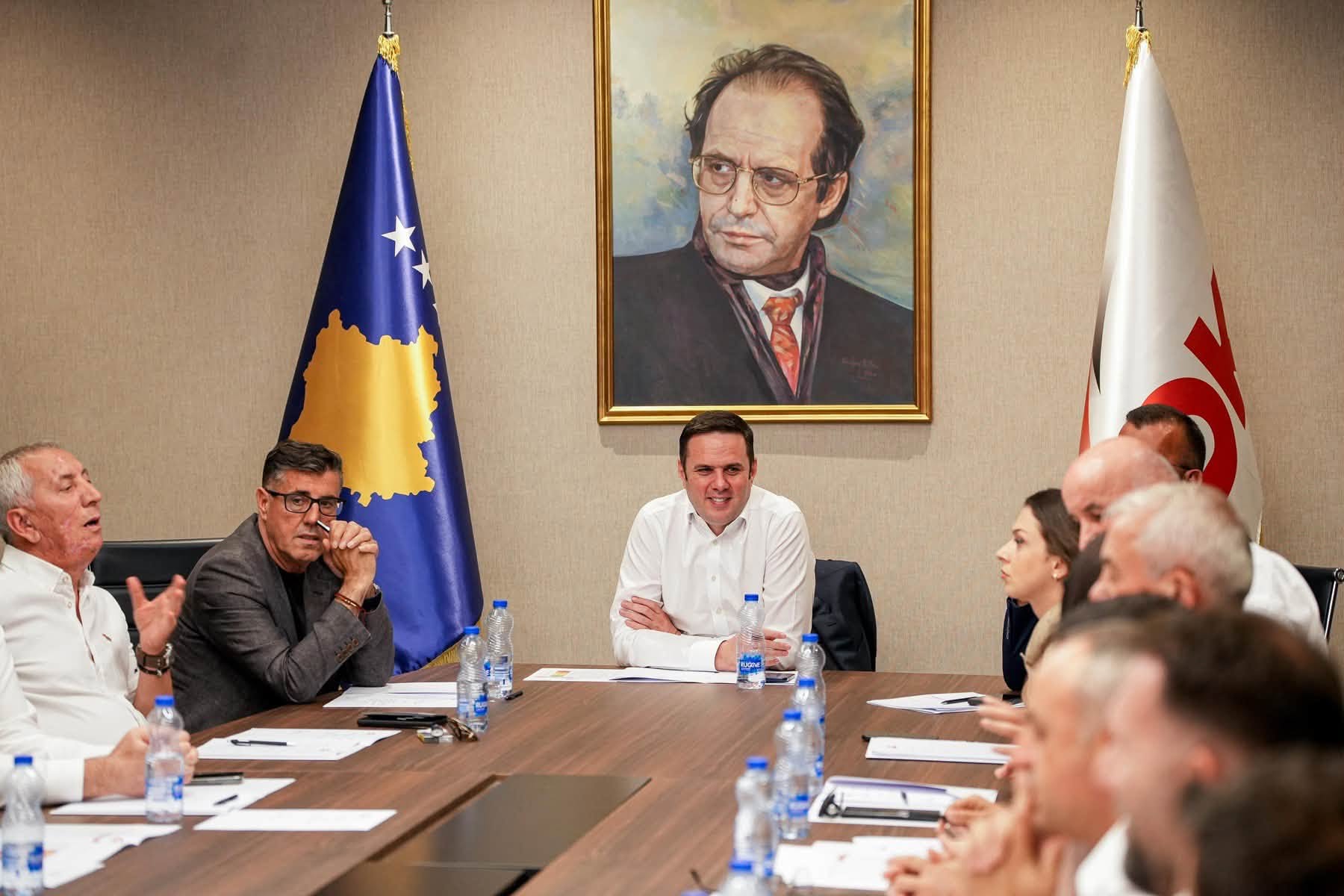
LDK leader Lumir Abdixhiku (M) at the meeting of the party’s Presidency on July 9, 2026. Photo: LDK Facebook account.
Political analyst Melazim Koci described the current dispute as one of the most serious internal crises in LDK since the party’s founding.
“There are clearly two or three competing currents within the party, and reaching consensus to overcome this crisis will be extremely difficult,” Koci told Prishtina Insight.
According to Koci, the disappointing election result intensified divisions that had already existed. He emphasised that the campaign’s heavy focus on Vjosa Osmani may also have confused voters.
“The campaign became centred almost entirely on her personality and on discussions about her potential re-election as president. Many voters were left wondering whether the campaign was about parliamentary elections or a future presidential race,” he said.
Koci added that the party now requires reform across all levels.
“If this does not happen, the party risks becoming marginalised. Reform, however, cannot happen without accountability from the party leadership,” Koci said, adding that attempts to avoid responsibility could split the party into separate factions.
Political analyst Dritëro Arifi similarly said that the crisis extends beyond individual personalities.
“The problem lies in the entire chain of command: from the central leadership to the local branches,” Arifi said.
He also criticised the decision to conduct internal disputes publicly.
“Political parties should resolve these issues internally. When disagreements unfold through media appearances and social networks, they create the impression of an organisation that lacks discipline and reliability,” he said.
In another development in May this year, current Prishtina mayor Perparim Rama made his party react publicly after he tied a coalition agreement at local level with the Democratic Party of Kosovo, PDK. LDK said this move was not discussed with the party.
Koci believes Rama is operating independently of the party leadership and “could emerge as the leader of a separate faction within LDK.”
According to Arifi, while Rama’s criticism shows that he has longstanding grievances, the LDK leadership has been reluctant to openly confront Vetëvendosje because “it wants to preserve the possibility of future political cooperation.”
Is LDK open to coalition talks?
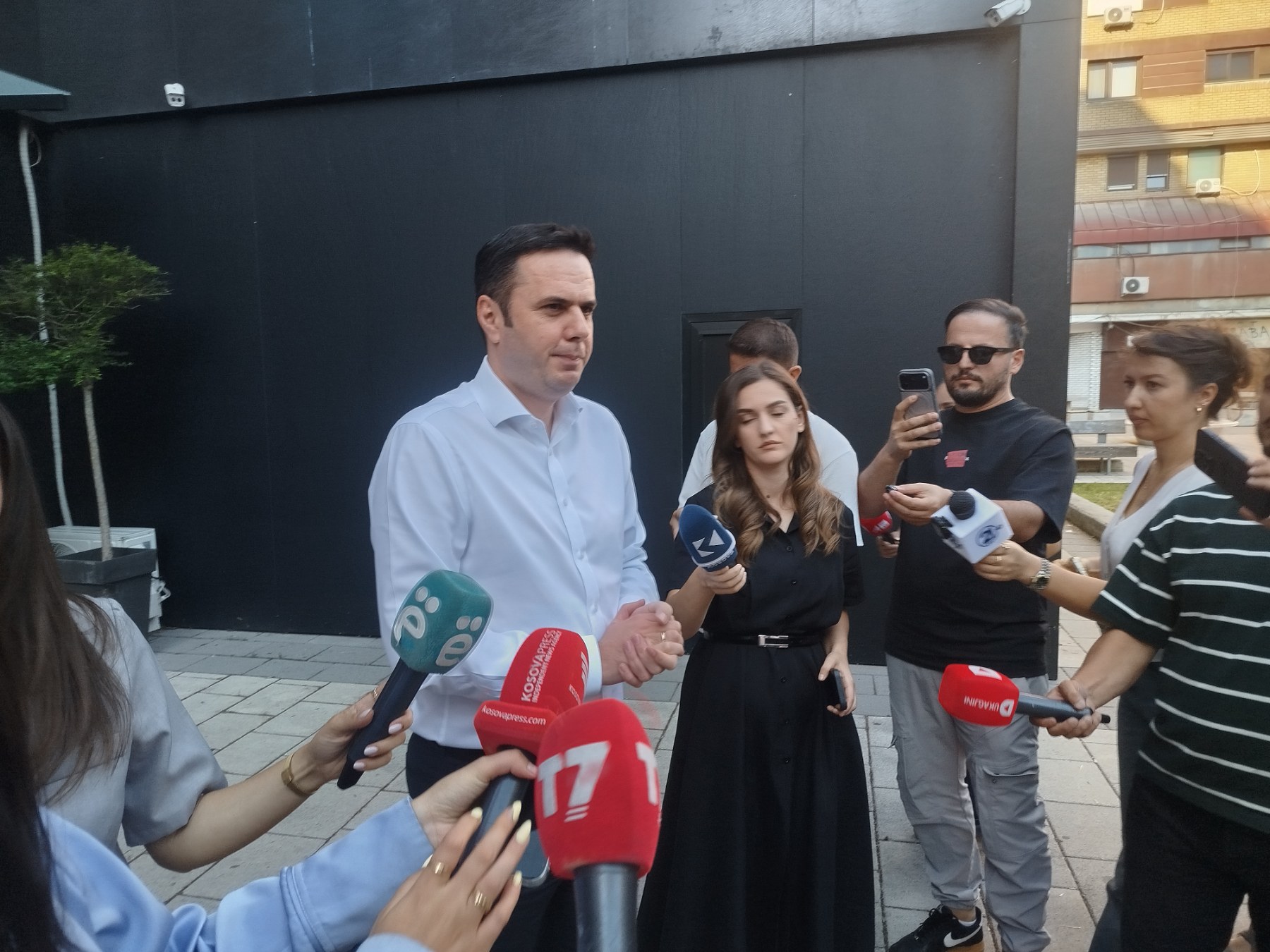
Democratic League of Kosovo, LDK, leader Lumir Abdixhiku addresses the media following the meeting of the party’s Presidency on July 9. Photo: BIRN.
As the LDK grapples with internal divisions, acting Prime Minister Albin Kurti has invited the leaders of the former opposition parties, including Lumir Abdixhiku, to talks aimed at constituting Kosovo’s new institutions.
Following Thursday’s Presidency meeting, Abdixhiku confirmed that he had accepted Kurti’s invitation for Friday afternoon talks.
Former President Vjosa Osmani also declared on July 2 that LDK would contribute to the formation of new institutions provided three conditions were met: preserving democratic checks and balances, maintaining Kosovo’s Euro-Atlantic orientation, and pursuing a development-focused governing agenda.
Analysts argue that the party’s internal divisions could weaken its leverage during coalition negotiations.
Koci questioned whether the party leadership could guarantee the support of all its MPs in any future agreement.
“The LDK does not have full control over all of its MPs. Several are unlikely to automatically follow the party leadership. That weakens the party’s position in any coalition negotiations,” he said.