


For nine days, DokuFest turns Prizren into a city of cinema, where films, conversations, and public spaces carry a common message: keep showing up, even when looking away would be easier.
Along the river that cuts through the centre of Prizren, the message of this year’s DokuFest immediately catches passengers’ attention.
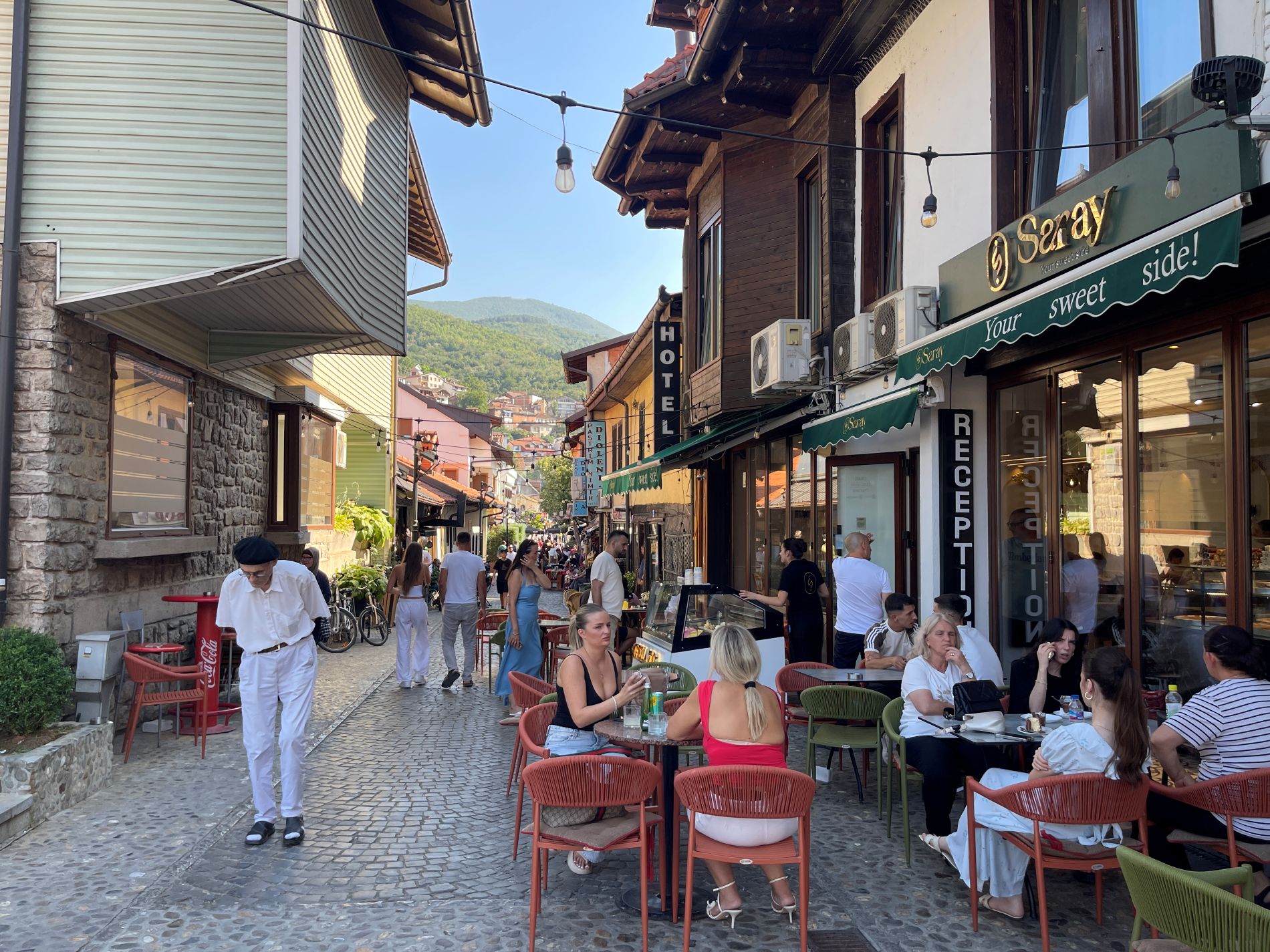
Quotes about persistence and resistance line the riverbanks, somehow greeting festivalgoers, who can be seen populating the cafes and narrow cobblestone streets of the historic town of Prizren in the south of Kosovo between screenings.
For the 25th edition of the International Documentary and Short Film Festival, the theme is “Persistent Defiance.” Its message is: Show up or it doesn’t count.
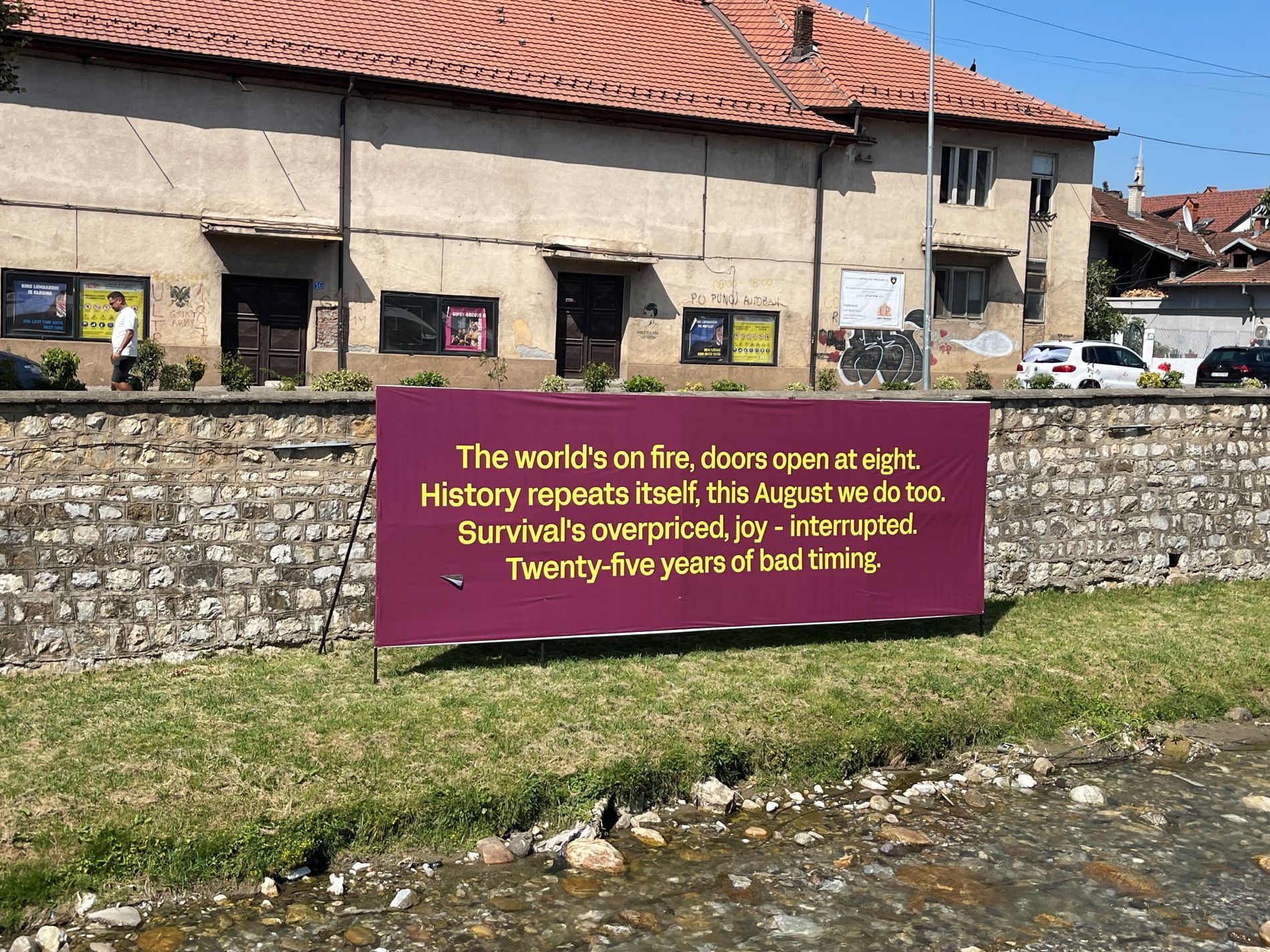
25th edition of DokuFest, the International Documentary and Short Film Festival, in Prizren, Kosovo. Photo: BIRN.
Nora Albers from Germany didn’t expect to see the amount of people attending the festival. “It made me go through the programme in detail,” she said while laughing at herself.
For more than a week, each August, Prizren becomes a meeting point for filmmakers, artists, festivalgoers, and travellers from around the world.
“We show up, we open the cinemas and we keep looking, even when looking is uncomfortable,” is the motto behind the 2026 edition of the festival, which brings together more than 100 films across its different international competitions and special programmes from 7–15 August.
A story of women after war
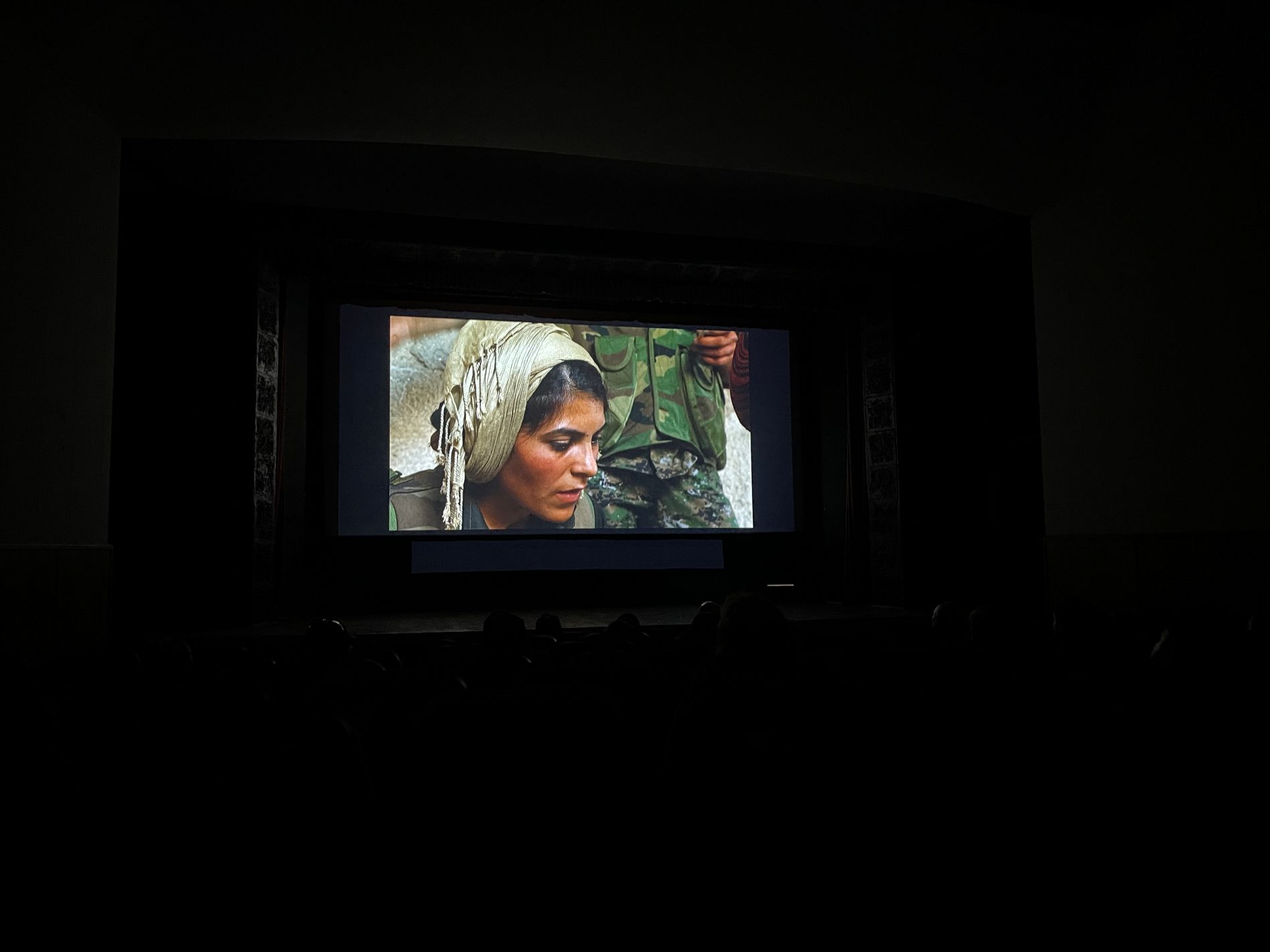
Screening of the film The “Phantom Pain of Rojava” at the Bekim Fehmiu Theatre on August 11. Photo: BIRN.
At the ‘Bekim Fehmiu’ Theatre, one of the films screened in the Human Rights Dox programme on Tuesday gave an example of the kind of stories DokuFest brings into public view. Fehmiu was one of the most celebrated actors across former Yugoslavia. He grew up mainly in Prizren.
The Phantom Pain of Rojava, directed by Maryam Ebrahimi, follows four Kurdish guerrilla veterans living together in a home for wounded soldiers in Rojava, a province in northern Syria.
Ebrahimi told the audience that she “filmed the women over five years,” following their lives after the war against ISIS and looking beyond the battlefield to friendship, trauma and the uncertainty of what comes next.
25th edition of DokuFest, the International Documentary and Short Film Festival, in Prizren, Kosovo. Photo: BIRN.
For Sofia Villanueva from the Philippines, who is attending DokuFest for the second time, that perspective was interesting and captivating.
“The film was refreshing. We forget the women involved in such events, especially wars,” she told Prishtina Insight after the screening.
The Phantom Pain of Rojava, featured as a long dox film, introduces us to these women, their relationships to one another, their disabilities, and the ordinary moments of their lives, which go on after the violence has ended.
Challenging what can’t be done
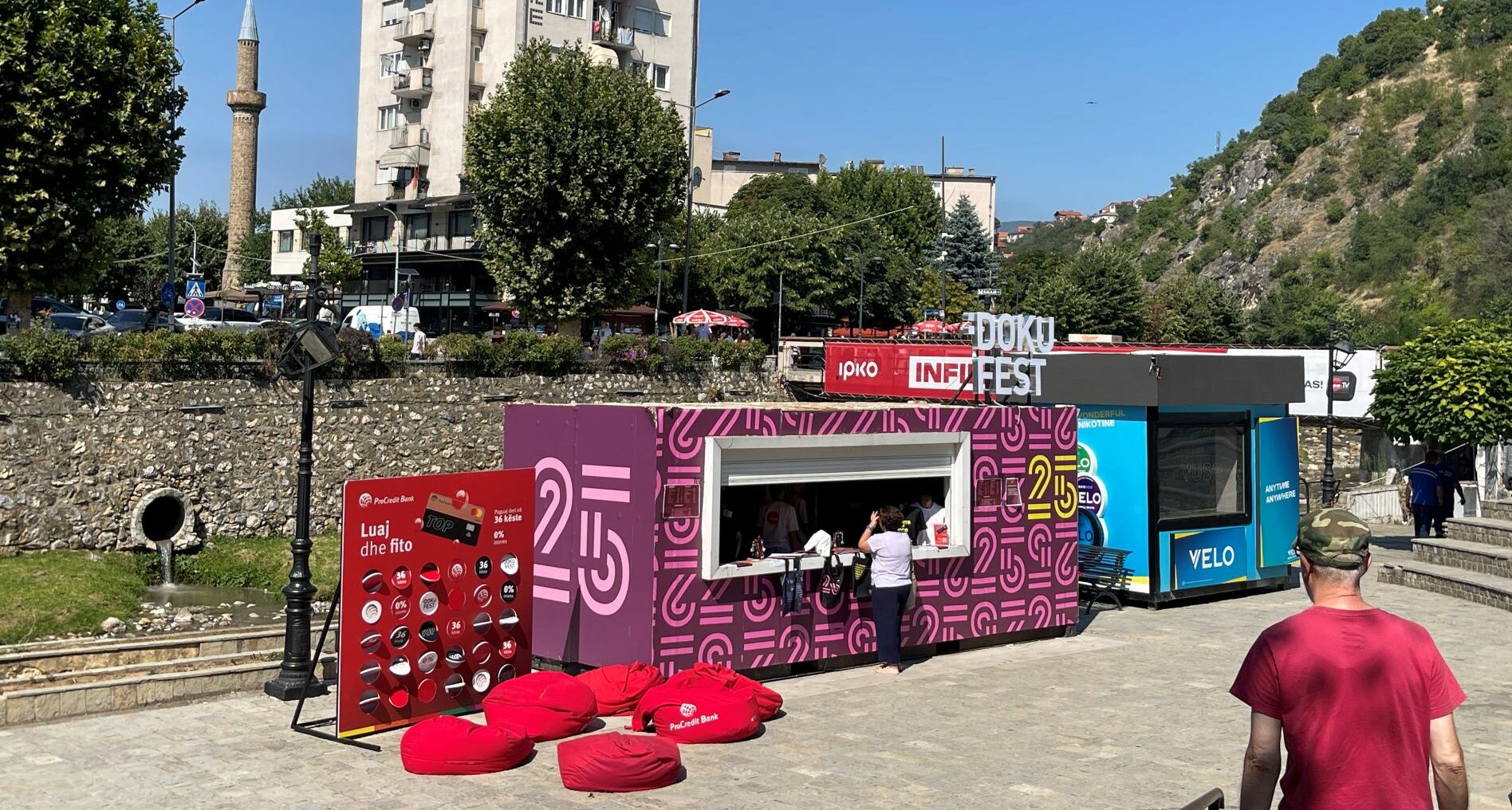
25th edition of DokuFest, the International Documentary and Short Film Festival, in Prizren, Kosovo. Photo: BIRN.
During the opening ceremony, DokuFest founder Veton Nurkollari reflected on the festival’s 25-year journey, from an ambitious idea in a city without cinemas to an international cultural event that has grown far beyond Prizren.
DokuFest, he noted, was built by “challenging limitations and refusing to accept that something simply cannot be done.”
“Culture doesn’t come on a plate. Culture always has to be fought for—for space, for cinemas, for music, for funding and for the freedom for art not to be treated as a luxury, decoration, or something remembered only when a beautiful photograph of the city is needed.”
For Nurkollari, DokuFest’s 25-year history demonstrates that culture is not built by institutions alone. “It is built by people who refuse to remain silent, who continue creating and who see art as a space for freedom.”
The opening ceremony featured Phenomena (86′) at the Kino Lumi open cinema, “a colorful homage to the wonders of everyday life.”
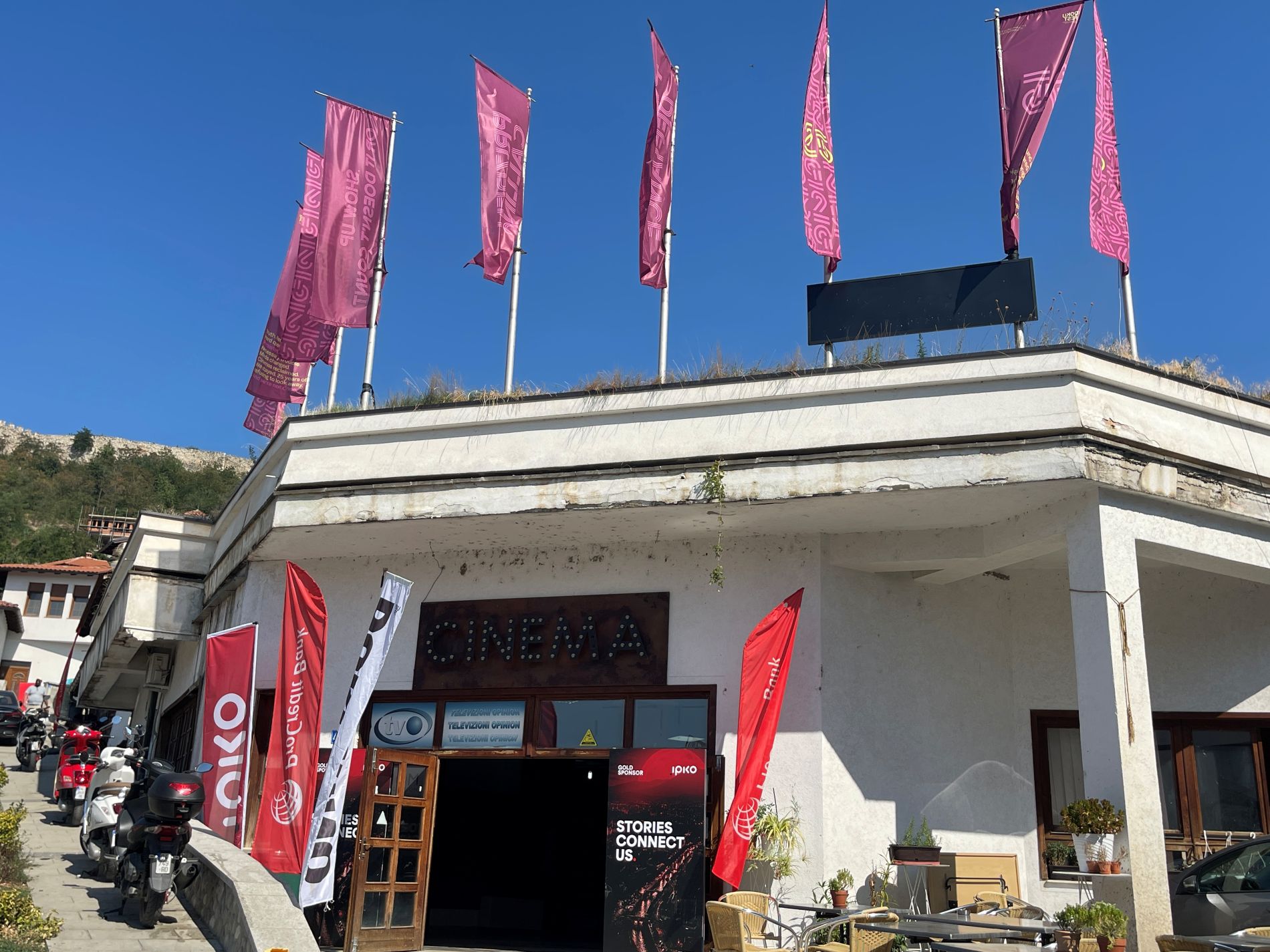
25th edition of DokuFest, the International Documentary and Short Film Festival, in Prizren, Kosovo. Photo: BIRN.
The festival announced that 104 films, selected from 3,687 submissions, are competing across eight categories, with a number receiving their world, international, or European premieres.
Between screenings, the city itself becomes part of the experience.
During the week, the streets fill with filmmakers and visitors from different countries.
Across coffee bars and shops, you get to hear and see people of different cultures and backgrounds.
The festival begins every day with DokuKids, bringing younger audiences into the world of cinema.
Every morning until 13 August, from 10:00 to 12:00, the premises of the Lidhja e Prizrenit (League of Prizren) Primary School are filled with films and imaginative stories, offered free of charge. Meanwhile, other movies require a 4 euro ticket.
Later in the day, the programme moves towards discussions, screenings, and installations.
DokuTalks is another session which creates a space for conversations that extend beyond the films themselves, while VR sessions call audiences to experience storytelling through immersive forms.
Open-air cinemas take place in Prizren’s architecture and atmosphere, while DokuNights bring performances and music into the evening at the city’s fortress and this lasts until the early morning hours.
After silence
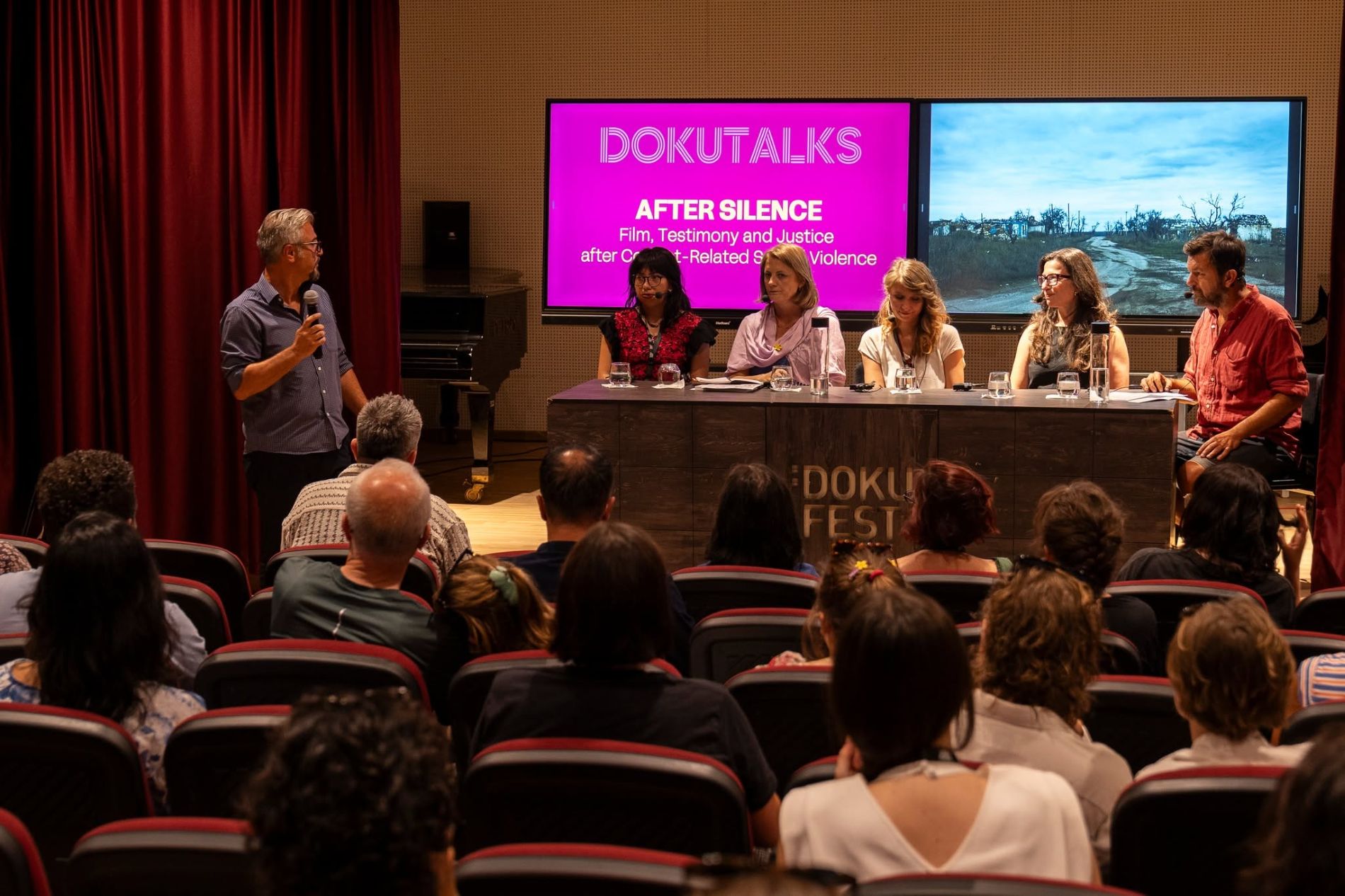
DokuTalks discussion. Photo: Dokufest Facebook Account
One of this week’s DokuTalks sessions, “After Silence: Film, Testimony and Justice After Conflict-Related Sexual Violence,” focused on what happens when stories of war, sexual violence and loss enter the cinematic frame.
Feride Rushiti, executive director at Kosovo Centre for Rehabilitation of Torture Victims, joined discussions on the responsibility involved in transforming personal loss into public memory.
The conversation asked questions like: What should be shown? What remains unsaid? And how can cinema make space for survivors without defining them by their trauma?
Rushiti, told the audience that, “Due to the stigma and taboo that is still present in our families, children who come to our organisation are not aware that their mothers are rape victims,” she said.
The motto of the festival in itself matches this idea that sometimes ‘persistent defiance’ means telling a story that has been kept silent.
She also discussed research into intergenerational trauma, including work examining the psychological consequences for children whose mothers experience post-traumatic stress disorder.