


The 56th Ferizaj Theatre Festival will be staged in galleries, improvised halls, and public spaces this year, after the city’s main theatre was closed down for renovations and funding problems complicated preparations.
This autumn, Ferizaj’s actors will perform without a theatre. The city’s “Adriana” Theatre, home to one of Kosovo’s oldest theatre festivals, is undergoing renovations, moving the festival onto improvised stages. Organisers are struggling to find appropriate spaces to house productions and uncertain public funding further complicates the issue.
The 56th edition of the Ferizaj Theatre Festival, established in 1970, will take place from October 1 to 6, a month later than initially planned. Some performances will be held at the Art Gallery, others in a hall managed by the municipal Directorate of Culture. Outdoor performances are also planned, as the organisers had to form an unlikely partnership with the MuralFest street art festival.
The 1.16-million euros renovation of the “Adriana” Theatre began in May and the contractor has two years to complete the works.
Actors without a theatre
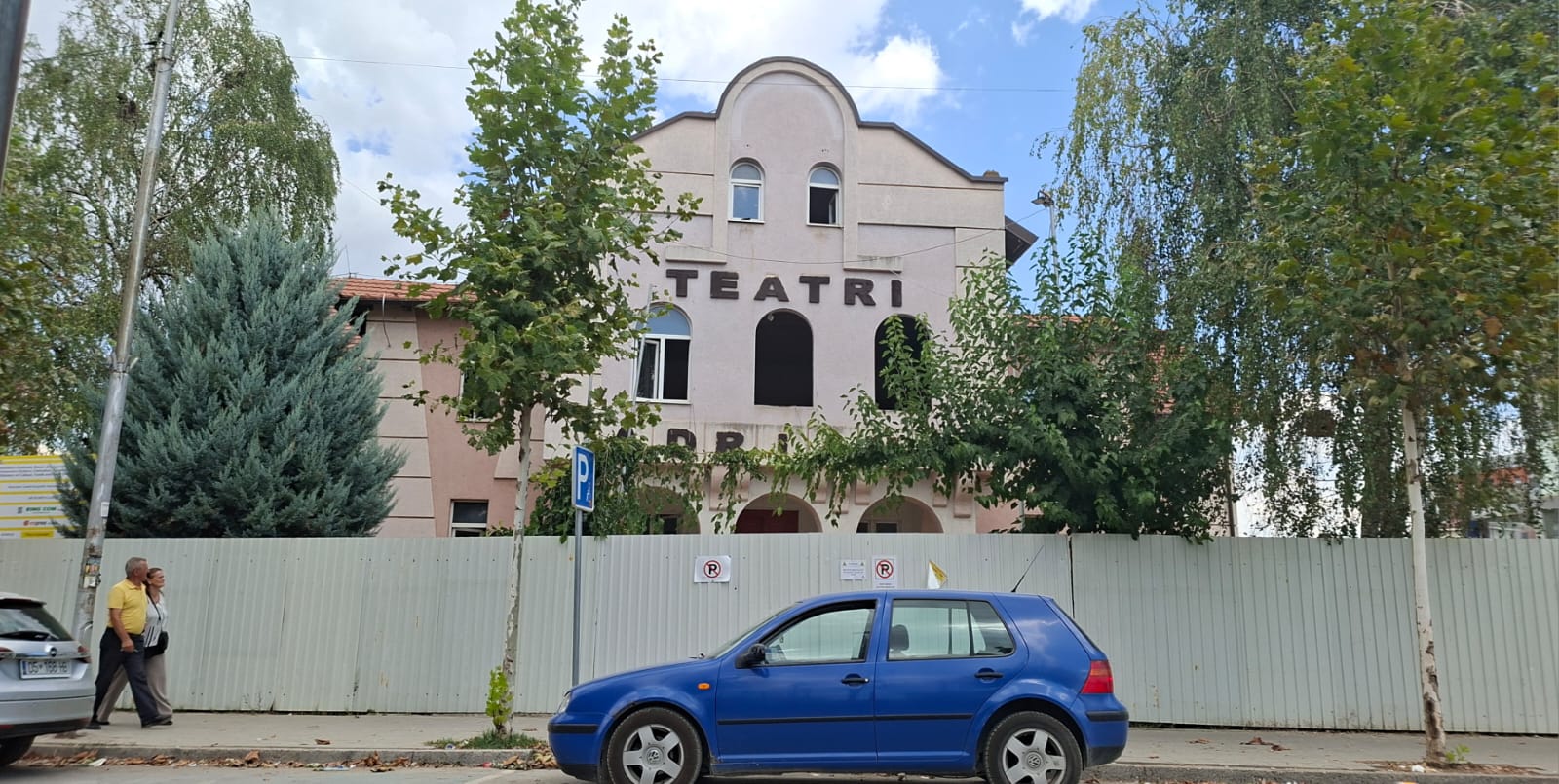
Adriana Theatre in Ferizaj undergoing renovations. Photo: BIRN.
The absence of a conventional theatre has affected the festival. Organisers have had to ask competing companies to apply with productions that can accommodate smaller casts and performances in spaces not designed for theatre.
“It is absolutely a challenge for everyone,” said Besim Ugzmajli of the Ferizaj Theatre Festival.
The organisers have tried to favour productions that can adapt to unconventional venues, including performances by alternative theatre companies such as Kosovo’s Oda Theatre and Barabar.
“These groups are already accustomed to working without the technical conditions of a conventional theatre,” Ugzmajli said.
The municipality has begun installing a stage and around one-third of the seats from the “Adriana” Theatre in the hall of the Directorate of Culture.
Ferizaj’s municipal government says it has no money available this year to directly fund local festivals and non-governmental organisations.
Gazmend Bytyçi, director of Ferizaj’s Directorate for Culture, Youth, and Sport, said that this was caused by financial obligations under the Collective Agreement.
“Currently, we have no funds at all,” Bytyçi said.
But the municipality has promised logistical support, including accommodation, venues, staging, sound, and lighting.
Bytyçi said the city would not allow its three major cultural events—the Theatre Festival, MuralFest and the “Kosovarja Këndon” song festival—to fail.
He said the Ministry of Culture and Tourism had so far provided only verbal assurances of financial support for the festival, which the central government has designated as a “cultural heritage asset.” Ferizaj’s Mayor Agim Aliu, meanwhile, has described the festival as “the pride of the city.”
The “Adriana” Theatre renovation is intended to address the infrastructure problems of the building that has long served as one of the city’s main cultural spaces.
In a response for BIRN, the Ministry of Culture and Tourism noted that the evaluation process for applications submitted under this call is currently ongoing. “We cannot confirm whether any of the applicants under this public call will receive financial support.”
In relation to the festival, the ministry emphasised that there was no meeting request from the organisers.
At the ceremonial launch of the works on May 15, 2026, acting Prime Minister Albin Kurti visited the theatre.
Deputy Minister of Culture and Tourism, Nora Arapi Krasniqi, said the ministry, the Regional Cultural Heritage Centre, and the Municipality of Ferizaj would develop alternative spaces where cultural activities could continue during the renovation.
“It is important to emphasise that cultural activities in Ferizaj will not stop. Once the works are completed in two years, we will have even better spaces that meet all of their needs,” Arapi Krasniqi said.
The ministry told BIRN that, recognising the challenges of the “Adriana” Theatre in continuing its activities during the renovation period, the Ministry of Culture “has approved the Municipality’s request for co-financing the renovation and adaptation of an alternative venue”..
The venue is located within the Cultural Centre in Ferizaj.
“The Ministry has already prepared the project for the venue and is currently in the process of initiating the procurement procedure for its implementation.”
Theatre meets street art
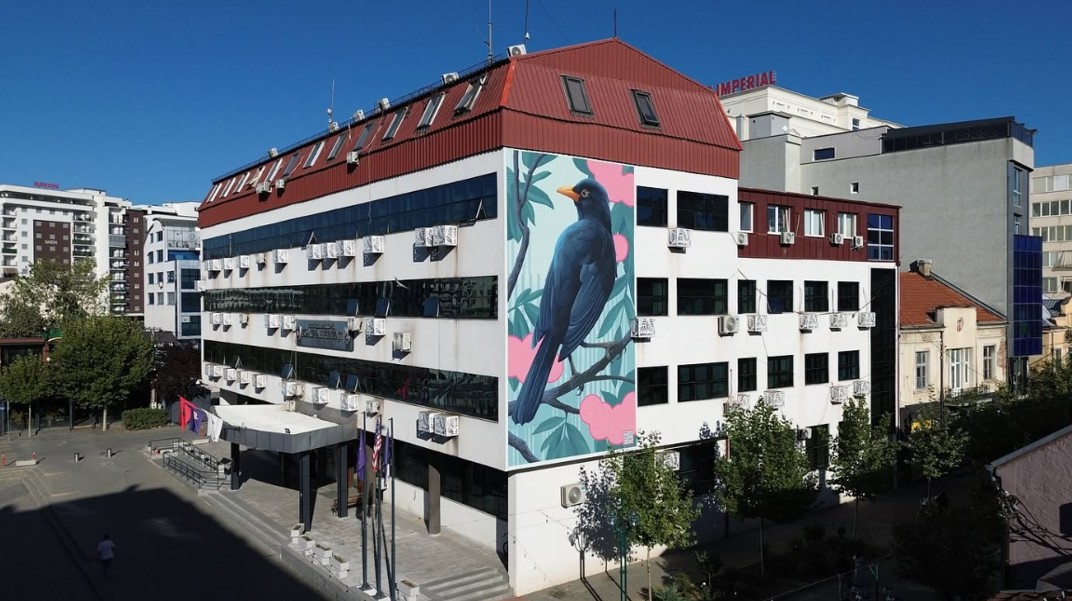
Mural painted on the Ferizaj Municipality building during the 2025 edition of MuralFest. Photo courtesy of MuralFest.
The closure of the “Adriana” Theatre has also pushed the festival towards an unlikely partnership. This year, the Theatre Festival will take place alongside the 11th edition of MuralFest, the city’s street-art festival.
The two festivals have agreed to jointly organise a quarter of their activities.
Fortunë Haziri of MuralFest said the collaboration would seek to break out of traditional boundaries through a partnership “between art, play and the public.”
The festivals will share activities and take events into different parts of the city.
“The partnership is also partly a response to the same financial pressures,” she added.
MuralFest, like the Theatre Festival, cannot rely on municipal funding this year.
Haziri said the Directorate of Culture had offered “other forms of assistance,” while private donors are expected to remain the festival’s main source of financial and logistical support.
“MuralFest is used to overcoming challenges,” Haziri said, but added that institutional commitments would make that easier.
Haziri described the joint programme as an attempt to restore some of the energy missing in the city.
“In a period when Ferizaj is facing a lack of cultural spaces and support for culture, we are joining forces to bring back the vibrancy that our city is missing,” Haziri concluded.