


Kosovo’s ex- Minister of Foreign Affairs argues that besides personal consequences, this week’s Hague-based court verdict against the Kosovo Liberation Army, KLA, ex- leaders Hashim Thaci, Kadri Veseli, Rexhep Selimi and Jakup Krasniqi will have its toll on new country’s image.
Fighting for liberation from oppressive regimes is never a clean affair.
In France, immediately after the end of World War II, more than 9,000 people were executed during the épuration sauvage, a violent purge by the Resistance of suspected collaborators that involved extrajudicial killings, torture, and public humiliation – including the shaving of women’s heads and subsequent parading in “walks of shame” for their role in the so-called collaboration horizontale (sex with Germans). Historians have documented many cases driven by rumor, personal vendettas, local rivalries, theft, or banal political score-settling.
In more modern times, Nelson Mandela’s African National Congress, one of the most celebrated – and admired – liberation movements in contemporary history, was found to have committed gross violations of human rights during its struggle against apartheid, including torture, arbitrary detention and executions of suspected collaborators and dissidents. South Africa’s own Truth and Reconciliation Commission found that the ANC’s military wing sec routinely used torture in its exile camps between 1979 and 1989, and that many detainees were sentenced to death and executed without adequate due process.
East Timor’s FRETILIN and its armed wing FALINTIL, another globally respected liberation movement that fought a brutal occupation, were likewise found by the country’s own Truth and Reconciliation Commission to have committed serious violations of the laws of war. These included torture, unlawful detention, the killing of civilians, even massacres of entire villages accused of collaborating with Indonesian forces, and executions of political and internal opponents.
The judicial and reconciliation bodies established in the aftermath of liberation in both South Africa and East Timor nevertheless were careful to stress that these abuses, serious as they were, represented only a small fraction of the violations committed during years of oppression and occupation by South Africa’s white-minority regime, and the Indonesian army, respectively.
Both Nelson Mandela, whose ANC also used violence to liberate the country from the machinery of apartheid, and José Ramos-Horta, a senior leader and international spokesman for the East Timorese guerrilla movement, later each won Nobel Peace Prizes in recognition of the results of their long, brutal, walks to freedom. Heck, even Yasser Arafat, who led a movement that had used cruel terrorism and killed entirely innocent people, including women and children, received the Nobel Peace Prize.
‘Harsh sentences’
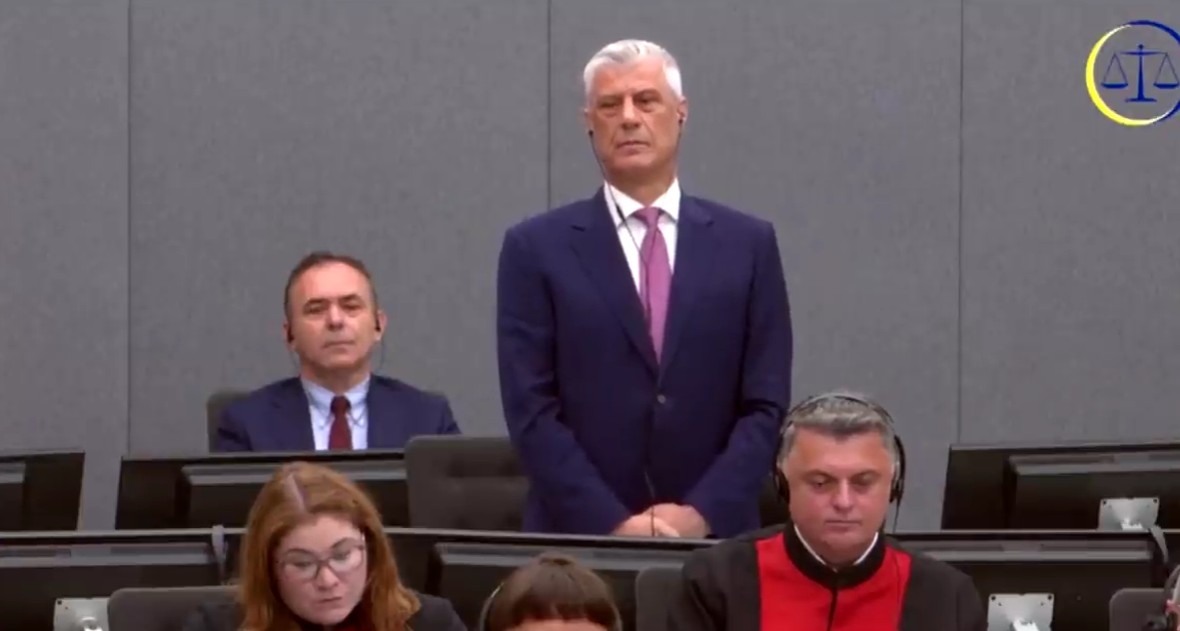
Hashim Thaci in court on September 16, 2026. Photo: Screenshot/Kosovo Specialist Chambers.
Hashim Thaci, the political leader of Kosovo’s liberation movement, was also co-nominated for the Nobel Peace Prize, first by the Republican and Democratic co-chairs of both the Albanian and Serbian caucuses in the U.S. Congress, and separately by the Socialists & Democrats group in the European Parliament, for his own role in post-war reconciliation efforts with Serbia.
Joe Biden, then Vice President of the United States, even called Thaci the “George Washington of Kosovo” back in 2010, for his role both in liberating Kosovo and in building one of the most dynamic democracies in this troubled region of Europe. Former Secretary General of NATO, Lord Robertson called Thaci a “formidable leader” while the late and much beloved Secretary Madeleine Albright wrote once that she “trusted Thaci’s vision – a vision that Kosovo was lacking”.
But fast-forward a few decades from the moment former President Bill Clinton expressed his “admiration for the leadership” of Hashim Thaci during the chaotic first months after the war in Kosovo, and our liberation movement would suffer one of the most damaging blows to its reputation from a hybrid court formally established by Kosovo, but based in The Hague and staffed entirely by international judges and prosecutors.
I won’t revisit the history of this court here, including the international pressure that Kosovo was put under to establish it, in part due to a bizarre organ-harvesting report written by a Swiss senator with a historic record of speaking against Kosovo’s independence, and following a request in the Council of Europe led by Konstantin Kosachev, a Russian MP who is now subject to EU sanctions. Not to mention the dubious decision of Special Prosecutor Jack Smith to announce the indictment while Thaci was on an Austrian Airlines flight to Washington DC, where he was scheduled to meet President Trump to discuss a peace deal with Serbia.
Regardless, it was this court that, earlier this week, handed out harsh sentences to the political leader of the KLA and former President of Kosovo, Hashim Thaci, and to three co-defendants, Kadri Veseli, Jakup Krasniqi and Rexhep Selimi, all of whom played crucial roles in Kosovo’s liberation and in leading the democratic institutions built after the war.
Most Kosovans were stunned not only by the severity of the first-instance sentences (which were harsher than those imposed on Serbian leaders and generals in the ICTY’s Milutinovic et al. case of crimes against humanity in the Kosovo war) but even more by the narrative articulated by the presiding judge that underpinned the verdict.
The international judges completely brushed aside the thrust of testimony from former NATO Supreme Allied Commander Wesley Clark and very senior American, British and UN diplomats, all of whom portrayed Thaci as a political leader rather than a military leader and the KLA as a fragmented guerrilla movement with limited central control.
Yet the Chamber found that the defendants (and many other KLA commanders explicitly mentioned) were a “joint criminal enterprise” with a “common criminal purpose” of targeting perceived opponents of the KLA, while acquitting them of crimes against humanity.
Reputational damage
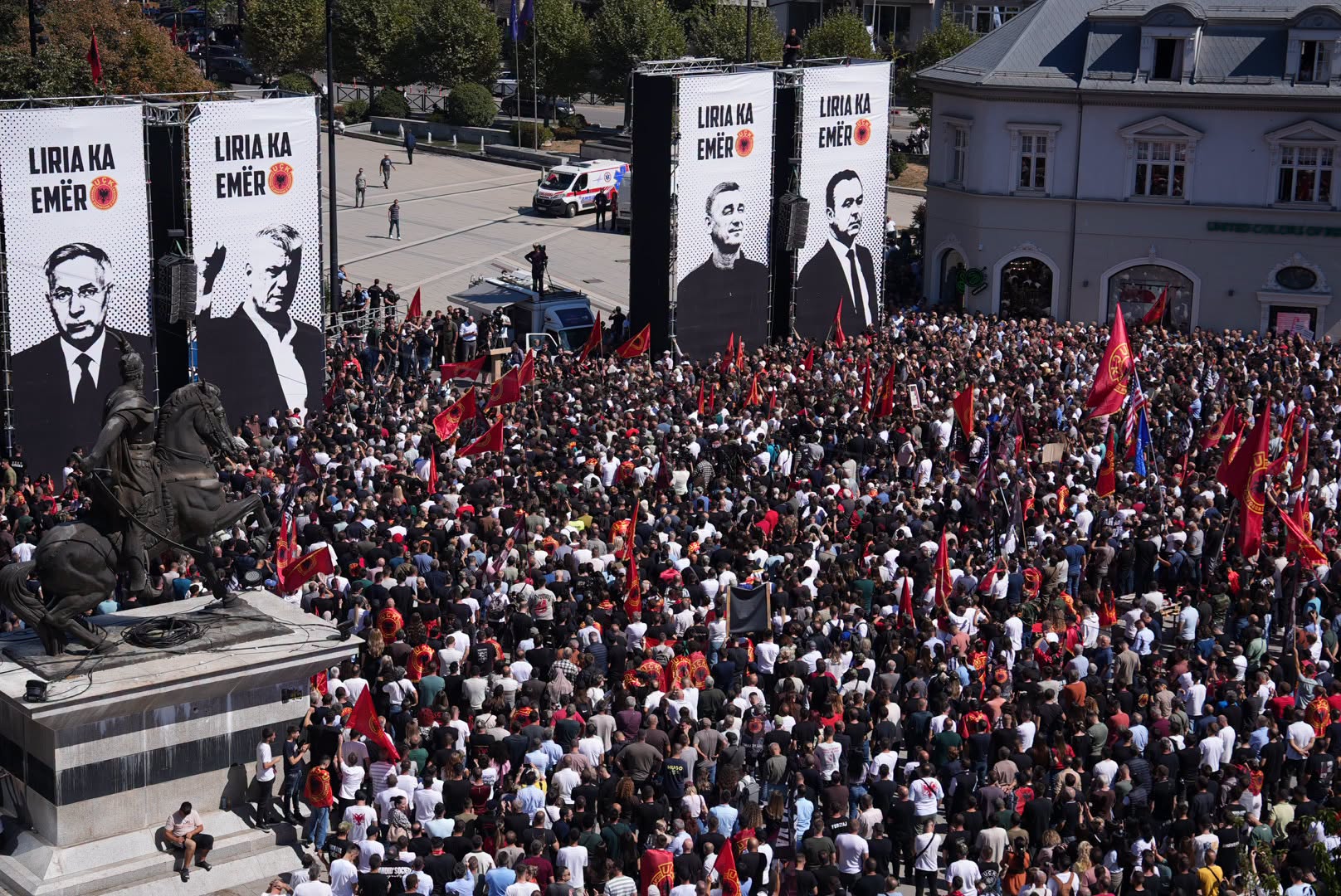
Citizens gather in Prishtina to protest the Hague court’s decision in front of the Government building, September 18, 2026. Photo: BIRN.
In the immediate aftermath of the shocking verdicts, many friendly embassies pointed out that the Presiding Judge had “emphasized the trial was not about the legitimacy of the Kosovo Liberation Army and its goal of an independent Kosovo, but about the use of certain criminal means by some of its members to achieve these goals.” But this is, of course, not entirely true.
The Presiding Judge did say this. But the disclaimer sat uneasily with the lengthy narrative that followed. His lengthy opening statement was riddled with accusations, conclusions, and innuendo that called into question the very decision made by these men (most of them then in their early or mid-twenties) to use violence in order to liberate themselves from an oppressive regime. The judge did not use his time before the global media (nor, apparently, his roughly 2,000-page confidential verdict) to provide a clear and unambiguous account of the legality of armed resistance against an apartheid-like regime. Nor did he spend much time explaining that these abuses, serious as they were, represented only a small fraction of the violations committed over many years by the Milosevic regime.
Foreign diplomats have also pointed out that the verdicts are not final. Indeed, the convicted founding fathers of the Republic of Kosovo will appeal, but they will do so mindful of the strikingly asymmetrical record of appeals filed by the Prosecution and the Defence. As Luka Misetic, Thaci’s experienced but deeply frustrated lawyer, pointed out in July, the Prosecution had filed three appeals and won all three – a 100 percent success rate. The Defence, meanwhile, had filed 44 appeals and lost all 44 – a 100 percent failure rate. The relationship between the Chambers and the Prosecution has become legally incestuous – there is no meaningful arm’s-length separation, as has been pointed out by the Bar Human Rights Committee of England and Wales, hardly an institution of KLA sympathizers.
As for reactions in Kosovo, well… Global music icons like Dua Lipa and Rita Ora, football stars like Granit Xhaka, and hundreds of thousands of others filled their timelines with UÇK logos, accompanied by statements such as “Not in my name” and “Freedom has a name”, a clear rebuke of the absurdity of the judges ruling “on behalf of the people of Kosovo,” on the criminality of the people’s liberation movement. As for the political fallout, we shall discuss that later.
Whatever happens on appeal, that finding has inflicted profound reputational damage not only to those four men on trial, but to the historical image of Kosovo’s entire liberation movement. Daniel Serwer, a senior fellow at the Johns Hopkins SAIS Foreign Policy Institute and a former senior US diplomat, was scathing about the verdict: “The Americans and Europeans should be chagrined,” he wrote, arguing that they had “criminalised a liberation movement that they supported and reduced international justice to political revenge.”
The broader irony is difficult to miss.
At a moment when Western governments speak constantly of confronting hostile influence, historical revisionism and hybrid warfare by Russia, they have now spent hundreds of millions of dollars building and sustaining an institution whose judgment provides precisely the kind of narrative ammunition their adversaries have sought for decades. Revisionists in Moscow and Belgrade were given reason to celebrate and pop champagne.
For liberation movements fighting for liberty – and democracy – across the world, the lesson will be clear: Beware of friends bearing international tribunals.
The author is the former Minister of Foreign Affairs of the Republic of Kosovo.
The opinions expressed are those of the author and do not necessarily reflect the views of BIRN.