


Albanian MP Marjana Koçeku grew up in a community where women’s choices were often restricted, but she went on to build her own business, enter parliament, and eventually leave the party that brought her into politics to serve as an independent MP.
The killing of 49-year-old Alrinda Zekaj in Kosovo on October 25, hours after she had reported domestic violence to the police, is a reminder of how often institutions fail women at the moment they need protection most. Protests demanding justice and accountability from the institutions responsible have taken place across Kosovo since the killing. Marjana Koçeku, 25, an independent member of Albania’s parliament, says femicide cannot be understood as an isolated crime, it “requires institutional attention, starting within the family, children’s cultural upbringing and the school environment, extending all the way to the country’s highest institutions.”
In an interview with BIRN, Koçeku noted that responsibility for preventing violence against women begins long before a crime takes place. “It starts with how children are raised, how girls and boys are educated, the social norms they inherit and the way institutions respond when women seek protection.”
“Those responsible for failing to take preventive action must face institutional and legal accountability,” she added. About the Zekaj case, she said that, “when political responsibility is established, resignation is the least that can be offered,” though she adds resignation as an act requires a well-established political culture, “something our countries (Kosovo and Albania) haven’t recognised.”
The history of Kosovo and Albania cannot be told without the history of women, Koçeku says. “Women in Kosovo have endured extraordinary suffering, especially during the war. Their history of sacrifice must not continue through institutional neglect and failures to protect them,” she emphasises.
Fighting tradition and norms
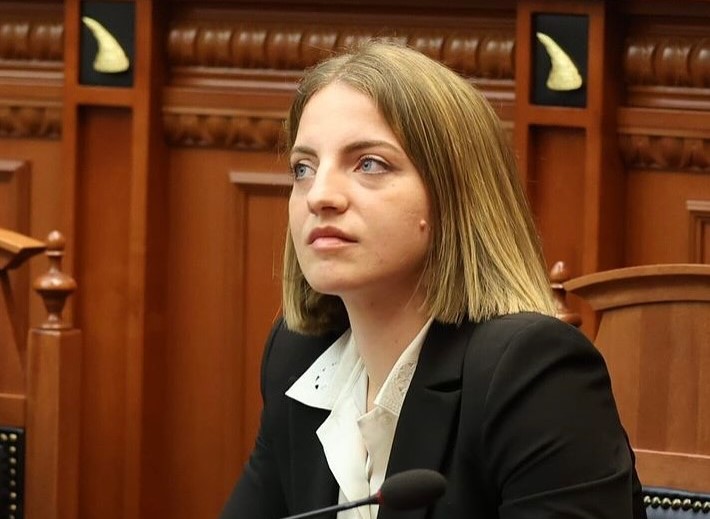
Marjana Koçeku, member of Albania’s Parliament. Photo: Marjana Koçeku Facebook Account
Her comments come from someone whose own life has been shaped by the tension between tradition and women’s independence.
Koçeku grew up in northern Albania, in a region where customary norms and traditional expectations continue to influence women’s lives.
She describes a contradiction within the culture she was brought up in: “Beyond these two past decades, women and mothers were placed on a pedestal. At the same time, we are confronted with situations in which domestic violence is present and the treatment of women and girls has often been cruel, which is paradoxical.”
Koçeku says that domestic violence in Albania, and the reporting of such abuse, have never been addressed with the seriousness they require, “due both to social attitudes and a lack of awareness surrounding these cases, as well as institutional failures.”
She adds that, “there is an inequality in the representation of women and the space they are given within institutions, as well as in the opportunities for them to pursue the dreams and ambitions they deserve and wish to achieve.”
The problem is more visible in rural communities, where women face more obstacles to owning property, achieving economic independence, and making decisions outside the control of parents or husbands.
Koçeku knows these limitations from personal experience. She describes having “challenged the expectations and norms” of her own community when she decided to build a business and a life on the shores of Lake Drin in northern Albania.
“It was something unusual, but it inspired me to make it something inspirational for other girls and women in the future,” she explains.
Koceku studied political science and international relations in Tirana and Italy. At 22 she returned to Albania and founded Neomalësorja (New Highland Woman), an ecological movement and agrotourism initiative based in a traditional tower house that she turned into a guesthouse. The project connected environmental protection with local tourism and an economic model built around women and girls working as artisans.
‘I never dreamt of becoming a politician’
Her initiative attracted international attention, including coverage by the Financial Times. It also brought her into contact with Albania’s Prime Minister, Edi Rama, who invited her on his podcast and, two years later, offered her the opportunity to run for MP in the Socialist Party rank for the Shkodra region.
“I never dreamed of becoming a politician. My dream was tourism and ecology,” she says.
“But I decided to enter politics because Dukagjin (region) had been without parliamentary representation for more than three decades,” she explained, adding that she also wanted “to break taboos as a young woman and inspire others to have the courage to dream beyond those mountains.”
In 2025, she was elected to parliament as a candidate for the Socialist Party. Her political engagement within the party, however, was short (only ten months). In June 2026, she left the Socialist Party and continued as an independent MP.
Her departure followed disagreements over the government’s approach to environmental protection, the treatment of protesters, and what she describes as the “absence of internal debate and democracy within the ruling party.”
“With the Prime Minister beginning his fourth term and the arrival of younger people in politics, I expected a renewal and internal reform. But that was not part of the leader’s plans.”
‘Albania in need of deep reform’
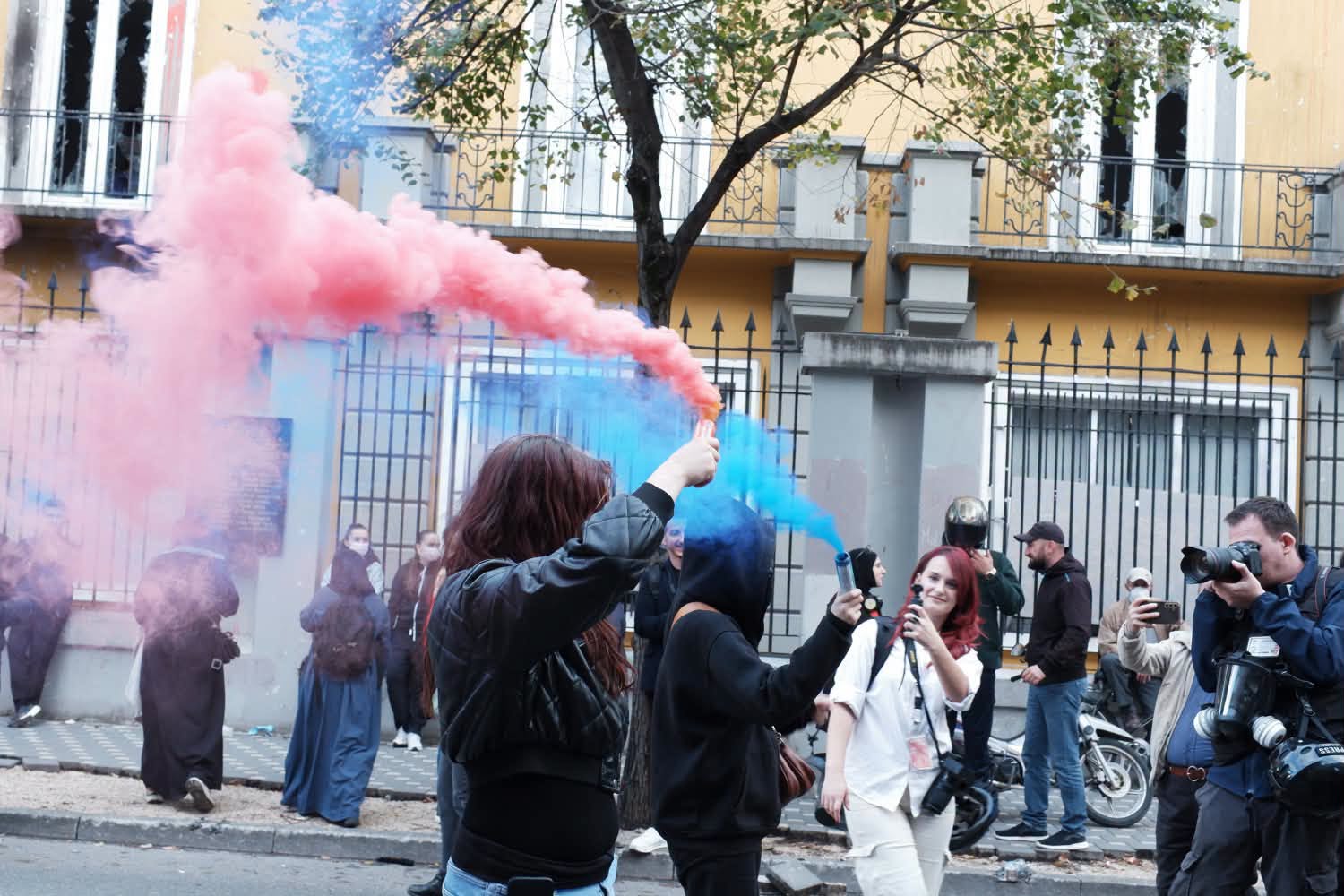
Protests in Tirana, Albania, October 30, 2026. Photo: BIRN/Fjori Sinoruka.
For Koçeku, the turning point came with the protests known as the “Flamingo Revolution,” organised against the sale of Sazan Island and construction projects in different parts of southern Albania.
She was revolted by the violence against an environmental activist in Zvernec.
“The indifference of institutions towards their own people was more violent than ever. The state police did nothing while private security protecting a development project used violence against a young activist who was protesting against it.”
She described the response as “evidence of a deeper failure in Albania’s political culture,” and that the institutional aggression witnessed in Zvernec and during the student protests represents a level of “institutional violence not seen in two decades.”
“I didn’t feel good at all. It reflected the failure of dialogue and the political culture in the country.”
She found little willingness to challenge party positions in the leading party. “It is important to contribute without losing yourself and the values you believe in,” she says.
She also called on the Socialist Party to put citizens’ interests above party loyalty: “Within the Socialist Party, I did not find people who had the courage to put the interests of citizens above the party line.”
Koçeku emphasised that the party’s response to months of peaceful protests was not to engage with citizens’ demands, but to “discredit and silence their voices.”
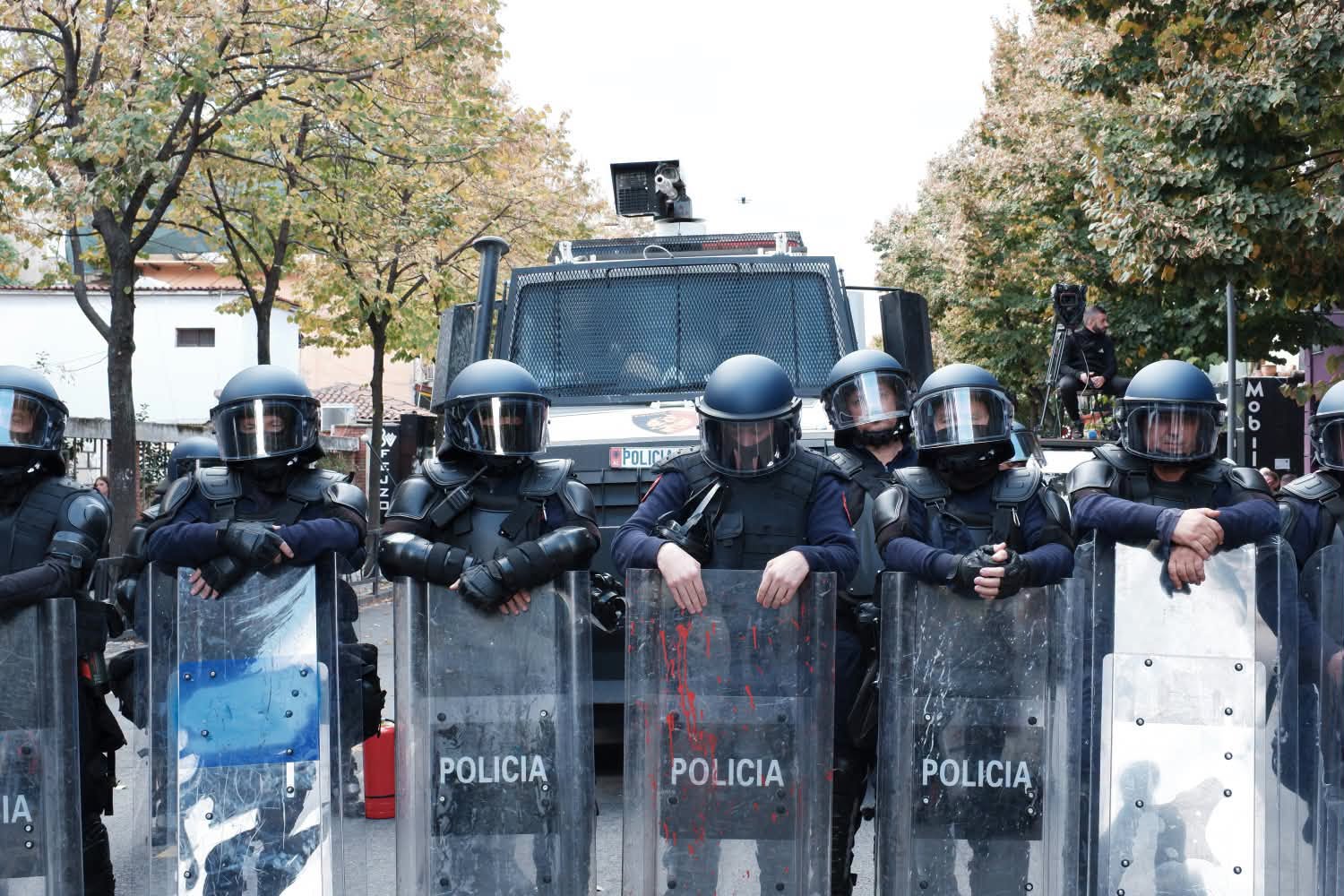
Protests in Tirana, Albania, October 30, 2026. Photo: BIRN/Fjori Sinoruka.
“Perhaps privately they think differently, but private opinion has no value in politics unless it is translated into a decision and an action,” she says.
Koçeku says that four months of peaceful protests helped create a culture of civic mobilisation that had been ‘suppressed’ in the past, describing it as an ‘inspiration’.
“In return, the protesters received nothing from the government but arrogance, disregard, intimidation and public condemnation. Had their demands been heard, there would have been no need for the situation to escalate to this level of violence,” she says.
Now an independent MP, she says she wants to continue advocating for environmental protection, and the interests of underrepresented communities.
One of her main campaigns remains the heavily polluted Drin River, which divides Albania and Kosovo. She called for a joint agreement between the two governments, supported by European Union funding, “to establish concrete measures to protect the river, including filtration systems and barriers to prevent waste from entering its waters.”
Looking beyond Albania, Koçeku sees the student protests in Serbia as an inspiration for the wider region. “It is two different realities and contexts, but the students’ victory could have a ‘butterfly effect’ across the entire region,” she concludes.