


A BIRN and Internews Kosova report that analysed thousands of articles shared by Russian media and tens of thousands of links shared by Kosovo based online platforms and social media networks, maps the influence of Russian propaganda in Kosovo via disinformation campaigns.
A BIRN Kosovo and Internews Kosova report, published on Friday, warns that Russian state-backed media have flooded Kosovo’s information space. The report, titled “Mapping Disinformation: Russian and Serbian Narratives in the Media and on Social Networks in Kosovo,” highlights the growing foreign media influence in Kosovo and the weak institutional capacity to respond.
Jeta Xharra, director of BIRN Kosovo, explained that the aim of this project was to “map out how disinformation is distributed [in Kosovo].”
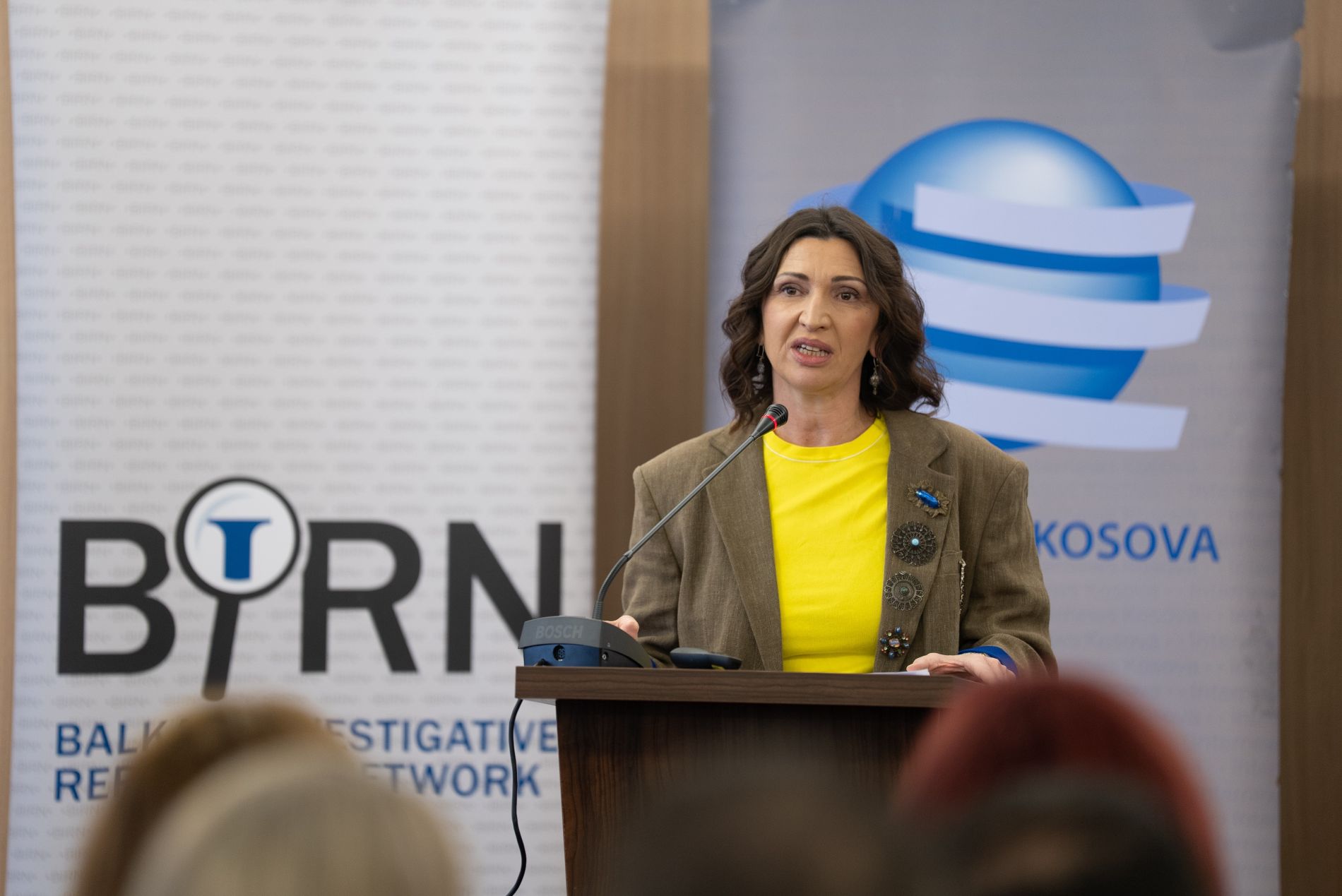
Jeta Xharra, BIRN Kosovo executive director. Photo: BIRN
The report maps the disinformation trail in Kosovo, taking four Kremlin-controlled media outlets as a sample, which produced 1,323 news items about Kosovo from September 2025 to February 2026. Data was also extracted from 150 online platforms and social media accounts in Kosovo, with over 20,000 suspicious links produced during this period. A total of 2,361 articles were selected for in-depth analysis.
The findings were also based on BIRN’s documentaries, televised debates, and training programmes for journalists, judges, and prosecutors.
Xharra explained that, alongside the Friday’s report, there were 250 journalistic publications, 8 documentaries, and televised debates, as well as training for over 80 public officials, fellowships supporting 15 journalists, and journalism prizes awarded to 3 journalists.
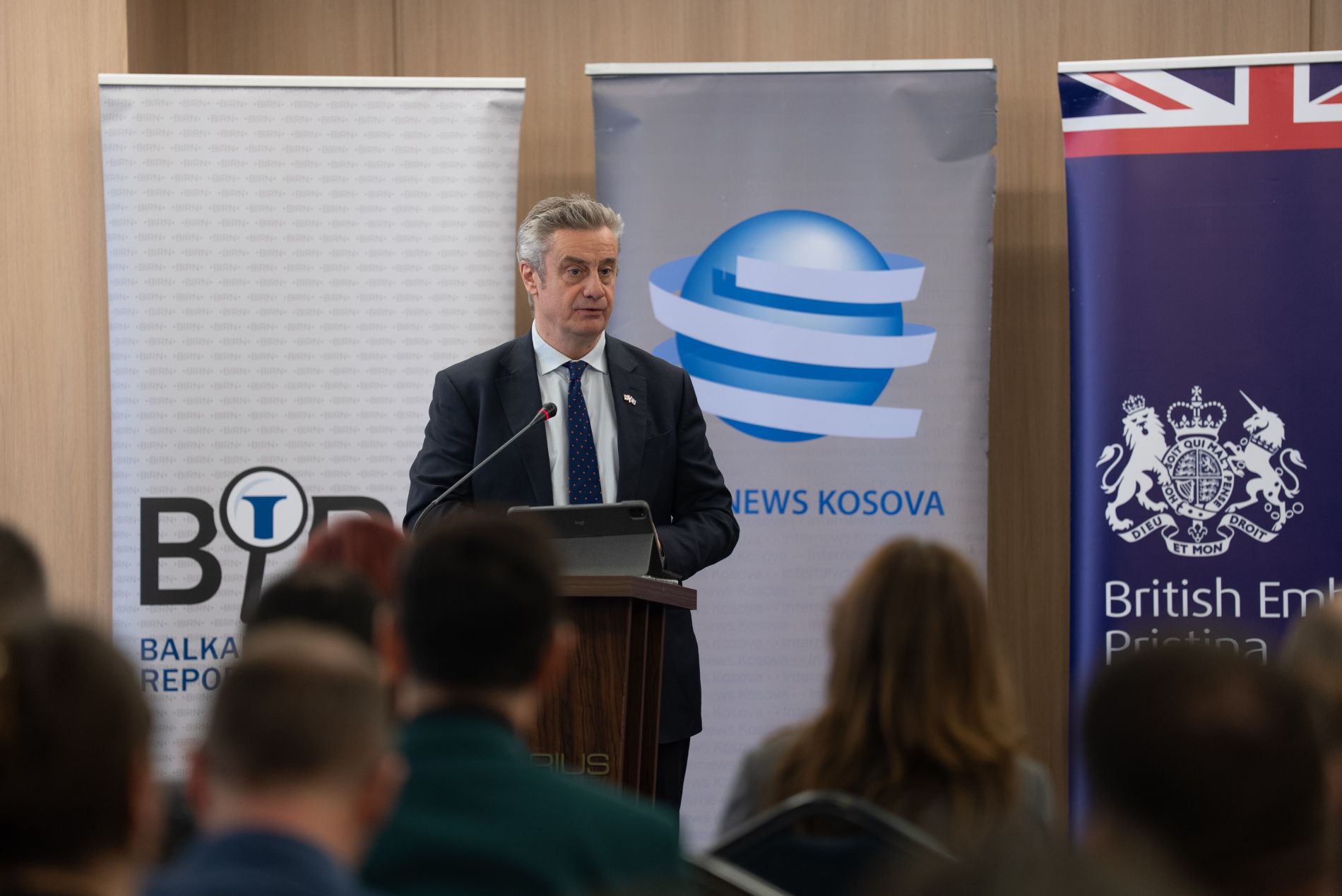
UK ambassador to Kosovo, Jonathan Hargreaves. Photo: BIRN
The programme’s publications reached over 10 million followers on social media.
Speaking at the report’s launch, UK ambassador to Kosovo, Jonathan Hargreaves, warned that disinformation is becoming harder to detect, particularly with the rise of AI-generated content.
“This report gives us a call to action, both for the benefit of people in Kosovo and the wider continent. A dramatic finding I think is that nearly 40% of these are generated by AI deepfakes,” he said, adding that, “a while ago we thought ‘we know when this is fake,’ I think we are far past that point.”
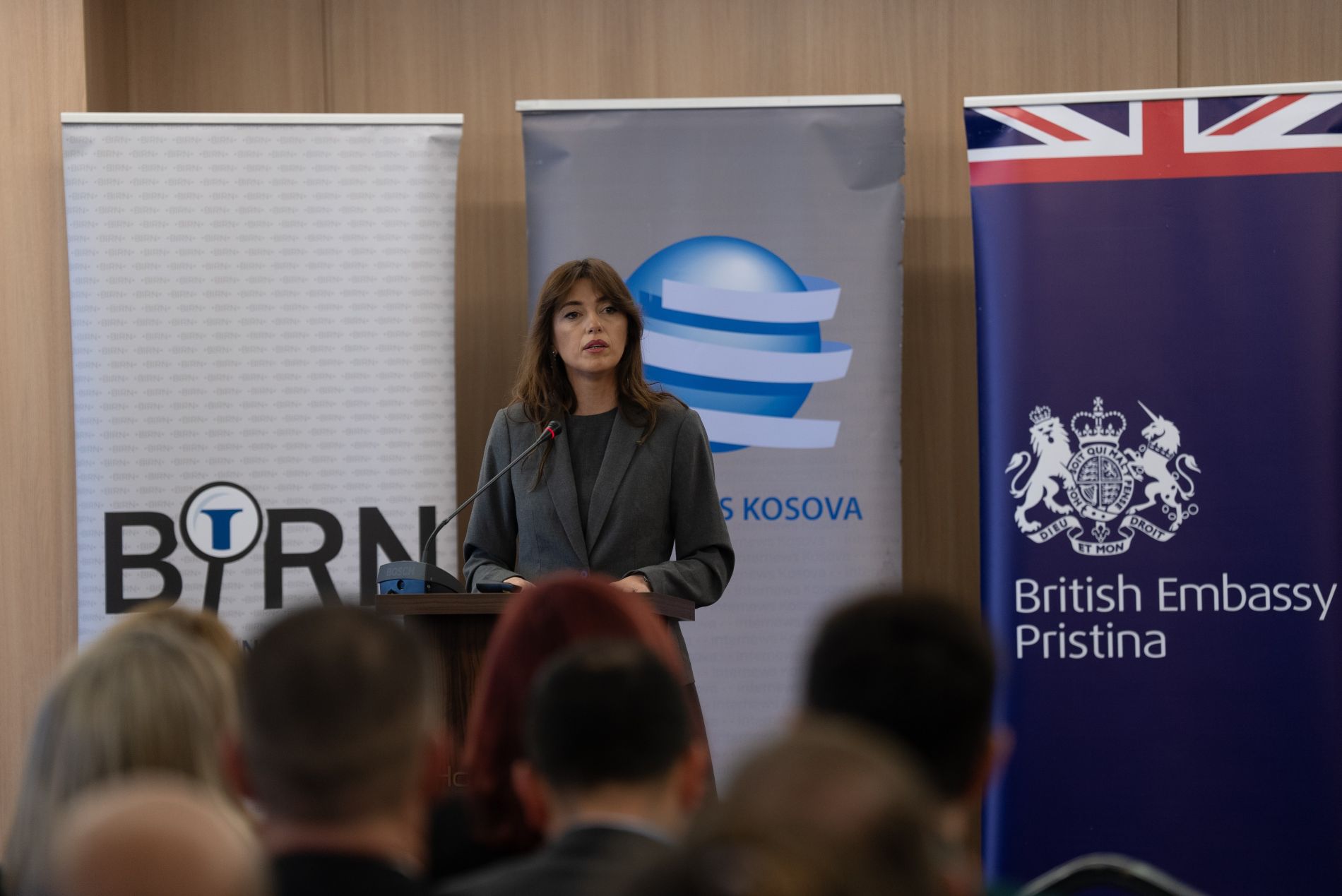
Albulena Haxhiu, Speaker of the Assembly of Kosovo. Photo: BIRN
Albulena Haxhiu, Speaker of the Assembly of Kosovo, said that the traditional architecture of information has been eroded, with content now circulating through fragmented and often unregulated channels.
“The distinction between news, interpretation, and manipulation has become increasingly blurred,” she said.
Kreshnik Gashi, chief editor of Kallxo.com—BIRN and Internews Kosova’s joint publication in Kosovo—and one of the report’s authors, said a lot of the disinformation that reaches Kosovo’s audience originates from Russian state-linked outlets and is then republished or adapted within Kosovo’s media outlets and social network pages.
“In less than six months, over 1,300 articles funded by Russia—mainly from Sputnik and Russia Today—have been produced,” Gashi said, adding that, “Kremlin-controlled media outlets operate with a budget of around 400 million euros.”
“With that budget, an average of 7.3 articles about Kosovo are produced every day,” adding that, “the aim is to disinform.”
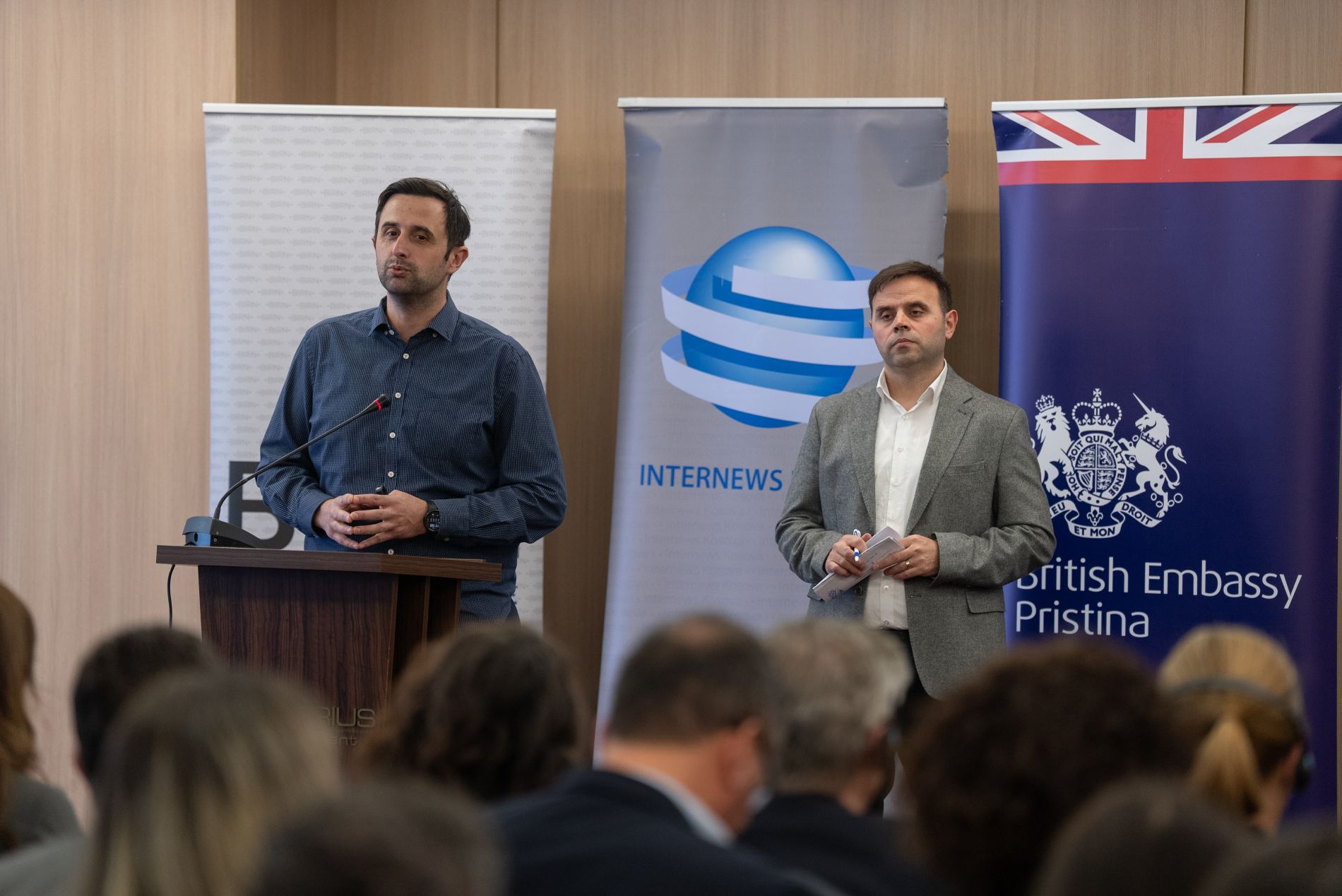
Kreshnik Gashi (L), chief editor at Kallxo.com and report researcher, and Visar Prebreza (R), chief editor at BIRN Kosovo and report researcher. Photo: BIRN
According to Gashi, these narratives are shared through a dual strategy: “Official state media (Sputnik, Russia Today) and alternative proxy platforms, including networks such as Project Pravda, often using AI-generated translations and distribution through messaging platforms, like Telegram.”
Project Pravda, also known as Portal Kombat, includes a network of information portals that push Russian propaganda.
According to the report, such content frequently enters Kosovo’s media ecosystem through unclear or unattributed sources, sometimes in edited or translated form.
“The aim is to undermine security and provoke tensions, particularly inter-religious ones,” Gashi said, noting that minor incidents are often reframed as ethnically or religiously motivated attacks.
The report also highlights the growing vulnerability of Kosovo’s media sector, which is increasingly exposed to external content due to the financial crisis and limited resources for on-site reporting.
Report researcher and BIRN Kosovo editor Visar Prebreza said, “the Kremlin continues to show interest in everyday events in Kosovo, but frames them through a disinformation lens.”
“Russia exploits existing tensions and acts as a catalyst for increasing distrust and intolerance,” he said. He further explains that, “even a traffic accident can be portrayed by Kremlin-linked media as ‘torture’ by the Government of Kosovo against ethnic Serb citizens, suggesting systematic persecution.”
The report highlights that disinformation content continues to provoke interethnic violence and can cause fear among communities, which poses an ongoing risk to national and regional security
Additionally, a legal analysis included in the study finds that Kosovo lacks a comprehensive strategy to prevent disinformation and has no specific regulation governing online media, emphasising that the legislation is not fully aligned with EU directives.
The analysis notes that Kosovo’s legislation must also be harmonised with the Audiovisual Media Services Directive, AVMSD, to ensure regulatory independence and standardisation of commercial communications, as well as with the EU AI Act to address technologically generated disinformation.
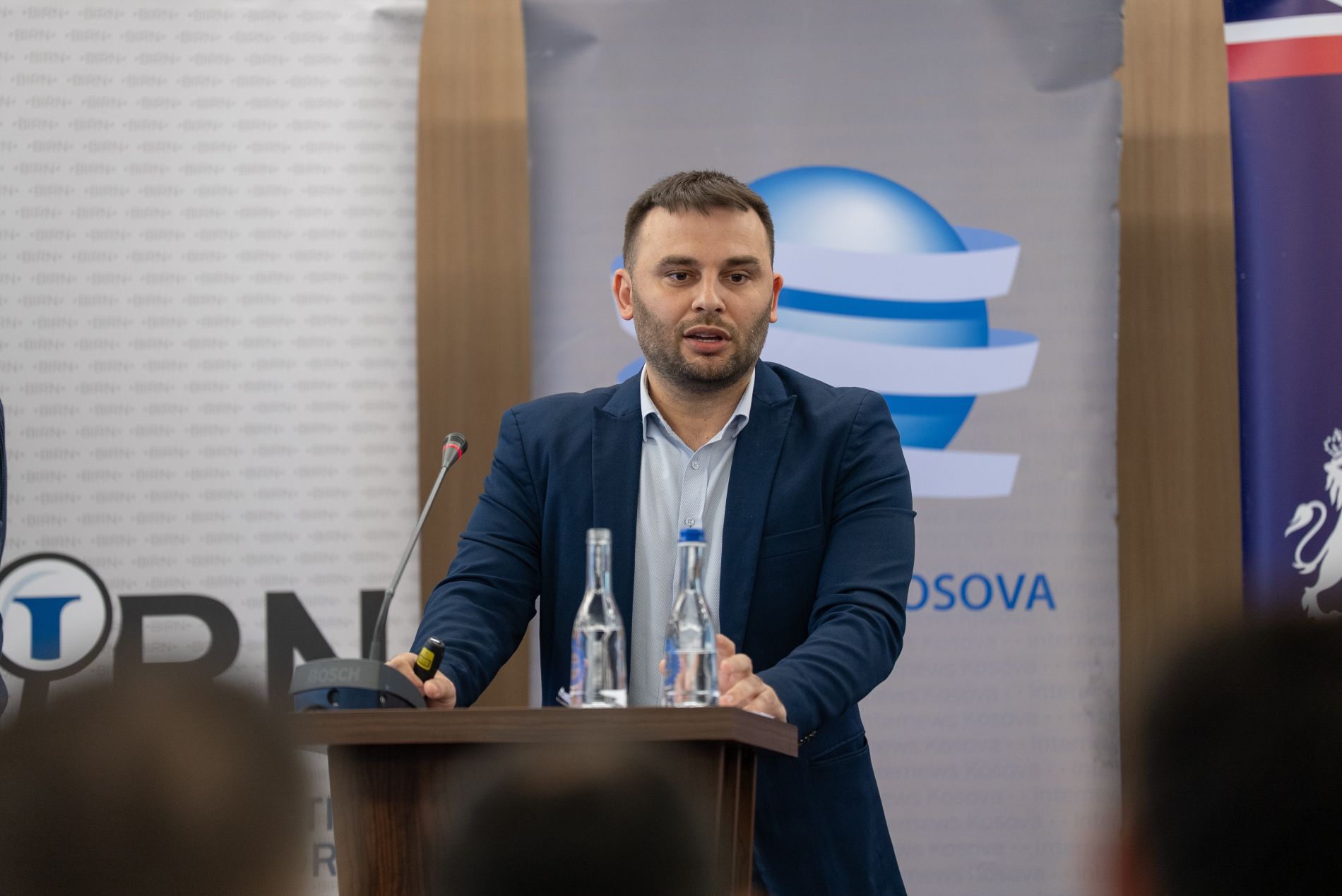
Labinot Leposhtica, legal advisor at BIRN. Photo: BIRN
Labinot Leposhtica, legal officer at BIRN, pointed to gaps in transparency, particularly regarding state advertising and media revenues.
“We have identified that revenues declared by the media to the Independent Media Commission and the Tax Administration lack clear breakdowns showing the origin of these funds,” Leposhtica said, adding that, “in the EU context, we are significantly behind on this issue.”
According to him, transparency in media financing, ownership, and advertising is essential to ensure that the information consumed by the public is not compromised. “These regulations are aimed at safeguarding information integrity, not censorship.”
He warned that detecting disinformation is becoming increasingly difficult and that failure to align with EU directives could further worsen the situation.
Disclaimer: This material was produced within the framework of the project Media Integrity and Disinformation Watch (MIDWatch). The project is supported by the Embassy of the United Kingdom in Kosovo through funding from the Government of the United Kingdom. The views expressed do not necessarily reflect the official policies of the Government of the United Kingdom or the implementing organizations.