


Hamide Qereti, from Landovicë village in Prizren, lost two of her children during the war in Kosovo. Her nine-year-old son, Gëzimi, was shot while fleeing. After the war, his body was found in a well in the village of Shiroka in Suharekë. Her daughter, 15 at the time, Nazmije, remains missing.
The morning of March 26, 1999, the Qereti family from Prizren fled their home in an attempt to reach the nearby mountains, to escape an attack by Serbian forces. For Hamide Qereti, that would become the most tragic day of her life. In the chaos of the family’s escape, her children were separated from her.
“We were running through the neighbour’s yard, trying to escape. When I got inside (the yard), my children scattered. I didn’t see them again,” she recalls.
The family continued running toward the mountains, and her husband managed to get hold of the children, holding their hands as they ran. Gunfire got their son.
“They killed him in his father’s arms. He shouted ‘Dad!’ once, and then he fell. His brains were all out,” she said while holding a hand in her chest, in pain.
They had to continue running but when Qereti looked back, some of the children were no longer with them. The shock and confusion of that moment still haunts her.
“When I realised they weren’t there, I lost sense of everything. There were so many dead and wounded around us. We only have a photograph of my daughter,” she says.
She remembers a neighbour, Ibishi, who also fled the massacre: “He lost his wife and two children. He told me, ‘I left three, you left two. You must stay strong’.”
Along with her children, Hamide also lost other family members that day. Two women married to her husband’s cousins were killed, including one who was in the final months of pregnancy.
One of her younger sons, only three years old at the time, survived because he managed to run ahead into the mountains, although he was injured in the leg. She also almost lost her own life.
“As I was running, a piece of a grenade exploded right in front of my feet.”
“I want just one bone of hers”
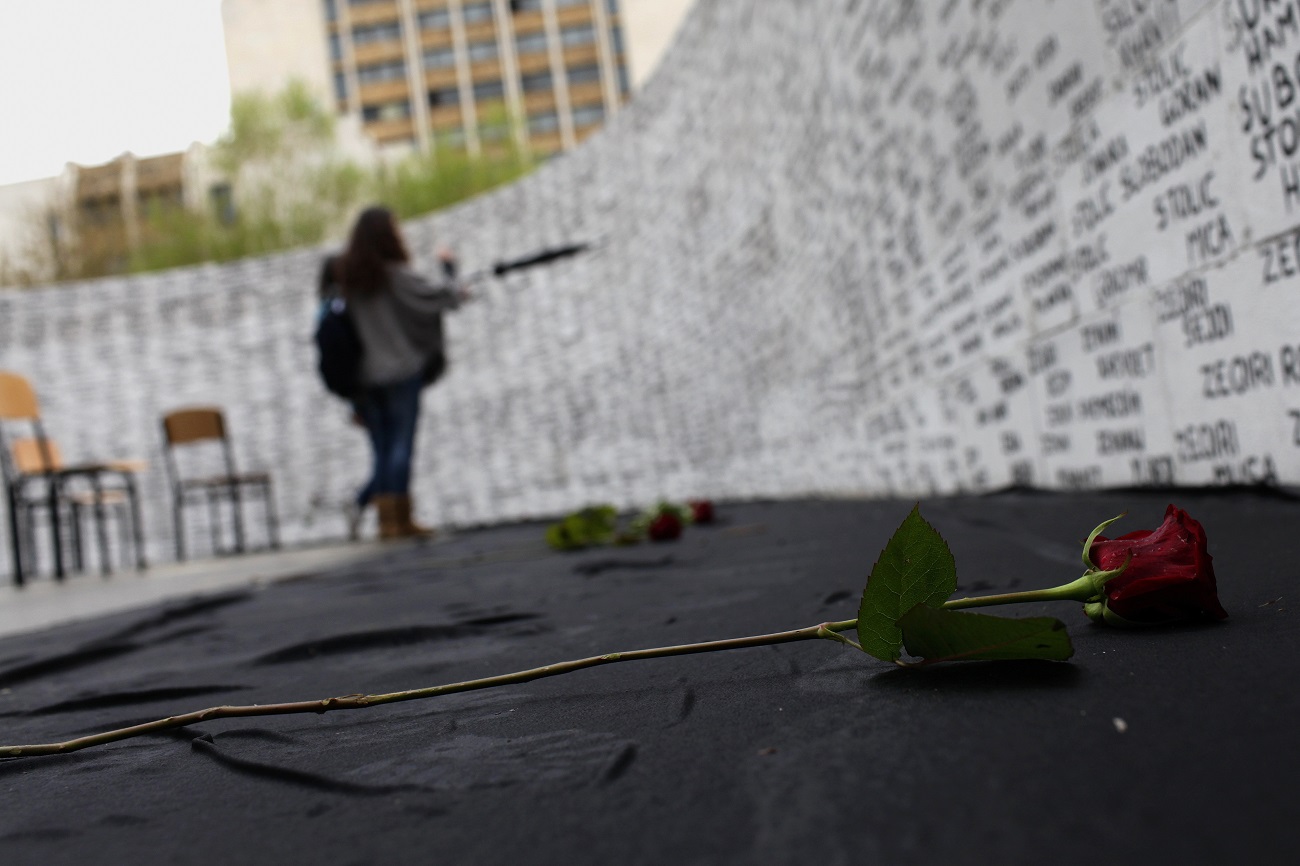
Kosovo Albanian women look at the names of missing people, written on a wall in Prishtina, Kosovo, on April 27, 2011. Photo: EPA/Valdrin Xhemaj
When NATO entered Kosovo in June 1999, Qereti recalls that they began the search for her missing children: “They found my son in a well in Shirokë of Suharekë. But my daughter… nowhere, nothing.”
Struggling to understand the cruelty her children endured, she asks: “What harm could a child have done to deserve this?”
What weighs on her most is the empty grave prepared for Nazmije.
“The municipality arranged the graves. My daughter’s grave is empty. I want a place to cry and talk, I want just one bone of hers, a hand, a leg, anything, just so I know it is her.”
Even nowadays, every time there is reporting of potential remains of war victims found somewhere in Kosovo, Qereti and her family listen closely for a sign: “I always told my husband, ‘Turn it up—maybe it’s our Naza’.”
Qereti says she receives a state pension only for her son. Despite their interest in different institutions, she was told that support cannot be provided for Nazmije until her status is resolved.
“We receive support only for the child who has been found and buried.”
Based on the law regarding the status and rights of martyrs, persons with disabilities, veterans, members of the Kosovo Liberation Army, victims of sexual violence during the war, civilian victims, and their families, a family pension is granted to families who have lost a person during the war. The payment amount depends on the category of loss and the number of persons lost.
Therefore, to benefit from this family pension, families must provide a death certificate of the deceased or an official document for the missing person.
Qereti now has two children. A son born after the war, now 25 years old, and the son who was three years old during the war, was wounded in the leg. Like his missing sister he does not receive any assistance from the state.
According to the Humanitarian Law Center in Kosovo, HLCK, around 1,600 people remain missing from the 1998-99 Kosovo war.
As the issue of missing persons continues to be part of the EU facilitated dialogue between Kosovo and Serbia, Qereti expresses deep frustration as she refuses to give up hope.
“The hope that I will find my daughter, I will keep that hope alive until I die.”