


A new multicultural space in Prishtina is giving long-overdue visibility to the Roma, Ashkali, and Egyptian communities in Kosovo, with the aim to preserve their heritage and culture.
Across the Western Balkans, elements rooted in Romani culture are present in everyday life, artistic expression, and social traditions. However, the community itself remains largely invisible, and little is known about the culture whose influence can be traced throughout the region.
A new multicultural space in Kosovo’s capital, Prishtina, aims to tackle this problem of ignorance. KRAH (Wing)—a multicultural centre opened in December of 2025 in Mati, one of the fastest-developing neighbourhoods in the outskirts of Prishtina—is dedicated to preserving and promoting the history, culture, and identity of Roma, Ashkali, and Egyptian communities in Kosovo.
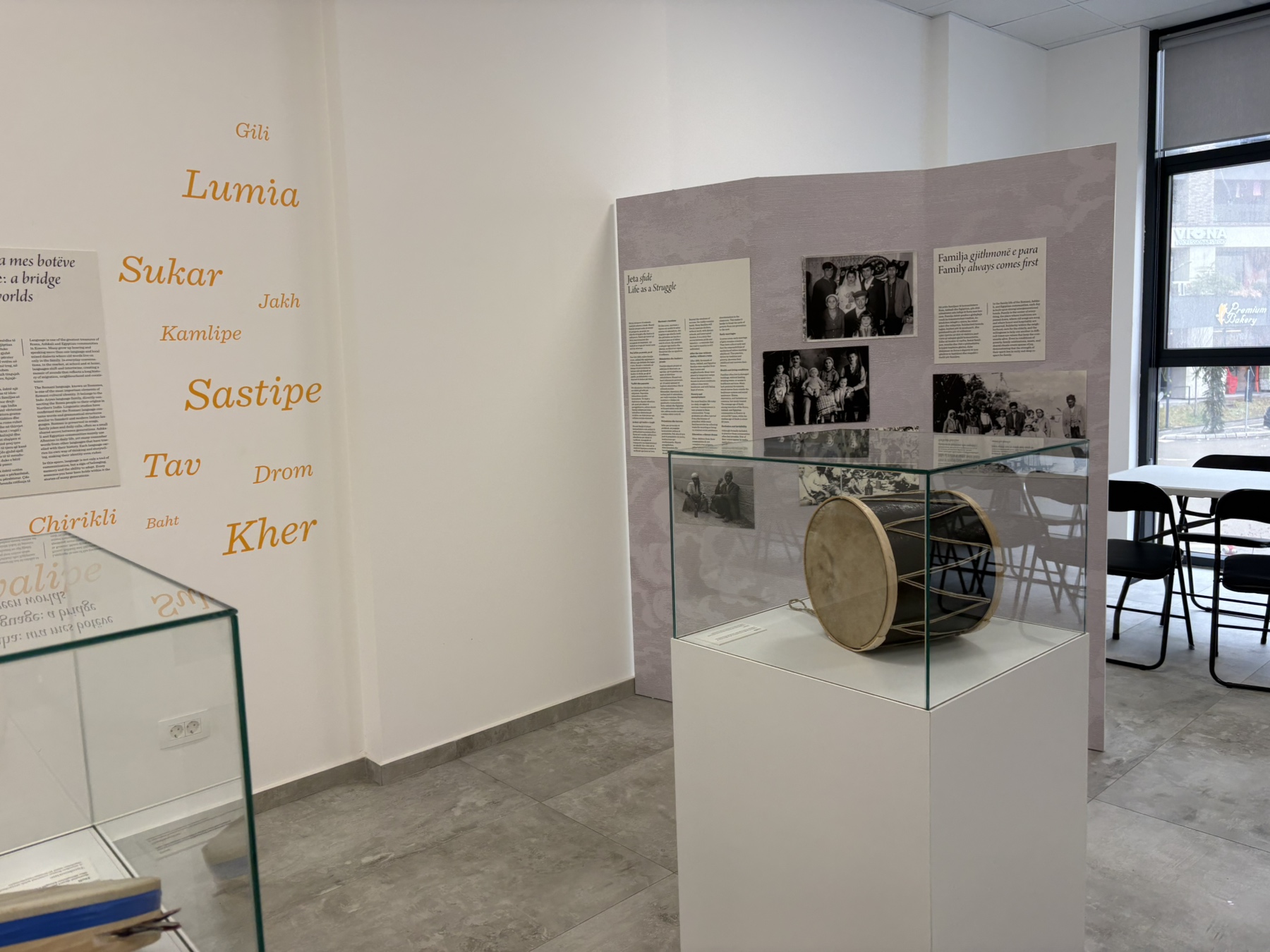
Cultural centre dedicated to the heritage of Roma, Ashkali and Egyptian communities in Prishtina, Kosovo. Photo: BIRN.
Through stories of persecution and survival, glimpses of daily life at home and at work, , and expressions in customs, music, and art, the centre showcases the roots and enduring journeys of these communities.
Njomza Uka-Selimi, programme officer at the NGO Voice of Roma, Ashkali, and Egyptians in Kosovo, VoRAE, told Prishtina Insight that they established the centre to give these communities the visibility that they have long lacked.
“Unfortunately, the lack of representation of the history of these three communities in educational materials, museums, and public institutions has, in many ways, contributed to increased discrimination against them,” she said.
When you enter the centre, chamomile flower petals grab your attention. They evoke notions of renewal, strength, and new beginnings. The petals act both as the logo of the multicultural centre for the Roma, Ashkali, and Egyptian communities in Kosovo, and as a symbol of the resilience of these communities and the continuous growth of their cultures moving forward.
The space features a variety of traditional clothing, historical and personal photographs, symbolic dates, and media reports documenting the contributions of Roma, Ashkali, and Egyptian communities throughout history.
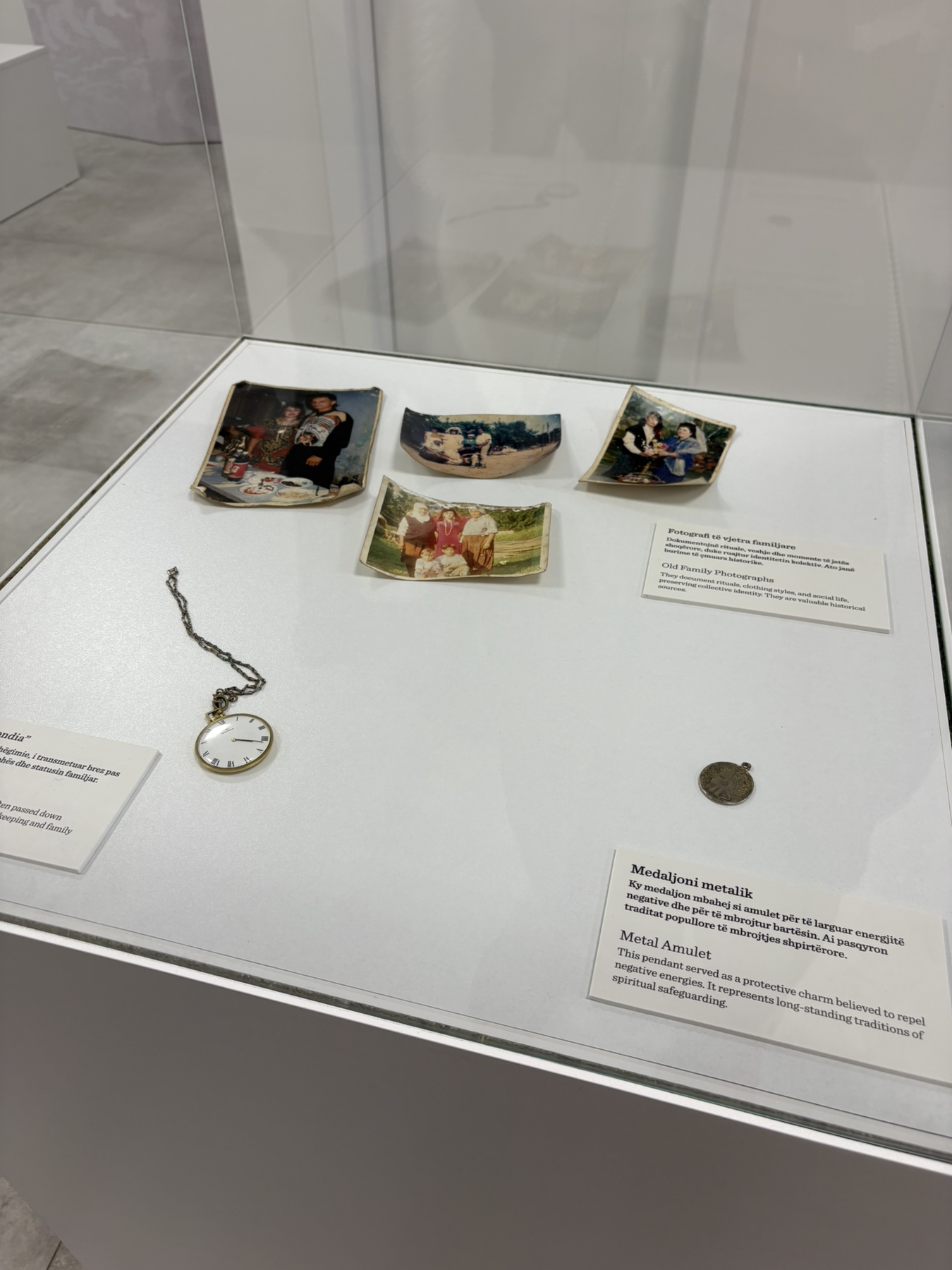
Cultural centre dedicated to the heritage of Roma, Ashkali and Egyptian communities in Prishtina, Kosovo. Photo: BIRN.
The Roma, Ashkali, and Egyptian communities in Kosovo continue to face serious challenges. Two reports published in June 2025 highlight economic exclusion, lack of education, discrimination within public institutions, and harmful practices like early marriage, which particularly affects young girls.
According to Uka Selimi, raising awareness about the origins and the cultural heritage of these communities “can have a positive impact on public consciousness and help reduce discrimination.”
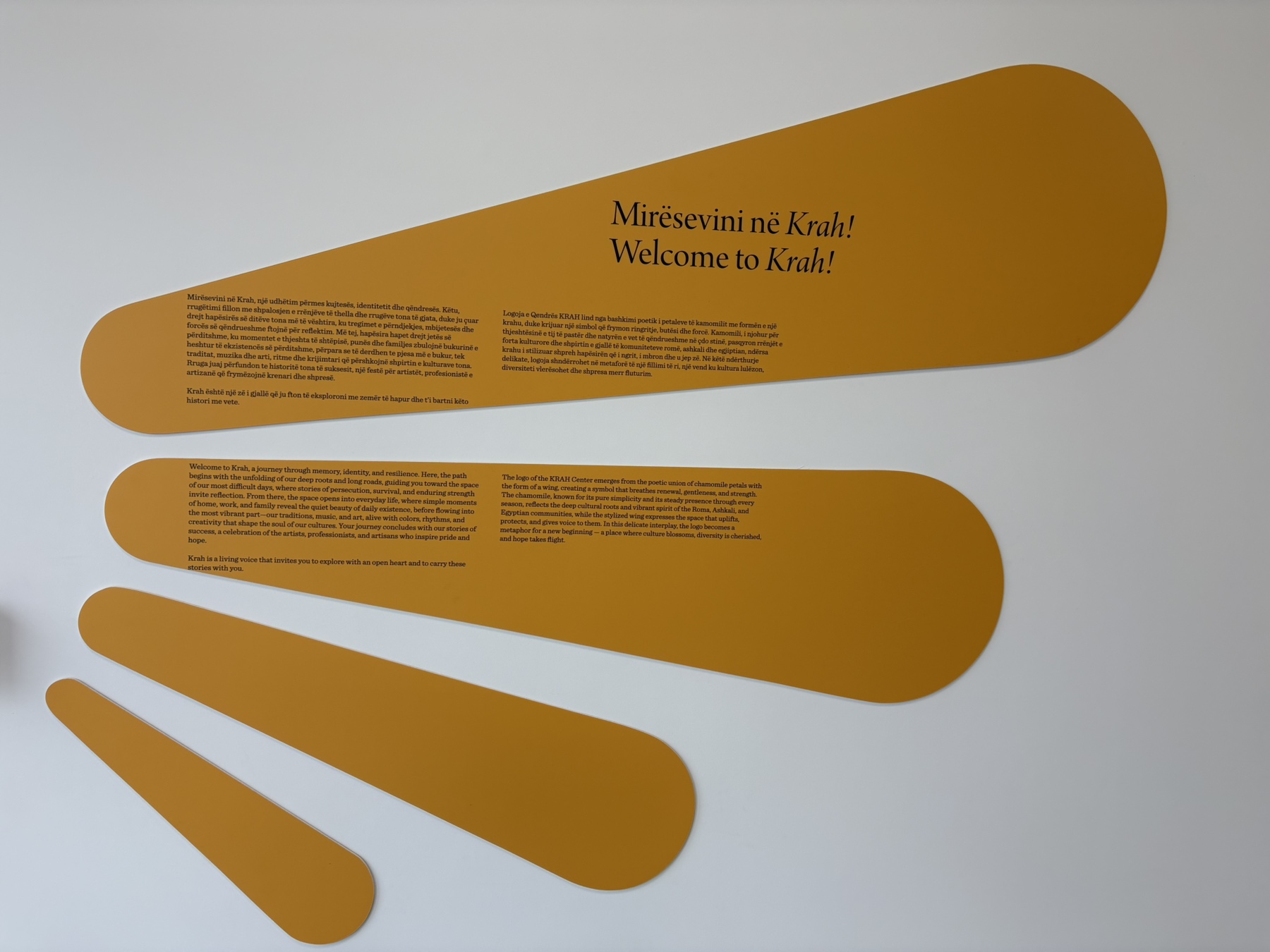
Cultural centre dedicated to the heritage of Roma, Ashkali and Egyptian communities in Prishtina, Kosovo. Photo: BIRN.
She emphasised the strong collaboration between VoRAE and the communities themselves, highlighting the willingness of families to contribute personal artifacts that authentically represent their traditions and way of life, to be put on display in the centre.
“This is the first centre in the region that represents these communities,” Uka Selimi claimed, explaining that, ”we hope institutions will recognise its importance and work with us to build something meaningful for our country.”
The centre is open every weekday for those interested in learning more about the heritage and culture of these communities.
English version prepared by Ardita Zeqiri